
Ag-FinTech Product Manager
Junior Ag-FinTech Product Manager
Explore Career
An Agricultural Extension Officer is a professional dedicated to bridging the gap between agricultural research and farmers, providing education, training, and support to improve farming practices, enhance productivity, and promote sustainable agriculture. They work in government agricultural departments, research institutions, non-profit organizations, and private agribusinesses, collaborating with farmers, scientists, and policymakers. Agricultural Extension Officers play a critical role in ensuring food security and rural development in a world increasingly focused on sustainable farming, climate-smart agriculture, and technological innovation in agriculture.
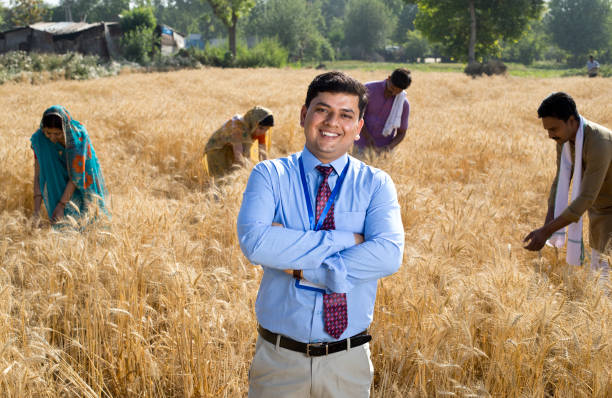
Agricultural Extension Officers are experts in agronomy and rural development, responsible for disseminating the latest agricultural knowledge, technologies, and practices to farmers to improve crop yields, livestock management, and farm sustainability. Their role involves field visits, organizing training programs, and facilitating access to resources, often working in diverse settings such as rural farmlands, government offices, or agricultural training centers. They combine expertise in agricultural science, communication, and community engagement to address issues like low productivity, pest management, and climate variability. As key contributors to agricultural advancement, they help empower farmers in an era prioritizing food security, organic farming, and rural economic growth.
| Route | Steps |
| Route 1 | 1. 10+2 with Physics, Chemistry, Biology (PCB) or Agriculture stream. 2. Bachelor’s degree in Agriculture, Horticulture, or Agronomy (3-4 years). 3. Gain practical experience through internships or training in agricultural extension or rural development (3-6 months). 4. Pursue entry-level roles like Field Assistant or Junior Extension Worker (1-2 years). |
| Route 2 | 1. 10+2 with PCB or Agriculture stream. 2. Bachelor’s degree in Agricultural Science, Rural Development, or Animal Husbandry (3-4 years). 3. Master’s degree in Agricultural Extension, Agronomy, or Rural Management (2 years, optional). 4. Work in agricultural outreach or farmer training roles to gain experience (1-2 years). 5. Transition to Agricultural Extension Officer roles with enhanced skills and knowledge. |
| Route 3 | 1. 10+2 with PCB or Agriculture stream. 2. Bachelor’s degree in Agriculture, Horticulture, or related field (3-4 years). 3. Pursue professional certifications like Certified Agricultural Extension Professional (1-2 years). 4. Gain hands-on experience through roles in farm advisory services or rural projects (1-2 years). 5. Establish a career as an Agricultural Extension Officer in government or NGOs. |
| Route 4 | 1. 10+2 with PCB or Agriculture stream. 2. Bachelor’s degree from India in Agriculture, Agronomy, or related field (3-4 years). 3. Pursue international agricultural extension certifications or advanced degrees abroad (1-2 years). 4. Gain exposure through roles in global agricultural development projects or international organizations (1-2 years). 5. Work as an Agricultural Extension Officer in international markets or global agricultural bodies. |
| Institute | Course/Program | Official Link |
| Indian Agricultural Research Institute (IARI), New Delhi | B.Sc./M.Sc. in Agriculture (Extension Focus) | https://www.iari.res.in/ |
| Punjab Agricultural University (PAU), Ludhiana | B.Sc./M.Sc. in Agriculture / Agricultural Extension | https://www.pau.edu/ |
| Tamil Nadu Agricultural University (TNAU), Coimbatore | B.Sc./M.Sc. in Agriculture (Extension Education) | https://www.tnau.ac.in/ |
| University of Agricultural Sciences (UAS), Bangalore | B.Sc./M.Sc. in Agriculture / Extension | https://www.uasbangalore.edu.in/ |
| G.B. Pant University of Agriculture and Technology, Pantnagar | B.Sc./M.Sc. in Agriculture / Extension Education | https://www.gbpuat.ac.in/ |
| Banaras Hindu University (BHU), Varanasi | B.Sc./M.Sc. in Agriculture | https://www.bhu.ac.in/ |
| Chaudhary Charan Singh Haryana Agricultural University (CCSHAU), Hisar | B.Sc./M.Sc. in Agriculture / Extension | https://www.hau.ac.in/ |
| Dr. Rajendra Prasad Central Agricultural University, Bihar | B.Sc./M.Sc. in Agriculture (Extension Focus) | https://www.rpcau.ac.in/ |
| Acharya N.G. Ranga Agricultural University (ANGRAU), Guntur | B.Sc./M.Sc. in Agriculture / Extension | https://www.angrau.ac.in/ |
| National Institute of Agricultural Extension Management (MANAGE), Hyderabad | PGDM in Agricultural Extension Management | https://www.manage.gov.in/ |
| Institution | Course | Country | Official Link |
| Cornell University | Agricultural Sciences (Extension Focus) | USA | https://www.cornell.edu/ |
| University of California, Davis | Agricultural and Resource Economics (Extension) | USA | https://www.ucdavis.edu/ |
| Wageningen University & Research | Agricultural Extension and Rural Development | Netherlands | https://www.wur.nl/ |
| University of Reading | Agriculture and Development (Extension Focus) | UK | https://www.reading.ac.uk/ |
| Michigan State University | Agricultural Extension and Community Development | USA | https://www.msu.edu/ |
| University of Melbourne | Agricultural Science (Extension Focus) | Australia | https://www.unimelb.edu.au/ |
| University of British Columbia | Agricultural Sciences and Extension | Canada | https://www.ubc.ca/ |
| ETH Zurich | Agricultural Sciences (Sustainability Focus) | Switzerland | https://www.ethz.ch/ |
| University of Copenhagen | Agricultural Development and Extension | Denmark | https://www.ku.dk/ |
| National University of Singapore (NUS) | Food and Agricultural Science (Extension Focus) | Singapore | https://www.nus.edu.sg/ |
India:
International:
Field Assistant → Junior Extension Worker → Agricultural Extension Officer → Senior Extension Officer → Extension Program Manager → Agricultural Development Consultant → Academician/Researcher
| India | International |
| Ministry of Agriculture and Farmers Welfare, India | Food and Agriculture Organization (FAO), Global |
| Indian Council of Agricultural Research (ICAR) | International Fund for Agricultural Development (IFAD), Global |
| Krishi Vigyan Kendras (KVKs) across India | World Bank (Agriculture Division), Global |
| State Agricultural Departments (e.g., Tamil Nadu, Maharashtra) | International Rice Research Institute (IRRI), Philippines |
| National Institute of Agricultural Extension Management (MANAGE) | International Maize and Wheat Improvement Center (CIMMYT), Mexico |
| National Bank for Agriculture and Rural Development (NABARD) | Consultative Group on International Agricultural Research (CGIAR), Global |
| WWF-India (Sustainable Agriculture Programs) | United States Department of Agriculture (USDA), USA |
| Action for Food Production (AFPRO) | International Livestock Research Institute (ILRI), Kenya |
| PRADAN (Professional Assistance for Development Action) | World Food Programme (WFP), Global |
| Bayer CropScience India (Extension Services) | Syngenta Foundation for Sustainable Agriculture, Global |
| Pros | Cons |
| Direct impact on improving farmer livelihoods and ensuring food security | Physically demanding fieldwork in remote rural areas with limited facilities |
| Growing demand due to increasing focus on sustainable agriculture and rural development | Challenges in convincing farmers to adopt new practices due to traditional mindsets |
| Opportunity to contribute to climate-smart farming and agricultural innovation | Emotional stress from witnessing farmer struggles with debt, climate, or market issues |
| Varied career paths in government, research, consultancy, and agribusiness | Limited resources or funding for extension programs in some regions |
| Potential for societal change through empowering rural communities and enhancing productivity | Need for constant travel and adaptation to diverse agricultural and cultural contexts |
| Career Level | India (₹ per annum) | International (USD per annum) |
| Field Assistant (Early Career) | 2,50,000 - 4,50,000 | 35,000 - 50,000 |
| Junior Extension Worker (Mid-Career) | 4,50,000 - 7,00,000 | 50,000 - 65,000 |
| Agricultural Extension Officer | 7,00,000 - 10,00,000 | 65,000 - 80,000 |
| Senior Extension Officer | 10,00,000 - 14,00,000 | 80,000 - 95,000 |
| Extension Program Manager/Agricultural Development Consultant/Academician/Researcher | 14,00,000 - 20,00,000 | 95,000 - 120,000+ |
Note: Salaries may vary based on location, employer, experience, and specialization. Indian figures are updated estimates based on current industry trends, government pay scales (e.g., under 7th Pay Commission for state roles), and private sector data as of 2025, reflecting inflation and demand growth in agricultural extension sectors. International figures are based on data from the U.S., Canada, and Europe as of 2025, adjusted for market trends in agricultural extension roles, sourced from industry reports and salary surveys like Glassdoor and PayScale. Due to the speculative nature of future data, these are approximations and may differ based on real-time economic factors.
A career as an Agricultural Extension Officer offers a unique opportunity to contribute to food security and rural development by empowering farmers with knowledge, resources, and sustainable practices across diverse agricultural landscapes. From training farmers in modern techniques to facilitating access to government schemes, Agricultural Extension Officers play a pivotal role in modern agricultural advancement and farmer welfare. This field combines scientific expertise, community engagement, and a commitment to societal and economic well-being, offering diverse paths in government, research, consultancy, and agribusiness. For those passionate about transforming agriculture, adapting to global farming challenges, and addressing critical rural needs in an era of increasing food security urgency, a career as an Agricultural Extension Officer provides an intellectually stimulating and professionally rewarding journey with the potential to make significant contributions to society by enhancing agricultural productivity and sustainable progress worldwide.


Professionals lead farmer education programs, provide advisory services, and implement government schemes, employed by state agriculture...
0.0LPA

Experienced officers oversee extension programs, mentor junior staff, and coordinate regional agricultural initiatives in bodies like the...
0.0LPA
Senior leaders manage large-scale extension projects, develop training curricula, and secure funding for agricultural outreach with organizations...
0.0LPA
Take the next step and explore more about Agricultural Extention Officer.
Explore similar career paths that might interest you
Junior Agricultural GIS & Remote-Sensing Analyst
Explore Career