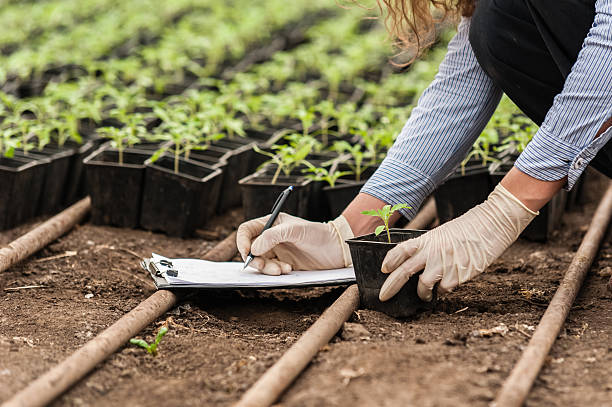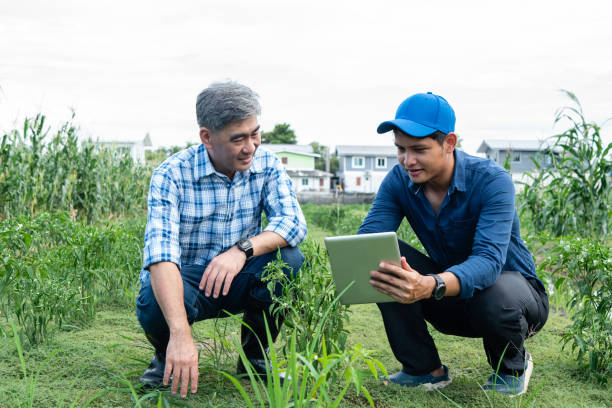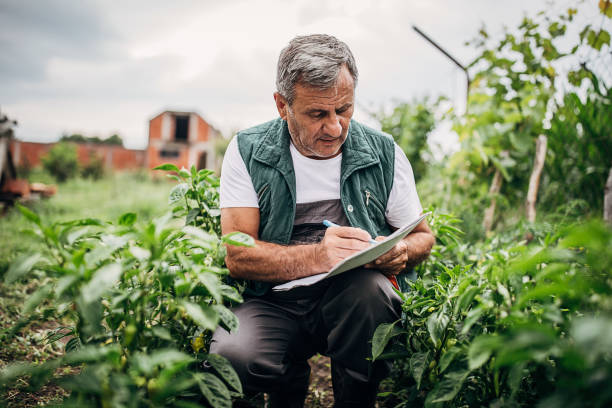
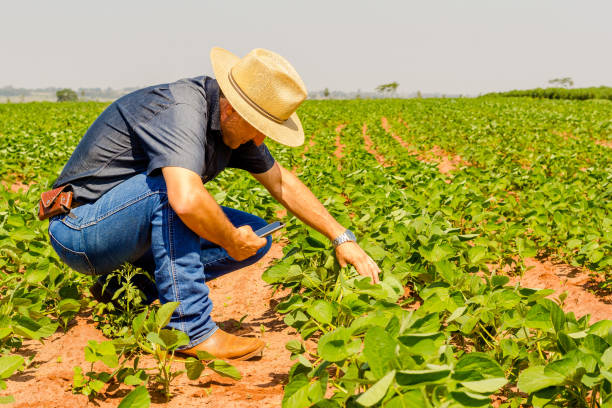
Agriculture Technicians are hands-on professionals responsible for assisting in the day-to-day operations of agricultural production, including planting, harvesting, soil testing, and equipment operation. Their role includes collecting data on crop health, maintaining farm machinery, applying fertilizers or pesticides, and supporting research experiments, often under varying field conditions. They combine technical skills with practical knowledge, working in dynamic environments to support farmers and agricultural scientists. As key contributors to agricultural productivity, they enable the application of scientific advancements in a landscape increasingly focused on precision farming and sustainable practices.
- Crop Monitoring and Maintenance
- Assist in planting, irrigating, and harvesting crops as per guidelines
- Monitor crop health and report issues like pests or diseases to supervisors
- Soil Sampling and Testing
- Collect soil samples for analysis to determine nutrient levels or pH balance
- Assist in implementing soil improvement techniques based on test results
- Equipment Operation and Maintenance
- Operate farm machinery such as tractors, harvesters, and irrigation systems
- Perform routine maintenance and minor repairs on agricultural equipment
- Pest and Weed Management
- Apply pesticides, herbicides, and fertilizers under supervision to control pests and weeds
- Assist in implementing integrated pest management (IPM) strategies
- Data Collection and Record-Keeping
- Record data on crop yields, weather conditions, and farm activities
- Maintain logs of inputs like seeds, fertilizers, and chemicals used
- Support in Research and Trials
- Assist agricultural scientists in conducting field experiments or trials
- Set up and monitor test plots for new crop varieties or farming techniques
- Irrigation and Resource Management
- Install and maintain irrigation systems to ensure efficient water distribution
- Monitor resource usage to support sustainable farming practices
- Farmer Support and Training
- Provide basic technical support to farmers on equipment or farming methods
- Assist in training farm workers on safe and efficient practices
| Route | Steps |
| Route 1 | 1. 10th/12th with any stream or vocational agriculture training 2. Certificate in Agricultural Technology (3-6 months) 3. Internship or on-the-job training (1-3 months) 4. Practice as Agriculture Technician |
| Route 2 | 1. 10+2 with Physics, Chemistry, Biology (PCB) or Agriculture stream 2. Diploma in Agriculture or Agricultural Technology (1-2 years) 3. Hands-on training or internship 4. Work as Agriculture Technician |
| Route 3 | 1. 10+2 with PCB or Agriculture stream 2. Bachelor’s degree in Agriculture or Agricultural Technology (3-4 years) 3. Field training or internship 4. Practice as Senior Agriculture Technician or Supervisor |
| Route 4 | 1. 10+2 with any stream or vocational training 2. Advanced certification or international training in Agricultural Technology (1-2 years) 3. Licensure as per country regulations if applicable 4. Practice abroad or in India |
- Mandatory field training during certificate or diploma programs on farms or agricultural centers
- Rotations in farm operations for hands-on experience with crop and equipment management
- Internships under senior technicians or agriculturalists for exposure to real-time farm tasks
- Observerships in research stations for experience in agricultural trials and data collection
- Participation in mock farming activities for practical skill development in field scenarios
- Training in equipment operation through real-world farm tasks and simulations
- Exposure to irrigation and pest management protocols during internships
- Field projects on crop monitoring or soil testing during training
- Community farming initiatives for assisting in local agricultural programs
- International agricultural attachments for global exposure to farm technology practices
- Certificate in Agricultural Technology or Farm Equipment Operation
- Diploma in Agriculture or Agricultural Technology
- Bachelor’s in Agricultural Technology or Vocational Agriculture
- Training in Farm Machinery Maintenance and Operation
- Specialization in Precision Farming Technology
- Certification in Irrigation Technology
- Workshops on Integrated Pest Management (IPM)
- Training in Soil Testing and Analysis
- Specialization in Greenhouse Technology
- Certification in Organic Farming Techniques
| Institute | Course/Program | Official Link |
| Indian Agricultural Research Institute (IARI), New Delhi | Certificate/Diploma in Agriculture | https://www.iari.res.in/ |
| Tamil Nadu Agricultural University (TNAU), Coimbatore | Diploma in Agricultural Technology | https://www.tnau.ac.in/ |
| Punjab Agricultural University (PAU), Ludhiana | Certificate/Diploma in Agriculture | https://www.pau.edu/ |
| University of Agricultural Sciences (UAS), Bangalore | Diploma in Agricultural Technology | https://www.uasbangalore.edu.in/ |
| Diploma in Agriculture | https://www.gbpuat.ac.in/ |
| Chaudhary Charan Singh Haryana Agricultural University (CCSHAU), Hisar | Diploma in Agriculture | https://www.hau.ac.in/ |
| Acharya N.G. Ranga Agricultural University (ANGRAU), Guntur | Diploma in Agricultural Technology | https://www.angrau.ac.in/ |
| Mahatma Phule Krishi Vidyapeeth (MPKV), Rahuri | Diploma in Agriculture | https://www.mpkv.ac.in/ |
| Kerala Agricultural University (KAU), Thrissur | Diploma in Agricultural Technology | https://www.kau.in/ |
| Banaras Hindu University (BHU), Varanasi | Diploma in Agriculture | https://www.bhu.ac.in/ |
| Institution | Course | Country | Official Link |
| Wageningen University & Research | Agricultural Technology Programs | Netherlands | https://www.wur.nl/ |
| University of California, Davis (UC Davis) | Agricultural Technology Training | USA | https://www.ucdavis.edu/ |
| Cornell University | Agricultural Technology Courses | USA | https://www.cornell.edu/ |
| University of Reading | Agriculture and Technology Training | UK | https://www.reading.ac.uk/ |
| University of Queensland | Agricultural Technology Programs | Australia | https://www.uq.edu.au/ |
| Iowa State University | Agricultural Technology Training | USA | https://www.iastate.edu/ |
| University of Copenhagen | Agricultural Technology Courses | Denmark | https://www.ku.dk/ |
| Swedish University of Agricultural Sciences (SLU) | Agricultural Technology Programs | Sweden | https://www.slu.se/ |
| University of Hohenheim | Agricultural Technology Training | Germany | https://www.uni-hohenheim.de/ |
| Purdue University | Agricultural Technology Programs | USA | https://www.purdue.edu/ |
India:
- State-level agricultural or vocational entrance exams for diploma or certificate admissions
- University-specific entrance tests for agricultural technology programs
- Indian Council of Agricultural Research (ICAR) AIEEA for some undergraduate programs
- Vocational training board exams for certificate courses
International:
- Specific entrance exams or prerequisites as per institute for agricultural technology programs
- Test of English as a Foreign Language (TOEFL) with a minimum score of 80-100 for non-native speakers
- International English Language Testing System (IELTS) with a minimum score of 6.0-7.0
- Pearson Test of English Academic (PTE Academic)
- Duolingo English Test (accepted by some institutions)
- Vocational or technical qualification assessments for international certification
Trainee → Junior Agriculture Technician → Senior Agriculture Technician → Field Supervisor → Farm Operations Manager → Agricultural Technology Trainer → Agricultural Equipment Specialist → Agricultural Technology Consultant
- Farms and agricultural estates for crop and livestock support
- Agricultural research stations for field trial assistance
- Government agricultural departments for extension and technical services
- Agribusiness companies for equipment and product support
- Non-governmental organizations (NGOs) for rural farming initiatives
- Vocational training centers for teaching future technicians
- Food processing units for supply chain and quality assistance
- Irrigation and equipment suppliers for technical support roles
- Private farm consultancies for field operation services
- Greenhouse and hydroponic farms for specialized technical support
| India | International |
| Indian Council of Agricultural Research (ICAR) | Food and Agriculture Organization (FAO), Italy |
| National Seeds Corporation (NSC) | International Fund for Agricultural Development (IFAD), Italy |
| National Dairy Development Board (NDDB) | World Bank (Agriculture Division), USA |
| Mahindra Agri Solutions | Syngenta, Switzerland |
| ITC Agri Business | Monsanto (Bayer), USA |
| Godrej Agrovet | Corteva Agriscience, USA |
| Tata Rallis India | John Deere, USA |
| UPL Limited | Nestlé (Agricultural Division), Switzerland |
| Jain Irrigation Systems | Archer Daniels Midland (ADM), USA |
| Kaveri Seed Company | Cargill, USA |
| Pros | Cons |
| Opportunity to contribute to food production and sustainability | Physically demanding work with long hours in the field |
| High demand for technicians in modern farming operations | Exposure to harsh weather and environmental challenges |
| Rewarding impact on farm efficiency and productivity | Risk of injury from operating heavy machinery |
| Diverse career paths across farms, research, and technology | Limited public recognition compared to other agricultural roles |
| Strong potential for growth with advancements in farm technology | Dependency on seasonal work and market fluctuations |
- Growing integration of precision farming tools like drones and sensors for field monitoring
- Rising demand for agriculture technicians due to mechanization and technology adoption
- Advancements in farm equipment for faster and more efficient operations
- Heightened focus on sustainable practices with stricter environmental guidelines
- Expansion of greenhouse and hydroponic farming requiring technical expertise
- Development of mobile apps for real-time farm data collection and analysis
- Increased emphasis on technician training for handling advanced farm systems
- Enhanced collaboration between technicians and agricultural scientists for innovation
- Growing need for continuous skill development to master emerging agricultural tools
- Focus on global certification standards to align technical practices internationally
| Career Level | India (₹ per annum) | International (USD per annum) |
| Trainee/Junior Agriculture Technician (Early Career) | 1,50,000 - 3,00,000 | 20,000 - 30,000 |
| Senior Agriculture Technician (Mid-Career) | 3,00,000 - 5,00,000 | 30,000 - 45,000 |
| Field Supervisor | 5,00,000 - 7,00,000 | 45,000 - 60,000 |
| Farm Operations Manager/Equipment Specialist | 7,00,000 - 10,00,000 | 60,000 - 80,000 |
| Trainer/Technology Consultant | 10,00,000+ | 80,000+ |
| Note: Salaries vary based on location, experience, employer, and specialization. International figures are approximate and depend on the country and agricultural sector. |
- Farm Management Software for tracking field activities and resources
- Geographic Information Systems (GIS) for basic farm mapping
- Precision Agriculture Apps for monitoring crop and soil conditions
- Weather Forecasting Tools for planning farm tasks
- Equipment Diagnostic Software for machinery maintenance
- Teleconferencing tools like Zoom for training and team coordination
- Agricultural mobile apps for pest identification and data logging
- Microsoft Office Suite for documentation and report preparation
- Data collection tools for recording field observations
- Inventory management software for tracking farm supplies and equipment
- Indian Society of Agricultural Engineers (ISAE)
- American Society of Agricultural and Biological Engineers (ASABE)
- International Society for Precision Agriculture (ISPA)
- Agricultural Technology Management Agency (ATMA), India
- National Association of Agricultural Educators (NAAE), USA
- European Network for Rural Development (ENRD)
- Indian Agricultural Universities Association (IAUA)
- Global Forum on Agricultural Research (GFAR)
- Farm Equipment Manufacturers Association (FEMA), USA
- International Commission of Agricultural and Biosystems Engineering (CIGR)
- Dr. Norman Borlaug (Historical, USA): Known as the "Father of the Green Revolution" in the 1960s. His work on high-yield crops indirectly shaped modern technical farming. His contributions impact global agriculture.
- Dr. M.S. Swaminathan (Contemporary, India): Pioneer of the Green Revolution in India since the 1960s. His innovations inspired technical advancements in farming. His legacy influences agricultural practices worldwide.
- Dr.VergheseKurien (Historical, India): Architect of India’s White Revolution in the 1970s. His cooperative model transformed rural technical support systems. His work guides agricultural operations globally.
- George Washington Carver (Historical, USA): Innovator in sustainable farming in the early 1900s. His practical farming techniques influenced technical roles. His contributions enhance field practices internationally.
- Dr. Yuan Longping (Historical, China): Developer of hybrid rice in the 1970s. His innovations boosted production, requiring skilled technical support. His impact continues to address food security worldwide.
- Dr. Pamela Ronald (Contemporary, USA): Leader in agricultural biotechnology since the 1990s. Her research on resilient crops relies on technical field support. Her efforts improve farming globally.
- Dr. Cary Fowler (Contemporary, USA): Advocate for seed conservation since the 2000s. His work on biodiversity preservation involves technical expertise. His contributions protect agricultural heritage worldwide.
- Dr. Agnes Kalibata (Contemporary, Rwanda): Champion of African agricultural transformation since the 2010s. Her initiatives rely on technicians for implementation. Her impact strengthens regional food systems.
- Dr.Rajendra Singh Paroda (Contemporary, India): Leader in agricultural research since the 1980s. His policies support technical roles in farming. His work influences global agricultural strategies.
- Dr. Louise Fresco (Contemporary, Netherlands): Expert in sustainable agriculture since the 2000s. Her leadership shapes technical advancements in farming. Her insights advance global agricultural sustainability.
- Build a strong foundation in basic agricultural practices and equipment operation to understand farm systems.
- Seek early exposure to farm environments through volunteer programs to confirm interest in the field.
- Prepare thoroughly for entrance exams or certification requirements specific to your chosen program or region.
- Pursue advanced certifications in precision farming or equipment maintenance to gain expertise.
- Stay updated on advancements in farm technology by attending workshops and training sessions.
- Develop hands-on skills in machinery operation through practical training on farms.
- Engage in rural farming or community projects to build real-world experience.
- Join professional associations like the Indian Society of Agricultural Engineers (ISAE) for networking and resources.
- Work on precision and problem-solving to ensure accurate field tasks and equipment handling.
- Explore international training programs for exposure to diverse agricultural technology practices and standards.
- Volunteer on farms or with technical teams to understand operational needs and build experience.
- Cultivate adaptability to handle unpredictable environmental and seasonal challenges.
- Attend continuing education programs to stay abreast of evolving farm technology and methods.
- Build a network with farmers, agriculturalists, and equipment suppliers for collaborative efforts.
- Develop physical and mental resilience to manage the demanding nature of fieldwork.
- Balance field tasks with continuous learning to adapt to rapid advancements in agricultural technology.
A career as an Agriculture Technician offers a unique opportunity to contribute to food production and sustainability by supporting the practical implementation of agricultural techniques and technologies. From operating farm machinery to assisting in crop management, Agriculture Technicians play a pivotal role in modern farming systems. This field combines technical expertise, hands-on application, and a commitment to agricultural efficiency, offering diverse paths in farms, research support, and technology roles. For those passionate about supporting food security, adapting to technological advancements, and aiding farmers in an era of increasing mechanization and environmental challenges, a career as an Agriculture Technician provides an intellectually stimulating and professionally rewarding journey with the potential to make significant contributions to society by enhancing the quality of agricultural operations and farm productivity worldwide.