3D Printing Specialist
Junior 3D Printing Technician
Explore Career
An AR / VR (XR) Developer is a skilled professional who designs, develops, and implements augmented reality (AR), virtual reality (VR), and extended reality (XR) applications to create immersive digital experiences. They work in industries such as gaming, education, healthcare, entertainment, real estate, and technology, collaborating with designers, engineers, and content creators. AR/VR (XR) Developers play a crucial role in modern innovation by pushing the boundaries of interactive technology in an era where immersive experiences are transforming how we learn, work, and play.
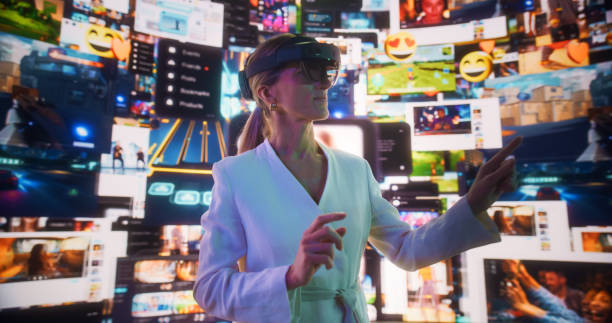
AR / VR (XR) Developers are technical and creative experts responsible for building applications that blend digital content with the real world (AR) or create fully immersive virtual environments (VR). Their role includes programming 3D interactions, optimizing performance for headsets or mobile devices, and addressing challenges ranging from user experience to hardware limitations. They combine skills in software development with an understanding of spatial computing, working across various settings to craft engaging experiences. As key contributors to digital transformation, AR/VR (XR) Developers drive innovation and user engagement in a landscape increasingly focused on immersive technologies.
| Route | Steps |
| Route 1 | 1. 10+2 in Science stream (preferably with Mathematics or Computer Science) |
| 2. Bachelor’s degree in Computer Science, Game Development, or related field (3-4 years) | |
| 3. Internship or practical training (3-6 months) | |
| 4. Practice as Junior AR/VR Developer or Game Developer | |
| Route 2 | 1. 10+2 in any stream |
| 2. Diploma or Certificate in Game Development or XR Technologies (6 months-2 years) | |
| 3. Build hands-on experience through projects | |
| 4. Work as Freelance or Junior XR Technician | |
| Route 3 | 1. 10+2 in Science stream |
| 2. Bachelor’s degree in Computer Science or Multimedia (3-4 years) | |
| 3. Master’s degree in Virtual Reality or Interactive Media (2 years) | |
| 4. Work as Senior AR/VR Developer or XR Lead | |
| Route 4 | 1. 10+2 in any stream |
| 2. Advanced international training or certification in AR/VR Development (1-2 years) | |
| 3. Master’s or specialized courses as per country requirements | |
| 4. Practice abroad or in India |
| Institute | Course/Program | Official Link |
| Indian Institute of Technology (IIT), Bombay | B.Tech/M.Tech in Computer Science | https://www.iitb.ac.in/ |
| Indian Institute of Technology (IIT), Delhi | B.Tech/M.Tech in Information Technology | https://home.iitd.ac.in/ |
| National Institute of Technology (NIT), Trichy | B.Tech in Computer Science and Engineering | https://www.nitt.edu/ |
| Birla Institute of Technology and Science (BITS), Pilani | B.E./M.E. in Computer Science | https://www.bits-pilani.ac.in/ |
| Indian Institute of Information Technology (IIIT), Hyderabad | B.Tech/M.Tech in IT and Systems | https://www.iiit.ac.in/ |
| Arena Animation, Multiple Locations | Diploma in Game Development and XR | https://www.arena-multimedia.com/ |
| MAAC (Maya Academy of Advanced Cinematics), Multiple Locations | Advanced Diploma in AR/VR Development | https://www.maacindia.com/ |
| Vellore Institute of Technology (VIT), Vellore | B.Tech in Computer Science (Gaming Focus) | https://vit.ac.in/ |
| Amity University, Noida | B.Tech in Computer Science (AR/VR Focus) | https://www.amity.edu/ |
| SRM Institute of Science and Technology, Chennai | B.Tech in Software Engineering | https://www.srmist.edu.in/ |
| Institution | Course | Country | Official Link |
| Massachusetts Institute of Technology (MIT) | BS/MS in Computer Science (Media Lab) | USA | https://www.mit.edu/ |
| Stanford University | BS/MS in Computer Science (VR Focus) | USA | https://www.stanford.edu/ |
| University of Southern California (USC) | BS/MS in Interactive Media & Games | USA | https://www.usc.edu/ |
| University College London (UCL) | MSc in Virtual Reality | UK | https://www.ucl.ac.uk/ |
| University of Toronto | BSc/MSc in Computer Science (Graphics Focus) | Canada | https://www.utoronto.ca/ |
| Nanyang Technological University (NTU) | BFA in Digital Animation (XR Focus) | Singapore | https://www.ntu.edu.sg/ |
| University of Melbourne | Bachelor/Master of Information Technology | Australia | https://www.unimelb.edu.au/ |
| Carnegie Mellon University | BS/MS in Human-Computer Interaction | USA | https://www.cmu.edu/ |
| ETH Zurich | BSc/MSc in Computer Science (Graphics) | Switzerland | https://ethz.ch/en.html |
| Aalto University | MSc in Game Design and Production | Finland | https://www.aalto.fi/en |
India:
International:
Junior AR/VR Developer → AR/VR Developer → Senior AR/VR Developer → XR Lead Developer → XR Project Manager → XR Technical Director → Chief Technology Officer (CTO) → XR Consultant
| India | International |
| Tata Consultancy Services (TCS) | Meta (Oculus), USA |
| Infosys | Microsoft (HoloLens), USA |
| Wipro | Google (ARCore), USA |
| HCL Technologies | Apple (ARKit), USA |
| Tech Mahindra | Unity Technologies, USA |
| Cognizant Technology Solutions | Epic Games (Unreal Engine), USA |
| Accenture India | HTC Vive, Taiwan |
| Capgemini India | Sony (PlayStation VR), Japan |
| Larsen & Toubro Infotech (LTI) | Magic Leap, USA |
| Mindtree | Niantic (Pokémon GO), USA |
| Pros | Cons |
| Opportunity to work on cutting-edge immersive projects | High-pressure environment due to tight project deadlines |
| High demand for XR developers in diverse industries | Long hours, often requiring overtime during project crunch times |
| Rewarding impact through creating transformative experiences | Risk of mental fatigue from continuous technical and creative tasks |
| Diverse career paths across gaming, education, and healthcare | Limited job security in freelance or project-based roles |
| Strong potential for growth with advancements in XR tools | Dependency on hardware compatibility and user feedback |
| Career Level | India (₹ per annum) | International (USD per annum) |
| Junior AR/VR Developer (Early Career) | 3,00,000 - 5,00,000 | 40,000 - 60,000 |
| AR/VR Developer (Mid-Career) | 5,00,000 - 8,00,000 | 60,000 - 80,000 |
| Senior AR/VR Developer/XR Lead | 8,00,000 - 12,00,000 | 80,000 - 110,000 |
| XR Project Manager/Technical Director | 12,00,000 - 18,00,000 | 110,000 - 140,000 |
| Chief Technology Officer/XR Consultant | 18,00,000+ | 140,000+ |
Note: Salaries vary based on location, experience, employer, and specialization. International figures are approximate and depend on the country and sector.
A career as an AR / VR (XR) Developer offers a unique opportunity to contribute to immersive storytelling, technological advancement, and user engagement by crafting digital experiences for diverse applications. From enhancing gaming to revolutionizing education and healthcare, XR Developers play a pivotal role in modern innovation and technology landscapes. This field combines technical expertise, creative skills, and a commitment to solving complex challenges, offering diverse paths in gaming, education, healthcare, and beyond. For those passionate about immersive technologies, adapting to evolving tools, and addressing user needs in an era of rapid digital evolution, a career as an AR / VR (XR) Developer provides an intellectually stimulating and professionally rewarding journey with the potential to make significant contributions to society by advancing the art and application of extended reality worldwide.


Specialists oversee complex XR projects with exceptional competence. They integrate deep technical knowledge with expertise in specific XR domains...
0.0LPA

Leaders focus on guiding XR teams and shaping long-term project visions. They provide strategic oversight by aligning applications with user...
0.0LPA

Top-tier professionals manage entire XR pipelines and creative strategies for organizations. They handle budgets, staffing, and technical...
0.0LPA
Take the next step and explore more about AR - VR (XR) Developer.
Explore similar career paths that might interest you