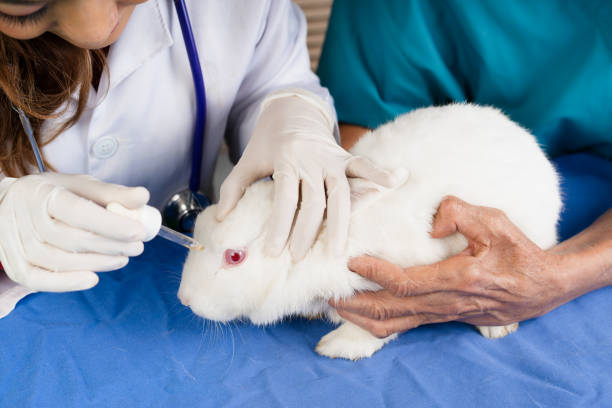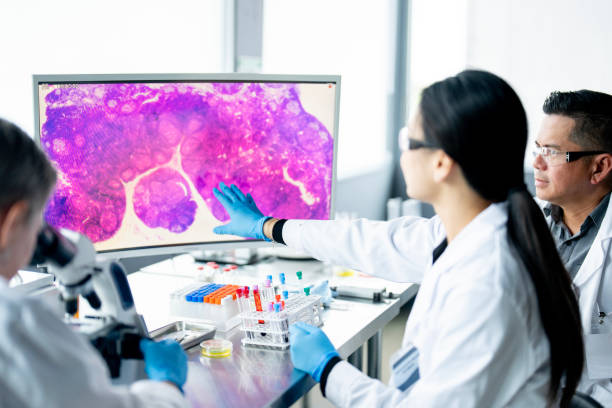

Biological Scientists are research-driven experts responsible for investigating the structure, function, growth, and evolution of living organisms, including plants, animals, and microorganisms. Their role includes conducting experiments, analyzing data, developing new technologies or treatments, and publishing findings, often under controlled laboratory or field conditions. They combine deep scientific knowledge with analytical skills, working across diverse settings to push the boundaries of life sciences. As key contributors to societal progress, they enable breakthroughs in medicine, sustainability, and conservation in a landscape increasingly focused on health and environmental solutions.
- Research and Experimentation
- Design and conduct experiments to study biological processes and organisms
- Use advanced techniques like microscopy, DNA sequencing, and bioinformatics for analysis
- Data Analysis and Interpretation
- Analyze experimental data to draw conclusions about biological phenomena
- Use statistical tools to validate research findings and identify trends
- Publication and Dissemination
- Write research papers and reports for publication in scientific journals
- Present findings at conferences and seminars to share knowledge with peers
- Biotechnology Development
- Develop new products or processes, such as drugs, vaccines, or genetically modified organisms
- Collaborate with industries to apply biological research to practical solutions
- Environmental Studies
- Investigate the impact of environmental factors on ecosystems and biodiversity
- Recommend conservation strategies based on biological research
- Health and Disease Research
- Study pathogens, genetic disorders, and cellular mechanisms to improve health outcomes
- Contribute to the development of medical treatments and diagnostic tools
- Grant Writing and Funding
- Prepare proposals to secure funding for research projects from government or private sources
- Manage budgets and resources for scientific studies
- Mentorship and Education
- Supervise students or junior researchers in laboratory and field settings
- Teach biological sciences at universities or educational institutions
| Route | Steps |
| Route 1 | 1. 10+2 with Physics, Chemistry, Biology (PCB) 2. Bachelor’s degree in Biology or Life Sciences (3-4 years) 3. Internship or research training (3-6 months) 4. Practice as Junior Biological Scientist |
| Route 2 | 1. 10+2 with PCB 2. Bachelor’s degree in Biology or Biotechnology (3-4 years) 3. Master’s degree in Biological Sciences or related field (2 years) 4. Work as Biological Scientist or Researcher |
| Route 3 | 1. 10+2 with PCB 2. Bachelor’s degree in Life Sciences (3-4 years) 3. Master’s degree in Biology or specialized field (2 years) 4. Ph.D. in Biological Sciences (3-5 years) 5. Practice as Senior Researcher or Academic |
| Route 4 | 1. 10+2 with PCB 2. Advanced international training or certification in Biological Sciences (1-2 years) 3. Master’s or Ph.D. as per country requirements 4. Practice abroad or in India |
- Mandatory research training during degree programs in laboratories or field stations
- Rotations in research centers for hands-on experience with biological studies
- Internships under senior scientists for exposure to real-time research projects
- Observerships in biotechnology labs for experience in molecular techniques
- Participation in mock experiments for practical skill development in research scenarios
- Training in field studies through real-world ecological or biological surveys
- Exposure to ethical research protocols during internships
- Research projects on genetics, microbiology, or ecology during training
- Public outreach initiatives for assisting in community science programs
- International research attachments for global exposure to biological practices
- Certificate in Molecular Biology or Bioinformatics
- Bachelor’s in Biology, Biotechnology, or Life Sciences
- Master’s in Biological Sciences, Microbiology, or Genetics
- Ph.D. in Biological Sciences or Specialized Field
- Specialization in Cell Biology
- Certification in Genetic Engineering
- Workshops on CRISPR and Gene Editing Technologies
- Training in Ecology and Conservation Biology
- Specialization in Immunology
- Certification in Computational Biology
| Institute | Course/Program | Official Link |
| Indian Institute of Science (IISc), Bangalore | M.Sc./Ph.D. in Biological Sciences | https://www.iisc.ac.in/ |
| Jawaharlal Nehru University (JNU), New Delhi | M.Sc./Ph.D. in Life Sciences | https://www.jnu.ac.in/ |
| Tata Institute of Fundamental Research (TIFR), Mumbai | M.Sc./Ph.D. in Biology | https://www.tifr.res.in/ |
| University of Delhi, Delhi | M.Sc./Ph.D. in Biological Sciences | https://www.du.ac.in/ |
| Banaras Hindu University (BHU), Varanasi | M.Sc./Ph.D. in Life Sciences | https://www.bhu.ac.in/ |
| University of Hyderabad, Hyderabad | M.Sc./Ph.D. in Biotechnology | https://www.uohyd.ac.in/ |
| Indian Institute of Technology (IIT), Bombay | M.Sc./Ph.D. in Biosciences | https://www.iitb.ac.in/ |
| National Centre for Biological Sciences (NCBS), Bangalore | M.Sc./Ph.D. in Biology | https://www.ncbs.res.in/ |
| University of Calcutta, Kolkata | M.Sc./Ph.D. in Life Sciences | https://www.caluniv.ac.in/ |
| Anna University, Chennai | M.Sc./Ph.D. in Biotechnology | https://www.annauniv.edu/ |
| Institution | Course | Country | Official Link |
| Harvard University | Biological Sciences Programs | USA | https://www.harvard.edu/ |
| Massachusetts Institute of Technology (MIT) | Biology and Biotechnology Programs | USA | https://www.mit.edu/ |
| Stanford University | Life Sciences and Biology Programs | USA | https://www.stanford.edu/ |
| University of Oxford | Biological Sciences Programs | UK | https://www.ox.ac.uk/ |
| University of Cambridge | Natural Sciences (Biology) Programs | UK | https://www.cam.ac.uk/ |
| California Institute of Technology (Caltech) | Biology and Bioengineering Programs | USA | https://www.caltech.edu/ |
| University of California, Berkeley | Biological Sciences Programs | USA | https://www.berkeley.edu/ |
| ETH Zurich | Life Sciences Programs | Switzerland | https://www.ethz.ch/ |
| University of Tokyo | Biological Sciences Programs | Japan | https://www.u-tokyo.ac.jp/ |
| National University of Singapore (NUS) | Life Sciences Programs | Singapore | https://www.nus.edu.sg/ |
India:
- JNU CEEB (Combined Entrance Examination for Biotechnology): Conducted by Jawaharlal Nehru University for admission to M.Sc. Biotechnology programs across participating universities.
- CSIR-UGC NET (National Eligibility Test): For postgraduate research roles, junior research fellowships, and lectureship in biological sciences.
- ICAR AIEEA (All India Entrance Examination for Admission): Conducted by the Indian Council of Agricultural Research for admissions in life sciences and biotechnology programs.
International:
- TOEFL (Test of English as a Foreign Language): Minimum score of 80-100 required for non-native speakers applying to programs in English-speaking countries.
- IELTS (International English Language Testing System): Minimum score of 6.0-7.0 required for admission to universities in the UK, Australia, and other English-speaking regions.
- PTE Academic (Pearson Test of English Academic): Accepted by many international institutes as an alternative to TOEFL or IELTS for English proficiency.
- Duolingo English Test: Accepted by some institutions as a convenient alternative for English language proficiency testing.
Trainee → Junior Biological Scientist → Senior Biological Scientist → Research Scientist → Biotechnology Specialist → Project Manager → Research Director → Biological Science Consultant
- Research institutions for biological and genetic studies
- Universities for academic research and teaching in life sciences
- Government agencies for policy and public health research initiatives
- Biotechnology companies for product development and innovation
- Non-governmental organizations (NGOs) for conservation and sustainability projects
- Pharmaceutical firms for drug discovery and medical research
- Environmental agencies for biodiversity and ecological research
- Healthcare organizations for disease research and diagnostics
- Private research consultancies for specialized biological advisory
- International development agencies for global health and environmental projects
| India | International |
| Indian Council of Medical Research (ICMR) | National Institutes of Health (NIH), USA |
| Department of Biotechnology (DBT), India | World Health Organization (WHO), Switzerland |
| Council of Scientific and Industrial Research (CSIR) | Centers for Disease Control and Prevention (CDC), USA |
| Tata Institute of Fundamental Research (TIFR) | Pfizer, USA |
| Biocon Limited | Novartis, Switzerland |
| Serum Institute of India | Roche, Switzerland |
| Dr. Reddy’s Laboratories | Johnson & Johnson, USA |
| Cipla Limited | GlaxoSmithKline (GSK), UK |
| Bharat Biotech | Merck & Co., USA |
| National Centre for Biological Sciences (NCBS) | Amgen, USA |
| Pros | Cons |
| Opportunity to contribute to advancements in health and sustainability | High-pressure environment due to research deadlines and funding constraints |
| High demand for biological scientists in biotechnology and healthcare | Long hours in labs or fields, often with repetitive experimental tasks |
| Rewarding impact on society through innovative scientific solutions | Risk of ethical dilemmas in genetic research and biotechnology |
| Diverse career paths across research, industry, and academia | Limited public recognition compared to other scientific fields |
| Strong potential for growth with advancements in life sciences | Dependency on research grants and fluctuating funding availability |
- Growing integration of gene-editing technologies like CRISPR for biological research
- Rising demand for biological scientists due to global health and environmental challenges
- Advancements in synthetic biology for creating innovative solutions
- Heightened focus on personalized medicine through genetic research
- Expansion of computational biology for analyzing large biological datasets
- Development of sustainable biotechnologies through biological research
- Increased emphasis on bioinformatics for managing and interpreting biological data
- Enhanced collaboration between biological scientists and industry for innovation
- Growing need for continuous training to master emerging scientific tools
- Focus on global ethical standards to align biological research practices internationally
| Career Level | India (₹ per annum) | International (USD per annum) |
| Trainee/Junior Biological Scientist (Early Career) | 3,00,000 - 5,00,000 | 35,000 - 50,000 |
| Senior Biological Scientist (Mid-Career) | 5,00,000 - 8,00,000 | 50,000 - 70,000 |
| Research Scientist | 8,00,000 - 12,00,000 | 70,000 - 90,000 |
| Biotechnology Specialist/Project Manager | 12,00,000 - 18,00,000 | 90,000 - 120,000 |
| Research Director/Consultant | 18,00,000+ | 120,000+ |
| Note: Salaries vary based on location, experience, employer, and specialization. International figures are approximate and depend on the country and sector. |
- Bioinformatics Software for genetic sequence analysis (e.g., BLAST, GenBank)
- Gene-Editing Tools like CRISPR-Cas9 design software for genetic modification
- Data Analysis Tools like SPSS or R for statistical research analysis
- Laboratory Information Management Systems (LIMS) for managing experimental data
- Molecular Modelling Software for studying biological structures
- Teleconferencing tools like Zoom for research collaboration and presentations
- Scientific databases for accessing biological research (e.g., PubMed)
- Microsoft Office Suite for documentation and research report preparation
- Simulation software for modelling biological processes
- Project management tools for coordinating research timelines and resources
- Indian Society of Cell Biology (ISCB)
- American Society for Cell Biology (ASCB)
- Indian Science Congress Association (ISCA)
- Federation of American Societies for Experimental Biology (FASEB)
- Society for Biotechnology, India (SBI)
- European Molecular Biology Organization (EMBO)
- International Union of Biological Sciences (IUBS)
- Biotechnology Industry Organization (BIO), USA
- Association of Microbiologists of India (AMI)
- Global Forum on Biotechnology Research
- Dr. Rosalind Franklin (Historical, UK): Known for her critical role in discovering DNA structure in the 1950s. Her work laid the foundation for modern genetics. Her contributions impact biological sciences globally.
- Dr. M.S. Swaminathan (Contemporary, India): Pioneer of the Green Revolution in India since the 1960s. His research on agricultural biology inspired life science advancements. His legacy influences sustainability worldwide.
- Dr. Deepak Pental (Contemporary, India): Renowned for his work on genetically modified crops since the 1990s. His contributions to biotechnology are significant in India. His research impacts biological applications nationally and globally.
- Dr. James Watson (Historical, USA): Co-discoverer of DNA structure in the 1950s. His biological innovations revolutionized molecular biology. His impact continues to shape life sciences worldwide.
- Dr. Jennifer Doudna (Contemporary, USA): Co-developer of CRISPR-Cas9 since the 2010s. Her gene-editing technology transformed biological research. Her contributions revolutionize life sciences internationally.
- Dr.VenkatramanRamakrishnan (Contemporary, India/UK): Nobel laureate for ribosome structure research since the 2000s. His work on molecular biology advances biological understanding. His impact strengthens scientific research globally.
- Dr. Elizabeth Blackburn (Contemporary, Australia/USA): Known for telomere research since the 1980s. Her discoveries in cellular aging are a cornerstone of biology. Her efforts improve health research globally.
- Dr.Swapan K. Datta (Contemporary, India): Known for his work on biofortified crops since the 1990s. His research addresses nutritional challenges through biology. His impact strengthens biotechnology in India and beyond.
- Dr. Shinya Yamanaka (Contemporary, Japan): Pioneer of induced pluripotent stem cells since the 2000s. His work on regenerative biology shapes medical research. His contributions advance global health solutions.
- Dr. Ada Yonath (Contemporary, Israel): Nobel laureate for ribosome crystallography since the 2000s. Her research on protein synthesis enhances biological science. Her insights drive molecular discoveries worldwide.
- Build a strong foundation in biology, chemistry, and mathematics to understand life science systems.
- Seek early exposure to research environments through internships to confirm interest in the field.
- Prepare thoroughly for entrance exams or certification requirements specific to your chosen program or region.
- Pursue advanced certifications in molecular biology or bioinformatics to gain expertise.
- Stay updated on advancements in biological technology by attending workshops and conferences.
- Develop hands-on skills in laboratory techniques through practical research training.
- Engage in sustainability or health research projects to build real-world experience.
- Join professional associations like the American Society for Cell Biology (ASCB) for networking and resources.
- Work on precision and analytical thinking to ensure accurate experiments and research outcomes.
- Explore international research programs for exposure to diverse biological practices and standards.
- Volunteer in research labs or field stations to understand scientific challenges and build experience.
- Cultivate adaptability to handle complex scientific and ethical challenges.
- Attend continuing education programs to stay abreast of evolving biotechnological methods and tools.
- Build a network with researchers, biotechnologists, and industry professionals for collaborative efforts.
- Develop resilience to manage the intellectual and funding demands of research work.
- Balance lab work with continuous learning to adapt to rapid advancements in biological sciences.
A career as a Biological Scientist offers a unique opportunity to contribute to human health, environmental sustainability, and scientific innovation by exploring the mysteries of life at the molecular, cellular, and ecological levels. From developing life-saving treatments to conserving biodiversity, Biological Scientists play a pivotal role in modern science and technology. This field combines intellectual rigor, experimental research, and a commitment to global well-being, offering diverse paths in academia, industry, and policy development. For those passionate about solving biological challenges, adapting to global health and environmental issues, and addressing critical societal needs in an era of rapid scientific progress, a career as a Biological Scientist provides an intellectually stimulating and professionally rewarding journey with the potential to make significant contributions to society by advancing our understanding and application of life sciences worldwide.