
Advertising Professional
Advertising Executive
Explore Career
A Cinematographer, also known as a Director of Photography (DP), plays a pivotal role in visual storytelling within the film and television industry. They are responsible for capturing the essence of a narrative through the lens, using techniques such as lighting, camera angles, and movement to convey mood, emotion, and the story's visual language. Working closely with directors, cinematographers ensure the visual style aligns with the intended vision, managing everything from camera selection to the final color grade. Their work spans various settings, from feature films to commercials, requiring both technical expertise and creative vision to bring stories to life visually.
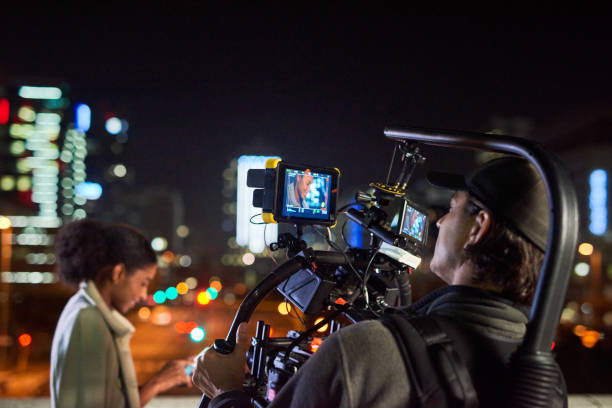
Cinematographers are the architects of a film's visual narrative. They translate the director's vision into a cohesive visual style, overseeing the camera department, lighting design, and ensuring the technical quality of the visuals. Their responsibilities include selecting and setting up cameras, designing lighting schemes to enhance the mood and support the narrative, framing shots for visual impact, and working with post-production teams to achieve the intended color palette. Cinematographers must be adept at problem-solving, adapting to various shooting conditions, and maintaining creative integrity while meeting production deadlines and budgetary constraints.
| Route | Steps |
| Route 1 | 1. 10+2 in any stream, preferably with an interest in arts or media. 2. Bachelor’s degree (3-4 yrs) in Film Studies, Cinematography, or related fields. 3. Internships or assistant roles on film sets for practical experience. 4. Optional Master’s degree (1-2 yrs) in Cinematography or Visual Arts. |
| Route 2 | 1. 10+2 in any stream. 2. Diploma or Certificate courses in Cinematography or Photography (1-2 yrs). 3. Entry-level roles like camera assistant or grip for on-set experience. 4. Professional workshops or short courses focused on cinematography techniques. |
| Route 3 | 1. 10+2 in any stream. 2. Self-study or online courses in cinematography, lighting, and camera operation. 3. Build a portfolio through personal projects or short films. 4. Network with industry professionals and seek mentorship. 5. Freelance work or entry-level positions in related fields. |
| Route 4 | 1. 10+2 in any stream. 2. Bachelor’s degree in a related field (e.g., Fine Arts, Visual Communication). 3. Specialized courses or workshops in cinematography. 4. Assistant roles or second unit work on professional film sets. 5. Advanced certifications or further education in film production. |
| Institute | Course/Program | Official Link |
| Film and Television Institute of India (FTII), Pune | Postgraduate Diploma in Cinematography | ftii.ac.in |
| Satyajit Ray Film & Television Institute (SRFTI), Kolkata | 3-Year PG Diploma in Cinematography | srfti.ac.in |
| Whistling Woods International, Mumbai | Bachelor of Fine Arts in Cinematography | whistlingwoods.net |
| National Institute of Design (NID), Ahmedabad | Film and Video Communication | nid.edu |
| Annapurna International School of Film and Media (AISFM), Hyderabad | Diploma in Cinematography | aisfm.edu.in |
| Asian Academy of Film & Television (AAFT), Noida | Diploma in Cinematography | aaft.com |
| Mumbai Film School | Diploma in Cinematography | mumbaifilmschool.com |
| L.V. Prasad Film & TV Academy, Chennai | PG Diploma in Cinematography | lvprasad.org |
| Zee Institute of Media Arts (ZIMA), Mumbai | Diploma in Cinematography | zima.edu.in |
| Film School of Los Angeles India, Mumbai | Certificate in Cinematography | filmschoolla.com |
| Institution | Course | Country | Official Link |
| American Film Institute (AFI) | MFA in Cinematography | USA | afi.com |
| University of Southern California (USC) School of Cinematic Arts | MFA in Cinematography | USA | cinema.usc.edu |
| New York University (NYU) Tisch School of the Arts | MFA in Cinematography | USA | tisch.nyu.edu |
| National Film and Television School (NFTS), UK | MA in Cinematography | UK | nfts.co.uk |
| Australian Film Television and Radio School (AFTRS) | Master of Arts in Cinematography | Australia | aftrs.edu.au |
| Vancouver Film School (VFS) | Film Production Program | Canada | vfs.edu |
| Beijing Film Academy | Cinematography Department | China | bfa.edu.cn |
| École Nationale Supérieure Louis-Lumière | Cinéma et Audiovisuel | France | ens-louis-lumiere.fr |
| Filmakademie Baden-Württemberg | Cinematography Program | Germany | filmakademie.de |
| London Film School | MA in Filmmaking (Cinematography) | UK | lfs.org.uk |
Camera Assistant → Second Unit Cinematographer → Director of Photography (DP) → Cinematographer → Director (optional) → Creative Consultant
| India | International |
| Yash Raj Films | Universal Pictures |
| Dharma Productions | Warner Bros. |
| Red Chillies Entertainment | Paramount Pictures |
| Excel Entertainment | Sony Pictures |
| Aamir Khan Productions | 20th Century Fox |
| Rajkumar Hirani Films | DreamWorks SKG |
| Anurag Kashyap Films Pvt. Ltd. | Lucasfilm Ltd. |
| Viacom18 Motion Pictures | Marvel Studios |
| Balaji Motion Pictures | Netflix |
| T-Series | Amazon Studios |
| Pros | Cons |
| Creative fulfillment through visual storytelling. | Long and irregular working hours, often under pressure. |
| High demand for visually compelling content across media. | Physically demanding work, requiring strength and endurance. |
| Opportunity to work on diverse projects, from indie films to blockbusters. | High competition for top-tier projects and recognition. |
| Potential for international work and travel. | Budget constraints can limit creative freedom. |
| Collaboration with talented artists and filmmakers. | The need to constantly adapt to new technologies and trends. |
| Career Level | India (₹ per annum) | International (US$ per annum) |
| Camera Assistant | 3,00,000 - 6,00,000 | $30,000 - $50,000 |
| Second Unit Cinematographer | 6,00,000 - 12,00,000 | $50,000 - $90,000 |
| Director of Photography | 12,00,000 - 25,00,000 | $90,000 - $150,000 |
| Cinematographer | 25,00,000 - 50,00,000+ | $150,000 - $300,000+ |
| Director (optional) | 50,00,000 - 1,00,00,000+ | $300,000 - $1,000,000+ |
| Creative Consultant | Variable, project-based | Variable, project-based |
Becoming a cinematographer involves mastering both the technical aspects of filmmaking and the art of visual storytelling. It's a career path that demands dedication, creativity, and continuous learning. With the rise of digital platforms and the ever-evolving technology in the industry, the demand for skilled cinematographers continues to grow, offering both challenges and opportunities for those passionate about visual storytelling.


Assists the cinematographer with camera setups, lens changes, and equipment management. They gain hands-on experience with camera operations....
0.0LPA

Works on secondary scenes or shots, often under the supervision of the main DP. They develop their visual storytelling skills. Their efforts...
0.0LPA

Oversees the entire camera and lighting department, translating the director's vision into visual storytelling. They make creative and technical...
0.0LPA
Take the next step and explore more about Cinematographer.
Explore similar career paths that might interest you