Academic Writer
Academic Writer (Entry to Mid-Level)
Explore Career
A Curator is a professional who manages, organizes, and presents collections of art, artifacts, or cultural objects in museums, galleries, libraries, or other institutions, with the aim of preserving heritage, educating the public, and fostering cultural appreciation. They work in museums, art galleries, historical sites, archives, or private collections, collaborating with historians, artists, conservators, and educators. Curators play a crucial role in safeguarding cultural treasures, curating exhibitions, and bridging history with contemporary audiences in a sector focused on cultural preservation, education, and public engagement.
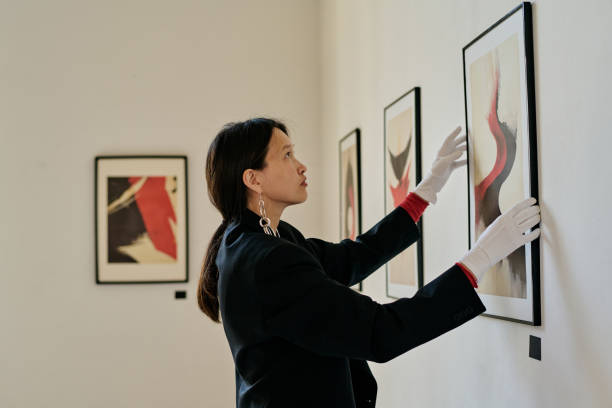
Curators are scholarly and creative professionals responsible for acquiring, cataloguing, and interpreting collections, as well as designing exhibitions that tell compelling stories about history, art, or science. Their role involves research, conservation, and public outreach, often working in museum environments, academic institutions, or cultural organizations. They combine skills in history, art, research, and storytelling to address challenges like audience engagement, artifact preservation, and cultural relevance. As key contributors to cultural education, they help shape public understanding of heritage and identity in an industry increasingly focused on digital exhibitions, accessibility, and global cultural exchange.
| Route | Steps |
| Route 1 | 1. 10+2 in any stream (preferably with History, Arts, or Literature) |
| 2. Bachelor’s degree in History, Art History, or Museum Studies (3-4 years) | |
| 3. Internship or volunteer work in museums/galleries (3-6 months) | |
| 4. Practice as Assistant Curator | |
| Route 2 | 1. 10+2 in any stream |
| 2. Bachelor’s degree in History, Art History, or related field (3-4 years) | |
| 3. Master’s degree in Museum Studies or Art History (1-2 years) | |
| 4. Work as Curator or Exhibition Coordinator | |
| Route 3 | 1. 10+2 in any stream |
| 2. Bachelor’s degree in History or Art History (3-4 years) | |
| 3. Master’s degree in Museum Studies or Cultural Heritage (1-2 years) | |
| 4. Ph.D. in Art History or Museum Studies (3-5 years) | |
| 5. Practice as Senior Curator or Academician | |
| Route 4 | 1. 10+2 in any stream |
| 2. Short-term certification or diploma in Museum Studies or Curation (6-12 months) | |
| 3. Internship or entry-level role in cultural institutions | |
| 4. Practice as Curator domestically or internationally |
| Institute | Course/Program | Official Link |
| National Museum Institute, New Delhi | MA/Ph.D. in Art History & Conservation | http://nmi.gov.in/ |
| University of Delhi, Delhi | MA/Ph.D. in History & Art History | https://www.du.ac.in/ |
| Jawaharlal Nehru University (JNU), New Delhi | MA/Ph.D. in History & Arts | https://www.jnu.ac.in/ |
| Banaras Hindu University (BHU), Varanasi | MA/Ph.D. in Art History & Archaeology | https://www.bhu.ac.in/ |
| University of Mumbai, Mumbai | MA in History & Archaeology | https://mu.ac.in/ |
| University of Calcutta, Kolkata | MA/Ph.D. in Museology | https://www.caluniv.ac.in/ |
| Christ University, Bangalore | MA in Cultural Studies | https://www.christuniversity.in/ |
| Amity University, Noida | MA in Heritage Management | https://www.amity.edu/ |
| IGNOU (Indira Gandhi National Open University), New Delhi | MA in History & Certificate in Museology | http://www.ignou.ac.in/ |
| Chhatrapati Shivaji Maharaj Vastu Sangrahalaya (CSMVS), Mumbai | Diploma in Museology | https://www.csmvs.in/ |
| Institution | Course | Country | Official Link |
| University College London (UCL) | MA in Museum Studies | UK | https://www.ucl.ac.uk/ |
| University of Leicester | MA in Museum Studies | UK | https://le.ac.uk/ |
| New York University (NYU) | MA in Museum Studies | USA | https://www.nyu.edu/ |
| Harvard University (Extension School) | Certificate in Museum Studies | USA | https://extension.harvard.edu/ |
| University of Sydney | Master of Museum & Heritage Studies | Australia | https://www.sydney.edu.au/ |
| University of Toronto | Master of Museum Studies | Canada | https://www.utoronto.ca/ |
| Sorbonne University | MA in Art History & Museology | France | https://www.sorbonne-universite.fr/ |
| University of Amsterdam | MA in Heritage & Museum Studies | Netherlands | https://www.uva.nl/ |
| Humboldt University of Berlin | MA in Cultural History & Museum Studies | Germany | https://www.hu-berlin.de/ |
| King’s College London | MA in Cultural & Creative Industries | UK | https://www.kcl.ac.uk/ |
India:
International:
Trainee → Assistant Curator → Curator → Senior Curator → Museum Director → Cultural Consultant → Academician/Professor → Heritage Advisor
| India | International |
| National Museum, New Delhi | The Metropolitan Museum of Art, USA |
| Chhatrapati Shivaji Maharaj Vastu Sangrahalaya (CSMVS), Mumbai | The British Museum, UK |
| Indian Museum, Kolkata | The Louvre Museum, France |
| Salar Jung Museum, Hyderabad | Smithsonian Institution, USA |
| Victoria Memorial Hall, Kolkata | Victoria and Albert Museum, UK |
| Nehru Memorial Museum & Library, New Delhi | Getty Museum, USA |
| National Gallery of Modern Art (NGMA), New Delhi | Museum of Modern Art (MoMA), USA |
| Asiatic Society of Mumbai | Rijksmuseum, Netherlands |
| Crafts Museum, New Delhi | Hermitage Museum, Russia |
| IGNCA (Indira Gandhi National Centre for the Arts), New Delhi | Tate Modern, UK |
| Pros | Cons |
| Opportunity to preserve and share cultural heritage with the public | Often requires extensive research and documentation, which can be time-intensive |
| High intellectual satisfaction in working with history, art, and culture | Limited job openings in prestigious institutions, leading to high competition |
| Rewarding impact on education and cultural appreciation through exhibitions | Can involve physically demanding tasks like handling artifacts or long hours during exhibitions |
| Diverse career paths across museums, academia, and consulting roles | Risk of funding shortages for projects, affecting exhibition scope or conservation efforts |
| Strong potential for growth with increasing focus on digital curation and heritage tourism | Limited public recognition compared to other creative or academic professions |
| Career Level | India (₹ per annum) | International (USD per annum) |
| Trainee/Assistant Curator (Early Career) | 2,50,000 - 5,00,000 | 30,000 - 45,000 |
| Curator (Mid-Career) | 5,00,000 - 10,00,000 | 45,000 - 70,000 |
| Senior Curator/Museum Director | 10,00,000 - 15,00,000 | 70,000 - 100,000 |
| Cultural Consultant/Heritage Advisor | 15,00,000 - 20,00,000 | 100,000 - 130,000 |
| Academician/Professor | 12,00,000+ | 90,000+ |
| Note: Salaries may vary based on location, employer, experience, and specialization. |
A career as a Curator offers an unparalleled chance to safeguard the past while inspiring future generations through the thoughtful presentation of cultural and historical treasures. Curators are stewards of humanity’s legacy, weaving narratives that connect artifacts to modern contexts through exhibitions, research, and public programs. This profession merges intellectual depth with creative expression, providing pathways in museums, heritage sites, and digital platforms. For individuals driven by a passion for history, a dedication to preserving cultural identity, and an eagerness to engage diverse audiences in an era of technological and societal transformation, becoming a Curator is a profoundly fulfilling journey. It holds the power to enrich communities by deepening appreciation for shared heritage and fostering dialogue across cultures worldwide.


Experienced professionals manage exhibitions and collections with high accuracy, using advanced research techniques. They offer expertise in...
0.0LPA
Specialists oversee major collections and exhibitions with exceptional competence. They integrate deep historical knowledge with expertise in...
0.0LPA
Senior professionals specialize in leading cultural institutions, ensuring innovation. They provide leadership by establishing curatorial vision...
0.0LPA
Take the next step and explore more about Curator.
Explore similar career paths that might interest you