Overview
A Dairy Production Technologist is a skilled professional who specializes in the production, processing, and quality control of dairy products such as milk, cheese, butter, yogurt, and ice cream. This role involves operating machinery, ensuring hygiene standards, monitoring production processes, and maintaining product quality in dairy plants or farms. In India, with its position as one of the largest milk producers globally and a strong dairy industry supported by cooperatives and private players, the demand for trained dairy technologists is significant. This vocational career offers accessible entry points, opportunities for technical expertise, and the chance to contribute to a vital sector of the economy. This detailed guide provides the latest information (based on trends up to the most recent data, projected to the current year of 2025) on job roles, education, salary, and prospects within India for this vocational career.
Roles and Responsibilities
a) Production and Processing Responsibilities:
- Operate and maintain dairy processing equipment such as pasteurizers, homogenizers, and separators to produce milk and other dairy products.
- Monitor production stages, including milk collection, storage, processing, and packaging, to ensure efficiency and adherence to timelines.
- Follow standard operating procedures (SOPs) for processing dairy products like cheese, butter, ghee, or curd, ensuring consistency in output.
- Adjust machinery settings or processing parameters to meet product specifications, such as fat content or texture, based on recipes or standards.
- Assist in the development of new dairy products by conducting trials or experiments under the guidance of senior technologists or supervisors.
b) Quality Control and Safety Responsibilities:
- Conduct regular tests on raw milk and finished products to check for quality parameters like purity, fat content, microbial load, and shelf life.
- Ensure compliance with food safety standards, such as FSSAI (Food Safety and Standards Authority of India) regulations, to prevent contamination or spoilage.
- Maintain hygiene and sanitation in production areas by cleaning equipment, sterilizing tools, and adhering to Good Manufacturing Practices (GMP).
- Record data on production batches, quality test results, and equipment maintenance for traceability and regulatory audits.
- Identify and report any deviations in product quality or equipment performance to prevent production losses or safety hazards.
c) Administrative and Support Responsibilities:
- Assist in inventory management by tracking raw materials (e.g., milk, additives) and packaging supplies to avoid shortages during production.
- Coordinate with farm suppliers or logistics teams to ensure timely delivery of raw milk or distribution of finished products.
- Support documentation for production reports, quality certifications, or compliance with environmental and waste management norms.
- Participate in training or skill development programs to stay updated on new dairy technologies, equipment, or safety protocols.
- Collaborate with team members to optimize production processes, reduce waste, and improve energy efficiency in dairy plants.
Educational Requirements and Study Routes
Eligibility Criteria
| Level | Eligibility |
| Entry-Level (Certificate) | Minimum 10th or 12th standard pass with interest in dairy or food processing; basic science knowledge is beneficial. |
| Diploma/Advanced Training | 12th standard pass (preferably science stream) or relevant certification in dairy technology or food processing. |
| Advanced Roles (Further Training) | Certificate or diploma in Dairy Technology; relevant work experience preferred for competitive roles. |
Study Routes
| Route | Focus Area | Duration | Outcome |
| Certificate Programs | Basics of Dairy Production & Processing | 3-6 months | Entry-level roles in dairy plants or cooperatives. |
| Diploma Programs | Dairy Technology & Quality Control | 6 months-1 year | Broader scope for positions in large dairy firms or quality labs. |
| Short-Term Training (Optional) | Milk Processing, Hygiene Standards | 1-3 months | Specialized skills for areas like cheese production or pasteurization. |
| Online Courses | Food Safety, Dairy Product Innovation | 1-3 months | Flexible learning for trends like organic dairy or automation. |
Entrance Tests (India):
- No National Entrance Tests: Most certificate and diploma programs for dairy technology do not require national-level entrance exams, focusing on direct or merit-based admissions
- Institute-Specific Criteria: Reputed training centers may assess candidates based on basic science knowledge or interest through interviews or tests.
- Direct Admissions: Many private and government vocational centers, including ITIs, offer admissions with minimal eligibility requirements.
Additional Certifications (Recommended for Credibility):
- Certificate in Dairy Technology from recognized institutes like NDRI (National Dairy Research Institute) affiliates or ITI centers.
- Short courses in Food Safety or Quality Control from platforms like Coursera, Alison, or FSSAI training programs.
- Certifications in Dairy Equipment Operation or HACCP (Hazard Analysis and Critical Control Points) from industry-specific providers for advanced roles.
Skills and Competencies
- Technical Skills: Proficiency in operating dairy processing machinery and understanding production techniques for various dairy products.
- Quality Assurance Skills: Ability to conduct tests, interpret results, and ensure compliance with food safety and quality standards.
- Hygiene and Safety Skills: Knowledge of sanitation practices, sterilization methods, and regulatory norms to maintain a safe production environment.
- Analytical Skills: Competence in monitoring processes, identifying issues, and suggesting improvements to enhance product quality or efficiency.
- Digital Literacy: Familiarity with basic software for data recording or inventory management, and adaptability to automated dairy systems.
- Soft Skills: Attention to detail for quality checks, teamwork for collaborative production, and time management for meeting production schedules.
Work Environment
a) Dairy Production Settings:
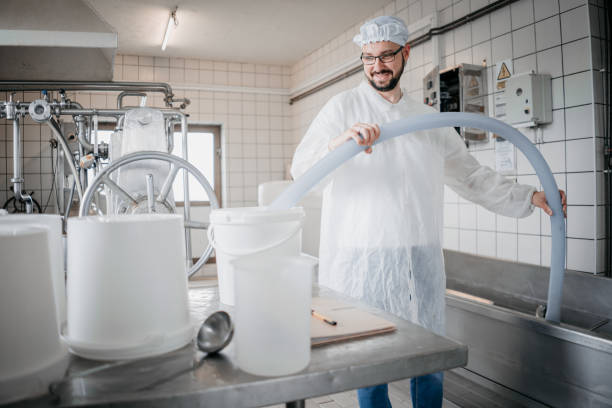
- Dairy Processing Plants: Roles in milk processing units, producing pasteurized milk, yogurt, or other products under controlled conditions.
- Dairy Cooperatives: Work with organizations like Amul or state-level milk unions to support production and distribution.
b) Sector-Specific Settings:
- Private Dairy Firms: Assist in large-scale production for brands focusing on packaged dairy products or specialty items like cheese.
- Dairy Farms (Support Roles): Collaborate with farms for milk collection, initial processing, or quality testing before dispatch to plants.
- Quality Control Labs: Focus on testing and analysis of dairy products to ensure adherence to safety and quality standards.
- Research & Development: Support innovation in product development or process optimization in larger dairy companies or institutes.
Salary Structure (Tentative as of Recent Data in India, Projected to 2025)
Dairy Production Technologist (Various Settings)
| Level | Small-Scale/Cooperative Sector (INR Annual) | Large Firm/Private Sector (INR Annual) |
| Entry-Level | ₹1,50,000 - ₹2,50,000 | ₹2,00,000 - ₹3,50,000 |
| Mid-Level | ₹2,60,000 - ₹3,80,000 | ₹3,90,000 - ₹5,50,000 |
| Senior-Level | ₹3,90,000 - ₹5,00,000 | ₹5,60,000 - ₹7,50,000 |
Note: Salaries vary based on location (urban vs. rural), experience, employer type (cooperative vs. private/large firm), and additional benefits like bonuses or overtime pay. Roles in metro cities or with multinational dairy brands often offer higher pay. Data is approximate and subject to change based on economic conditions and industry trends in 2025.
Job Outlook in India
- General Roles: High demand due to India’s position as a global leader in milk production and the steady growth of the dairy sector.
- Specialized Roles: Rising need for technologists with expertise in quality control, organic dairy products, and automated processing systems.
- Emerging Areas: Opportunities in value-added dairy products (e.g., flavored milk, probiotics), export-focused units, and sustainable dairy practices.
Top Institutes for Relevant Studies in India
| Institute | Program Focus | Location | Sector Affiliation |
| National Dairy Research Institute (NDRI) | Dairy Technology & Research Training | Karnal, Haryana | Government |
| National Skill Development Corporation (NSDC) Partners | Dairy Processing Skills under Skill India | Nationwide | Government-Private |
| College of Dairy Technology (Affiliated to NDRI) | Diploma in Dairy Technology | Multiple Locations | Government |
| Industrial Training Institutes (ITI) | Vocational Courses in Dairy Processing | Multiple Locations | Government |
| Anand Agricultural University | Dairy Science & Technology Courses | Anand, Gujarat | Government |
| IGNOU (Indira Gandhi National Open University) | Certificate in Dairy Management | Multiple Centers | Government |
| State Agricultural Universities | Dairy Technology Training | Multiple States | Government |
| Coursera/Udemy/Alison | Online Dairy & Food Safety Courses | Online | Private |
| Guru Angad Dev Veterinary and Animal Sciences University | Dairy Technology Programs | Ludhiana, Punjab | Government |
| Aptech Learning (Select Centers) | Food Processing & Dairy Skills | Multiple Locations | Private |
Note: Admission requirements vary; government institutes like NDRI or ITI often have lower fees but may require eligibility checks or entrance tests, while private or online platforms may have higher fees with flexible admission processes. Check specific institute websites or NSDC portals for course details, eligibility, and application processes.
Career Advancement in India
a) Professional Growth Path:
- Production Sector: Progress to roles like Dairy Supervisor, Production Manager, or Plant Operator with experience and training.
- Quality Sector: Move into positions like Quality Control Officer or Food Safety Auditor with specialized certifications.
- Entrepreneurship: Start small-scale dairy units or supply businesses focusing on niche products like organic milk or artisanal cheese.
b) Further Education Path:
- All Sectors: Pursue advanced diplomas or degrees in Dairy Technology, Food Science, or related fields for managerial or research roles.
Pros and Cons of the Profession
| Pros | Cons |
| High demand in India’s robust dairy industry with stable job opportunities | Physically demanding due to long hours, shift work, and repetitive tasks |
| Accessible entry with short-term training and minimal educational barriers | Exposure to cold storage environments or machinery-related risks |
| Contribution to a critical sector ensuring food security and nutrition | Limited initial pay in smaller units or rural cooperatives |
| Potential for career growth in quality control or innovation fields | Need for constant adherence to strict hygiene and safety protocols |
| Opportunities in rural and urban settings, supporting local economies | Seasonal fluctuations in milk supply affecting production schedules |
Emerging Trends in India (Current Perspective, 2025)
- Technology: Adoption of automation, IoT for dairy plant monitoring, and blockchain for supply chain transparency.
- Public Policy Focus: Government initiatives like the National Dairy Plan, Skill India, and FSSAI regulations promoting quality and training.
- Industry Growth: Rise of packaged dairy products, organic and A2 milk demand, and export opportunities driving employment.
- Skill Development: Emphasis on sustainable dairy practices, energy-efficient processing, and value-added product innovation.
How to Get Started in India
- Education: Choose a relevant program (Certificate/Diploma) based on career goals from recognized institutes or online platforms, considering cost and accessibility.
- Certifications: Obtain credentials like Dairy Technology or Food Safety certificates to enhance credibility and marketability.
- Practical Experience: Gain hands-on experience through internships, on-the-job training at dairy plants, or working with cooperatives.
- Networking: Connect with dairy professionals, cooperative unions, or industry associations via events or platforms like LinkedIn for opportunities.
- Job Applications: Apply to roles in dairy plants, cooperatives, or quality labs through job portals like Naukri.com, Indeed, or direct outreach to HR.
- Stay Updated: Follow advancements via industry news (e.g., Dairy India, NDDB updates), webinars, and platforms like Skill India for trends and skill requirements.
Key Employers in India
| Sector | Category | Employers |
| Dairy Cooperatives | Milk Production & Processing | Amul (GCMMF), Mother Dairy, Nandini (KMF), Verka (Milkfed) |
| Private Dairy Firms | Packaged Products | Nestlé India, Danone India, Hatsun Agro (Arokya), Parag Milk Foods |
| State Milk Unions | Regional Processing | Aavin (Tamil Nadu), Saras (Rajasthan), Sudha (Bihar) |
| Export & Specialty Sector | Value-Added Products | Schreiber Dynamix, Britannia Industries (Dairy Division) |
| Research & Development | Innovation & Training | National Dairy Research Institute (NDRI), State Agricultural Universities |
Challenges Specific to India
- Skill Gaps: Limited access to advanced training in rural areas, requiring candidates to relocate to urban centers or dairy hubs for education or jobs.
- Infrastructure Issues: Inconsistent cold chain logistics or power supply in some regions affecting production and storage.
- Regulatory Compliance: Need to adhere to strict FSSAI and environmental norms, which can be challenging for smaller units.
- Market Fluctuations: Variations in milk supply due to seasonal or climatic factors impacting production planning and income stability.
A career as a Dairy Production Technologist in India offers a rewarding opportunity to work in a critical and growing industry that supports food security, rural economies, and consumer nutrition. Supported by government initiatives like the National Dairy Plan and Skill India, along with the dairy sector’s expansion through cooperatives and private firms, this vocational path is ideal for individuals with an interest in food processing, technical skills, and a commitment to quality and safety. With accessible training, practical experience, and alignment with emerging trends like automation and value-added products, individuals can build stable careers while paving the way for advancement into supervisory, quality control, or entrepreneurial roles within India’s vast and vital dairy landscape.
Study Route & Eligibility Criteria
Dairy-Production Technologist Study Route & Eligibility Criteria
Study route information is not available for this career.
Dairy-Production Technologist
Professional
Educational Requirements and Study Routes
Eligibility Criteria
| Level | Eligibility |
| Entry-Level (Certificate) | Minimum 10th or 12th standard pass with interest in dairy or food processing; basic science knowledge is beneficial. |
| Diploma/Advanced Training | 12th standard pass (preferably science stream) or relevant certification in dairy technology or food processing. |
| Advanced Roles (Further Training) | Certificate or diploma in Dairy Technology; relevant work experience preferred for competitive roles. |
Study Routes
| Route | Focus Area | Duration | Outcome |
| Certificate Programs | Basics of Dairy Production & Processing | 3-6 months | Entry-level roles in dairy plants or cooperatives. |
| Diploma Programs | Dairy Technology & Quality Control | 6 months-1 year | Broader scope for positions in large dairy firms or quality labs. |
| Short-Term Training (Optional) | Milk Processing, Hygiene Standards | 1-3 months | Specialized skills for areas like cheese production or pasteurization. |
| Online Courses | Food Safety, Dairy Product Innovation | 1-3 months | Flexible learning for trends like organic dairy or automation. |
Entrance Tests (India):
- No National Entrance Tests: Most certificate and diploma programs for dairy technology do not require national-level entrance exams, focusing on direct or merit-based admissions
- Institute-Specific Criteria: Reputed training centers may assess candidates based on basic science knowledge or interest through interviews or tests.
- Direct Admissions: Many private and government vocational centers, including ITIs, offer admissions with minimal eligibility requirements.
Additional Certifications (Recommended for Credibility):
- Certificate in Dairy Technology from recognized institutes like NDRI (National Dairy Research Institute) affiliates or ITI centers.
- Short courses in Food Safety or Quality Control from platforms like Coursera, Alison, or FSSAI training programs.
- Certifications in Dairy Equipment Operation or HACCP (Hazard Analysis and Critical Control Points) from industry-specific providers for advanced roles.
Skills and Competencies
- Technical Skills: Proficiency in operating dairy processing machinery and understanding production techniques for various dairy products.
- Quality Assurance Skills: Ability to conduct tests, interpret results, and ensure compliance with food safety and quality standards.
- Hygiene and Safety Skills: Knowledge of sanitation practices, sterilization methods, and regulatory norms to maintain a safe production environment.
- Analytical Skills: Competence in monitoring processes, identifying issues, and suggesting improvements to enhance product quality or efficiency.
- Digital Literacy: Familiarity with basic software for data recording or inventory management, and adaptability to automated dairy systems.
- Soft Skills: Attention to detail for quality checks, teamwork for collaborative production, and time management for meeting production schedules.
Work Environment
a) Dairy Production Settings:
- Dairy Processing Plants: Roles in milk processing units, producing pasteurized milk, yogurt, or other products under controlled conditions.
- Dairy Cooperatives: Work with organizations like Amul or state-level milk unions to support production and distribution.
b) Sector-Specific Settings:
- Private Dairy Firms: Assist in large-scale production for brands focusing on packaged dairy products or specialty items like cheese.
- Dairy Farms (Support Roles): Collaborate with farms for milk collection, initial processing, or quality testing before dispatch to plants.
- Quality Control Labs: Focus on testing and analysis of dairy products to ensure adherence to safety and quality standards.
- Research & Development: Support innovation in product development or process optimization in larger dairy companies or institutes.
Salary Structure (Tentative as of Recent Data in India, Projected to 2025)
Dairy Production Technologist (Various Settings)
| Level | Small-Scale/Cooperative Sector (INR Annual) | Large Firm/Private Sector (INR Annual) |
| Entry-Level | ₹1,50,000 - ₹2,50,000 | ₹2,00,000 - ₹3,50,000 |
| Mid-Level | ₹2,60,000 - ₹3,80,000 | ₹3,90,000 - ₹5,50,000 |
| Senior-Level | ₹3,90,000 - ₹5,00,000 | ₹5,60,000 - ₹7,50,000 |
Note: Salaries vary based on location (urban vs. rural), experience, employer type (cooperative vs. private/large firm), and additional benefits like bonuses or overtime pay. Roles in metro cities or with multinational dairy brands often offer higher pay. Data is approximate and subject to change based on economic conditions and industry trends in 2025.
Job Outlook in India
- General Roles: High demand due to India’s position as a global leader in milk production and the steady growth of the dairy sector.
- Specialized Roles: Rising need for technologists with expertise in quality control, organic dairy products, and automated processing systems.
- Emerging Areas: Opportunities in value-added dairy products (e.g., flavored milk, probiotics), export-focused units, and sustainable dairy practices.
Top Institutes for Relevant Studies in India
| Institute | Program Focus | Location | Sector Affiliation |
| National Dairy Research Institute (NDRI) | Dairy Technology & Research Training | Karnal, Haryana | Government |
| National Skill Development Corporation (NSDC) Partners | Dairy Processing Skills under Skill India | Nationwide | Government-Private |
| College of Dairy Technology (Affiliated to NDRI) | Diploma in Dairy Technology | Multiple Locations | Government |
| Industrial Training Institutes (ITI) | Vocational Courses in Dairy Processing | Multiple Locations | Government |
| Anand Agricultural University | Dairy Science & Technology Courses | Anand, Gujarat | Government |
| IGNOU (Indira Gandhi National Open University) | Certificate in Dairy Management | Multiple Centers | Government |
| State Agricultural Universities | Dairy Technology Training | Multiple States | Government |
| Coursera/Udemy/Alison | Online Dairy & Food Safety Courses | Online | Private |
| Guru Angad Dev Veterinary and Animal Sciences University | Dairy Technology Programs | Ludhiana, Punjab | Government |
| Aptech Learning (Select Centers) | Food Processing & Dairy Skills | Multiple Locations | Private |
Note: Admission requirements vary; government institutes like NDRI or ITI often have lower fees but may require eligibility checks or entrance tests, while private or online platforms may have higher fees with flexible admission processes. Check specific institute websites or NSDC portals for course details, eligibility, and application processes.
Career Advancement in India
a) Professional Growth Path:
- Production Sector: Progress to roles like Dairy Supervisor, Production Manager, or Plant Operator with experience and training.
- Quality Sector: Move into positions like Quality Control Officer or Food Safety Auditor with specialized certifications.
- Entrepreneurship: Start small-scale dairy units or supply businesses focusing on niche products like organic milk or artisanal cheese.
b) Further Education Path:
- All Sectors: Pursue advanced diplomas or degrees in Dairy Technology, Food Science, or related fields for managerial or research roles.
Pros and Cons of the Profession
| Pros | Cons |
| High demand in India’s robust dairy industry with stable job opportunities | Physically demanding due to long hours, shift work, and repetitive tasks |
| Accessible entry with short-term training and minimal educational barriers | Exposure to cold storage environments or machinery-related risks |
| Contribution to a critical sector ensuring food security and nutrition | Limited initial pay in smaller units or rural cooperatives |
| Potential for career growth in quality control or innovation fields | Need for constant adherence to strict hygiene and safety protocols |
| Opportunities in rural and urban settings, supporting local economies | Seasonal fluctuations in milk supply affecting production schedules |
Emerging Trends in India (Current Perspective, 2025)
- Technology: Adoption of automation, IoT for dairy plant monitoring, and blockchain for supply chain transparency.
- Public Policy Focus: Government initiatives like the National Dairy Plan, Skill India, and FSSAI regulations promoting quality and training.
- Industry Growth: Rise of packaged dairy products, organic and A2 milk demand, and export opportunities driving employment.
- Skill Development: Emphasis on sustainable dairy practices, energy-efficient processing, and value-added product innovation.
How to Get Started in India
- Education: Choose a relevant program (Certificate/Diploma) based on career goals from recognized institutes or online platforms, considering cost and accessibility.
- Certifications: Obtain credentials like Dairy Technology or Food Safety certificates to enhance credibility and marketability.
- Practical Experience: Gain hands-on experience through internships, on-the-job training at dairy plants, or working with cooperatives.
- Networking: Connect with dairy professionals, cooperative unions, or industry associations via events or platforms like LinkedIn for opportunities.
- Job Applications: Apply to roles in dairy plants, cooperatives, or quality labs through job portals like Naukri.com, Indeed, or direct outreach to HR.
- Stay Updated: Follow advancements via industry news (e.g., Dairy India, NDDB updates), webinars, and platforms like Skill India for trends and skill requirements.
Key Employers in India
| Sector | Category | Employers |
| Dairy Cooperatives | Milk Production & Processing | Amul (GCMMF), Mother Dairy, Nandini (KMF), Verka (Milkfed) |
| Private Dairy Firms | Packaged Products | Nestlé India, Danone India, Hatsun Agro (Arokya), Parag Milk Foods |
| State Milk Unions | Regional Processing | Aavin (Tamil Nadu), Saras (Rajasthan), Sudha (Bihar) |
| Export & Specialty Sector | Value-Added Products | Schreiber Dynamix, Britannia Industries (Dairy Division) |
| Research & Development | Innovation & Training | National Dairy Research Institute (NDRI), State Agricultural Universities |
Challenges Specific to India
- Skill Gaps: Limited access to advanced training in rural areas, requiring candidates to relocate to urban centers or dairy hubs for education or jobs.
- Infrastructure Issues: Inconsistent cold chain logistics or power supply in some regions affecting production and storage.
- Regulatory Compliance: Need to adhere to strict FSSAI and environmental norms, which can be challenging for smaller units.
- Market Fluctuations: Variations in milk supply due to seasonal or climatic factors impacting production planning and income stability.
A career as a Dairy Production Technologist in India offers a rewarding opportunity to work in a critical and growing industry that supports food security, rural economies, and consumer nutrition. Supported by government initiatives like the National Dairy Plan and Skill India, along with the dairy sector’s expansion through cooperatives and private firms, this vocational path is ideal for individuals with an interest in food processing, technical skills, and a commitment to quality and safety. With accessible training, practical experience, and alignment with emerging trends like automation and value-added products, individuals can build stable careers while paving the way for advancement into supervisory, quality control, or entrepreneurial roles within India’s vast and vital dairy landscape.