
Advocate or Lawyer
Associate Lawyer
Explore Career
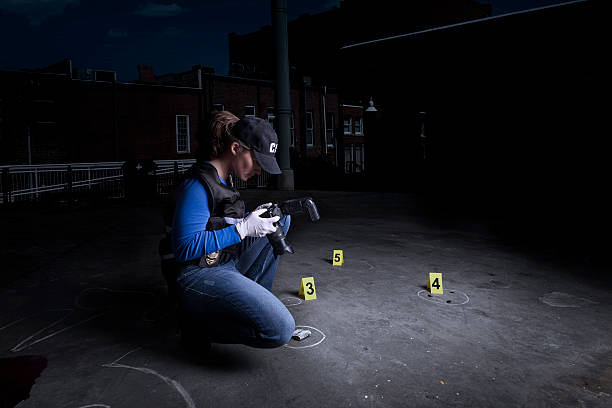
A Detective is a professional investigator who works to solve crimes, gather evidence, and uncover facts related to criminal or civil cases. They operate within law enforcement agencies or as private investigators, collaborating with police, legal teams, and clients to resolve mysteries and ensure justice. Detectives play a crucial role in public safety and legal proceedings by meticulously piecing together information in an era where crime complexity, technology, and privacy concerns are central to investigative work.

Detectives are analytical and resourceful professionals tasked with investigating crimes such as theft, fraud, homicide, or missing persons cases, often using surveillance, interviews, and forensic analysis. Their role includes collecting evidence, documenting findings, and addressing challenges ranging from legal constraints to evolving criminal tactics. They combine skills in observation, critical thinking, and technology, working in field operations, offices, or undercover settings to uncover truths. As key contributors to law enforcement and justice systems, Detectives drive accountability and resolution in a landscape increasingly focused on cybersecurity, organized crime, and victim advocacy.
| Route | Steps |
| Route 1 | 1. 10+2 in any stream (preferably with Humanities or Science) |
| 2. Bachelor’s degree in Criminology, Forensic Science, or related field (3-4 years) | |
| 3. Join law enforcement through competitive exams (e.g., police recruitment) | |
| 4. Work as Junior Officer and progress to Detective role through experience | |
| Route 2 | 1. 10+2 in any stream |
| 2. Diploma or Certificate in Private Investigation or Security Management (6 months-1 year) | |
| 3. Internship or training with private detective agencies (3-6 months) | |
| 4. Practice as Private Investigator or Assistant Detective | |
| Route 3 | 1. 10+2 in any stream |
| 2. Bachelor’s degree in any discipline (3 years) | |
| 3. Advanced certifications in criminology, cybercrime, or forensics | |
| 4. Work as Senior Detective or Specialized Investigator | |
| Route 4 | 1. 10+2 in any stream |
| 2. International training or certification in Investigation or Law Enforcement (1-2 years) | |
| 3. Specialized courses as per country or industry requirements | |
| 4. Practice globally or in India as a certified Detective/Investigator |
| Institute | Course/Program | Official Link |
| National Forensic Sciences University (NFSU), Gandhinagar | B.Sc. & M.Sc. in Forensic Science | https://www.nfsu.ac.in/ |
| Dr. Harisingh Gour University, Sagar (MP) | BA & MA in Criminology | https://www.dhsgsu.ac.in/ |
| University of Madras, Chennai | MA in Criminology & Criminal Justice | https://www.unom.ac.in/ |
| Lok Nayak Jayaprakash Narayan National Institute of Criminology & Forensic Science, Delhi | M.Sc. in Criminology & Forensic Science | https://nicfs.gov.in/ |
| Amity Institute of Forensic Sciences, Noida | B.Sc. & M.Sc. in Forensic Science | https://www.amity.edu/ |
| Christ University, Bangalore | BA in Psychology with Criminology Focus | https://www.christuniversity.in/ |
| Banaras Hindu University (BHU), Varanasi | MA in Criminology | https://www.bhu.ac.in/ |
| Gujarat University, Ahmedabad | Diploma & Certificate in Criminology | https://www.gujaratuniversity.ac.in/ |
| Osmania University, Hyderabad | MA in Criminology | https://www.osmania.ac.in/ |
| IGNOU (Indira Gandhi National Open University) | Certificate in Criminal Justice & Criminology | https://www.ignou.ac.in/ |
| Institution | Course | Country | Official Link |
| University of Maryland, College of Behavioral and Social Sciences | BS & MS in Criminology & Criminal Justice | USA | https://ccjs.umd.edu/ |
| University of Leicester, School of Criminology | MSc in Criminology & Criminal Justice | UK | https://le.ac.uk/criminology |
| John Jay College of Criminal Justice, CUNY | BA & MA in Criminal Justice & Forensic Science | USA | https://www.jjay.cuny.edu/ |
| University of Toronto, Centre for Criminology | MA & PhD in Criminology | Canada | https://www.criminology.utoronto.ca/ |
| University of Melbourne, School of Social and Political Sciences | Master of Criminology | Australia | https://arts.unimelb.edu.au/ |
| University of Cambridge, Institute of Criminology | MPhil & PhD in Criminology | UK | https://www.crim.cam.ac.uk/ |
| Arizona State University, School of Criminology and Criminal Justice | BS & MS in Criminology & Criminal Justice | USA | https://ccj.asu.edu/ |
| University of Copenhagen, Faculty of Law | MSc in Criminology | Denmark | https://www.ku.dk/ |
| Griffith University, School of Criminology | Bachelor & Master of Criminology | Australia | https://www.griffith.edu.au/ |
| University of Ottawa, Department of Criminology | BA & MA in Criminology | Canada | https://www.uottawa.ca/ |
India:
International:
Junior Officer/Investigator → Assistant Detective → Detective → Senior Detective → Investigative Supervisor → Chief Investigator → Forensic Specialist → Private Detective Consultant → Law Enforcement Trainer → Criminal Intelligence Analyst
| India | International |
| Central Bureau of Investigation (CBI) | Federal Bureau of Investigation (FBI), USA |
| National Investigation Agency (NIA) | Interpol, Global |
| State Police Departments | Scotland Yard (Metropolitan Police), UK |
| Research and Analysis Wing (RAW) | Central Intelligence Agency (CIA), USA |
| Enforcement Directorate (ED) | Drug Enforcement Administration (DEA), USA |
| Crime Branch CID (Criminal Investigation Department) | Australian Federal Police (AFP), Australia |
| Intelligence Bureau (IB) | Royal Canadian Mounted Police (RCMP), Canada |
| Delhi Police Special Cell | National Crime Agency (NCA), UK |
| Maharashtra ATS (Anti-Terrorism Squad) | Europol, Europe |
| Private Agencies like Pinkerton India | Pinkerton, USA |
| Pros | Cons |
| Opportunity to work in impactful and justice-driven environments | High risk due to exposure to dangerous situations or criminals |
| High demand for detectives in growing crime and cybersecurity sectors | Long and irregular hours, including night shifts or stakeouts |
| Rewarding impact through solving cases and ensuring safety | Emotional stress from handling violent or tragic cases |
| Diverse career paths across law enforcement, private, and forensic sectors | Limited job security in freelance or private roles |
| Strong potential for influence with high-profile case resolutions | Dependency on legal system constraints and bureaucratic delays |
| Career Level | India (₹ per annum) | International (USD per annum) |
| Junior Officer/Investigator (Early Career) | 2,00,000 - 4,00,000 | 30,000 - 40,000 |
| Assistant Detective (Mid-Career) | 4,00,000 - 6,00,000 | 40,000 - 55,000 |
| Detective | 6,00,000 - 10,00,000 | 55,000 - 70,000 |
| Senior Detective/Investigative Supervisor | 10,00,000 - 15,00,000 | 70,000 - 90,000 |
| Chief Investigator/Consultant | 15,00,000+ | 90,000+ |
Note: Salaries vary based on location, experience, employer, and specialization. International figures are approximate and depend on the country and sector.
A career as a Detective offers a unique opportunity to contribute to justice, public safety, and truth-seeking by navigating complex criminal landscapes for diverse communities. From solving intricate crimes to protecting societal interests and supporting legal systems, Detectives play a pivotal role in modern law enforcement and private investigation. This field combines analytical expertise, observational skills, and a commitment to solving challenging mysteries, offering diverse paths in policing, private investigation, forensics, and beyond. For those passionate about uncovering facts, adapting to dynamic crime trends, and addressing societal needs in an era of evolving threats, a career as a Detective provides an intellectually stimulating and professionally rewarding journey with the potential to make significant contributions to society by advancing the art and application of investigation worldwide.

Early-career professionals assist in basic investigations under supervision. They build skills in evidence collection while ensuring accurate...
0.0LPA

Experienced professionals manage specific cases with high competence, using investigative skills. They offer expertise in surveillance. Their...
0.0LPA

Senior professionals guide major investigations and ensure consistency across cases. They provide leadership by establishing workflows for...
0.0LPA
Take the next step and explore more about Detective.
Explore similar career paths that might interest you