
Disaster Management
A Disaster Management Professional is an expert in planning, coordinating, and implementing strategies to prevent, mitigate, respond to, and recover from natural and human-made disasters. They work in government agencies, non-governmental organizations (NGOs), international bodies, or private sectors, collaborating with emergency services, policymakers, and communities. Disaster Management Professionals play a crucial role in saving lives, protecting infrastructure, and building resilient societies in a field driven by risk assessment, emergency preparedness, and humanitarian response.
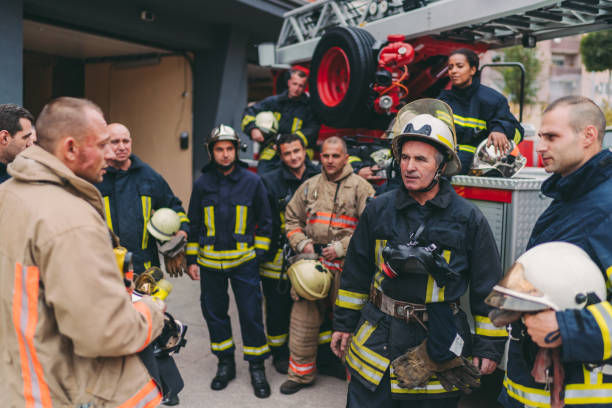
Career Description
Disaster Management Professionals are proactive and resourceful individuals who operate in high-pressure environments such as emergency operation centers, disaster-affected areas, or policy offices, using tools like Geographic Information Systems (GIS), risk modelling software, and communication networks. Their role involves assessing vulnerabilities, coordinating relief efforts, and educating communities, often facing challenges like unpredictable crises or resource constraints. They combine expertise in risk analysis, crisis response, and stakeholder coordination to deliver effective solutions. As key contributors to public safety and resilience, they help shape the future of disaster preparedness, climate adaptation, and humanitarian aid in a sector increasingly driven by technology, data analytics, and global collaboration.
Roles and Responsibilities
- Risk Assessment and Planning
- Identify potential hazards and vulnerabilities in communities or regions through data analysis.
- Develop disaster preparedness and mitigation plans to minimize impact.
- Emergency Response Coordination
- Organize and lead response teams during disasters like earthquakes, floods, or industrial accidents.
- Ensure timely deployment of resources, personnel, and aid to affected areas.
- Community Education and Training
- Conduct awareness programs and drills to prepare communities for disaster scenarios.
- Train local authorities and volunteers in emergency protocols and safety measures.
- Policy Development and Advocacy
- Formulate policies and guidelines for disaster risk reduction at local or national levels.
- Advocate for resilient infrastructure and sustainable urban planning.
- Resource Management and Logistics
- Manage stockpiles of emergency supplies like food, water, and medical kits.
- Coordinate logistics for efficient distribution during crisis situations.
- Post-Disaster Recovery and Rehabilitation
- Assess damage and needs after a disaster to plan recovery efforts.
- Support rebuilding efforts and psychological aid for affected populations.
- Monitoring and Early Warning Systems
- Utilize technology to monitor environmental changes and issue timely warnings.
- Collaborate with meteorological and geological agencies for accurate predictions.
- Stakeholder Collaboration
- Work with government bodies, NGOs, and international agencies for unified disaster response.
- Facilitate communication between diverse groups for effective crisis management.
- Research and Data Analysis
- Conduct studies on past disasters to improve future preparedness strategies.
- Analyze data to predict trends and enhance risk reduction measures.
Study Route & Eligibility Criteria
| Route | Steps |
| Route 1 | 1. 10+2 in any stream 2. Certificate/Diploma in Disaster Management (6 months-1 year) 3. Internship at emergency services or NGOs 4. Practice as Junior Disaster Management Officer |
| Route 2 | 1. 10+2 in any stream 2. Bachelor’s degree in Disaster Management/Emergency Services (3-4 years) 3. Internship or entry-level role in disaster response agencies 4. Work as Disaster Management Specialist |
| Route 3 | 1. 10+2 in any stream 2. Bachelor’s degree in Disaster Management or related field (3-4 years) 3. Master’s degree in Disaster Management or Emergency Planning (1-2 years) 4. Gain experience in crisis response roles 5. Work as Senior Disaster Manager or Coordinator |
| Route 4 | 1. 10+2 in any stream 2. Bachelor’s degree in Disaster Management or related field (3-4 years) 3. Master’s degree in Disaster Management (1-2 years) 4. Ph.D. in Disaster Studies or Risk Management (3-5 years) 5. Practice as Disaster Management Consultant or Academic Lead |
Significant Observations (Academic Related Points)
- Foundational Knowledge: Strong understanding of hazard analysis, emergency protocols, and resilience planning is essential for practice.
- Practical Skills: Training in crisis simulation, first aid, and resource allocation develops core competencies for response.
- Specialized Training: Certifications in GIS or emergency response are critical for technical expertise.
- Technology Proficiency: Familiarity with disaster modeling software and communication tools is vital for modern roles.
- Interdisciplinary Knowledge: Understanding climate science, sociology, and public health enhances disaster strategies.
- Certification Importance: Recognized credentials in disaster management boost professional recognition.
- Continuing Education: Regular updates on global disaster trends and technologies are necessary to stay relevant.
- Global Standards: Familiarity with international frameworks like the Sendai Framework enhances opportunities for cross-border roles.
- Attention to Detail: Precision in risk mapping and resource planning is critical for effective outcomes.
- Entrance Examination Success: Competitive exams may be required for admission to top disaster management programs.
- International Testing Requirements: Language proficiency tests like IELTS may be needed for global opportunities.
Internships & Practical Exposure
- Mandatory internships during degree programs at disaster response agencies or NGOs for real-world experience.
- Rotations in risk assessment, emergency response, and recovery planning for hands-on exposure to diverse tasks.
- Internships under experienced disaster managers for training in crisis coordination and community outreach.
- Observerships at emergency operation centers or disaster sites for applied insights.
- Participation in mock disaster drills or simulations for skill development in response strategies.
- Training in GIS and early warning systems through real-world projects like hazard mapping.
- Exposure to post-disaster rehabilitation during internships for skills in recovery planning.
- Volunteer roles in disaster relief organizations to build a portfolio.
- Community engagement projects for promoting disaster awareness and preparedness.
- International disaster response attachments for global exposure to advanced crisis management practices.
Courses & Specializations to Enter the Field
- Certificate in Disaster Management or Emergency Response.
- Diploma in Disaster Preparedness and Mitigation.
- Bachelor’s in Disaster Management, Emergency Services, or Environmental Science.
- Master’s in Disaster Management, Risk Reduction, or Humanitarian Action.
- Specialization in Natural Disaster Management, Urban Resilience, or Climate Adaptation.
- Workshops on Crisis Communication or GIS for Disaster Mapping.
- Training in Emergency Medical Response or Search and Rescue Operations.
- Specialization in Humanitarian Logistics or Disaster Policy Planning.
- Certification in Risk Assessment or Early Warning Systems.
- Short courses in Community-Based Disaster Risk Management.
Top Institutes for Disaster Management Education (India)
| Institute | Course/Program | Official Link |
| National Institute of Disaster Management (NIDM), Delhi | PG Diploma in Disaster Management | https://nidm.gov.in/ |
| Tata Institute of Social Sciences (TISS), Mumbai | MA in Disaster Management | https://www.tiss.edu/ |
| Indira Gandhi National Open University (IGNOU), Delhi | PG Diploma/Certificate in Disaster Management | https://www.ignou.ac.in/ |
| Jamia Millia Islamia, Delhi | MA in Disaster Management | https://www.jmi.ac.in/ |
| Amity Institute of Disaster Management, Noida |
| https://www.amity.edu/ |
| Guru Gobind Singh Indraprastha University (GGSIPU), Delhi | PG Diploma in Disaster Preparedness | https://www.ipu.ac.in/ |
| University of North Bengal, Siliguri | PG Diploma in Disaster Management | https://www.nbu.ac.in/ |
| Annamalai University, Tamil Nadu | MBA in Disaster Management | https://annamalaiuniversity.ac.in/ |
| Sikkim Manipal University, Gangtok | Certificate in Disaster Management | https://www.smu.edu.in/ |
| Christ University, Bangalore | Certificate/Diploma in Disaster Management | https://www.christuniversity.in/ |
Top International Institutes
| Institution | Course | Country | Official Link |
| University College London (UCL), Institute for Risk and Disaster Reduction | MSc in Risk, Disaster and Resilience | UK | https://www.ucl.ac.uk/risk-disaster-reduction/ |
| University of Copenhagen, Copenhagen Centre for Disaster Research | MSc in Disaster Management | Denmark | https://www.cope.ku.dk/ |
| University of Manchester, Humanitarian and Conflict Response Institute | MA in Humanitarian Action | UK | https://www.hcri.manchester.ac.uk/ |
| Tufts University, Feinstein International Center | MA in Humanitarian Assistance | USA | https://nutrition.tufts.edu/ |
| University of Queensland, School of Earth and Environmental Sciences | MSc in Disaster Management | Australia | https://sees.uq.edu.au/ |
| Kyoto University, Disaster Prevention Research Institute | Master’s in Disaster Risk Management | Japan | https://www.dpri.kyoto-u.ac.jp/en/ |
| University of Auckland, School of Environment | MSc in Disaster Management | New Zealand | https://www.auckland.ac.nz/en/science.html |
| Lund University, Centre for Risk Assessment and Management | MSc in Disaster Risk Management | Sweden | https://www.lunduniversity.lu.se/ |
| University of Hawaii at Manoa, National Disaster Preparedness Training Center | Certificate in Disaster Preparedness | USA | https://ndptc.hawaii.edu/ |
| King’s College London, Department of Geography | MA in Disasters, Adaptation & Development | UK | https://www.kcl.ac.uk/geography |
Entrance Tests Required
India:
- TISSNET (Tata Institute of Social Sciences National Entrance Test): For admission to MA in Disaster Management at TISS, Mumbai.
- IGNOU OPENMAT (for MBA programs): For admission to MBA in Disaster Management at IGNOU (if applicable).
- JMI Entrance Test (JamiaMilliaIslamia): For admission to MA in Disaster Management at Jamia Millia Islamia, Delhi.
- Amity JEE (Amity Joint Entrance Examination): For admission to disaster management programs at Amity University, Noida.
- GGSIPU CET (Guru Gobind Singh Indraprastha University Common Entrance Test): For admission to PG Diploma in Disaster Preparedness at GGSIPU, Delhi.
- University-Specific Tests: For admission to disaster management programs at universities like Christ University or Annamalai University.
International:
- GRE (Graduate Record Examination): Required for admission to graduate programs in disaster management or related fields in the USA, UK, and other countries at universities like Tufts or UCL.
- GMAT (Graduate Management Admission Test): Occasionally required for disaster management programs with a focus on administration or policy internationally.
- TOEFL (Test of English as a Foreign Language): Minimum score of 80-100 required for non-native speakers applying to disaster management programs in English-speaking countries like the USA, UK, or Australia.
- IELTS (International English Language Testing System): Minimum score of 6.5-7.0 required for admission to disaster management programs in the UK, Australia, and other English-speaking regions.
- Portfolio or Work Experience: Many international programs, such as at University of Manchester, may require evidence of prior work or volunteer experience in disaster or humanitarian fields.
- Interview or Statement of Purpose: Certain programs assess candidates through personal interviews or essays to evaluate commitment and fit for disaster management roles.
Ideal Progressing Career Path
Junior Disaster Management Officer → Disaster Management Specialist → Senior Disaster Manager → Emergency Response Coordinator → Disaster Risk Reduction Expert → Regional Disaster Management Head → National Disaster Policy Advisor → Chief Disaster Management Officer → Disaster Management Consultant → Disaster Studies Professor
Major Areas of Employment
- Government disaster management agencies for policy and response coordination.
- Non-governmental organizations for humanitarian aid and community resilience.
- International bodies like the UN for global disaster risk reduction initiatives.
- Private sector consultancies for corporate disaster preparedness planning.
- Research institutions for studying disaster trends and mitigation strategies.
- Emergency services for on-ground response and rescue operations.
- Urban planning departments for integrating resilience into infrastructure.
- Environmental agencies for addressing climate-related disasters.
- Healthcare organizations for medical response during crises.
- Educational institutions for teaching disaster management and awareness.
Prominent Employers
| India | International |
| National Disaster Management Authority (NDMA), Delhi | United Nations Office for Disaster Risk Reduction (UNDRR), Global |
| National Disaster Response Force (NDRF), Multiple Locations | International Federation of Red Cross and Red Crescent Societies (IFRC), Global |
| State Disaster Management Authorities (SDMA), Multiple Locations | World Bank - Global Facility for Disaster Reduction and Recovery (GFDRR), Global |
| Tata Institute of Social Sciences (TISS), Mumbai | UNICEF, Global |
| Indian Red Cross Society, Multiple Locations | Oxfam International, Global |
| ActionAid India, Multiple Locations | Save the Children, Global |
| CARE India, Multiple Locations | Médecins Sans Frontières (MSF), Global |
| SEEDS India, Delhi | World Vision International, Global |
| Sphere India, Delhi | CARE International, Global |
| Plan India, Multiple Locations | Mercy Corps, Global |
Pros and Cons of the Profession
| Pros | Cons |
| Opportunity to save lives and make a societal impact | Often involves high stress during active disaster scenarios |
| High personal satisfaction in building resilient communities | Can face emotional toll from witnessing loss and devastation |
| Rewarding role in a globally relevant and evolving field | May require working in hazardous or remote environments |
| Diverse career paths across government, NGO, and private sectors | Risk of burnout due to unpredictable crises and long hours |
| Strong potential for growth with increasing climate challenges | Uncertainty in funding or resources for disaster programs |
Industry Trends and Future Outlook
- Digital Transformation: Increasing focus on technology like drones and AI for disaster monitoring and response.
- Rising Demand: Growing need for professionals skilled in climate adaptation and urban resilience.
- Technology Impact: Enhanced use of big data and IoT for early warning systems and damage assessment.
- Interdisciplinary Focus: Emergence of collaboration with climate scientists and urban planners.
- AI and Disaster Tools: Adoption of AI for predictive modeling and resource optimization.
- Global Market Needs: Development of strategies for climate-induced migration and disasters.
- Compliance-Centric Market: Use of data to ensure transparency in disaster funding and response.
- Skill Development Needs: Growing necessity for training in tech-driven disaster tools and analytics.
- Sustainability Focus: Increased efforts to integrate disaster resilience into sustainable development.
- Hybrid Response Models: Blending on-ground efforts with digital coordination for broader impact.
Salary Expectations
| Career Level | India (₹ per annum) | International (USD per annum) |
| Junior Disaster Management Officer (Early Career) | 3,00,000 - 6,00,000 | 30,000 - 45,000 |
| Disaster Management Specialist (Mid-Career) | 6,00,000 - 10,00,000 | 45,000 - 60,000 |
| Senior Disaster Manager/Coordinator | 10,00,000 - 18,00,000 | 60,000 - 80,000 |
| Disaster Risk Reduction Expert/Regional Head | 18,00,000 - 25,00,000 | 80,000 - 110,000 |
| Chief Disaster Management Officer/Consultant | 25,00,000+ | 110,000+ |
| Note: Salaries may vary based on location, employer, experience, and specialization. |
Key Software Tools
- Geographic Information Systems (e.g., ArcGIS, QGIS) for hazard mapping and spatial analysis.
- Disaster Modeling Software (e.g., HAZUS, RiskScape) for predicting disaster impacts.
- Early Warning Systems (e.g., SAHANA, Alertus) for issuing timely alerts.
- Resource Management Tools (e.g., WebEOC, Crisis Track) for coordinating emergency supplies.
- Data Analytics Platforms (e.g., Tableau, Power BI) for analyzing disaster trends and needs.
- Communication Software (e.g., Slack, Zello) for real-time crisis coordination.
- Remote Sensing Tools (e.g., ENVI, Google Earth Engine) for monitoring environmental changes.
- Mobile Apps (e.g., Disaster Alert, FEMA App) for public communication and updates.
- Cloud Collaboration Platforms (e.g., Google Workspace, Microsoft 365) for team coordination.
- Simulation Software (e.g., AnyLogic) for disaster response training and planning.
Professional Organizations and Networks
- International Association of Emergency Managers (IAEM), Global.
- United Nations Office for Disaster Risk Reduction (UNDRR), Global.
- Asian Disaster Preparedness Center (ADPC), Asia.
- National Disaster Management Authority (NDMA), India.
- Indian Society of Earthquake Technology (ISET), India.
- Global Facility for Disaster Reduction and Recovery (GFDRR), Global.
- Humanitarian OpenStreetMap Team (HOT), Global.
- Disaster Emergency Committee (DEC), UK.
- Pacific Disaster Center (PDC), USA.
- International Federation of Red Cross and Red Crescent Societies (IFRC), Global.
Notable Disaster Management Professionals and Industry Leaders (Top 10)
- Mami Mizutori (Japan/Global): Special Representative of the UN Secretary-General for Disaster Risk Reduction, leading global resilience efforts under UNDRR. Her policies shape frameworks. Her impact drives global action.
- P.K. Mishra (India): Principal Secretary to the Prime Minister of India, instrumental in shaping India’s disaster management policies at NDMA. His leadership saves lives. His impact strengthens preparedness.
- Craig Fugate (USA): Former FEMA Administrator, known for modernizing US disaster response with tech-driven strategies. His reforms enhance efficiency. His impact sets standards.
- Rajib Shaw (Japan/India): Professor at Keio University, expert in community-based disaster risk management in Asia. His research guides policy. His impact builds resilience.
- Helen Clark (New Zealand/Global): Former UNDP Administrator, advocated for disaster risk reduction in sustainable development globally. Her vision integrates solutions. Her impact fosters safety.
- Vinod Chandra Menon (India): Former NDMA member, key in establishing India’s disaster response framework and NDRF. His initiatives protect millions. His impact reforms systems.
- Kerry Sieh (USA/Singapore): Director of Earth Observatory of Singapore, focusing on earthquake and tsunami risk mitigation. His studies predict hazards. His impact saves communities.
- Ilan Kelman (UK): Professor at UCL, specializing in disaster risk reduction and climate adaptation globally. His insights shape strategies. His impact bridges academia and action.
- Jemilah Mahmood (Malaysia/Global): Founder of MERCY Malaysia, leading humanitarian disaster response in Asia and beyond. Her work aids victims. Her impact inspires aid.
- Margaret Arnold (USA/Global): Senior Social Development Specialist at World Bank, focusing on disaster resilience and urban planning. Her projects rebuild lives. Her impact fortifies futures.
Advice for Aspiring Disaster Management Professionals
- Build a strong foundation in risk analysis and emergency protocols to navigate crisis scenarios.
- Seek early exposure to disaster roles through internships to confirm interest in resilience building.
- Prepare thoroughly for competitive exams like TISSNET with structured study plans.
- Pursue short courses in GIS or emergency response to gain expertise in key areas.
- Stay updated on disaster trends by following resources like UNDRR or NDMA reports.
- Develop hands-on skills in crisis coordination and community training through practical experience.
- Engage in internships at disaster agencies or NGOs for real-world exposure.
- Join professional associations like IAEM or ADPC for networking and resources.
- Work on precision in risk assessment and resource planning to ensure effective outcomes.
- Explore international opportunities for exposure to global disaster management standards.
- Volunteer in disaster relief or community preparedness to understand diverse needs.
- Cultivate adaptability to handle unpredictable crises and cultural contexts.
- Attend continuing education programs to stay abreast of disaster tools and policies.
- Build a network with emergency professionals and policymakers for collaborative growth.
- Develop resilience to manage the emotional and physical demands of disaster work.
- Balance technical expertise with empathy to adapt to evolving disaster challenges.
A career in Disaster Management offers a profound opportunity to protect lives, driving progress through strategic planning and crisis response, fostering safety with every initiative. Disaster Management Professionals are the architects of resilience, using their skills to empower communities, address vulnerabilities, and promote recovery across diverse settings. This profession blends technical precision with humanitarian impact, providing pathways in government, NGOs, research, and beyond. For those passionate about public safety and social good, driven by a desire to mitigate risks, and eager to embrace the evolving landscape of digital tools and global frameworks, becoming a Disaster Management Professional is a deeply rewarding journey. It empowers individuals to shape safer futures, address critical emergency needs, and advance human progress through the transformative power of disaster resilience.
Leading Professions
View AllJunior Disaster Management Officer:
Entry-level individuals who assist in basic planning, data collection, and community outreach under supervision. They gain initial experience with risk assessments and emergency drills. Their role builds foundational skills in crisis response. They often support senior officers to learn workflows. This position is crucial for understanding the field before advancing to independent roles.
Disaster Management Specialist:
Early-career professionals who independently handle disaster preparedness plans, coordinate small-scale responses, and train communities under guidance. They focus on specific areas like flood mitigation or urban disasters in agencies or NGOs. Their work contributes to safety. They often collaborate with senior staff to ensure effectiveness. Their contributions lay the groundwork for impactful resilience.
Senior Disaster Manager:
Mid-level professionals who lead complex disaster response operations, oversee teams, and develop mitigation strategies. They handle diverse crises and monitor outcomes across regions. Their role involves addressing challenges like resource shortages or coordination gaps. They often mentor junior staff. Their expertise is vital for advancing disaster preparedness and response.
Emergency Response Coordinator:
Experienced professionals who focus on crisis response logistics, providing leadership during active disasters in agencies or humanitarian groups. They ensure operational efficiency and guide teams in high-stress environments. Their role includes training others in emergency protocols. They often collaborate with government bodies for systemic impact. They are central to translating plans into life-saving actions.
Disaster Risk Reduction Expert:
Experts who specialize in long-term strategies to minimize disaster impacts, working in policy or research roles. They handle high-complexity tasks like climate adaptation while contributing to global frameworks. Their expertise lies in pioneering innovative risk models or tools. They ensure alignment with community needs or environmental trends. Their leadership is essential for sustained impact in resilience building.
Regional Disaster Management Head:
Senior professionals who coordinate large-scale disaster strategies, ensuring effective preparedness and response across multiple regions. They manage budgets, teams, and schedules while mitigating operational risks. Their role involves stakeholder communication, presenting outcomes to authorities or funders. They ensure compliance with safety standards. Their oversight is pivotal for successful regional outcomes and scalability.
National Disaster Policy Advisor:
Top-tier executives responsible for the strategic direction of disaster management policies at a national level for governments or organizations. They develop long-term plans for risk reduction, oversee large budgets, and ensure alignment with global standards. Their role involves driving partnerships with international bodies. They champion cutting-edge approaches like tech-driven early warnings. Their vision is critical for positioning the nation as a resilience leader.
Chief Disaster Management Officer:
Executive leaders who oversee all disaster management initiatives within a major agency or government body, often reporting to top management. They shape policies for preparedness, innovation, and regulatory adherence on a large scale. Their leadership drives adoption of transformative models like AI in risk prediction. They represent the disaster division to stakeholders. They play a key role in ensuring long-term competitiveness in crisis management.
CAREER VIDEOS
Interested? Take the next step for this career
Skills Needed
This page includes information from O*NET Resource Center by the U.S. Department of Labor, Employment and Training Administration (USDOL/ETA). Used under the CC BY 4.0 license. O*NET® is a trademark of USDOL/ETA.
© 2025 TopTeen. All rights reserved.