
ACCA- Association of Certified Chartered Accountant
Junior Accountant
Explore Career
An ESG Analyst is a professional dedicated to evaluating and integrating Environmental, Social, and Governance (ESG) factors into investment decisions, corporate strategies, and risk assessments to promote sustainable and ethical business practices. They work in industries such as finance, consulting, asset management, corporate sustainability, and research, collaborating with portfolio managers, corporate executives, sustainability officers, and regulatory bodies. ESG Analysts play a critical role in aligning financial performance with sustainability goals in a world increasingly focused on climate change, social responsibility, and corporate ethics.

ESG Analysts are experts in sustainability and ethical business analysis, responsible for assessing companies’ ESG performance, identifying risks and opportunities related to environmental impact, social responsibility, and governance practices, and providing actionable insights for investment or strategic decisions. Their role involves data analysis, stakeholder engagement, and reporting, often working in settings such as financial institutions, corporate offices, consulting firms, or virtual environments. They combine expertise in sustainability metrics, financial analysis, and regulatory frameworks to address challenges like climate risks, social inequality, and governance scandals. As key contributors to sustainable finance, they help organizations thrive in an era prioritizing ethical investments, corporate responsibility, and long-term environmental and social impact.
| Route | Steps |
| Route 1 | 1. 10+2 with Commerce, Mathematics, or relevant subjects. 2. Bachelor’s degree in Finance, Economics, Environmental Science, or Business Administration (3-4 years). 3. Gain practical experience through internships or training in sustainability or financial analysis roles (3-6 months). 4. Pursue entry-level roles like Junior ESG Analyst or Sustainability Research Assistant (1-2 years). |
| Route 2 | 1. 10+2 with Commerce or relevant subjects. 2. Bachelor’s degree in Finance, Economics, or related field (3-4 years). 3. Master’s degree in Sustainable Finance, Environmental Management, or MBA with ESG focus (2 years, optional). 4. Work in financial analysis or sustainability roles to gain experience (1-2 years). 5. Transition to ESG Analyst roles with enhanced skills and knowledge. |
| Route 3 | 1. 10+2 with Commerce or relevant subjects. 2. Bachelor’s degree in Finance, Environmental Science, or related field (3-4 years). 3. Pursue professional certifications like CFA ESG Investing or GRI Sustainability Reporting (1-2 years). 4. Gain hands-on experience through roles in ESG research or sustainable finance (1-2 years). 5. Establish a career as an ESG Analyst in finance or sustainability sectors. |
| Route 4 | 1. 10+2 with Commerce or relevant subjects. 2. Bachelor’s degree from India in Finance or Environmental Studies (3-4 years). 3. Pursue international certifications or advanced degrees in sustainable finance abroad (1-2 years). 4. Gain exposure through roles in global asset management or sustainability consulting firms (1-2 years). 5. Work as an ESG Analyst in international markets or global firms. |
| Institute | Course/Program | Official Link |
| Indian Institute of Management (IIM), Ahmedabad | MBA in Finance/Sustainability | https://www.iima.ac.in/ |
| Indian Institute of Management (IIM), Bangalore | MBA in Finance/Sustainability | https://www.iimb.ac.in/ |
| Indian Institute of Management (IIM), Calcutta | MBA in Finance/Sustainability | https://www.iimcal.ac.in/ |
| XLRI - Xavier School of Management, Jamshedpur | MBA in Sustainability Management | https://www.xlri.ac.in/ |
| SP Jain Institute of Management and Research, Mumbai | MBA in Finance/Sustainability | https://www.spjimr.org/ |
| Indian School of Business (ISB), Hyderabad | PGP in Management (Finance/Sustainability Focus) | https://www.isb.edu/ |
| Narsee Monjee Institute of Management Studies (NMIMS), Mumbai | MBA in Finance/Sustainability | https://www.nmims.edu/ |
| Symbiosis Institute of Business Management (SIBM), Pune | MBA in Finance/Sustainability | https://www.sibm.edu/ |
| Amity University, Noida | MBA in Sustainability Management | https://www.amity.edu/ |
| TERI School of Advanced Studies, New Delhi | MA/MSc in Sustainable Development | https://www.terisas.ac.in/ |
| Institution | Course | Country | Official Link |
| Harvard Business School | MBA in Sustainability/Finance | USA | https://www.hbs.edu/ |
| Stanford Graduate School of Business | MBA in Sustainability/Finance | USA | https://www.gsb.stanford.edu/ |
| London Business School | MBA in Finance/Sustainability | UK | https://www.london.edu/ |
| INSEAD | MBA in Finance/Sustainability | France/Singapore | https://www.insead.edu/ |
| University of Toronto (Rotman School of Management) | MBA in Sustainability/Finance | Canada | https://www.rotman.utoronto.ca/ |
| University of Melbourne (Melbourne Business School) | MBA in Sustainability/Finance | Australia | https://mbs.edu/ |
| Nanyang Technological University (Nanyang Business School) | MBA in Sustainability/Finance | Singapore | https://www.ntu.edu.sg/nbs |
| University of Amsterdam (Amsterdam Business School) | MBA in Sustainability/Finance | Netherlands | https://abs.uva.nl/ |
| Copenhagen Business School | MSc in Sustainability/Finance | Denmark | https://www.cbs.dk/ |
| Wharton School, University of Pennsylvania | MBA in Sustainability/Finance | USA | https://www.wharton.upenn.edu/ |
India:
International:
Junior ESG Analyst → ESG Analyst → Senior ESG Analyst → ESG Manager → Director of ESG Strategy → Chief Sustainability Officer (CSO) → Academician/Independent Consultant
| India | International |
| Sustainalytics India, Mumbai | Sustainalytics, Netherlands |
| MSCI India, Mumbai | MSCI, USA |
| BlackRock India, Mumbai | BlackRock, USA |
| HSBC India, Mumbai | HSBC, UK |
| Deloitte India, Mumbai | Deloitte, Global |
| EY India, Mumbai | EY, Global |
| Tata Sustainability Group, Mumbai | CDP (Carbon Disclosure Project), UK |
| Reliance Industries (Sustainability Unit), Mumbai | S&P Global, USA |
| Aditya Birla Group, Mumbai | Bloomberg ESG Data, USA |
| Infosys (Sustainability Division), Bangalore | ISS ESG, Germany |
| Pros | Cons |
| Direct impact on promoting sustainable and ethical business practices through ESG integration | High-pressure role due to balancing financial goals with sustainability and ethical considerations |
| Growing demand due to increasing focus on climate change, social responsibility, and corporate governance | Challenges in accessing reliable ESG data and standardizing metrics across diverse industries |
| Opportunity to contribute to long-term environmental and social well-being through strategic insights | Emotional stress from navigating stakeholder conflicts over ESG priorities versus profitability |
| Varied career paths in finance, consulting, corporate sustainability, and international sectors | Limited immediate visibility of impact, as ESG strategies often yield results over long terms |
| Potential for societal change through advancing sustainable finance and responsible corporate behavior | Need for constant updates on evolving ESG regulations, frameworks, and global sustainability trends |
| Career Level | India (₹ per annum) | International (USD per annum) |
| Junior ESG Analyst (Early Career) | 4,00,000 - 7,00,000 | 45,000 - 60,000 |
| ESG Analyst | 7,00,000 - 12,00,000 | 60,000 - 80,000 |
| Senior ESG Analyst | 12,00,000 - 18,00,000 | 80,000 - 100,000 |
| ESG Manager | 18,00,000 - 25,00,000 | 100,000 - 130,000 |
| Director of ESG Strategy/Chief Sustainability Officer (CSO)/Academician/Independent Consultant | 25,00,000 - 40,00,000+ | 130,000 - 180,000+ |
Note: Salaries may vary based on location, employer, experience, and specialization. Indian figures are updated estimates based on current industry trends, corporate pay scales, and private sector data as of 2025, reflecting inflation and demand growth in the ESG analysis sector. International figures are based on data from the U.S., UK, and Europe as of 2025, adjusted for market trends in ESG roles, sourced from industry reports and salary surveys like Glassdoor and PayScale. Due to the speculative nature of future data, these are approximations and may differ based on real-time economic factors.
A career as an ESG Analyst offers a unique opportunity to contribute to sustainable and ethical progress by integrating environmental, social, and governance factors across diverse industries and investment landscapes. From mitigating climate risks to promoting social equity, ESG Analysts play a pivotal role in modern sustainable finance and corporate responsibility. This field combines expertise in sustainability analysis, financial strategy, and a commitment to ethical impact, offering diverse paths in finance, consulting, corporate sustainability, and international sectors. For those passionate about shaping a sustainable future, adapting to global challenges, and addressing critical ESG needs in an era of increasing environmental and social urgency, a career as an ESG Analyst provides an intellectually stimulating and professionally rewarding journey with the potential to make significant contributions to society by advancing responsible business practices and long-term global well-being.
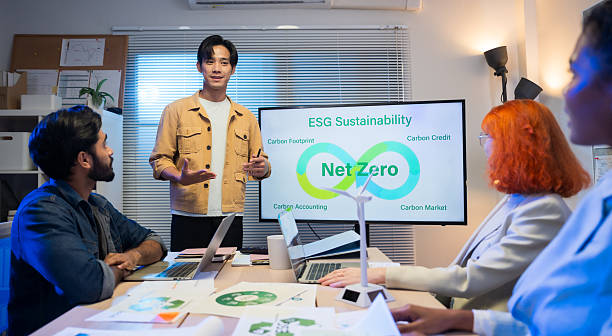
Entry-level professionals assist in collecting ESG data and preparing basic reports, working in firms like Sustainalytics India or MSCI India....
0.0LPA

Mid-level specialists conduct detailed ESG assessments, analyze risks, and support investment decisions, employed by companies like BlackRock...
0.0LPA
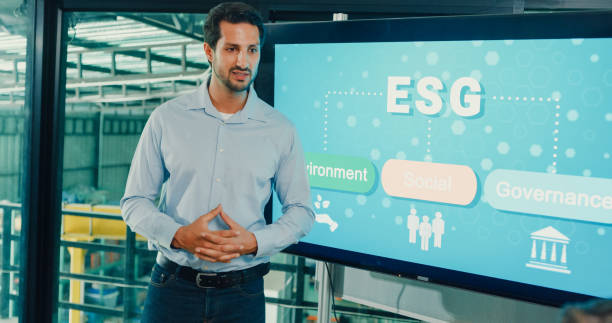
Experienced analysts lead ESG research projects, mentor juniors, and provide strategic insights in organizations like Deloitte India or EY India....
0.0LPA
Take the next step and explore more about ESG Analyst.
Explore similar career paths that might interest you