
Academic Writer
Academic Writer (Entry to Mid-Level)
Explore Career
A Geographer is a professional who studies the Earth's physical features, human societies, and their interactions, with the aim of understanding spatial patterns, environmental changes, and cultural landscapes. They work in academia, government agencies, environmental organizations, urban planning, or private consultancies, collaborating with scientists, policymakers, urban planners, and researchers. Geographers play a crucial role in addressing global challenges like climate change, urbanization, and resource management, providing spatial insights for sustainable development in a sector focused on environmental stewardship, data analysis, and societal impact.

Geographers are analytical and interdisciplinary professionals who investigate the relationships between people, places, and the environment using tools like Geographic Information Systems (GIS), remote sensing, and fieldwork. Their role involves mapping, data analysis, and policy recommendation, often working in diverse settings from research labs to disaster-prone regions. They combine expertise in physical sciences, social sciences, and technology to tackle challenges like environmental degradation, population dynamics, and spatial inequality. As key contributors to sustainable planning, they help shape policies and strategies for managing natural and human resources in an industry increasingly driven by climate urgency, technological innovation, and global connectivity.
| Route | Steps |
| Route 1 | 1. 10+2 in any stream (preferably with Geography, Science, or Social Studies) |
| 2. Bachelor’s degree in Geography or Environmental Science (3-4 years) | |
| 3. Internship or assistant role in geographic research (3-6 months) | |
| 4. Practice as Junior Geographer or GIS Analyst | |
| Route 2 | 1. 10+2 in any stream |
| 2. Bachelor’s degree in Geography or related field (3-4 years) | |
| 3. Master’s degree in Geography, GIS, or Environmental Studies (1-2 years) | |
| 4. Work as Geographer or Spatial Planner | |
| Route 3 | 1. 10+2 in any stream |
| 2. Bachelor’s degree in Geography or Earth Sciences (3-4 years) | |
| 3. Master’s degree in Geography or Remote Sensing (1-2 years) | |
| 4. Ph.D. in Geography or Environmental Geography (3-5 years) | |
| 5. Practice as Senior Geographer or Academician | |
| Route 4 | 1. 10+2 in any stream |
| 2. Short-term certification or diploma in GIS or Remote Sensing (6-12 months) | |
| 3. Internship or entry-level role in environmental or planning organizations | |
| 4. Practice as Geographer domestically or internationally |
| Institute | Course/Program | Official Link |
| University of Delhi, Delhi | BA/MA/Ph.D. in Geography | https://www.du.ac.in/ |
| Jawaharlal Nehru University (JNU), New Delhi | MA/Ph.D. in Geography | https://www.jnu.ac.in/ |
| Banaras Hindu University (BHU), Varanasi | BA/MA/Ph.D. in Geography | https://www.bhu.ac.in/ |
| University of Mumbai, Mumbai | BA/MA in Geography | https://mu.ac.in/ |
| University of Calcutta, Kolkata | BA/MA/Ph.D. in Geography | https://www.caluniv.ac.in/ |
| Jamia Millia Islamia, New Delhi | BA/MA in Geography | https://www.jmi.ac.in/ |
| University of Madras, Chennai | MA/Ph.D. in Geography | https://www.unom.ac.in/ |
| Amity University, Noida | BA/MA in Geography | https://www.amity.edu/ |
| IGNOU (Indira Gandhi National Open University), New Delhi | MA in Geography | http://www.ignou.ac.in/ |
| Osmania University, Hyderabad | BA/MA in Geography | https://www.osmania.ac.in/ |
| Institution | Course | Country | Official Link |
| University of California, Berkeley | MA/Ph.D. in Geography | USA | https://www.berkeley.edu/ |
| University of Oxford | MPhil/DPhil in Geography | UK | https://www.ox.ac.uk/ |
| University of Cambridge | MPhil/Ph.D. in Geography | UK | https://www.cam.ac.uk/ |
| University of British Columbia | MA/Ph.D. in Geography | Canada | https://www.ubc.ca/ |
| Australian National University (ANU) | Master of Geographical Sciences | Australia | https://www.anu.edu.au/ |
| University of Toronto | MA/Ph.D. in Geography | Canada | https://www.utoronto.ca/ |
| University College London (UCL) | MSc in Geography | UK | https://www.ucl.ac.uk/ |
| University of Amsterdam | MSc in Human Geography | Netherlands | https://www.uva.nl/ |
| ETH Zurich | Master in Spatial Development | Switzerland | https://ethz.ch/ |
| National University of Singapore (NUS) | MSc in Applied GIS | Singapore | https://www.nus.edu.sg/ |
India:
International:
Trainee → Junior Geographer → Geographer → Senior Geographer → GIS Specialist → Environmental Consultant → Academician/Professor → Policy Advisor
| India | International |
| Survey of India | United States Geological Survey (USGS) |
| National Remote Sensing Centre (NRSC) | European Space Agency (ESA) |
| Indian Space Research Organisation (ISRO) | National Geographic Society |
| Ministry of Environment, Forest and Climate Change | World Wildlife Fund (WWF) |
| National Disaster Management Authority (NDMA) | United Nations Environment Programme (UNEP) |
| Forest Survey of India (FSI) | Google Maps |
| Geological Survey of India (GSI) | Environmental Systems Research Institute (ESRI) |
| Central Ground Water Board (CGWB) | International Union for Conservation of Nature (IUCN) |
| National Institute of Urban Affairs (NIUA) | NASA Earth Science Division |
| Indian Meteorological Department (IMD) | Ordnance Survey, UK |
| Pros | Cons |
| Opportunity to address global challenges like climate change through spatial insights | Often requires extensive fieldwork in challenging or remote environments |
| High intellectual satisfaction in understanding human-environment interactions | Limited job openings in specialized geographic roles, leading to competition |
| Rewarding impact on sustainability and urban planning through research | Can involve physically demanding tasks like surveys or long travel periods |
| Diverse career paths across government, academia, and environmental sectors | Risk of funding shortages for research or conservation projects |
| Strong potential for growth with increasing focus on GIS and climate solutions | Limited public recognition compared to other scientific or technical professions |
| Career Level | India (₹ per annum) | International (USD per annum) |
| Trainee/Junior Geographer (Early Career) | 2,50,000 - 5,00,000 | 30,000 - 45,000 |
| Geographer (Mid-Career) | 5,00,000 - 10,00,000 | 45,000 - 70,000 |
| Senior Geographer/GIS Specialist | 10,00,000 - 15,00,000 | 70,000 - 100,000 |
| Environmental Consultant/Policy Advisor | 15,00,000 - 20,00,000 | 100,000 - 130,000 |
| Academician/Professor | 12,00,000+ | 90,000+ |
| Note: Salaries may vary based on location, employer, experience, and specialization. |
A career as a Geographer offers a unique opportunity to explore the intricate connections between the Earth’s landscapes and human societies, shaping solutions for a sustainable future. Geographers are the stewards of spatial knowledge, using data and technology to address pressing issues like climate change, urbanization, and resource scarcity. This profession blends scientific inquiry with societal impact, providing diverse pathways in environmental research, urban planning, academia, and policy development. For those passionate about understanding the world’s physical and cultural tapestry, eager to tackle global challenges, and driven to contribute to informed decision-making in an era of environmental and technological transformation, becoming a Geographer is a deeply rewarding journey. It empowers individuals to drive progress by mapping out strategies that enhance resilience and harmony across communities and ecosystems worldwide.

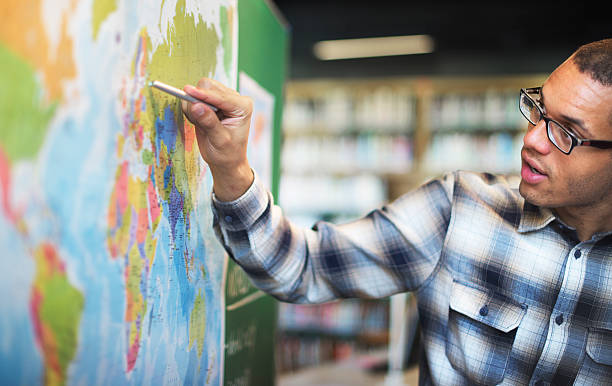
Specialists oversee major geographic projects and policy recommendations with exceptional competence. They integrate deep spatial knowledge with...
0.0LPA
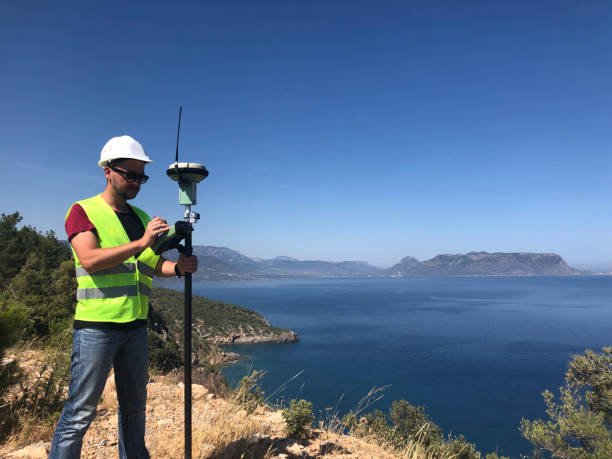
Senior professionals specialize in spatial data systems, ensuring innovation. They provide leadership by managing GIS projects and high-priority...
0.0LPA

Leaders provide strategic guidance on environmental projects in organizational or governmental settings. They oversee initiatives by aligning...
0.0LPA
Take the next step and explore more about Geographer.
Explore similar career paths that might interest you