
Accomodation manager
Hotel Accommodation Manager
Explore Career
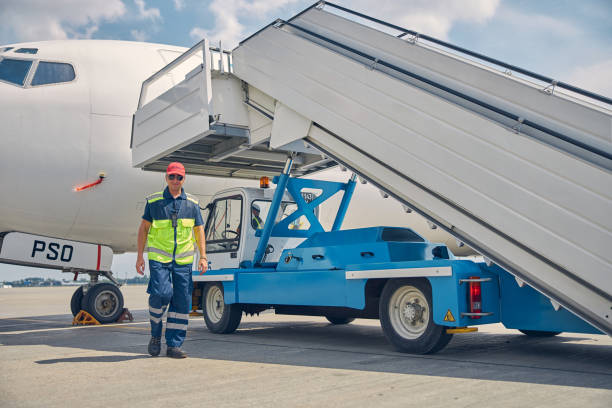
A Ground-Operation Manager is a professional responsible for overseeing the day-to-day operations at airports, ensuring the smooth handling of aircraft, passengers, baggage, and cargo while maintaining safety and efficiency. They work in the aviation industry, primarily at airports, collaborating with airline staff, ground crew, security personnel, and regulatory authorities. Ground-Operation Managers play a crucial role in ensuring seamless airport operations, timely departures, and passenger satisfaction in a sector focused on precision, safety, and time management.

Ground-Operation Managers are detail-oriented and decisive professionals who manage critical ground activities at airports, often working in fast-paced environments like terminals, tarmacs, or control centers. Their role involves coordinating aircraft turnaround, supervising staff, and ensuring compliance with aviation regulations, frequently facing challenges such as weather disruptions or technical delays. They combine expertise in logistics, safety protocols, and customer service to address issues ranging from baggage handling to emergency response. As key contributors to airline efficiency and traveler experience, they help maintain operational excellence in an industry increasingly driven by technology, sustainability, and global connectivity.
| Route | Steps |
| Route 1 | 1. 10+2 in any stream (preferably Science or Commerce) |
| 2. Bachelor’s degree in Aviation Management, Logistics, or Business Administration (3-4 years) | |
| 3. Internship at an airport or airline operations department (3-6 months) | |
| 4. Practice as Ground Staff or Junior Operations Coordinator | |
| Route 2 | 1. 10+2 in any stream |
| 2. Diploma or Certificate in Airport Management or Ground Handling (6-12 months) | |
| 3. Internship with an airline or ground handling agency (3-6 months) | |
| 4. Work as Ground Handling Assistant | |
| Route 3 | 1. 10+2 in any stream |
| 2. Bachelor’s degree in Aviation, Logistics, or Hospitality Management (3-4 years) | |
| 3. Master’s degree in Aviation Management or MBA (Operations) (1-2 years) | |
| 4. Practice as Ground-Operation Manager or Shift Supervisor | |
| Route 4 | 1. 10+2 in any stream |
| 2. Short-term certification in Airport Operations or Ground Handling (1-3 months) | |
| 3. Internship or entry-level role in airport ground operations | |
| 4. Practice as Ground-Operation Manager domestically or internationally |
| Institute | Course/Program | Official Link |
| Indira Gandhi Institute of Aeronautics (IGIA), Multiple Locations | Diploma in Airport Management | https://www.igia.in/ |
| Amity Institute of Travel and Tourism, Noida | BBA in Aviation Management | https://www.amity.edu/ |
| Frankfinn Institute of Air Hostess Training, Multiple Locations | Diploma in Airport Ground Staff | https://www.frankfinn.com/ |
| Christ University, Bangalore | BBA in Aviation and Logistics | https://www.christuniversity.in/ |
| Lovely Professional University (LPU), Punjab | BBA in Aviation Management | https://www.lpu.in/ |
| Avalon Academy, Multiple Locations | Diploma in Airport Ground Operations | https://www.avalonacademy.in/ |
| University of Petroleum and Energy Studies (UPES), Dehradun | BBA in Aviation Operations | https://www.upes.ac.in/ |
| Aptech Aviation Academy, Multiple Locations | Certificate in Ground Staff Services | https://www.aptechaviation.co.in/ |
| Symbiosis Institute of Management Studies (SIMS), Pune | MBA in Operations and Aviation | https://www.sims.edu/ |
| Institute of Logistics and Aviation Management (ILAM), Multiple Locations | Diploma in Aviation Management | https://www.ilamindia.in/ |
| Institution | Course | Country | Official Link |
| Embry-Riddle Aeronautical University | BS in Aviation Business Administration | USA | https://www.erau.edu/ |
| University of Westminster | BSc in Air Transport Management | UK | https://www.westminster.ac.uk/ |
| Cranfield University | MSc in Airport Management | UK | https://www.cranfield.ac.uk/ |
| Purdue University | BS in Aviation Management | USA | https://www.purdue.edu/ |
| University of New South Wales (UNSW) | Bachelor of Aviation (Management) | Australia | https://www.unsw.edu.au/ |
| Seneca College | Diploma in Aviation Operations | Canada | https://www.senecacollege.ca/ |
| Delft University of Technology | MSc in Transport, Infrastructure & Logistics | Netherlands | https://www.tudelft.nl/ |
| Nanyang Technological University (NTU) | Bachelor of Engineering (Aerospace) | Singapore | https://www.ntu.edu.sg/ |
| University of Waterloo | Bachelor of Environmental Studies (Aviation) | Canada | https://uwaterloo.ca/ |
| Queensland University of Technology (QUT) | Bachelor of Business (Aviation) | Australia | https://www.qut.edu.au/ |
India:
International:
Trainee → Ground Handling Assistant → Junior Operations Coordinator → Ground-Operation Manager → Senior Ground-Operation Manager → Airport Operations Director → Chief Operations Officer (COO)
| India | International |
| GMR Airports | Swissport, Global |
| Adani Airports | Dnata, UAE |
| Air India SATS | Menzies Aviation, UK |
| IndiGo Airlines | SATS Ltd, Singapore |
| SpiceJet | Worldwide Flight Services (WFS), France |
| Vistara | Aviapartner, Belgium |
| Delhi International Airport Ltd (DIAL) | Changi Airport Group, Singapore |
| Mumbai International Airport Ltd (MIAL) | Fraport, Germany |
| Bangalore International Airport Ltd (BIAL) | Aéroports de Paris (ADP), France |
| Celebi Aviation | Groundforce, Portugal |
| Pros | Cons |
| Opportunity to ensure smooth aviation operations | Often involves high-stress situations during delays |
| High personal satisfaction in maintaining safety | Can involve challenges in managing unpredictable disruptions |
| Rewarding impact on passenger experience and efficiency | May require working in shifts, including nights or weekends |
| Diverse career paths across airlines and cargo sectors | Risk of burnout from handling constant operational pressures |
| Strong potential for growth with increasing air travel | Limited control over external factors like weather or regulations |
| Career Level | India (₹ per annum) | International (USD per annum) |
| Trainee/Ground Handling Assistant (Early Career) | 2,00,000 - 4,00,000 | 25,000 - 40,000 |
| Junior Operations Coordinator (Mid-Career) | 4,00,000 - 7,00,000 | 40,000 - 55,000 |
| Ground-Operation Manager/Senior Manager | 7,00,000 - 12,00,000 | 55,000 - 80,000 |
| Airport Operations Director | 12,00,000 - 20,00,000 | 80,000 - 120,000 |
| Chief Operations Officer (COO)/Expert | 20,00,000+ | 120,000+ |
| Note: Salaries may vary based on location, employer, experience, and specialization. |
A career as a Ground-Operation Manager offers a vital opportunity to ensure the seamless functioning of airports, enhance passenger experiences, and uphold safety through meticulous coordination and strategic oversight, fostering efficiency and trust with every flight. Ground-Operation Managers are the backbone of airport logistics, using their skills to manage turnarounds, lead teams, and navigate challenges. This profession blends precision with leadership, providing pathways in commercial aviation, cargo operations, private terminals, and beyond. For those passionate about aviation, driven by a desire to tackle fast-paced operational hurdles, and eager to embrace the evolving landscape of digital tools and global connectivity, becoming a Ground-Operation Manager is a deeply rewarding journey. It empowers individuals to shape airport efficiency, address logistical obstacles, and advance aviation goals through the transformative power of ground operations management.
Early-career professionals handle basic ground tasks with increasing autonomy. They hone skills in baggage processing and ramp safety while...
0.0LPA

Specialists oversee major ground operations with exceptional competence. They integrate deep logistical knowledge with expertise in safety for...
0.0LPA

Leaders provide strategic guidance on airport-wide operations across terminals or regions. They oversee initiatives by aligning programs with...
0.0LPA
Take the next step and explore more about Ground-Operation Manager.
Explore similar career paths that might interest you