
Accomodation manager
Hotel Accommodation Manager
Explore Career
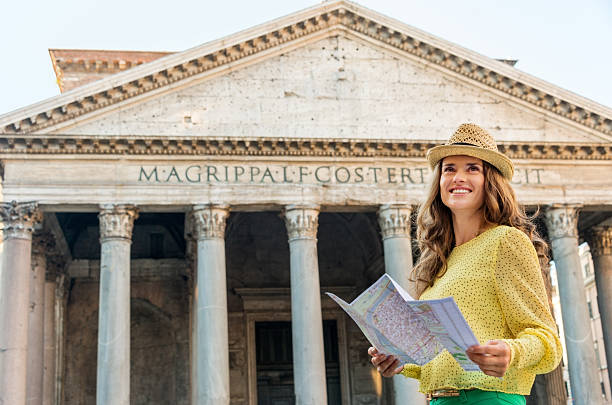
A Heritage-Tourism Manager is a professional who oversees the promotion, preservation, and management of cultural and historical sites, ensuring they are accessible and appealing to tourists while maintaining their integrity. They work in museums, heritage sites, tourism boards, or private organizations, collaborating with historians, conservationists, and local communities. Heritage-Tourism Managers play a crucial role in safeguarding cultural heritage, boosting local economies, and educating visitors in a sector focused on sustainable tourism, cultural preservation, and historical education.
| Route | Steps |
| Route 1 | 1. 10+2 in any stream (preferably Humanities or History) |
| 2. Bachelor’s degree in Tourism Management, History, or Archaeology (3-4 years) | |
| 3. Internship at a heritage site or tourism board (3-6 months) | |
| 4. Practice as Junior Heritage-Tourism Coordinator | |
| Route 2 | 1. 10+2 in any stream |
| 2. Diploma or Certificate in Tourism or Heritage Management (6-12 months) | |
| 3. Internship at a museum or cultural organization (3-6 months) | |
| 4. Work as Heritage-Tourism Assistant or Guide | |
| Route 3 | 1. 10+2 in any stream |
| 2. Bachelor’s degree in Tourism, History, or Cultural Studies (3-4 years) | |
| 3. Master’s degree in Heritage Management or Tourism Studies (1-2 years) | |
| 4. Practice as Heritage-Tourism Manager or Site Coordinator | |
| Route 4 | 1. 10+2 in any stream |
| 2. Short-term workshop or certification in Heritage Conservation or Tourism Marketing (1-3 months) | |
| 3. Internship or volunteer role at a heritage site or tourism agency | |
| 4. Practice as Heritage-Tourism Manager domestically or internationally |
| Institute | Course/Program | Official Link |
| Indian Institute of Tourism and Travel Management (IITTM), Gwalior | MBA in Tourism & Travel Management | https://www.iittm.ac.in/ |
| University of Delhi, Delhi | BA/MA in History or Tourism Management | https://www.du.ac.in/ |
| Banaras Hindu University (BHU), Varanasi | BA/MA in History or Archaeology | https://www.bhu.ac.in/ |
| IGNOU (Indira Gandhi National Open University), New Delhi | Certificate/Diploma in Tourism Studies | http://www.ignou.ac.in/ |
| Christ University, Bangalore | BA/MA in History or Tourism Management | https://www.christuniversity.in/ |
| Amity Institute of Travel & Tourism, Noida | BA/MBA in Tourism Management | https://www.amity.edu/ |
| Kerala Institute of Tourism and Travel Studies (KITTS), Thiruvananthapuram | Diploma in Tourism Management | https://www.kittsedu.org/ |
| Jawaharlal Nehru University (JNU), New Delhi | MA in History or Cultural Studies | https://www.jnu.ac.in/ |
| University of Rajasthan, Jaipur | MA in History and Culture | https://www.uniraj.ac.in/ |
| National Museum Institute, New Delhi | MA in Museology and Heritage Management | http://nmi.gov.in/ |
| Institution | Course | Country | Official Link |
| University of York | MA in Cultural Heritage Management | UK | https://www.york.ac.uk/ |
| University College London (UCL) | MA in Cultural Heritage Studies | UK | https://www.ucl.ac.uk/ |
| University of Sydney | Master of Heritage Conservation | Australia | https://www.sydney.edu.au/ |
| University of Massachusetts Amherst | MS in Historic Preservation | USA | https://www.umass.edu/ |
| University of Amsterdam | MA in Heritage and Memory Studies | Netherlands | https://www.uva.nl/ |
| University of Toronto | MA in Museum Studies | Canada | https://www.utoronto.ca/ |
| Sapienza University of Rome | MA in Cultural Heritage Management | Italy | https://www.uniroma1.it/ |
| University of Melbourne | Master of Cultural Materials Conservation | Australia | https://www.unimelb.edu.au/ |
| National University of Singapore (NUS) | MA in Cultural Studies | Singapore | https://www.nus.edu.sg/ |
| Durham University | MA in International Cultural Heritage Management | UK | https://www.durham.ac.uk/ |
India:
International:
Trainee → Heritage-Tourism Assistant → Heritage-Tourism Coordinator → Heritage-Tourism Manager → Senior Heritage Manager → Director of Cultural Tourism → Heritage Policy Advisor
| India | International |
| Archaeological Survey of India (ASI) | UNESCO, Global |
| Ministry of Culture, India | World Heritage Centre, Global |
| Indian National Trust for Art and Cultural Heritage (INTACH) | National Trust, UK |
| Tourism Corporation of India | Smithsonian Institution, USA |
| State Tourism Departments (e.g., Rajasthan, Kerala) | Getty Conservation Institute, USA |
| Taj Group of Hotels (Heritage Properties) | International Council on Monuments and Sites (ICOMOS), Global |
| Oberoi Hotels (Heritage Division) | English Heritage, UK |
| Heritage Walks of India | National Park Service, USA |
| Culture Holidays India Pvt. Ltd. | Historic England, UK |
| Sita Cultural Center | Cultural Heritage Agency, Netherlands |
| Pros | Cons |
| Opportunity to preserve and promote cultural heritage | Often limited funding for conservation or promotion |
| High personal satisfaction in educating visitors | Can involve challenges in balancing tourism with preservation |
| Rewarding impact on local economies and cultural pride | May require working in remote or under-resourced areas |
| Diverse career paths across tourism, conservation, and education | Risk of burnout from managing high tourist volumes or events |
| Strong potential for growth with increasing interest in cultural travel | Limited recognition compared to mainstream tourism roles |
| Career Level | India (₹ per annum) | International (USD per annum) |
| Trainee/Heritage-Tourism Assistant (Early Career) | 2,00,000 - 4,00,000 | 25,000 - 40,000 |
| Heritage-Tourism Coordinator (Mid-Career) | 4,00,000 - 6,00,000 | 40,000 - 60,000 |
| Heritage-Tourism Manager/Senior Manager | 6,00,000 - 10,00,000 | 60,000 - 80,000 |
| Director of Cultural Tourism | 10,00,000 - 18,00,000 | 80,000 - 120,000 |
| Senior Consultant/Heritage Policy Advisor | 15,00,000+ | 100,000+ |
| Note: Salaries may vary based on location, employer, experience, and site prominence. |
A career as a Heritage-Tourism Manager offers a unique opportunity to preserve the past, educate the present, and inspire the future through the thoughtful management of cultural and historical treasures, fostering global appreciation and local pride. Heritage-Tourism Managers are the guardians of history, using their skills to protect sites, engage communities, and enrich tourist experiences. This profession blends cultural passion with strategic planning, providing pathways in conservation, tourism, education, and beyond. For those passionate about history, driven by a desire to safeguard heritage, and eager to navigate the evolving landscape of sustainable travel and digital outreach, becoming a Heritage-Tourism Manager is a deeply rewarding journey. It empowers individuals to bridge generations, celebrate diversity, and advance cultural understanding through the transformative power of heritage tourism.

Experienced professionals manage specific heritage projects with high accuracy, using advanced planning techniques. They offer expertise in areas...
0.0LPA

Specialists oversee major heritage sites or programs with exceptional competence. They integrate deep cultural knowledge with expertise in tourism...
0.0LPA

Senior professionals specialize in large-scale heritage tourism strategies, ensuring comprehensive management. They provide leadership by...
0.0LPA
Take the next step and explore more about Heritage-Tourism Manager.
Explore similar career paths that might interest you