
Academic Writer
Academic Writer (Entry to Mid-Level)
Explore Career
A Human-Rights Advocate is a professional dedicated to promoting and protecting the fundamental rights and freedoms of individuals and communities, often focusing on issues like equality, justice, and dignity. They work in non-governmental organizations (NGOs), legal firms, international bodies, or grassroots movements, collaborating with activists, lawyers, and policymakers. Human-Rights Advocates play a crucial role in addressing systemic injustices, influencing policy, and empowering marginalized groups in a sector focused on social justice, legal reform, and global equity.
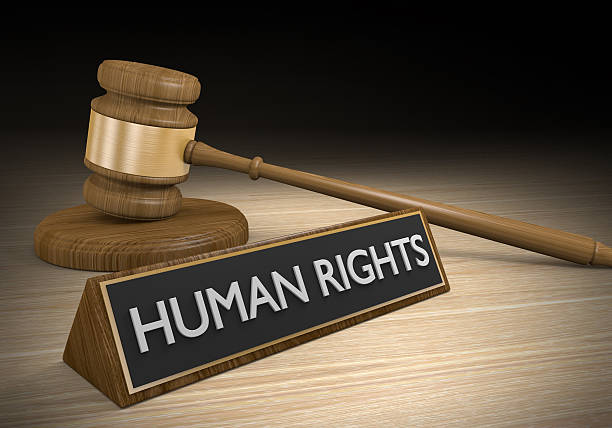
Human-Rights Advocates are passionate and resilient professionals who champion the cause of justice, often working in challenging environments such as conflict zones, legal battles, or advocacy campaigns. Their role involves raising awareness, providing legal or social support, and lobbying for change, frequently facing challenges like resistance from authorities or resource constraints. They combine expertise in law, sociology, and communication to address issues ranging from gender inequality to refugee rights. As key contributors to social equity and policy reform, they help shape a fairer world in an industry increasingly driven by global solidarity, digital activism, and intersectional approaches.
| Route | Steps |
| Route 1 | 1. 10+2 in any stream (preferably Humanities or Social Sciences) |
| 2. Bachelor’s degree in Law, Sociology, or Political Science (3-5 years) | |
| 3. Internship at an NGO or human rights organization (3-6 months) | |
| 4. Practice as Junior Human-Rights Advocate or Legal Assistant | |
| Route 2 | 1. 10+2 in any stream |
| 2. Diploma or Certificate in Human Rights or Social Justice (6-12 months) | |
| 3. Internship at a grassroots movement or advocacy group (3-6 months) | |
| 4. Work as Human-Rights Campaign Assistant | |
| Route 3 | 1. 10+2 in any stream |
| 2. Bachelor’s degree in Law, International Relations, or Sociology (3-5 years) | |
| 3. Master’s degree in Human Rights or Public Policy (1-2 years) | |
| 4. Practice as Human-Rights Advocate or Policy Analyst | |
| Route 4 | 1. 10+2 in any stream |
| 2. Bachelor’s degree in Law or Social Sciences (3-5 years) | |
| 3. PhD in Human Rights, Law, or Social Justice (3-5 years) | |
| 4. Practice as Senior Advocate, Professor, or International Consultant |
| Institute | Course/Program | Official Link |
| National Law School of India University (NLSIU), Bangalore | BA LLB/LLM in Human Rights Law | https://www.nls.ac.in/ |
| University of Delhi, Delhi | LLB/MA in Human Rights or Sociology | https://www.du.ac.in/ |
| Tata Institute of Social Sciences (TISS), Mumbai | MA in Human Rights or Social Work | https://www.tiss.edu/ |
| Jamia Millia Islamia, New Delhi | MA in Human Rights and Duties Education | https://www.jmi.ac.in/ |
| Banaras Hindu University (BHU), Varanasi | LLB/MA in Political Science or Sociology | https://www.bhu.ac.in/ |
| National Human Rights Commission (NHRC) Training Programs, New Delhi | Certificate in Human Rights | https://nhrc.nic.in/ |
| Christ University, Bangalore | BA LLB/MA in International Studies | https://www.christuniversity.in/ |
| IGNOU (Indira Gandhi National Open University), New Delhi | Certificate/Diploma in Human Rights | http://www.ignou.ac.in/ |
| Amity Law School, Noida | BA LLB/LLM in Human Rights | https://www.amity.edu/ |
| Symbiosis Law School, Pune | BA LLB/LLM in Human Rights Law | https://www.symlaw.ac.in/ |
| Institution | Course | Country | Official Link |
| Harvard Law School | LLM in Human Rights Law | USA | https://www.harvard.edu/ |
| University of Oxford | MSc in International Human Rights Law | UK | https://www.ox.ac.uk/ |
| University College London (UCL) | MA in Human Rights | UK | https://www.ucl.ac.uk/ |
| Columbia University | MA in Human Rights Studies | USA | https://www.columbia.edu/ |
| University of Toronto | MA in International Relations with Human Rights Focus | Canada | https://www.utoronto.ca/ |
| University of Amsterdam | MA in International Law and Human Rights | Netherlands | https://www.uva.nl/ |
| Australian National University (ANU) | Master of International Law and Human Rights | Australia | https://www.anu.edu.au/ |
| University of Cape Town | LLM in Human Rights Law | South Africa | https://www.uct.ac.za/ |
| National University of Singapore (NUS) | LLM in International Law and Human Rights | Singapore | https://www.nus.edu.sg/ |
| University of Geneva | MA in International Humanitarian Law | Switzerland | https://www.unige.ch/ |
India:
International:
Trainee → Human-Rights Campaign Assistant → Junior Human-Rights Advocate → Human-Rights Advocate → Senior Advocate → Program Director → International Human-Rights Consultant
| India | International |
| National Human Rights Commission (NHRC), India | United Nations Human Rights Council (UNHRC), Global |
| People’s Union for Civil Liberties (PUCL), India | Amnesty International, Global |
| Human Rights Law Network (HRLN), India | Human Rights Watch, Global |
| Oxfam India | International Committee of the Red Cross (ICRC), Global |
| ActionAid India | Doctors Without Borders (MSF), Global |
| Commonwealth Human Rights Initiative (CHRI), India | Freedom House, USA |
| Centre for Social Justice, India | Save the Children, Global |
| Mazdoor Kisan Shakti Sangathan (MKSS), India | International Rescue Committee (IRC), Global |
| Amnesty International India | CARE International, Global |
| Child Rights and You (CRY), India | Open Society Foundations, Global |
| Pros | Cons |
| Opportunity to fight for justice and protect vulnerable groups | Often face resistance or hostility from authorities or systems |
| High personal satisfaction in creating social impact | Can involve emotional toll due to exposure to trauma or injustice |
| Rewarding impact on policy reform and community empowerment | May require working in dangerous or unstable environments |
| Diverse career paths across legal, advocacy, and international roles | Risk of burnout from intense workloads or slow progress |
| Strong potential for growth with increasing focus on global equity | Limited funding or resources for advocacy initiatives |
| Career Level | India (₹ per annum) | International (USD per annum) |
| Trainee/Campaign Assistant (Early Career) | 2,00,000 - 4,00,000 | 25,000 - 40,000 |
| Junior Human-Rights Advocate (Mid-Career) | 4,00,000 - 6,00,000 | 40,000 - 60,000 |
| Human-Rights Advocate/Senior Advocate | 6,00,000 - 10,00,000 | 60,000 - 85,000 |
| Program Director/Lead Advocate | 10,00,000 - 15,00,000 | 85,000 - 120,000 |
| International Consultant/Expert | 15,00,000+ | 100,000+ |
| Note: Salaries may vary based on location, employer, experience, and specialization. |
A career as a Human-Rights Advocate offers a powerful opportunity to stand for justice, protect the vulnerable, and transform societies through relentless dedication to equality and dignity, fostering a world of fairness and compassion. Human-Rights Advocates are the voices of the oppressed, using their skills to challenge injustice, influence policy, and empower communities. This profession blends moral conviction with strategic action, providing pathways in legal aid, activism, policy, and beyond. For those passionate about equity, driven by a desire to combat oppression, and eager to navigate the evolving landscape of digital campaigns and global solidarity, becoming a Human-Rights Advocate is a profoundly meaningful journey. It empowers individuals to defend freedoms, address systemic wrongs, and advance societal progress through the transformative power of human rights advocacy.
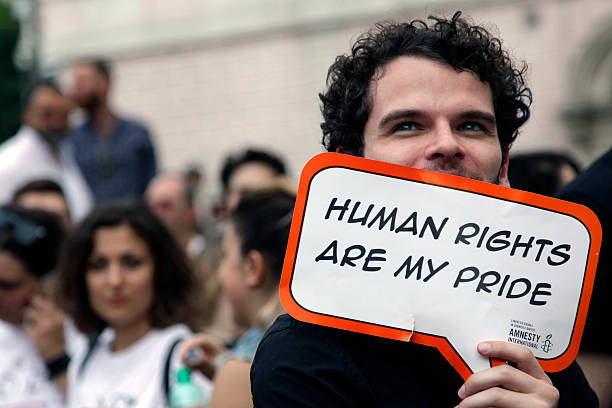
Early-career professionals handle basic campaign or case tasks with increasing autonomy. They hone skills in public outreach and reporting while...
0.0LPA

Specialists oversee major human rights cases or campaigns with exceptional competence. They integrate deep legal knowledge with expertise in...
0.0LPA
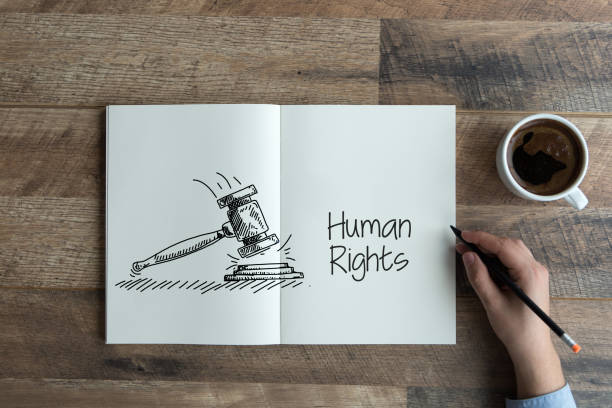
Senior professionals specialize in high-profile cases or large-scale campaigns, ensuring in-depth impact. They provide leadership by managing...
0.0LPA
Take the next step and explore more about Human-Rights Advocate.
Explore similar career paths that might interest you