Indian Army
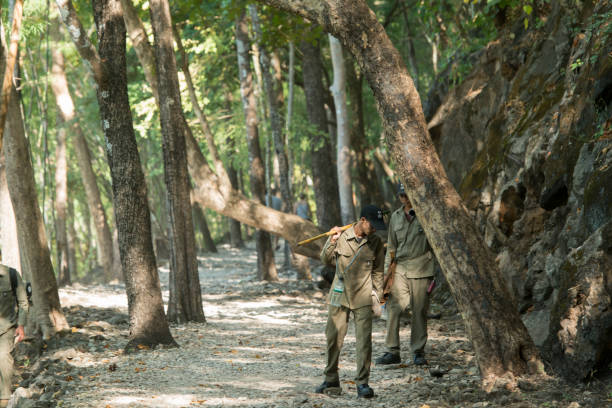
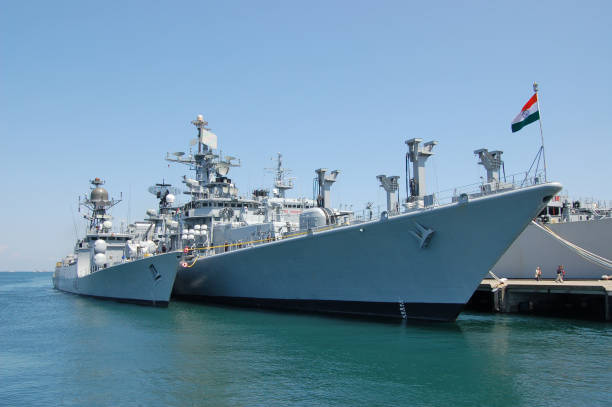
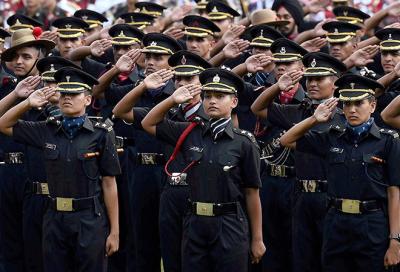
The Indian Army is the land-based branch of the Indian Armed Forces, responsible for protecting the nation’s territorial integrity, maintaining internal security, and supporting disaster relief operations. Established as one of the largest and most formidable armies in the world, the Indian Army plays a pivotal role in national defence, counter-terrorism, and peacekeeping missions both domestically and internationally. Indian Army personnel are critical to ensuring sovereignty, fostering stability, and providing humanitarian aid. This career is vital to national security, social harmony, and global military cooperation. Army professionals contribute to advancements through trends such as modernization of weaponry, integration of technology in warfare, and focus on joint military operations.
Career Description
Indian Army personnel work in diverse settings such as border outposts, operational theatres, command headquarters, and training institutes, often collaborating with other branches of the armed forces, government agencies, and international allies. Their roles include combat operations, logistics management, engineering support, and medical services. They face challenges like high-risk deployments, extreme physical demands, and prolonged separations from family. By leveraging expertise in military strategy, engineering, and leadership, Indian Army officers and soldiers ensure national safety and operational readiness. As key contributors to India’s defence, they drive progress through trends like indigenous defence production, cybersecurity in military operations, and advanced training methodologies.
Roles and Responsibilities
- Combat Operations (Infantry/Armoured/Artillery)
- Engage in ground warfare, border defence, and counter-insurgency operations to protect national interests.
- Operate tanks, artillery, or infantry units during combat or peacekeeping missions.
- Military Engineering and Infrastructure
- Construct and maintain roads, bridges, and fortifications in strategic or disaster-hit areas.
- Develop and deploy military technology for operational efficiency and defence infrastructure.
- Logistics and Supply Chain Management
- Manage procurement, transportation, and distribution of ammunition, food, and equipment.
- Ensure resource availability in remote or hostile environments during operations.
- Training and Skill Development
- Train recruits and existing personnel in combat tactics, weapon handling, and leadership skills.
- Design drills and simulations to maintain readiness for diverse operational scenarios.
- Intelligence and Surveillance
- Gather and analyze intelligence on enemy movements and potential threats for strategic planning.
- Use advanced surveillance tools like drones and satellites for border security.
- Medical and Healthcare Services
- Provide emergency medical care to soldiers during combat and peacetime operations.
- Manage field hospitals and conduct health programs for personnel and civilians in conflict zones.
- Administrative and Personnel Management
- Oversee recruitment, welfare, and discipline of soldiers across units and formations.
- Handle documentation, policy enforcement, and financial planning for army operations.
- Disaster Relief and Humanitarian Aid
- Lead rescue and relief efforts during natural calamities like floods, earthquakes, or pandemics.
- Coordinate with civilian authorities to provide food, shelter, and medical support in crises.
Study Route & Eligibility Criteria
| Route | Steps |
| Route 1: NDA Entry (Officer Cadre) | 1. Complete 10+2 in any stream with minimum 50-60% marks 2. Clear NDA Entrance Exam conducted by UPSC and SSB Interview 3. Undergo 3-year training at National Defence Academy (NDA), Khadakwasla 4. Join Indian Army as a Permanent Commission Officer after specialized training at Indian Military Academy (IMA), Dehradun |
| Route 2: CDS Entry (Officer Cadre) | 1. Complete a Bachelor’s degree in any discipline 2. Clear Combined Defence Services (CDS) Exam by UPSC and SSB Interview 3. Train at Indian Military Academy (IMA), Dehradun for 1-1.5 years 4. Join Indian Army as a Permanent or Short Service Commission Officer |
| Route 3: Technical Entry Scheme (TES) (Officer Cadre) | 1. Complete 10+2 with Physics, Chemistry, and Mathematics (PCM) with minimum 60% marks 2. Clear SSB Interview (no written test for TES) 3. Undergo 5-year training including engineering degree and military training 4. Join as Permanent Commission Officer in technical branches like Engineering Corps |
| Route 4: Short Service Commission (SSC) via AFCAT/Direct Entry | 1. Complete a Bachelor’s degree (specific criteria for branches like Medical or Technical) 2. Clear relevant exams (e.g., AFCAT for specific roles) or direct SSB Interview 3. Train at Officers Training Academy (OTA), Chennai for 49 weeks 4. Join as Short Service Commission Officer with option for extension or Permanent Commission |
| Route 5: Soldier/Jawan Entry (Non-Officer Cadre) | 1. Complete 10th/10+2 (depending on trade) with minimum 45-50% marks 2. Clear Indian Army Soldier Recruitment Rally tests (Physical, Medical, Written) 3. Undergo training at regimental centers based on trade 4. Join as Soldier in technical or non-technical trades with potential for promotion |
Significant Observations (Academic Related Points)
- Eligibility Criteria: Educational qualifications vary by entry (e.g., 10+2 for NDA, Bachelor’s for CDS) with specific age limits (e.g., 16.5-19.5 years for NDA).
- Competitive Examinations: Clearing exams like NDA, CDS, or recruitment rallies along with SSB interviews is mandatory for most roles.
- Physical Standards: Strict height, weight, and fitness criteria must be met due to combat and field demands.
- Medical Fitness: Candidates must pass rigorous medical tests to ensure suitability for military operations.
- Technical Knowledge: For technical branches, engineering or science backgrounds are advantageous.
- Continuous Training: Lifelong learning through advanced courses and field exercises is essential for skill upgrades.
- Field Readiness: Practical combat or logistical skills often outweigh theoretical knowledge in operational success.
- Strategic Awareness: Understanding military tactics and geopolitics aids in mission planning and execution.
- Discipline and Resilience: Mental and physical endurance are critical for handling high-stress environments.
- Ethical Commitment: Dedication to national service and integrity drives career progression.
- Teamwork Ability: Collaboration with diverse units and allied forces is key to operational success.
Internships & Practical Exposure
- Exposure through NCC activities for hands-on military and leadership experience.
- Training camps at army bases for understanding combat operations and field protocols.
- Participation in defence exhibitions or parades for insights into army capabilities.
- Observerships during NDA or IMA training for real-world mission simulations.
- Involvement in disaster relief drills for practical skills in humanitarian operations.
- Exposure to weapon handling and tactical exercises during pre-commission training.
- Workshops on cybersecurity and drone technology for modern warfare expertise.
- Volunteer roles in defence-related community outreach to build professional networks.
- Collaborative exercises with international armies for global operational exposure.
Courses & Specializations to Enter the Field
- B.Sc. or B.A. for foundational knowledge for officer cadre entries like NDA or CDS.
- B.E./B.Tech. in Mechanical, Electrical, or Civil Engineering for Technical Entry Scheme or Corps of Engineers.
- Bachelor’s degree in any discipline for Short Service Commission (SSC) non-technical roles.
- Specialization in Military Strategy, Defence Technology, or Cybersecurity.
- Short-term courses on Combat Tactics and Field Operations.
- Training in Disaster Response and Humanitarian Military Operations.
- Certifications in Logistics Management and Military Communication Systems.
- Advanced programs in Counter-Insurgency and Border Security (post-entry).
Top Institutes for Defence and Military Education (India)
| Institute | Course/Program | Official Link |
| National Defence Academy (NDA), Khadakwasla, Pune | 3-Year Training for Army Officer Cadets | https://www.nda.nic.in/ |
| Indian Military Academy (IMA), Dehradun | Officer Training for Permanent Commission | https://indianarmy.nic.in/ |
| Officers Training Academy (OTA), Chennai | Short Service Commission Officer Training | https://indianarmy.nic.in/ |
| Rashtriya Indian Military College (RIMC), Dehradun | Preparatory Training for Defence Entry | https://www.rimc.gov.in/ |
| Sainik Schools (Multiple Locations, e.g., Kapurthala, Ghorakhal) | Preparatory Education for NDA/CDS | https://www.sainikschooltvm.nic.in/ |
| College of Military Engineering (CME), Pune | Engineering Training for Technical Roles | https://indianarmy.nic.in/ |
| Defence Services Staff College (DSSC), Wellington | Advanced Military Leadership Training | https://dssc.gov.in/ |
| Army War College, Mhow, Madhya Pradesh | Strategic and Tactical Training for Officers | https://indianarmy.nic.in/ |
| Military College of Telecommunication Engineering (MCTE), Mhow | Signals and Communication Training | https://indianarmy.nic.in/ |
| Armed Forces Medical College (AFMC), Pune | MBBS and Medical Training for Army Doctors | https://www.afmc.nic.in/ |
Top International Institutes for Military and Defence Studies
| Institution | Course | Country | Official Link |
| United States Military Academy (West Point), New York | Bachelor of Science in Military Studies | USA | https://www.westpoint.edu/ |
| Royal Military Academy Sandhurst, Camberley | Officer Training for Military Leadership | UK | https://www.army.mod.uk/ |
| Australian Defence Force Academy (ADFA), Canberra | Bachelor of Arts/Science (Military Focus) | Australia | https://www.defence.gov.au/adfa/ |
| French Military Academy, Saint-Cyr Coëtquidan | Officer Training in Military Strategy | France | https://www.st-cyr.terre.defence.gouv.fr/ |
| Canadian Forces College, Toronto | Advanced Military and Strategic Studies | Canada | https://www.cfc.forces.gc.ca/ |
| German Armed Forces University, Munich | Military Leadership and Defence Studies | Germany | https://www.unibw.de/ |
| Japan Ground Self-Defence Force Academy, Yokosuka | Military Officer Training | Japan | https://www.mod.go.jp/gsdf/ |
| Royal Military College of Canada, Kingston | Bachelor of Military Arts and Science | Canada | https://www.rmc-cmr.ca/ |
| Italian Military Academy, Modena | Military Leadership and Tactical Training | Italy | https://www.esercito.difesa.it/ |
| Netherlands Defence Academy, Breda | Military Strategy and Defence Studies | Netherlands | https://www.defensie.nl/ |
Entrance Tests Required
India:
- NDA Entrance Exam (UPSC): For entry into NDA for Permanent Commission in Indian Army.
- Combined Defence Services (CDS) Exam (UPSC): For graduate-level entry into Indian Army as Permanent or Short Service Commission Officer.
- Indian Army Soldier Recruitment Rally Tests: For non-officer cadre entry, including physical, medical, and written tests.
- Technical Entry Scheme (TES): Direct SSB Interview for 10+2 PCM students (no written test).
- SSB Interview: Mandatory for all officer-level entries post-written exams, focusing on personality and aptitude.
International (for Relevant Studies or Exposure):
- IELTS (International English Language Testing System): Minimum score of 6.5-7.0 for non-native speakers applying to programs in the UK, Canada, etc.
- TOEFL (Test of English as a Foreign Language): Minimum score of 90-100 for programs in English-speaking countries like the USA.
- SAT (Scholastic Assessment Test): Required for undergraduate military programs in the USA at institutes like West Point.
- GRE (Graduate Record Examination): Needed for postgraduate programs in military or defence studies in countries like the USA or Canada.
- Program-Specific Assessments: Some institutes may require physical tests, essays, or interviews for military programs.
Ideal Progressing Career Path (Officer Cadre - Combat Branch Example)
Lieutenant → Captain → Major → Lieutenant Colonel → Colonel → Brigadier → Major General → Lieutenant General → General/Chief of Army Staff
Major Areas of Employment
- Army Bases and Border Outposts across India for combat and security operations.
- Command Headquarters for strategic planning and policy formulation.
- Training Institutes like IMA or NDA for skill development of personnel.
- Defence Research and Development Organization (DRDO) for military technology innovation.
- International Missions for peacekeeping or joint exercises with allied forces.
- Disaster Response Units for humanitarian aid during national emergencies.
- Ordnance Factories and PSUs like BEL for collaboration on defence production.
Prominent Employers/Associated Organizations
| India (Government/Defence Bodies) | International Collaborations |
| Indian Army Headquarters, New Delhi | United Nations Peacekeeping Missions, Global |
| Ministry of Defence, Government of India | North Atlantic Treaty Organization (NATO), Global (Exercises) |
| Defence Research and Development Organisation (DRDO), New Delhi | United States Army, USA (Joint Exercises) |
| Bharat Electronics Limited (BEL), Bangalore | British Army, UK (Collaboration) |
| Ordnance Factory Board (OFB), Kolkata | French Army, France (Joint Training) |
| Army Training Command (ARTRAC), Shimla | Russian Ground Forces, Russia (Historical Ties) |
| Union Public Service Commission (UPSC), New Delhi | Israeli Defence Forces, Israel (Technology Sharing) |
Pros and Cons of the Profession
| Pros | Cons |
| High societal impact through national defence and disaster response | High risk of injury or loss of life during combat or training |
| Prestigious role with job security, benefits, and honor | Physically and mentally demanding with rigorous training |
| Access to advanced training and leadership opportunities | Frequent relocations and long separations from family |
| Opportunity to serve in international missions and collaborations | Strict hierarchical structure with limited personal freedom |
| Contribution to nation-building and humanitarian efforts | Stressful conditions during wartime or counter-insurgency operations |
Industry Trends and Future Outlook
- Indigenous Defence Production: Focus on Made-in-India projects like Arjun Tank and small arms for self-reliance.
- Unmanned Systems and Drones: Integration of unmanned vehicles for surveillance and combat roles.
- Cyber Warfare Capabilities: Strengthening defences against cyber threats to military networks.
- Modernization of Arsenal: Acquisition of advanced weaponry and equipment for enhanced combat power.
- AI in Military Operations: Use of artificial intelligence for predictive analytics and battlefield decisions.
- Joint Military Exercises: Increasing international collaborations for operational readiness.
- Counter-Insurgency Strategies: Enhanced focus on technology-driven solutions for internal security.
- Soldier Welfare Initiatives: Improving living conditions and mental health support for personnel.
- Integrated Theatre Commands: Restructuring for seamless coordination among Army, Navy, and Air Force.
Salary Expectations
| Career Level (Officer Cadre) | India (₹ per annum) | Note on International Roles |
| Lieutenant (Entry) | 6,00,000 - 8,00,000 | International roles not typical for base salary |
| Captain (Early-Mid) | 8,00,000 - 10,00,000 | Salaries based on Indian pay scales |
| Major (Mid-Level) | 10,00,000 - 13,00,000 | Additional field and risk allowances |
| Lieutenant Colonel (Senior) | 13,00,000 - 16,00,000 | Perks include housing and travel |
| Colonel/Brigadier and Above | 16,00,000 - 22,50,000+ | Apex scale with significant benefits |
| Note: Salaries are based on the 7th Pay Commission scales for Indian Army officers and may vary with allowances (e.g., field area pay), postings, and seniority. Soldier/Jawan salaries range from ₹3,00,000 to ₹6,00,000 per annum based on rank and trade. |
Key Software Tools
- Battlefield Management Systems for real-time combat coordination.
- Logistics Management Software for supply chain and resource tracking.
- Surveillance Tools for drone and satellite-based intelligence gathering.
- Cybersecurity Platforms for protecting military communication networks.
- Simulation Software for tactical training and mission planning.
- Data Analytics Tools for operational planning and threat assessment.
- Geographic Information Systems (GIS) for terrain mapping and strategy.
Professional Organizations and Networks
- Indian Army Association, India.
- Ministry of Defence, Government of India.
- United Service Institution of India (USI), New Delhi.
- International Institute for Strategic Studies (IISS), Global.
- Army Training Command (ARTRAC), India.
- Defence Services Staff College (DSSC), India.
- Association of Military Colleges, Regional.
Notable Indian Army Personnel and Leaders (Top 10)
- Field Marshal Sam Manekshaw (India, 1914-2008): First Indian Army officer to be promoted to Field Marshal, led 1971 Indo-Pak War to victory. His strategy liberated Bangladesh. His impact shaped history.
- General K.M. Cariappa (India, 1899-1993): First Indian Commander-in-Chief of the Indian Army, laid foundation for modern military structure. His vision built discipline. His impact created legacy.
- General Bipin Rawat (India, 1958-2021): First Chief of Defence Staff, pioneered integrated military reforms. His leadership unified forces. His impact modernized defence.
- Major Somnath Sharma (India, 1923-1947): First recipient of Param Vir Chakra for bravery in 1947 Indo-Pak War. His valor saved Srinagar. His impact upheld sovereignty.
- Lieutenant ArunKhetarpal (India, 1950-1971): Awarded Param Vir Chakra for tank battle heroism in 1971 War. His bravery destroyed enemy. His impact secured borders.
- General Dalbir Singh Suhag (India, 1954-): Led surgical strikes in 2016, modernized army operations during tenure. His decisions countered terrorism. His impact strengthened security.
- Major General Ian Cardozo (India, 1937-): War hero and first amputee to command battalion, showed resilience. His determination broke barriers. His impact motivated soldiers.
- Havildar Hangpan Dada (India, 1979-2016): Awarded Ashoka Chakra for killing terrorists in 2016 operation. His heroism saved lives. His impact reinforced safety.
Advice for Aspiring Indian Army Personnel
- Build a strong foundation in academics and physical fitness for entry eligibility.
- Start physical training early to meet the army’s rigorous medical and fitness standards.
- Prepare thoroughly for entrance exams like NDA, CDS, or soldier rallies with focus on aptitude.
- Gain exposure through NCC or military camps to confirm interest in army life.
- Stay updated on defence technologies and national security issues for SSB interviews.
- Develop discipline and teamwork skills for handling military life and operations.
- Join coaching institutes or online resources for structured exam preparation guidance.
- Work on mental resilience to cope with high-stress combat or training scenarios.
- Explore soldier entry if officer cadre attempts are unsuccessful for initial experience.
- Volunteer in defence-related initiatives or camps to build a strong profile.
- Cultivate adaptability to handle frequent postings and diverse operational environments.
- Focus on national service ethos to align with the army’s mission of protecting sovereignty.
A career in the Indian Army offers a unique opportunity to defend the nation’s borders by mastering military strategy and technology, fostering security through dedicated service, and empowering the country with every mission accomplished. Indian Army personnel are the protectors of India’s territorial integrity, using their expertise and commitment to ensure national safety, uphold justice, and combat threats across diverse terrains. This profession blends combat readiness with leadership, providing pathways in infantry, engineering, logistics, and medical services. For those passionate about defence, driven by a desire to serve the nation through military service, and eager to embrace the evolving landscape of warfare, joining the Indian Army is a deeply rewarding journey. It empowers individuals to address critical national and global security needs, maintain territorial dominance, and advance human safety through the transformative power of military dedication.
Leading Professions
View AllLieutenant (Combat Role):
Entry-level officers who lead small units like platoons in combat or field operations under senior guidance. They execute tactical missions and training. They build skills by leading troops. Their role supports defence by securing areas.
Captain (Combat Role):
Early-to-mid-level officers who command companies, manage larger teams, and assist in operational planning. They oversee field duties and soldier welfare. Their work ensures discipline by guiding units. Their contribution aids missions.
Major (Combat Role):
Mid-level officers who lead battalions or handle staff roles, focusing on strategy and coordination during operations. They balance command with planning. Their expertise drives success by managing forces. Their impact strengthens operations.
Lieutenant Colonel (Combat/Technical):
Senior officers who command full battalions or oversee technical units like engineering or signals. They strategize for larger operations. Their leadership shapes efficiency by directing resources. Their role boosts readiness.
Colonel/Brigadier (Combat/Staff):
Top-tier field officers who manage regiments or brigades, ensuring integrated operations and mentoring subordinates. They handle high-stakes decisions. Their vision transforms units by setting standards. Their impact elevates defence.
Military Engineer (Technical Branch):
Mid-level technical officers who design and maintain military infrastructure or equipment in combat zones. They solve critical logistical issues. Their skills protect operations by ensuring support. Their contribution sustains missions.
Medical Officer (Army Medical Corps):
Mid-level officers who provide healthcare to soldiers, manage field hospitals, and support trauma care in conflict areas. They save lives under pressure. Their knowledge secures health by treating injuries. Their impact preserves strength.
Logistics Officer (Army Service Corps):
Mid-to-senior level officers who manage supply chains, ensuring resource availability for army operations. They support combat readiness. Their expertise aids missions by delivering supplies. Their impact maintains logistics.
CAREER VIDEOS
Interested? Take the next step for this career
Skills Needed
This page includes information from O*NET Resource Center by the U.S. Department of Labor, Employment and Training Administration (USDOL/ETA). Used under the CC BY 4.0 license. O*NET® is a trademark of USDOL/ETA.
© 2025 TopTeen. All rights reserved.