Armed Forces Medical Services (AFMS)
Medical Officer (Lieutenant/Captain)
Explore Career
Indian Railways is one of the largest railway networks in the world, operating under the Ministry of Railways, Government of India. It serves as the backbone of the nation’s transportation system, facilitating the movement of passengers and freight across over 68,000 km of track. Established in 1853 with the first train running between Bombay and Thane, Indian Railways plays a pivotal role in economic development, connectivity, and disaster response logistics. Indian Railways personnel are critical to ensuring efficient transport, national integration, and industrial growth. This career is vital to economic progress, public mobility, and infrastructure development. Railway professionals contribute to advancements through trends such as high-speed rail projects, digital ticketing systems, and sustainable rail technologies.
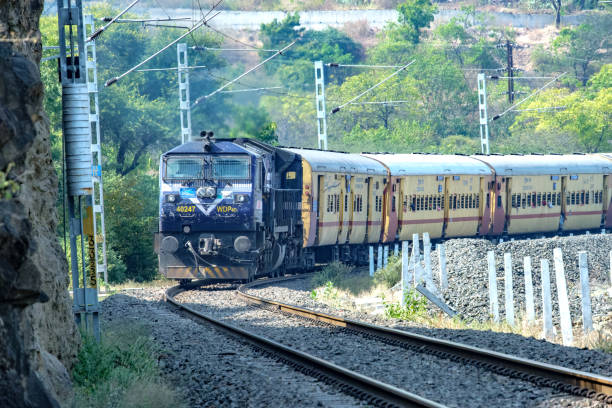
Indian Railways is one of the largest railway networks in the world, operating under the Ministry of Railways, Government of India. It serves as the backbone of the nation’s transportation system, facilitating the movement of passengers and freight across over 68,000 km of track. Established in 1853 with the first train running between Bombay and Thane, Indian Railways plays a pivotal role in economic development, connectivity, and disaster response logistics. Indian Railways personnel are critical to ensuring efficient transport, national integration, and industrial growth. This career is vital to economic progress, public mobility, and infrastructure development. Railway professionals contribute to advancements through trends such as high-speed rail projects, digital ticketing systems, and sustainable rail technologies.
Indian Railways personnel work in diverse settings such as railway stations, control rooms, workshops, zonal headquarters, and onboard trains, often collaborating with government bodies, private contractors, and international rail organizations. Their roles include train operations, infrastructure maintenance, passenger services, and administrative oversight. They face challenges like managing massive passenger volumes, ensuring safety during high-risk operations, and working in remote or extreme conditions. By leveraging expertise in engineering, logistics, and customer service, Indian Railways employees ensure seamless connectivity and operational efficiency. As key contributors to India’s transport ecosystem, they drive progress through trends like electrification of tracks, smart railway stations, and automation in ticketing and freight management.
| Route | Steps |
| Route 1: Indian Railway Management Service (IRMS) via UPSC CSE | 1. Complete a Bachelor’s degree in any discipline (Engineering preferred for technical roles) 2. Clear UPSC Civil Services Examination (Prelims, Mains, Interview) with IRMS preference 3. Undergo foundation training at LBSNAA, Mussoorie, followed by specialized training at railway institutes 4. Join as Group A officer in departments like Traffic, Engineering, or Personnel |
| Route 2: Engineering Services via UPSC IES/ESE | 1. Complete B.E./B.Tech. in Civil, Mechanical, Electrical, or related fields 2. Clear UPSC Indian Engineering Services (IES/ESE) Exam 3. Undergo training at Indian Railways Institute of Civil Engineering (IRICEN) or similar centers 4. Join as Group A officer in technical departments like Track or Signal Engineering |
| Route 3: Group C Posts via Railway Recruitment Board (RRB) | 1. Complete 10th/12th or ITI/Diploma for technical/non-technical roles (varies by post) 2. Clear RRB exams like NTPC (Non-Technical Popular Categories) or JE (Junior Engineer) 3. Undergo short training at zonal training centers 4. Join as Station Master, Technician, or Clerk with potential for promotion |
| Route 4: Group D Posts via Railway Recruitment Cell (RRC) | 1. Complete 10th pass or ITI certification for entry-level roles 2. Clear RRC exams and physical tests for posts like Trackman or Helper 3. Undergo basic training at designated centers 4. Join as Group D staff with scope for promotion to higher grades |
| Route 5: Apprenticeship and Technical Entry | 1. Complete ITI or Diploma in relevant trades (e.g., Fitter, Electrician) 2. Apply for apprenticeship programs through railway zones or workshops 3. Gain hands-on experience during 1-3 year training 4. Join as skilled technician or artisan with potential for permanent roles |
| Institution | Course | Country | Official Link |
| University of Birmingham, Birmingham | M.Sc. in Railway Systems Engineering | UK | https://www.birmingham.ac.uk/ |
| Delft University of Technology, Delft | M.Sc. in Transport and Railway Engineering | Netherlands | https://www.tudelft.nl/ |
| Massachusetts Institute of Technology (MIT), Cambridge | Transportation and Logistics Studies | USA | https://www.mit.edu/ |
| Technical University of Munich, Munich | M.Sc. in Transportation Systems | Germany | https://www.tum.de/ |
| University of Tokyo, Tokyo | Railway Engineering and Transport Studies | Japan | https://www.u-tokyo.ac.jp/ |
| Swiss Federal Institute of Technology (ETH), Zurich | Master’s in Transport Systems | Switzerland | https://ethz.ch/ |
| University of New South Wales (UNSW), Sydney | Transport Engineering and Management | Australia | https://www.unsw.edu.au/ |
| University of Toronto, Toronto | Transportation Engineering Studies | Canada | https://www.utoronto.ca/ |
| KTH Royal Institute of Technology, Stockholm | M.Sc. in Railway Engineering | Sweden | https://www.kth.se/ |
| Politecnico di Milano, Milan | Transport Systems and Railway Design | Italy | https://www.polimi.it/ |
India:
International (for Relevant Studies or Exposure):
Assistant Divisional Railway Manager (ADRM) → Divisional Railway Manager (DRM) → Senior Divisional Railway Manager → General Manager (GM) → Member of Railway Board → Chairman of Railway Board
| India (Government Bodies/PSUs) | International Collaborations |
| Ministry of Railways, New Delhi | International Union of Railways (UIC), Global |
| Indian Railway Board, New Delhi | Japan International Cooperation Agency (JICA), Japan (High-Speed Rail) |
| Indian Railway Catering and Tourism Corporation (IRCTC), New Delhi | Alstom, France (Locomotive Technology) |
| Rail Vikas Nigam Limited (RVNL), New Delhi | Siemens, Germany (Signaling Systems) |
| Dedicated Freight Corridor Corporation of India (DFCCIL), New Delhi | Bombardier, Canada (Rolling Stock) |
| Konkan Railway Corporation Limited (KRCL), Navi Mumbai | China Railway Corporation, China (Technical Collaboration) |
| Research Designs and Standards Organisation (RDSO), Lucknow | Deutsche Bahn, Germany (Training and Tech) |
| Pros | Cons |
| High societal impact through connectivity and economic growth | High risk of accidents or stress during operational failures |
| Stable government job with benefits, housing, and security | Physically demanding with long hours, especially in field roles |
| Access to diverse roles from operations to engineering | Frequent transfers and postings in remote or rural areas |
| Opportunity to contribute to national infrastructure projects | Bureaucratic delays and pressure to meet operational targets |
| Involvement in modernization and technology-driven rail initiatives | Limited work-life balance during peak traffic or emergency duties |
| Career Level (Officer Cadre - IRMS) | India (₹ per annum) | Note on International Roles |
| Assistant Divisional Railway Manager (Entry) | 6,00,000 - 8,00,000 | International roles not typical for base salary |
| Divisional Railway Manager (Early-Mid) | 9,00,000 - 12,00,000 | Salaries based on Indian pay scales |
| Senior Divisional Railway Manager (Mid-Level) | 12,00,000 - 15,00,000 | Additional field and project allowances |
| General Manager (Senior) | 15,00,000 - 18,00,000 | Perks include housing and travel |
| Member of Railway Board and Above | 18,00,000 - 22,50,000+ | Apex scale with significant benefits |
| Note: Salaries are based on the 7th Pay Commission scales for Indian Railways officers and may vary with allowances (e.g., field duty pay), postings, and seniority. Group C/D salaries range from ₹2,50,000 to ₹6,00,000 per annum based on role and grade. |
A career in Indian Railways offers a unique opportunity to support the nation’s economic backbone by mastering transport operations and technology, fostering connectivity through dedicated service, and empowering communities with every journey facilitated. Indian Railways personnel are the enablers of India’s mobility, using their expertise and commitment to ensure safe travel, efficient freight movement, and infrastructure development across vast landscapes. This profession blends technical prowess with operational discipline, providing pathways in engineering, traffic management, commercial services, and administration. For those passionate about national infrastructure, driven by a desire to serve through transportation, and eager to embrace the evolving landscape of rail technology, joining Indian Railways is a deeply rewarding journey. It empowers individuals to address critical mobility and economic needs, maintain public trust, and advance societal progress through the transformative power of dedicated railway service.

Entry-level officers who assist in managing train operations, safety, and passenger services in a division under senior guidance. They execute...
0.0LPA
Early-to-mid-level officers who lead entire railway divisions, manage operations, and ensure revenue targets. They oversee staff and safety. Their...
0.0LPA
Mid-level officers who supervise critical divisions, strategize for operational upgrades, and handle large-scale projects. They balance management...
0.0LPA
Take the next step and explore more about Indian Railways Services.
Explore similar career paths that might interest you