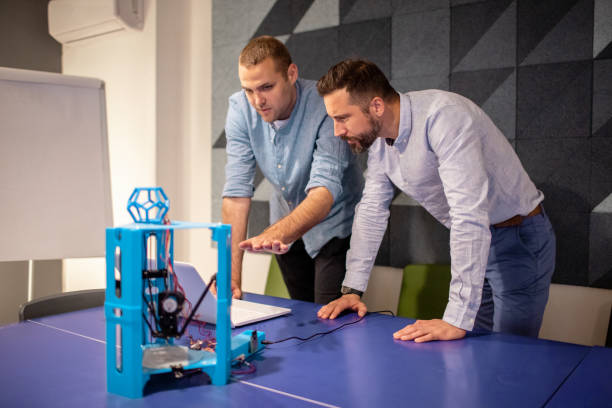
3D Printing Specialist
Junior 3D Printing Technician
Explore Career
A Quantum Computing Professional is a specialist who designs, develops, and applies quantum algorithms and systems to solve complex problems that are intractable for classical computers, leveraging principles of quantum mechanics. In India, the demand for quantum computing experts is emerging rapidly due to government initiatives like the National Quantum Mission (NQM), launched in 2023, and growing investments in quantum technologies for applications in cryptography, drug discovery, and optimization. With roots in physics, mathematics, and computer science, and fueled by modern trends such as quantum cryptography, quantum machine learning, and hybrid quantum-classical systems, this career is at the forefront of technological innovation. Professionals in this field are vital in research institutions, technology companies, government bodies, defense sectors, and startups, contributing to breakthroughs in secure communication, material science, and computational efficiency. This career drives progress through trends like quantum error correction, scalable quantum hardware, and quantum cloud platforms.

Quantum Computing Professionals work in cutting-edge environments such as research labs, tech firms, academic institutions, government agencies, or quantum-focused startups, often collaborating with physicists, computer scientists, and industry leaders across global and local ecosystems. Their roles include developing quantum algorithms, simulating quantum systems, and building quantum hardware while tackling challenges like decoherence, error rates, and the nascent stage of quantum technology adoption in India’s innovation landscape. They face issues such as limited access to quantum hardware, the complexity of quantum programming, and the need for interdisciplinary expertise amidst evolving technological and organizational demands. By leveraging knowledge of quantum mechanics, programming, and mathematics, they pioneer solutions that redefine computational limits. As key contributors to India’s quantum technology roadmap and global quantum advancements, they propel progress through trends like quantum supremacy, quantum internet, and industry-specific quantum applications.
| Route | Steps |
| Route 1: Bachelor’s Degree - Direct Entry | 1. Complete 10+2 in PCM (Physics, Chemistry, Mathematics) with minimum 50-60% marks. 2. Pursue B.Tech/B.Sc. in Physics, Computer Science, or Mathematics (3-4 years) via entrance exams like JEE Main. 3. Gain foundational skills through quantum-related coursework or projects. 4. Join entry-level roles in tech firms or research post-graduation. |
| Route 2: Master’s Specialization (M.Tech/M.S.) | 1. Complete B.Tech/B.Sc. in Physics, Computer Science, or related field. 2. Pursue M.Tech/M.S. in Quantum Computing, Physics, or Computer Science (2 years) via GATE or GRE. 3. Focus on quantum algorithms and hardware research. 4. Join specialized roles in industry or academia. |
| Route 3: Ph.D. for Research Focus | 1. Complete Master’s in Physics, Computer Science, or Quantum Technologies. 2. Pursue Ph.D. in Quantum Computing or Quantum Information Science (3-5 years) via entrance exams like NET or institute-specific tests. 3. Conduct original research in quantum systems. 4. Transition to research or leadership roles in academia or industry. |
| Route 4: International Education Path | 1. Complete 10+2 in PCM and clear entrance exams or language proficiency tests like IELTS/TOEFL. 2. Pursue B.S./M.S./Ph.D. in Quantum Computing or Physics from international universities (e.g., USA, UK). 3. Gain global exposure through research and internships. 4. Work internationally or return to India for high-demand roles. |
| Route 5: Short-Term Courses and Certifications | 1. Complete 10+2 or basic education with interest in tech or physics. 2. Enroll in short-term courses or certifications in quantum computing, Qiskit, or quantum cryptography (3-6 months). 3. Build a portfolio through quantum simulation projects. 4. Transition to formal roles or advanced degrees for career growth. |
| Institute | Course/Program | Official Link |
| Indian Institute of Technology (IIT), Madras | M.Tech in Quantum Science & Technology | https://www.iitm.ac.in/ |
| Indian Institute of Technology (IIT), Bombay | M.Tech/Ph.D. in Quantum Computing Electives | https://www.iitb.ac.in/ |
| Indian Institute of Science (IISc), Bangalore | M.Tech/Ph.D. in Quantum Technology | https://www.iisc.ac.in/ |
| Tata Institute of Fundamental Research (TIFR), Mumbai | Ph.D. in Quantum Information & Computing | https://www.tifr.res.in/ |
| Indian Institute of Technology (IIT), Delhi | M.Tech in Quantum Technologies (Electives) | https://www.iitd.ac.in/ |
| University of Calcutta, Kolkata | M.Sc. in Physics (Quantum Computing Focus) | https://www.caluniv.ac.in/ |
| Indian Statistical Institute (ISI), Kolkata | Research in Quantum Information Science | https://www.isical.ac.in/ |
| Harish-Chandra Research Institute (HRI), Allahabad | Ph.D. in Quantum Information Theory | https://www.hri.res.in/ |
| National Institute of Technology (NIT), Tiruchirappalli | M.Tech in Computer Science (Quantum Electives) | https://www.nitt.edu/ |
| Jawaharlal Nehru University (JNU), New Delhi | M.Sc./Ph.D. in Physics (Quantum Focus) | https://www.jnu.ac.in/ |
| Institution | Course | Country | Official Link |
| Massachusetts Institute of Technology (MIT), Cambridge | M.S./Ph.D. in Quantum Computing & Information | USA | https://www.mit.edu/ |
| Stanford University, Stanford | M.S./Ph.D. in Quantum Science & Engineering | USA | https://www.stanford.edu/ |
| University of California, Berkeley (UCB) | M.S./Ph.D. in Quantum Information Science | USA | https://www.berkeley.edu/ |
| University of Oxford, Oxford | M.Sc./D.Phil. in Quantum Computing | UK | https://www.ox.ac.uk/ |
| ETH Zurich, Zurich | M.Sc./Ph.D. in Quantum Engineering | Switzerland | https://www.ethz.ch/ |
| National University of Singapore (NUS), Singapore | M.Sc./Ph.D. in Quantum Technologies | Singapore | https://www.nus.edu.sg/ |
| University of Waterloo, Waterloo | M.Sc./Ph.D. in Quantum Information (IQC) | Canada | https://www.uwaterloo.ca/ |
| University of Melbourne, Melbourne | Master/Ph.D. in Quantum Science | Australia | https://www.unimelb.edu.au/ |
| Technical University of Munich (TUM), Munich | M.Sc./Ph.D. in Quantum Science & Technology | Germany | https://www.tum.de/ |
| California Institute of Technology (Caltech), Pasadena | M.S./Ph.D. in Quantum Science & Engineering | USA | https://www.caltech.edu/ |
India:
International (for Relevant Studies or Exposure):
Quantum Research Intern → Junior Quantum Developer → Quantum Computing Scientist → Senior Quantum Researcher → Quantum Technology Lead → Director of Quantum Innovation → Quantum Strategy Consultant
| India (Firms/Organizations) | International Collaborations |
| Indian Institute of Science (IISc), Bangalore | Global Quantum Research Networks |
| Tata Institute of Fundamental Research (TIFR), Mumbai | International Quantum Science Networks |
| Department of Science and Technology (DST), New Delhi | National Quantum Mission Collaborations |
| Infosys (Quantum Research Division), Bangalore | Global Quantum Innovation Networks |
| TCS Research, Mumbai | International Quantum Computing Networks |
| Quantum Information Science and Technology (QuIST), India | National and Global Quantum Initiatives |
| DRDO (Defence Research and Development Organisation), India | National Security Quantum Networks |
| IBM India Research Lab, Bangalore | Global Quantum Computing Networks |
| Microsoft Research India, Bangalore | Worldwide Quantum Software Networks |
| Google Quantum AI (Collaboration with Indian Institutes) | Global Quantum Hardware Networks |
| Pros | Cons |
| High potential for groundbreaking impact in science and technology | Limited job opportunities currently due to the nascent stage of the field |
| Opportunities to work on cutting-edge problems beyond classical computing | High complexity requiring deep knowledge of physics and mathematics |
| Strong government and industry support in India via initiatives like NQM | Limited access to quantum hardware for practical experimentation |
| Potential for high salaries and global recognition as expertise grows | Long learning curve and need for continuous upskilling in a fast-evolving field |
| Significant societal impact through secure systems and scientific discovery | Risk of uncertainty as quantum technology is still in experimental stages |
| Career Level (Private/Public Sector Example) | India (₹ per annum) | International (USD per annum, Tentative) |
| Quantum Research Intern (Entry) | 3,00,000 - 5,00,000 | $35,000 - $50,000 |
| Junior Quantum Developer (Early-Mid) | 6,00,000 - 10,00,000 | $60,000 - $80,000 |
| Quantum Computing Scientist (Mid-Level) | 10,00,000 - 18,00,000 | $80,000 - $120,000 |
| Senior Quantum Researcher/Lead (Senior) | 18,00,000 - 30,00,000 | $120,000 - $160,000 |
| Director of Quantum Innovation (Top) | 30,00,000 - 50,00,000+ | $160,000 - $250,000+ |
| Note: Salaries are indicative and vary based on location (metro vs. non-metro for India; country/region for international roles), sector, and experience. Quantum roles are currently rare, so figures reflect emerging trends. |
A career in Quantum Computing offers a transformative opportunity to pioneer the future of computation, solve unprecedented challenges, and drive scientific breakthroughs, opening doors to impactful contributions in a rapidly evolving technological frontier. These professionals are the architects of next-generation computing, using their interdisciplinary expertise and innovative thinking to craft solutions that redefine problem-solving across diverse contexts. This profession blends a passion for science with cutting-edge technology, providing diverse pathways in quantum algorithms, hardware, cryptography, research, and beyond. For those passionate about pushing computational boundaries, driven by a desire to harness quantum mechanics, and eager to navigate the uncharted landscape of quantum technologies, becoming a Quantum Computing Professional is a deeply rewarding journey. It empowers individuals to shape the future by building quantum systems and insights that transform how we compute, secure, and innovate through impactful, accessible, and groundbreaking quantum solutions.

Early-to-mid-level professionals who code quantum algorithms or simulate systems independently. They focus on practical applications. Their work...
0.0LPA

Mid-level experts who lead quantum projects, develop algorithms, and publish research. They balance theory with application. Their expertise...
0.0LPA

Mid-to-senior professionals who oversee complex quantum research, mentor juniors, and innovate hardware or software. They provide scientific...
0.0LPA
Take the next step and explore more about Quantum computing.
Explore similar career paths that might interest you