Academic Writer
Academic Writer (Entry to Mid-Level)
Explore Career
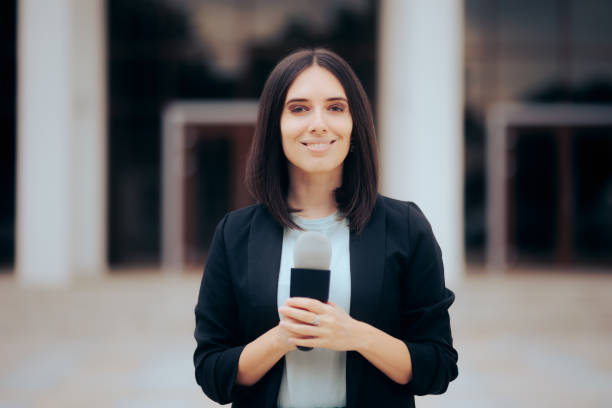
A Reporter is a professional who gathers, investigates, and presents news and information to the public through various media platforms such as newspapers, television, radio, or online outlets. They work in newsrooms, on-field assignments, or freelance roles, collaborating with editors, photographers, and media organizations. Reporters play a crucial role in informing society, uncovering truths, and shaping public opinion in a sector focused on journalism, communication, and current affairs.
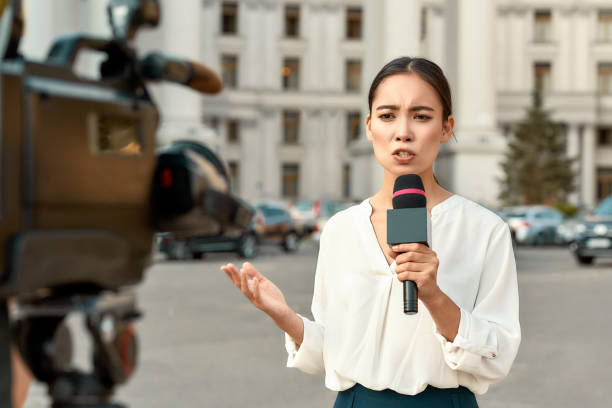
Reporters are inquisitive and resourceful professionals who seek out and deliver timely news stories, often working in fast-paced environments like newsrooms or conflict zones. Their role involves researching events, conducting interviews, and crafting reports, frequently facing challenges such as tight deadlines or ethical dilemmas. They combine expertise in storytelling, fact-checking, and media ethics to address issues ranging from local incidents to global crises. As key contributors to public awareness and accountability, they help shape information flow in an industry increasingly driven by digital media, real-time updates, and multimedia content.
| Route | Steps |
| Route 1 | 1. 10+2 in any stream |
| 2. Bachelor’s degree in Journalism or Mass Communication (3-4 years) | |
| 3. Internship at a news organization or media house (3-6 months) | |
| 4. Practice as Junior Reporter or Stringer | |
| Route 2 | 1. 10+2 in any stream |
| 2. Diploma or Certificate in Journalism or Media Studies (6-12 months) | |
| 3. Internship at a newspaper, TV channel, or online portal (3-6 months) | |
| 4. Work as Reporter or Freelance Journalist | |
| Route 3 | 1. 10+2 in any stream |
| 2. Bachelor’s degree in Journalism or Mass Communication (3-4 years) | |
| 3. Master’s degree in Journalism or Media Studies (1-2 years) | |
| 4. Practice as Senior Reporter or Special Correspondent | |
| Route 4 | 1. 10+2 in any stream |
| 2. Short-term workshop or certification in News Reporting or Digital Journalism (1-3 months) | |
| 3. Internship or freelance role in local news or online media | |
| 4. Practice as Reporter domestically or internationally |
| Institute | Course/Program | Official Link |
| Indian Institute of Mass Communication (IIMC), New Delhi | PG Diploma in Journalism | https://www.iimc.nic.in/ |
| Jamia Millia Islamia, New Delhi | MA in Mass Communication | https://www.jmi.ac.in/ |
| Symbiosis Institute of Media & Communication (SIMC), Pune | MBA in Communication Management | https://www.simc.edu/ |
| Xavier Institute of Communications (XIC), Mumbai | Diploma in Journalism & Mass Communication | https://www.xic.edu/ |
| University of Delhi, Delhi | BA/MA in Journalism | https://www.du.ac.in/ |
| Manipal Academy of Higher Education, Manipal | BA in Media & Communication | https://manipal.edu/ |
| Amity School of Communication, Noida | BA/MA in Journalism & Mass Communication | https://www.amity.edu/ |
| Makhanlal Chaturvedi National University of Journalism, Bhopal | BA/MA in Journalism | https://www.mcu.ac.in/ |
| IGNOU (Indira Gandhi National Open University), New Delhi | PG Diploma in Journalism & Mass Communication | http://www.ignou.ac.in/ |
| Asian College of Journalism (ACJ), Chennai | PG Diploma in Journalism | https://www.asianmedia.org.in/ |
| Institution | Course | Country | Official Link |
| Columbia University | MA in Journalism | USA | https://www.columbia.edu/ |
| New York University (NYU) | BA/MA in Journalism | USA | https://www.nyu.edu/ |
| University of Southern California (USC) | BA/MA in Journalism | USA | https://www.usc.edu/ |
| University of Westminster | BA/MA in Journalism | UK | https://www.westminster.ac.uk/ |
| City, University of London | MA in Investigative Journalism | UK | https://www.city.ac.uk/ |
| University of Sydney | Bachelor of Media and Communications | Australia | https://www.sydney.edu.au/ |
| Ryerson University | BA in Journalism | Canada | https://www.ryerson.ca/ |
| University of Amsterdam | BA/MA in Media and Journalism | Netherlands | https://www.uva.nl/ |
| Nanyang Technological University (NTU) | BA in Communication Studies | Singapore | https://www.ntu.edu.sg/ |
| University of Missouri | BA/MA in Journalism | USA | https://www.missouri.edu/ |
India:
International:
Trainee → Junior Reporter → Reporter → Senior Reporter → Special Correspondent → Bureau Chief → Editor
| India | International |
| The Times of India | The New York Times, USA |
| The Hindu | BBC News, UK |
| Hindustan Times | CNN, USA |
| Indian Express | Reuters, Global |
| NDTV | The Guardian, UK |
| India Today | Al Jazeera, Qatar |
| Zee News | The Washington Post, USA |
| Press Trust of India (PTI) | Associated Press (AP), USA |
| ANI (Asian News International) | Bloomberg News, USA |
| Doordarshan (Prasar Bharati) | Agence France-Presse (AFP), France |
| Pros | Cons |
| Opportunity to inform and influence public opinion | Often requires irregular hours and tight deadlines |
| High intellectual satisfaction in uncovering truths | Limited job security in a competitive and shrinking traditional media landscape |
| Rewarding impact on societal awareness and accountability | Can involve high stress and risk, especially in conflict zones |
| Diverse career paths across print, broadcast, and digital media | Risk of burnout due to constant pressure for breaking news |
| Strong potential for growth with the rise of digital journalism | Limited public recognition compared to other high-profile media roles |
| Career Level | India (₹ per annum) | International (USD per annum) |
| Trainee/Junior Reporter (Early Career) | 1,80,000 - 3,50,000 | 25,000 - 40,000 |
| Reporter (Mid-Career) | 3,50,000 - 6,00,000 | 40,000 - 60,000 |
| Senior Reporter/Special Correspondent | 6,00,000 - 10,00,000 | 60,000 - 85,000 |
| Bureau Chief/Editor | 10,00,000 - 20,00,000 | 85,000 - 150,000 |
| Celebrity Journalist/Anchor | 15,00,000+ | 100,000+ |
| Note: Salaries may vary based on location, employer, experience, and media platform. |
A career as a Reporter offers a dynamic opportunity to uncover truths, inform the public, and shape societal discourse through the power of journalism, contributing to transparency and accountability. Reporters are the frontline chroniclers of history, using their investigative skills to bring critical stories to light and foster informed communities. This profession blends curiosity with communication, providing pathways in print, broadcast, digital media, and beyond. For those passionate about current affairs, driven by a desire to reveal facts, and eager to navigate the evolving landscape of real-time news and multimedia platforms, becoming a Reporter is a profoundly impactful journey. It empowers individuals to challenge narratives, amplify voices, and advance public knowledge through the relentless pursuit of truth in journalism.

Early-career professionals handle basic reporting tasks with increasing autonomy. They hone skills in story writing and source building while...
0.0LPA
Specialists oversee major stories or beats with exceptional competence. They integrate deep source networks with expertise in storytelling for...
0.0LPA
Senior professionals specialize in niche areas or regions, ensuring in-depth coverage. They provide leadership by managing high-profile...
0.0LPA
Take the next step and explore more about Reporter.
Explore similar career paths that might interest you