Armed Forces Medical Services (AFMS)
Medical Officer (Lieutenant/Captain)
Explore Career
Social Welfare Administration under the Ministry of Social Justice and Empowerment (MoSJE) and state social welfare departments in India involves managing and implementing policies, programs, and initiatives to promote social equity, protect vulnerable populations, and ensure inclusive development. This field encompasses civilian administrative roles within central and state government bodies, welfare organizations, and schemes like the National Social Assistance Programme (NSAP). As of 2023, the MoSJE oversees numerous welfare programs targeting over 50 crore beneficiaries across various schemes for Scheduled Castes (SC), Scheduled Tribes (ST), Other Backward Classes (OBC), persons with disabilities, and senior citizens (MoSJE Annual Report 2022-23). Roles are categorized under Group A, B, and C services, recruited through exams like the Union Public Service Commission (UPSC) Civil Services Exam (CSE) for senior roles, Staff Selection Commission (SSC) for mid and lower levels, or direct recruitments by MoSJE and state departments. These positions are vital for ensuring social justice, policy execution, and welfare delivery within India’s social framework, with a budget of ₹19,751 crore for 2023-24 (Union Budget data). Rooted in principles of public administration, social equity, and community empowerment, and driven by trends like digital inclusion, gender equality, and disability rights, social welfare administration careers are central to India’s inclusive growth. Professionals work across government offices, community centers, and policy units, contributing to poverty alleviation, social protection, and empowerment initiatives. This career drives progress through innovations like Direct Benefit Transfer (DBT) and schemes for marginalized groups.
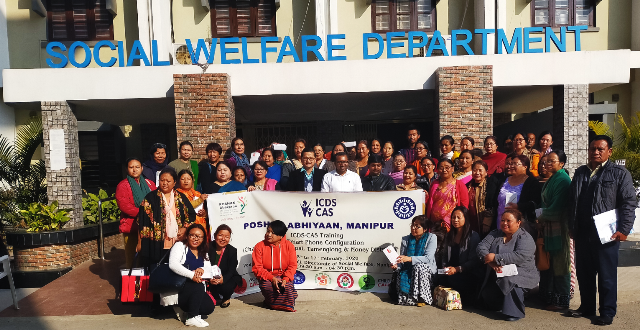
Social Welfare Administration professionals under the Ministry of Social Justice and Empowerment or state departments operate in diverse environments, including central and state welfare offices, district social welfare offices, rehabilitation centers, and community outreach programs across India. They collaborate with social workers, government officials, NGOs, and international agencies like UNICEF within the social welfare ecosystem. Their roles include managing welfare programs, overseeing budgets, ensuring compliance with policies, and addressing challenges such as poverty, discrimination, and access to resources for marginalized groups. They face issues like adapting to digital welfare delivery systems, balancing policy with ground realities, and managing social disparities. By leveraging expertise in administration, policy implementation, and stakeholder coordination, they ensure the smooth functioning of welfare services. As key contributors to India’s social equity and justice, they propel progress through trends like digital inclusion, empowerment schemes for women and minorities, and initiatives for disability and elderly care.
| Route | Steps |
| Route 1: Entry-Level Roles via SSC Exams (Graduate/12th Pass Level) | 1. Complete 10+2 in any stream. 2. Pursue a Bachelor’s degree (for Group B/C roles) or qualify post-12th (for lower roles). 3. Clear SSC CGL/CHSL for roles like Clerk or Assistant. 4. Join after basic training at welfare institutes. |
| Route 2: Officer-Level Roles via UPSC Exams (Graduate Level) | 1. Complete 10+2 in any stream. 2. Pursue a Bachelor’s degree in any discipline (3-4 years). 3. Clear UPSC CSE for IAS/IPS roles in social welfare admin. 4. Join after training at LBSNAA or welfare-focused centers. |
| Route 3: Specialized Roles via Direct Recruitment (Graduate/PG Level) | 1. Complete 10+2 in relevant stream. 2. Pursue a specialized degree like MSW, MA Sociology, or MBA (3-5 years). 3. Apply for MoSJE/state dept. direct recruitments for admin roles. 4. Start after induction training. |
| Route 4: Promotion within Civilian Cadres (Internal Exams) | 1. Join at lower levels (e.g., Clerk) with minimum qualifications. 2. Gain experience and clear internal exams for promotion to higher roles. 3. Transition after additional training. |
| Route 5: Contractual or Deputation Roles for Mid-Level Entry | 1. Complete Bachelor’s/Master’s in relevant field. 2. Gain experience in social work or government sectors (3-5 years). 3. Apply for contractual/deputation roles via MoSJE notifications. 4. Start after orientation. |
India:
| India (Government Bodies/Organizations) | Key Roles/Areas |
| Ministry of Social Justice and Empowerment (MoSJE), Delhi | Policy and Administrative Oversight |
| Department of Empowerment of Persons with Disabilities | Disability Welfare Admin Roles |
| National Commission for Scheduled Castes (NCSC) | SC Welfare Policy and Admin Roles |
| National Commission for Scheduled Tribes (NCST) | ST Welfare Policy and Admin Roles |
| National Institute of Social Defence (NISD) | Training and Social Welfare Research Roles |
| State Social Welfare Departments (e.g., Tamil Nadu, UP) | Regional Welfare Admin and Program Roles |
| National Backward Classes Finance & Development Corporation (NBCFDC) | OBC Welfare Admin Roles |
| National Trust for Welfare of Persons with Autism, Cerebral Palsy, etc. | Disability Support Admin Roles |
| Ministry of Women and Child Development (cross-collaboration) | Women and Child Welfare Admin Roles |
| UNICEF India Office | Collaborative Social Welfare Policy Roles |
| Pros | Cons |
| High societal impact through improving lives of marginalized groups | High stress due to systemic challenges and resource constraints |
| Stable government job with benefits like pension, allowances, and housing | Frequent transfers, often to rural or underserved areas |
| Diverse roles across policy, program management, and digital welfare | Bureaucratic delays and systemic inefficiencies can hinder impact |
| Opportunity to contribute to national schemes like NSAP and DBT | Work-life balance issues during large-scale crises or reforms |
| Structured career progression with scope for leadership positions | Risk of public criticism during welfare system failures or disparities |
| Career Level (Social Welfare Administration Roles - Public Sector) | India (₹ per annum, Approx., as per Pay Matrix) |
| Junior Level - LDC/UDC (Entry to Early Level) | 2,50,000 - 4,00,000 (Level 2-4) |
| Junior Level - Assistant (Early Level) | 4,00,000 - 6,00,000 (Level 5-6) |
| Mid-Level - Section Officer/Program Officer (Early-Mid Level) | 6,00,000 - 9,00,000 (Level 7-8) |
| Mid-Level - Deputy Director/Welfare Officer (Mid-Level) | 9,00,000 - 12,00,000 (Level 9-10) |
| Senior Level - Joint Director/Senior Welfare Admin (Mid-Senior Level) | 12,00,000 - 15,00,000 (Level 11-12) |
| Senior Level - Director/Deputy Secretary (Senior Level) | 15,00,000 - 20,00,000 (Level 13-14) |
| Apex Level - Additional Secretary/Secretary | 20,00,000 - 25,00,000+ (Level 15-17) |
| Note: Salaries include basic pay, dearness allowance (DA), house rent allowance (HRA), and other benefits; they vary based on level, posting location, and seniority under the 7th Central Pay Commission (CPC) as of 2023. |
A career in Social Welfare Administration under the Ministry of Social Justice and Empowerment or state departments offers a transformative opportunity to shape India’s social landscape by managing critical programs, ensuring policy alignment, and enhancing welfare accessibility across diverse and vulnerable populations. Social welfare administrators are the backbone of government welfare systems, using their expertise, strategic skills, and commitment to build a robust foundation for social protection, support equity, and improve quality of life for millions. This profession blends a passion for public service with leadership in social governance, providing diverse pathways in policy, program management, digital welfare, crisis response, and beyond. For those passionate about social justice, driven by a desire to serve marginalized communities through efficient management, and eager to navigate the evolving landscape of digital transformation and inclusive reforms, joining through MoSJE or state department roles is a deeply rewarding journey. It empowers individuals to address critical social needs, maintain system integrity, and advance national development through the transformative power of responsible, impactful, and accessible social welfare administration.

Entry-level staff handling clerical tasks, data entry, and documentation in welfare offices. They build foundational skills. Their role supports...
0.0LPA
Early-level staff managing records, correspondence, and assisting in welfare programs. Their coordination ensures smoothness. Their impact boosts...
0.0LPA
Mid-level staff overseeing specific welfare programs or sections, ensuring policy compliance. Their leadership drives results. Their role...
0.0LPA
Take the next step and explore more about Social Welfare Administration.
Explore similar career paths that might interest you

Social Welfare Administration under the Ministry of Social Justice and Empowerment (MoSJE) and state social welfare departments in India involves managing and implementing policies, programs, and initiatives to promote social equity, protect vulnerable populations, and ensure inclusive development. This field encompasses civilian administrative roles within central and state government bodies, welfare organizations, and schemes like the National Social Assistance Programme (NSAP). As of 2023, the MoSJE oversees numerous welfare programs targeting over 50 crore beneficiaries across various schemes for Scheduled Castes (SC), Scheduled Tribes (ST), Other Backward Classes (OBC), persons with disabilities, and senior citizens (MoSJE Annual Report 2022-23). Roles are categorized under Group A, B, and C services, recruited through exams like the Union Public Service Commission (UPSC) Civil Services Exam (CSE) for senior roles, Staff Selection Commission (SSC) for mid and lower levels, or direct recruitments by MoSJE and state departments. These positions are vital for ensuring social justice, policy execution, and welfare delivery within India’s social framework, with a budget of ₹19,751 crore for 2023-24 (Union Budget data). Rooted in principles of public administration, social equity, and community empowerment, and driven by trends like digital inclusion, gender equality, and disability rights, social welfare administration careers are central to India’s inclusive growth. Professionals work across government offices, community centers, and policy units, contributing to poverty alleviation, social protection, and empowerment initiatives. This career drives progress through innovations like Direct Benefit Transfer (DBT) and schemes for marginalized groups.