Sports Photographer

A Sports Photographer is a creative professional who captures dynamic and compelling images of athletes, sporting events, and related activities, preserving moments of action, emotion, and triumph for media, teams, or personal archives. They work with news outlets, sports organizations, magazines, or as freelancers, collaborating with editors, journalists, and marketing teams to deliver visually striking content. Sports Photographers are essential in documenting the spirit of athletics in an era where visual storytelling drives fan engagement and media coverage of sports across traditional and digital platforms.
Share :
Career tree mind map (horizontal) — Sports Photographer
Colored branches, hub circles, and underlined topics — same style as counselor course classic (types 18–19 in admin).
Loading mind map…

Sports Photographers are skilled visual artists who specialize in photographing live sports events, training sessions, and athlete portraits, using their technical expertise and artistic vision to freeze high-energy moments in time. Their work involves anticipating key plays, navigating challenging environments, and producing images that convey the intensity and passion of sports for publications, advertisements, or social media. Operating in fast-paced settings like stadiums, arenas, or outdoor fields, they blend a love for athletics, precision photography skills, and adaptability to meet tight deadlines and client expectations. As key contributors to the sports and physical education cluster, Sports Photographers enhance the visual narrative of sports in a landscape fueled by the growing demand for captivating imagery and multimedia content in the global sports industry.

  1. Event Coverage and Action Photography:
    • Capture live action shots during sporting events, focusing on critical moments like goals, finishes, or emotional reactions.
    • Use high-speed cameras and lenses to freeze fast-moving subjects with clarity and precision.
  2. Pre- and Post-Event Documentation:
    • Photograph pre-game preparations, team huddles, or post-match celebrations to provide a comprehensive visual story.
    • Document behind-the-scenes moments, such as athlete warm-ups or fan interactions, for editorial or promotional use.
  3. Athlete Portraits and Profiles:
    • Shoot professional portraits of athletes for media kits, team promotions, or personal branding purposes.
    • Create visually engaging images that highlight an athlete’s personality, strength, or dedication.
  4. Photo Editing and Post-Production:
    • Edit images using software to enhance quality, adjust lighting, or crop for specific formats and client needs.
    • Ensure timely delivery of edited photos to meet publication deadlines or social media posting schedules.
  5. Collaboration with Media Teams:
    • Work with editors, journalists, or marketing professionals to align images with stories, campaigns, or branding goals.
    • Coordinate with event organizers or teams to gain access to restricted areas for optimal shooting angles.
  6. Equipment Management and Setup:
    • Maintain and transport specialized photography gear, such as telephoto lenses, tripods, and protective equipment for outdoor shoots.
    • Set up equipment in advance to ensure readiness for fast-paced, unpredictable sports action.
  7. Research and Planning:
    • Study game schedules, player profiles, and venue layouts to anticipate key moments and position for the best shots.
    • Stay informed about sports rules and trends to better predict and capture significant plays or events.
  8. Marketing and Client Relations:
    • Build a portfolio to showcase work for potential clients, including sports teams, media houses, or individual athletes.
    • Negotiate contracts or assignments as a freelancer, ensuring clear communication of deliverables and timelines.

Route Steps
Route 1 1. 10+2 in any stream (Arts or Visual Studies preferred)
  2. Bachelor’s in Photography, Visual Arts, or Journalism (3-4 years)
  3. Start as a Junior Photographer or Photography Assistant in media or sports organizations
Route 2 1. 10+2 in any stream (Arts or Visual Studies preferred)
  2. Bachelor’s in Photography, Visual Arts, or Journalism (3-4 years)
  3. Master’s in Photography or Visual Communication (2 years)
  4. Work as a Sports Photographer for news outlets or sports teams
Route 3 1. 10+2 in any stream (Arts or Visual Studies preferred)
  2. Certification or Diploma in Photography or Sports Photography (6 months-1 year)
  3. Build a portfolio through freelance work or internships
  4. Pursue roles as a Lead Sports Photographer for major events or publications
Route 4 1. 10+2 in any stream (Arts or Visual Studies preferred)
  2. Bachelor’s in Photography, Visual Arts, or Journalism (3-4 years)
  3. Gain experience through freelance sports photography or internships
  4. Serve as a Senior Sports Photographer, Photo Editor, or Creative Director

  • Participation in internships at sports media outlets during or after academic programs for hands-on experience in event photography.
  • Involvement in university-led photography projects covering campus sports or local games for practical learning.
  • Assisting senior photographers at sports events or media houses to gain insights into action shooting and workflow.
  • Observerships with sports teams or event organizers for exposure to professional setups and athlete interactions.
  • Participation in photography workshops or sports imaging bootcamps for skill enhancement and networking.
  • Training through collaborative projects like covering local tournaments or charity sports events for real-world exposure.
  • Exposure to industry-standard practices such as using high-speed cameras or editing for quick publication turnarounds.
  • Project-based learning in specialized areas like cricket photography, motorsports imaging, or athlete portraits for focused experience.
  • Community sports event coverage to apply photography skills in practical settings like school or amateur league matches.
  • International sports photography volunteering or online courses for exposure to global event standards and techniques.

  • Bachelor of Fine Arts (BFA) in Photography or Visual Arts.
  • Master of Fine Arts (MFA) in Photography or Visual Communication.
  • Certification in Sports Photography or Action Photography.
  • Specialization in Event Photography or Photojournalism.
  • Diploma in Digital Photography or Media Production.
  • Training in High-Speed Photography and Equipment Handling.
  • Workshops on Sports Photo Editing and Composition.
  • Short Courses in Athlete Portrait Photography.
  • Advanced Training in Drone Photography for Sports Events.
  • Courses in Sports Marketing and Visual Storytelling.

Institute Course/Program Official Link
National Institute of Design (NID), Ahmedabad B.Des., M.Des. in Photography Design https://www.nid.edu/
Sir J.J. Institute of Applied Art, Mumbai BFA in Applied Art, Photography https://www.sirjjarchitecture.org/
Light & Life Academy, Ooty Diploma in Professional Photography https://www.llacademy.org/
Delhi College of Photography, Delhi Diploma, Certification in Photography https://www.delhicollegeofphotography.com/
Symbiosis School of Photography, Pune B.A. in Visual Arts and Photography https://www.ssp.ac.in/
Annapurna College of Film and Media, Hyderabad Courses in Photography, Visual Media https://www.annapurnacollege.edu.in/
Asian Academy of Film & Television (AAFT), Noida Diploma in Photography, Media Production https://aaft.com/
Jamia Millia Islamia, Delhi B.A., M.A. in Mass Communication, Visual Arts https://www.jmi.ac.in/
Christ University, Bangalore B.A. in Media & Communication, Visual Arts https://www.christuniversity.in/
Pearl Academy, Multiple Locations B.A. in Photography, Visual Communication https://pearlacademy.com/

Institution Course Country Official Link
Brooks Institute (Legacy Programs), USA B.A., M.A. in Photography (now part of other institutions) USA Historical Reference
New York Institute of Photography (NYIP), Online Certification in Photography USA https://www.nyip.edu/
University of Westminster, London B.A., M.A. in Photography UK https://www.westminster.ac.uk/
Ryerson University, Toronto BFA in Photography Studies Canada https://www.ryerson.ca/
RMIT University, Melbourne B.A. in Photography Australia https://www.rmit.edu.au/
London College of Communication, London B.A., M.A. in Photography UK https://www.arts.ac.uk/colleges/london-college-of-communication
Parsons School of Design, New York BFA, MFA in Photography USA https://www.newschool.edu/parsons/
Nanyang Technological University (NTU), Singapore B.A. in Art, Design & Media (Photography) Singapore https://www.ntu.edu.sg/
University of Amsterdam, Amsterdam B.A., M.A. in Media & Visual Arts Netherlands https://www.uva.nl/en
Rhode Island School of Design (RISD), Providence BFA, MFA in Photography USA https://www.risd.edu/

India:

  • NID Entrance Exam (DAT): For admission to design and photography programs at National Institute of Design.
  • University-Specific Exams: Institutes like Symbiosis, Pearl Academy, or Christ University conduct their own entrance tests for B.A. and M.A. programs.
  • No Mandatory National-Level Entrance for Undergraduates: Admission to many B.A. or diploma programs often based on 10+2 merit or portfolio submission.
  • UCEED (Undergraduate Common Entrance Exam for Design): For some design-related programs with photography components at select institutes.
  • Portfolio Review: Many photography programs require a portfolio of prior work as part of the admission process.


International:

  • SAT (Scholastic Assessment Test): Required for undergraduate admissions in the USA and some other countries.
  • ACT (American College Testing): Alternative to SAT for undergraduate admissions in the USA.
  • GRE (Graduate Record Examination): Required for postgraduate programs in photography or visual arts globally, if applicable.
  • TOEFL (Test of English as a Foreign Language): Minimum score of 80-100 required for non-native speakers applying to programs in English-speaking countries.
  • IELTS (International English Language Testing System): Minimum score of 6.5-7.0 required for admission to universities in the UK, Australia, and other English-speaking regions.

Junior Photographer → Sports Photographer → Senior Sports Photographer → Lead Event Photographer → Photo Editor → Creative Director → Sports Photography Consultant

  • Sports media outlets for capturing live events and athlete features for publications or broadcasts.
  • Sports teams and organizations for documenting games, training, and promotional content.
  • News agencies for providing sports imagery for breaking news or feature stories.
  • Advertising and marketing firms for shooting sports-related campaigns or endorsements.
  • Digital platforms and social media for creating visual content for online sports channels or influencers.
  • Event management companies for covering major tournaments or exhibitions.
  • Magazines and publishing houses for sports features, covers, or editorial spreads.
  • Freelance photography for independent projects with athletes, teams, or local events.
  • Educational institutions for documenting school or college sports programs.
  • International sports bodies for capturing global events like Olympics or FIFA World Cup.

India International
The Times of India (Sports Desk), Multiple Locations Getty Images, Global
Hindustan Times (Sports Desk), Delhi Associated Press (AP), USA
ESPN Cricinfo, Bangalore Reuters, Global
Star Sports, Mumbai Sports Illustrated, USA
Sony Sports Network, Mumbai AFP (Agence France-Presse), France
Indian Express, Multiple Locations Icon Sportswire, USA
Sportskeeda, Bangalore Shutterstock Sports, Global
BCCI (Board of Control for Cricket in India), Mumbai FIFA Media, Global
IPL (Indian Premier League) Teams, Multiple Locations Olympics Media (IOC), Global
Pro Kabaddi League, Multiple Locations ESPN Images, USA

Pros Cons
Opportunity to combine passion for sports and photography into a creative career Physically demanding work, requiring long hours standing or moving in challenging conditions
Potential for recognition through iconic images published in major media outlets Irregular schedules, including weekends, holidays, and travel for events across locations
Exciting role with access to major sporting events and behind-the-scenes moments High competition, often requiring a standout portfolio or niche to secure consistent work
Diverse work opportunities across media, teams, advertising, and freelance projects Expensive initial investment in high-end camera gear, lenses, and editing software
Growing demand driven by the rise of digital media and visual content in sports Risk of injury or equipment damage while shooting in crowded or fast-paced event environments

  • Expertise in high-speed photography techniques to capture fast-moving sports action with precision.
  • Technical proficiency in using advanced cameras, telephoto lenses, and editing software for professional results.
  • In-depth knowledge of sports rules, player dynamics, and event timing to anticipate key photographic moments.
  • Creative vision to compose compelling shots that convey emotion, intensity, or storytelling in sports.
  • Physical stamina to endure long hours, harsh weather, or challenging terrains during outdoor events.
  • Adaptability to shoot in varied lighting conditions, crowded venues, or high-pressure situations.
  • Time management to meet tight deadlines for editing and delivering images to clients or media outlets.
  • Collaboration skills for working with editors, event staff, or marketing teams to align with project goals.
  • Research ability to prepare for events by studying teams, venues, and potential shot opportunities.
  • Business acumen for freelancers to market services, negotiate contracts, and manage client relationships.

(Figures are approximate and based on latest available data as of 2026, subject to change. Salaries vary based on location, experience, client type (media vs. freelance), and event scale.)

Career Level India (₹ per annum) International (USD per annum)
Junior Photographer (Early Career) 2,00,000 - 5,00,000 20,000 - 35,000
Sports Photographer (Mid-Career) 5,00,000 - 10,00,000 35,000 - 60,000
Senior Sports Photographer (Established) 10,00,000 - 20,00,000 60,000 - 90,000
Lead Event Photographer/Photo Editor 20,00,000 - 35,00,000 90,000 - 150,000
Creative Director/Photography Consultant 35,00,000+ 150,000+

  • Photo Editing Software like Adobe Photoshop for enhancing and retouching sports images.
  • Image Management Tools like Adobe Lightroom for organizing, cataloging, and batch-editing large photo sets.
  • Video Editing Software like Adobe Premiere Pro for creating hybrid photo-video sports content.
  • High-Speed Camera Apps or Firmware for configuring gear to capture fast action with precision.
  • Cloud Storage Platforms like Google Drive or Dropbox for sharing large image files with clients or media houses.
  • Social Media Tools like Canva for creating quick visual posts or stories with sports photos.
  • Data Visualization Tools like Tableau for analyzing event coverage or portfolio performance metrics.
  • Remote Access Software like TeamViewer for collaborating with editors or clients on image selection.
  • Sports Stats Platforms like Sportradar for researching game data to inform shot planning.
  • Portfolio Platforms like SmugMug or Squarespace for showcasing sports photography work online.

  • Indian Sports Photographers Association (ISPA), India.
  • National Press Photographers Association (NPPA), USA.
  • Sports Photographers Society of India (SPSI), India.
  • British Press Photographers’ Association (BPPA), UK.
  • Professional Sports Photographers Association (PSPA), USA.
  • Australian Press Photographers Association (APPA), Australia.
  • Canadian Association of Photographers and Illustrators in Communications (CAPIC), Canada.
  • International Sports Press Association (AIPS), Global.
  • World Press Photo Foundation, Global.
  • European Pressphoto Agency (EPA), Europe.

  • Atul Kasbekar (India, Contemporary): Fashion and sports photographer since the 1990s, known for iconic athlete portraits and IPL team imagery in India.
     
  • Raghu Rai (India, Contemporary): Legendary photojournalist since the 1960s, captured sports moments alongside cultural events, a pioneer in Indian photography.
     
  • Prakash Singh (India, Contemporary): Sports photographer since the 2000s, works with AFP, known for covering cricket and Olympics with striking action shots in India.
     
  • Vijay Bate (India, Contemporary): Sports photographer since the 1990s, associated with Hindustan Times, renowned for cricket and hockey imagery in India.
     
  • Pal Pillai (India, Contemporary): Sports photographer since the 2000s, works with Getty Images, captures major Indian sports events like IPL and international tournaments.
     
  • Annie Leibovitz (USA, Contemporary): Iconic photographer since the 1970s, known for sports portraits in Sports Illustrated and Vanity Fair, blending art with athletics.
     
  • Walter Iooss Jr. (USA, Contemporary): Sports photographer since the 1960s, legendary for Sports Illustrated covers, captured iconic moments like Michael Jordan’s career.
     
  • Neil Leifer (USA, Contemporary): Sports photographer since the 1950s, renowned for Muhammad Ali images and Sports Illustrated work, a defining figure in sports imaging.
     
  • Bob Martin (UK, Contemporary): Sports photographer since the 1980s, multiple award-winner for Olympic and Paralympic imagery, known for innovative angles and storytelling.
     
  • Lucy Nicholson (UK/USA, Contemporary): Sports photographer since the 1990s, works with Reuters, celebrated for dynamic action shots at global events like the FIFA World Cup.
     

  • Build a strong foundation in photography techniques and sports knowledge to capture impactful action moments.
  • Seek early exposure through internships or volunteer roles at local sports events to develop practical skills.
  • Prepare diligently for entrance exams or portfolio reviews to secure admission to top photography programs.
  • Pursue specialized training in high-speed or sports-specific photography for a competitive advantage in the field.
  • Stay updated on camera technology and sports trends by attending workshops and following industry innovations.
  • Build practical skills by shooting small-scale games or creating a diverse portfolio for potential clients.
  • Engage in community sports coverage or local tournaments to apply photography talents in real-world settings.
  • Join professional networks like NPPA or ISPA for connections and access to essential industry resources.
  • Cultivate resilience to handle the physical demands and tight deadlines inherent in sports event photography.
  • Explore international opportunities or diverse sports to understand varied cultural and athletic contexts.
  • Volunteer at school matches or amateur events to grasp the dynamics of live sports imaging.
  • Sharpen technical and creative skills to deliver standout images that evoke emotion and action.
  • Participate in continuing education to keep pace with evolving photography tools and digital media trends.
  • Build ties with sports media professionals, editors, and athletes for collaborative career growth.
  • Maintain determination to navigate intense competition and irregular schedules in sports photography.
  • Balance academic learning with hands-on shooting experience to adapt to the fast-paced world of sports visuals.

Venturing into a career as a Sports Photographer unveils an exhilarating opportunity to immortalize the raw energy and emotion of athletic feats, crafting visual legacies that inspire fans and athletes alike across the world. From freezing split-second victories to revealing the untold stories behind the game, Sports Photographers play a pivotal role in shaping how we experience and remember sports. This vocation fuses a deep passion for athletics, artistic flair, and an unwavering commitment to capturing fleeting moments, offering diverse paths in media, team collaborations, and independent projects. For those thrilled by the challenge of framing dynamic action, eager to harness cutting-edge imaging technologies, and driven to etch their mark on the visual history of sports, a career as a Sports Photographer presents an incredibly enriching and influential professional quest, with the potential to redefine how the essence of competition is seen and celebrated for generations to come.

Knowledge & Skills You Will Learn
1
Expertise in high-speed photography techniques to capture fast-moving sports action with precision.
2
Technical proficiency in using advanced cameras, telephoto lenses, and editing software for professional results.
3
In-depth knowledge of sports rules, player dynamics, and event timing to anticipate key photographic moments.
4
Adaptability to shoot in varied lighting conditions, crowded venues, or high-pressure situations.
5
Collaboration skills for working with editors, event staff, or marketing teams to align with project goals.
6
Research ability to prepare for events by studying teams, venues, and potential shot opportunities.
Junior Photographer

Junior Photographer

Early-career individuals assist senior photographers, cover local sports events, and build a portfolio while learning technical skills. They focus...

0.0LPA

Senior Sports Photographer

Senior Sports Photographer

Experienced photographers handle major national or international events, often specializing in specific sports, and mentor junior staff. They...

0.0LPA
Lead Event Photographer

Lead Event Photographer

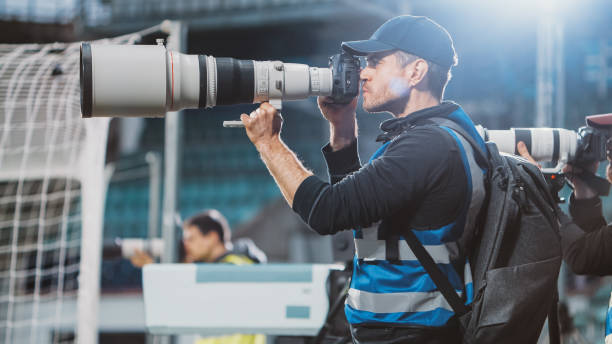
High-level photographers oversee photography for marquee events like Olympics or World Cups, leading teams and ensuring comprehensive coverage....

0.0LPA

Interested in this career?

Take the next step and explore more about Sports Photographer.