
Accomodation manager
Hotel Accommodation Manager
Explore Career
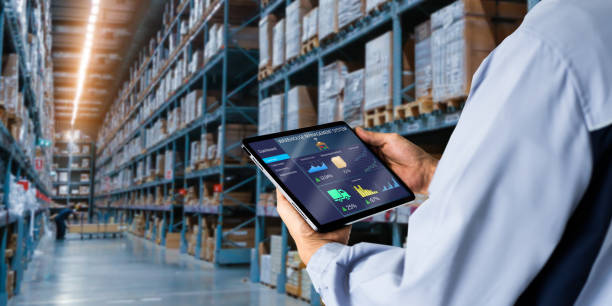
A Supply Chain Manager is a professional responsible for overseeing the end-to-end process of sourcing, producing, and delivering goods or services, ensuring efficiency, cost-effectiveness, and timely delivery. They work in corporate offices, warehouses, or manufacturing facilities, collaborating with suppliers, logistics teams, and business executives. Supply Chain Managers play a crucial role in optimizing operations, reducing costs, and maintaining product availability in a sector focused on logistics, inventory management, and global trade.

Supply Chain Managers are analytical and strategic professionals who manage the flow of goods and services, often working in office environments or on-site at distribution centers with access to supply chain software and data tools. Their role involves planning, coordination, and problem-solving, frequently facing challenges such as supply disruptions or cost overruns. They combine expertise in logistics, procurement, and data analysis to address issues ranging from inventory shortages to transportation delays. As key contributors to operational efficiency and customer satisfaction, they help shape business success in an industry increasingly driven by automation, sustainability, and global connectivity.
| Route | Steps |
| Route 1 | 1. 10+2 in any stream (preferably Commerce, Mathematics, or Science) |
| 2. Bachelor’s degree in Supply Chain Management, Logistics, or Business Administration (3-4 years) | |
| 3. Internship at a manufacturing or logistics company (3-6 months) | |
| 4. Practice as Junior Supply Chain Analyst | |
| Route 2 | 1. 10+2 in any stream with interest in operations or logistics |
| 2. Diploma or Certificate in Supply Chain Management or Logistics (6-12 months) | |
| 3. Internship at a warehouse or distribution center (3-6 months) | |
| 4. Work as Supply Chain Assistant | |
| Route 3 | 1. 10+2 in any stream |
| 2. Bachelor’s degree in Business, Industrial Engineering, or Economics (3-4 years) | |
| 3. Master’s degree in Supply Chain Management, MBA (Operations), or Logistics (1-2 years) | |
| 4. Practice as Supply Chain Manager or Operations Lead | |
| Route 4 | 1. 10+2 in any stream |
| 2. Short-term certification in Supply Chain or Inventory Management (1-3 months) | |
| 3. Internship or entry-level role in a logistics or operations setting | |
| 4. Practice as Supply Chain Manager domestically or internationally |
| Institute | Course/Program | Official Link |
| Indian Institute of Management (IIM), Multiple Locations | MBA in Operations & Supply Chain | https://www.iima.ac.in/ |
| Narsee Monjee Institute of Management Studies (NMIMS), Mumbai | MBA in Operations & Logistics | https://www.nmims.edu/ |
| Amity University, Noida | BBA/MBA in Logistics & Supply Chain Management | https://www.amity.edu/ |
| Symbiosis Institute of Operations Management (SIOM), Nashik | MBA in Operations Management | https://www.siom.in/ |
| Christ University, Bangalore | BBA/MBA in Supply Chain & Operations | https://www.christuniversity.in/ |
| Lovely Professional University (LPU), Punjab | BBA/MBA in Supply Chain Management | https://www.lpu.in/ |
| Institute of Logistics & Aviation Management (ILAM), Multiple Locations | Diploma in Supply Chain Management | https://www.ilamindia.in/ |
| Xavier School of Management (XLRI), Jamshedpur | MBA in Operations & Supply Chain | https://www.xlri.ac.in/ |
| SP Jain Institute of Management and Research, Mumbai | MBA in Operations with Supply Chain Focus | https://www.spjimr.org/ |
| Birla Institute of Management Technology (BIMTECH), Greater Noida | PGDM in Operations & Supply Chain | https://www.bimtech.ac.in/ |
| Institution | Course | Country | Official Link |
| Massachusetts Institute of Technology (MIT) | MS in Supply Chain Management | USA | https://www.mit.edu/ |
| University of Southern California (USC) | MBA with Supply Chain Focus | USA | https://www.usc.edu/ |
| Cranfield University | MSc in Logistics & Supply Chain Management | UK | https://www.cranfield.ac.uk/ |
| University of Toronto | Master of Supply Chain Management | Canada | https://www.utoronto.ca/ |
| University of Melbourne | Master of Supply Chain Management | Australia | https://www.unimelb.edu.au/ |
| National University of Singapore (NUS) | MSc in Supply Chain Management | Singapore | https://www.nus.edu.sg/ |
| INSEAD | MBA with Operations & Supply Chain Focus | France/Singapore | https://www.insead.edu/ |
| Michigan State University | MS in Supply Chain Management | USA | https://www.msu.edu/ |
| University of Sydney | Master of Logistics & Supply Chain Management | Australia | https://www.sydney.edu.au/ |
| ETH Zurich | Master of Science in Supply Chain Management | Switzerland | https://www.ethz.ch/ |
India:
International:
Junior Supply Chain Analyst → Supply Chain Specialist → Supply Chain Manager → Senior Supply Chain Manager → Supply Chain Director → Vice President of Supply Chain
| India | International |
| Reliance Industries | Amazon, USA |
| Tata Group | Walmart, USA |
| Larsen & Toubro (L&T) | Apple, USA |
| Adani Group | Tesla, USA |
| Hindustan Unilever Limited (HUL) | Procter & Gamble, USA |
| Flipkart | Unilever, UK/Netherlands |
| Amazon India | FedEx, USA |
| Mahindra Group | UPS, USA |
| Maruti Suzuki | DHL, Germany |
| ITC Limited | Maersk, Denmark |
| Pros | Cons |
| Opportunity to optimize operations and reduce costs | Often involves high-stress situations during disruptions |
| High personal satisfaction in ensuring product availability | Can involve challenges in managing global supply risks |
| Rewarding impact on business efficiency and customer satisfaction | May require availability outside regular hours for emergencies |
| Diverse career paths across industries and supply roles | Risk of burnout from managing complex and critical operations |
| Strong potential for growth with increasing automation focus | Limited control over external factors like geopolitical issues |
| Career Level | India (₹ per annum) | International (USD per annum) |
| Junior Supply Chain Analyst (Early Career) | 3,00,000 - 6,00,000 | 40,000 - 60,000 |
| Supply Chain Specialist (Mid-Career) | 6,00,000 - 12,00,000 | 60,000 - 90,000 |
| Supply Chain Manager/Senior Supply Chain Manager | 12,00,000 - 20,00,000 | 90,000 - 130,000 |
| Supply Chain Director | 20,00,000 - 35,00,000 | 130,000 - 180,000 |
| Vice President of Supply Chain/Expert | 35,00,000+ | 180,000+ |
| Note: Salaries may vary based on location, employer, experience, and specialization. |
A career as a Supply Chain Manager offers a critical opportunity to streamline operations, ensure product availability, and drive business efficiency through strategic planning and meticulous execution, fostering resilience and growth with every optimized process. Supply Chain Managers are the architects of operational success, using their skills to minimize costs, mitigate risks, and deliver value. This profession blends analytical precision with strategic vision, providing pathways in logistics, procurement, inventory management, and beyond. For those passionate about problem-solving, driven by a desire to navigate complex global networks, and eager to embrace the evolving landscape of automation and sustainability, becoming a Supply Chain Manager is a deeply rewarding journey. It empowers individuals to shape operational outcomes, address critical challenges, and advance organizational success through the transformative power of supply chain management.


Early-career professionals assist in basic data analysis and inventory tracking with guidance. They develop skills in forecasting and reporting...
0.0LPA
Specialists oversee comprehensive supply chain operations with high competence. They integrate deep operational knowledge with expertise in...
0.0LPA

Leaders provide strategic direction for supply chain operations across departments or regions. They oversee initiatives by aligning programs with...
0.0LPA
Take the next step and explore more about Supply-Chain Manager.
Explore similar career paths that might interest you