
Accomodation manager
Hotel Accommodation Manager
Explore Career
A Terminal-Operations Manager oversees the daily operations of terminals, such as those in airports, seaports, rail hubs, or logistics centers, ensuring efficient handling of cargo, passengers, or goods. They are responsible for coordinating activities, managing staff, ensuring safety and compliance with regulations, and optimizing operational workflows to meet organizational goals. Terminal-Operations Managers work in high-pressure environments across transportation, logistics, and supply chain industries, collaborating with various stakeholders including government agencies, vendors, and internal teams. They combine expertise in logistics management, problem-solving, and leadership to maintain seamless terminal functionality, playing a critical role in global trade, travel, and distribution networks by ensuring timely and cost-effective operations.
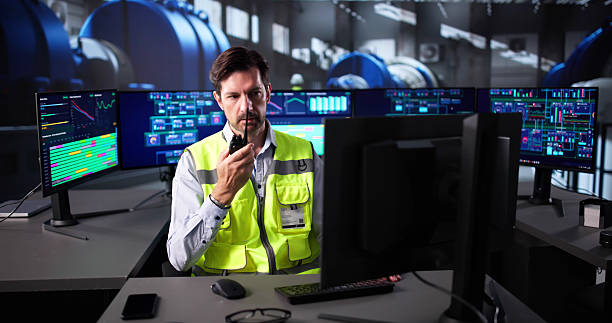
Terminal-Operations Managers are dedicated to managing the complex operations of transportation and logistics terminals, ensuring the smooth flow of goods, passengers, or freight through these critical hubs. Their work involves supervising loading and unloading processes, maintaining equipment, enforcing safety protocols, and addressing operational challenges like delays or emergencies. They collaborate with logistics coordinators, regulatory bodies, and technology teams to implement efficient systems, improve turnaround times, and meet customer or stakeholder expectations. Terminal-Operations Managers also focus on budget management, staff training, and staying updated on industry trends to enhance terminal efficiency in dynamic settings such as bustling airports, busy seaports, or high-volume cargo depots.
| Route | Steps |
| Route 1 | 1. 10+2 in any stream (Science/Commerce preferred). 2. Bachelor’s degree (3-4 yrs) in Business Administration, Logistics, or Supply Chain Management. 3. Internships or entry-level roles in logistics during studies. 4. Optional MBA (2 yrs) for career advancement in management. |
| Route 2 | 1. 10+2 in any stream. 2. Bachelor’s degree (3-4 yrs) in Transportation Management or Industrial Engineering. 3. Certification courses in Logistics or Operations Management. 4. Practical experience through on-the-job training in terminals. 5. Optional Master’s degree (2 yrs) in Logistics or Business Administration. |
| Route 3 | 1. 10+2 in any stream. 2. Diploma (1-2 yrs) in Logistics, Supply Chain, or Port Management. 3. Entry-level roles in terminal operations for hands-on experience. 4. Bachelor’s degree (part-time, 3-4 yrs) for further qualification. 5. Professional certifications and managerial training programs. |
| Route 4 | 1. 10+2 in any stream. 2. Bachelor’s degree (3-4 yrs) in Commerce, Engineering, or Management. 3. MBA (2 yrs) specializing in Operations, Logistics, or Supply Chain Management. 4. Leadership training and industry-specific certifications. 5. Progressive experience in logistics or terminal operations roles. |
| Institute | Course/Program | Official Link |
| Indian Institute of Management (IIM) Ahmedabad | PGP in Management, Logistics Focus | https://www.iima.ac.in/ |
| Indian Institute of Management (IIM) Bangalore | Operations & Supply Chain Management | https://www.iimb.ac.in/ |
| Indian Institute of Technology (IIT) Delhi | Industrial Engineering, Operations | https://www.iitd.ac.in/ |
| Indian Institute of Technology (IIT) Bombay | Operations Research, Logistics | https://www.iitb.ac.in/ |
| National Institute of Industrial Engineering (NITIE), Mumbai | PGDIM in Operations & Supply Chain | https://www.nitie.ac.in/ |
| Symbiosis Institute of Operations Management (SIOM), Nashik | MBA in Operations Management | https://www.siom.in/ |
| Xavier Institute of Management (XIMB), Bhubaneswar | MBA in Operations & Logistics | https://ximb.edu.in/ |
| University of Petroleum and Energy Studies (UPES), Dehradun | Logistics & Supply Chain Management | https://www.upes.ac.in/ |
| Amity University, Noida | Logistics & Supply Chain Programs | https://www.amity.edu/ |
| Indian Maritime University (IMU), Chennai | Port & Shipping Management | https://www.imu.edu.in/ |
| Institution | Course | Country | Official Link |
| Massachusetts Institute of Technology (MIT) | Supply Chain Management, Logistics | USA | https://mit.edu/ |
| Stanford University | Operations, Information & Technology | USA | https://stanford.edu/ |
| University of Southern California (USC) | Supply Chain Management | USA | https://www.usc.edu/ |
| Michigan State University | Supply Chain Management | USA | https://www.msu.edu/ |
| Cranfield University | Logistics & Supply Chain Management | UK | https://www.cranfield.ac.uk/ |
| University of Warwick | Supply Chain & Logistics Management | UK | https://warwick.ac.uk/ |
| Nanyang Technological University (NTU) | Operations & Supply Chain | Singapore | https://www.ntu.edu.sg/ |
| Delft University of Technology | Transport, Infrastructure & Logistics | Netherlands | https://www.tudelft.nl/ |
| University of Sydney | Logistics & Supply Chain Management | Australia | https://www.sydney.edu.au/ |
| Hong Kong Polytechnic University (PolyU) | Logistics & Maritime Studies | Hong Kong | https://www.polyu.edu.hk/ |
India
International
Terminal Operator → Shift Supervisor → Terminal Coordinator → Terminal-Operations Manager → Senior Operations Manager → Director of Terminal Operations → Vice President of Logistics
| India | International |
| Airports Authority of India (AAI) | FedEx |
| Adani Ports and Special Economic Zone (APSEZ) | UPS (United Parcel Service) |
| Jawaharlal Nehru Port Trust (JNPT) | DHL Global Forwarding |
| Indian Railways | Maersk Line |
| Container Corporation of India (CONCOR) | MSC (Mediterranean Shipping Company) |
| GMR Group (Delhi International Airport) | Dubai Ports World (DP World) |
| Mumbai International Airport Ltd (MIAL) | Singapore Airlines Cargo |
| Blue Dart Express | Cathay Pacific Cargo |
| Allcargo Logistics | Lufthansa Cargo |
| Transport Corporation of India (TCI) | Amazon Logistics |
| Pros | Cons |
| Opportunity to manage critical logistics hubs. | High-pressure environment with tight deadlines. |
| High responsibility and impact on global trade. | Long and irregular working hours, including shifts. |
| Potential for career growth in logistics and supply chain. | Stress from handling emergencies or delays. |
| Diverse work settings across airports, ports, and rail. | Need to constantly adapt to regulatory changes. |
| Collaborative work with international logistics networks. | Physical and mental demands of managing large teams. |
| Career Level | India (₹ per annum) | International (US$ per annum) |
| Terminal Operator / Trainee | 3,00,000 - 5,00,000 | $35,000 - $50,000 |
| Shift Supervisor | 5,00,000 - 8,00,000 | $50,000 - $65,000 |
| Terminal Coordinator | 8,00,000 - 12,00,000 | $65,000 - $80,000 |
| Terminal-Operations Manager | 12,00,000 - 20,00,000 | $80,000 - $110,000 |
| Director of Terminal Operations | 20,00,000 - 35,00,000+ | $110,000 - $150,000+ |
A career as a Terminal-Operations Manager offers the unique opportunity to oversee the backbone of global trade and transportation, ensuring the seamless movement of goods and people through critical hubs like airports, seaports, and rail terminals. From optimizing workflows to managing crises, Terminal-Operations Managers drive efficiency and reliability in fast-paced, high-impact environments. This field combines strategic planning with hands-on leadership, providing diverse paths in aviation, maritime, rail, and logistics sectors. For those passionate about solving complex operational challenges and contributing to the smooth functioning of global supply chains, a career in terminal operations offers a dynamic and rewarding journey with significant potential in an ever-evolving world of transportation and trade.


Airport Terminal Managers oversee passenger and cargo operations at airports, ensuring efficient check-ins, baggage handling, and gate management....
0.0LPA

Seaport Terminal Managers manage cargo handling, vessel berthing, and port logistics, ensuring efficient loading and unloading. They liaise with...
0.0LPA

Rail Terminal Managers supervise freight and passenger operations at rail hubs, managing train schedules and cargo transfers. They ensure safety...
0.0LPA
Take the next step and explore more about Terminal-Operations Manager.
Explore similar career paths that might interest you