
Architectural Engineer
Junior Architectural Engineer
Explore Career
Urban Planning is the science and art of designing and managing the development of cities, towns, and regions to ensure sustainable, functional, and equitable growth. In India, urban planning plays a crucial role in addressing rapid urbanization, infrastructure deficits, and environmental challenges for a growing population. With roots in ancient city layouts like Harappa and modern initiatives like the Smart Cities Mission, urban planning is vital to creating livable, inclusive, and resilient urban spaces. Urban Planners are essential for shaping policies, zoning regulations, and infrastructure that caters to societal needs. This career contributes to advancements through trends such as smart urban development, green city initiatives, and digital planning technologies.
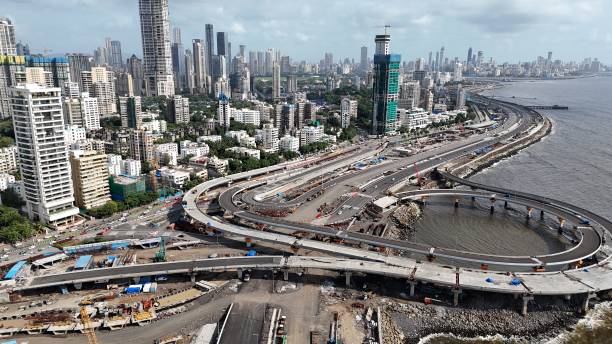
Urban Planners work in diverse settings such as government bodies, urban development authorities, private consultancies, and research organizations, often collaborating with architects, engineers, and policymakers. Their roles include creating master plans, zoning land use, ensuring sustainable development, and addressing housing and transportation needs. They face challenges like managing overpopulation, balancing economic growth with environmental concerns, and navigating bureaucratic hurdles. By leveraging expertise in spatial analysis, policy formulation, and community engagement, Urban Planners create frameworks that enhance urban functionality and quality of life. As key contributors to India’s urban transformation, they drive progress through trends like transit-oriented development, climate-resilient planning, and Geographic Information Systems (GIS).
| Route | Steps |
| Route 1: Bachelor’s in Urban Planning/Related Field - Direct Entry |
1. Complete 10+2 in any stream with minimum 50% marks (Science/Arts preferred by some institutes) 2. Clear entrance exams like NATA, JEE Main, or institute-specific tests 3. Pursue Bachelor of Planning (B.Plan) or B.Arch with Urban Planning focus (4-5 years) 4. Join planning authorities or firms after internships |
| Route 2: Diploma to Degree Pathway |
1. Complete 10th or 10+2 and enroll in a 1-3 year Diploma in Urban Planning or related field 2. Gain lateral entry into degree programs like B.Plan (if eligible) or start working 3. Build portfolio through practical projects or internships 4. Join firms or pursue advanced certifications for growth |
| Route 3: Master’s Specialization (M.Plan/M.Arch) |
1. Complete Bachelor’s in Planning, Architecture, or related field 2. Pursue M.Plan or M.Arch in Urban Planning via entrance exams like GATE/CEED 3. Gain advanced skills through postgraduate internships or research 4. Join senior roles in government, firms, or consultancy |
| Route 4: International Education Path |
1. Complete 10+2 and clear relevant entrance exams or portfolio assessments 2. Pursue urban planning degree from international universities (e.g., USA, UK) 3. Gain global exposure through internships or projects abroad 4. Return to India or work internationally with multinational organizations |
| Route 5: Short-Term Courses and Practical Entry |
1. Complete 10+2 or basic education in any stream 2. Enroll in short-term certificate courses (6 months-1 year) in Urban Planning 3. Work as apprentices or assistants in planning bodies for hands-on learning 4. Build portfolio and network to establish roles in government or private sectors |
| Institute | Course/Program | Official Link |
| School of Planning and Architecture (SPA), New Delhi | B.Plan, M.Plan in Urban Planning | https://spa.ac.in/ |
| CEPT University, Ahmedabad | B.Plan, M.Plan in Urban Design & Planning | https://cept.ac.in/ |
| Indian Institute of Technology (IIT), Kharagpur | M.Arch/M.Plan in Urban Development | https://www.iitkgp.ac.in/ |
| Indian Institute of Technology (IIT), Roorkee | M.Arch/M.Plan in Urban & Rural Planning | https://www.iitr.ac.in/ |
| National Institute of Technology (NIT), Trichy | M.Arch/M.Plan in Urban Planning | https://www.nitt.edu/ |
| Anna University, School of Architecture and Planning, Chennai | M.Plan in Urban Planning | https://www.annauniv.edu/ |
| Jamia Millia Islamia, New Delhi | M.Arch/M.Plan in Urban Regeneration | https://www.jmi.ac.in/ |
| Malaviya National Institute of Technology (MNIT), Jaipur | M.Plan in Urban Planning | https://www.mnit.ac.in/ |
| Birla Institute of Technology (BIT), Mesra | M.Plan in Urban Planning | https://www.bitmesra.ac.in/ |
| Institute of Town Planners, India (ITPI), New Delhi | Associate Membership (Urban Planning) | https://www.itpi.org.in/ |
| Institution | Course | Country | Official Link |
| Massachusetts Institute of Technology (MIT), Cambridge | Master of City Planning (MCP) | USA | https://www.mit.edu/ |
| Harvard Graduate School of Design, Cambridge | Master in Urban Planning (MUP) | USA | https://www.gsd.harvard.edu/ |
| University College London (UCL), Bartlett School of Planning, London | MSc in Urban Design & City Planning | UK | https://www.ucl.ac.uk/bartlett/ |
| Delft University of Technology, Delft | MSc in Urbanism | Netherlands | https://www.tudelft.nl/ |
| ETH Zurich, Zurich | MSc in Spatial Development & Infrastructure | Switzerland | https://ethz.ch/ |
| University of Melbourne, Melbourne | Master of Urban Planning | Australia | https://www.unimelb.edu.au/ |
| National University of Singapore (NUS), Singapore | Master of Urban Planning | Singapore | https://www.nus.edu.sg/ |
| University of Tokyo, Tokyo | Master of Urban Design & Planning Studies | Japan | https://www.u-tokyo.ac.jp/ |
| Politecnico di Milano, Milan | MSc in Urban Planning & Policy Design | Italy | https://www.polimi.it/ |
| KTH Royal Institute of Technology, Stockholm | MSc in Sustainable Urban Planning & Design | Sweden | https://www.kth.se/ |
India:
International (for Relevant Studies or Exposure):
Junior Urban Planner → Project Planner → Senior Urban Planner → Urban Planning Manager → Director of Planning → Consultancy Head/Firm Owner
| India (Government Bodies/Firms) | International Collaborations |
| Ministry of Housing and Urban Affairs (MoHUA), New Delhi | United Nations Human Settlements Programme (UN-Habitat), Global |
| National Institute of Urban Affairs (NIUA), New Delhi | World Bank (Urban Development Projects), Global |
| Town and Country Planning Organization (TCPO), New Delhi | Asian Development Bank (ADB), Asia-Pacific |
| Delhi Development Authority (DDA), New Delhi | International Society of City and Regional Planners (ISOCARP), Global |
| Mumbai Metropolitan Region Development Authority (MMRDA), Mumbai | Cities Alliance, Global |
| Larsen & Toubro (L&T) Urban Infrastructure, Mumbai | McKinsey & Company (Urban Consulting), Global |
| Shapoorji Pallonji Group (Urban Projects), Mumbai | AECOM (Urban Planning Services), USA |
| Pros | Cons |
| High societal impact through shaping livable cities | Bureaucratic delays often slow down project execution |
| Opportunity to address critical urban challenges | Balancing diverse stakeholder interests can be complex |
| Diverse specializations from transport to sustainability | Limited funding for innovative urban solutions in India |
| Growing demand due to urbanization and smart city projects | Stress from public scrutiny and policy implementation hurdles |
| Potential for international exposure in global urban projects | Fieldwork may involve long hours in varying conditions |
| Career Level (Private Sector Example) | India (₹ per annum) | International Roles (USD per annum, Tentative) |
| Junior Urban Planner (Entry) | 3,00,000 - 5,00,000 | $30,000 - $45,000 |
| Project Planner (Early-Mid) | 5,00,000 - 8,00,000 | $45,000 - $65,000 |
| Senior Urban Planner (Mid-Level) | 8,00,000 - 12,00,000 | $65,000 - $90,000 |
| Urban Planning Manager (Senior) | 12,00,000 - 18,00,000 | $90,000 - $130,000 |
| Director of Planning and Above | 18,00,000 - 30,00,000+ | $130,000 - $200,000+ |
| Note: Salaries are indicative and vary based on location (metro vs. non-metro for India; country/region for international roles), organization type, and project scale. |
A career in Urban Planning offers a unique opportunity to shape the future of cities by mastering policy and design, fostering innovation through sustainable solutions, and empowering communities with every plan created. Urban Planners are the visionaries of India’s urban and regional landscapes, using their expertise and passion to ensure functional, equitable, and resilient spaces across diverse regions. This profession blends analytical rigor with societal impact, providing pathways in city planning, transportation, housing, and sustainability. For those passionate about transforming urban environments, driven by a desire to create through strategic planning, and eager to embrace the evolving landscape of urban technology, a career in Urban Planning is a deeply rewarding journey. It empowers individuals to address critical infrastructure needs, maintain social equity, and advance societal progress through the transformative power of thoughtful urban design.


Early-to-mid-level planners who manage specific urban projects, coordinate with stakeholders, and oversee policy implementation. They supervise...
0.0LPA

Mid-level professionals who lead planning teams, handle complex regional projects, and mentor juniors. They balance strategy with execution. Their...
0.0LPA

Senior planners who oversee multiple projects, ensure policy alignment, and manage client or government relations. They handle high-level...
0.0LPA
Take the next step and explore more about Urban Planning.
Explore similar career paths that might interest you