Accomodation manager
Hotel Accommodation Manager
Explore Career
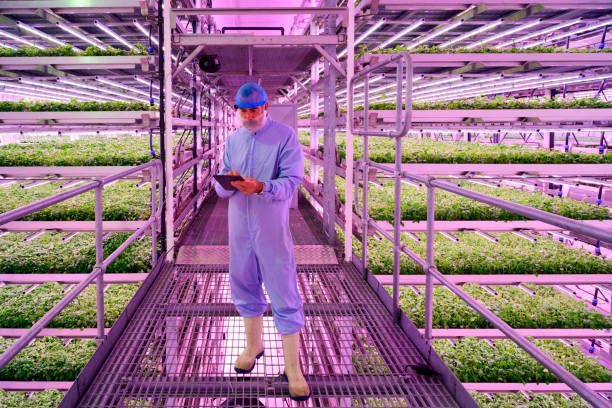
A Vertical/Urban-Farm Manager is a professional who specializes in managing agricultural operations in urban or confined spaces using innovative techniques such as vertical farming, hydroponics, and aquaponics to produce food sustainably. They work in urban farms, rooftop gardens, indoor farming facilities, and agricultural startups, collaborating with city planners, technology providers, and community organizations. Vertical/Urban-Farm Managers play a crucial role in addressing food security and sustainability by optimizing crop production in urban environments in a sector focused on innovation, technology, and environmental impact.
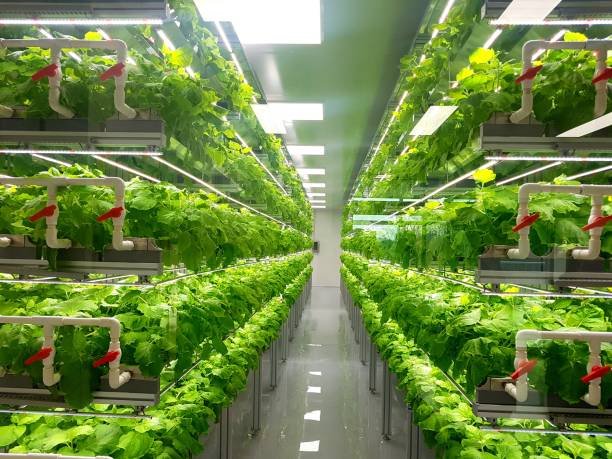
Vertical/Urban-Farm Managers are agricultural and technical experts responsible for overseeing the design, operation, and maintenance of farming systems in urban settings, ensuring efficient production of crops like leafy greens, herbs, and vegetables. Their role involves managing indoor or vertical farm setups, implementing technology-driven solutions, and often working in controlled environments or urban landscapes. They combine knowledge of horticulture, engineering, and sustainability to address challenges like space constraints, resource efficiency, and urban food demands. As key contributors to modern agriculture, they help shape sustainable practices in an industry increasingly focused on local food production, smart farming, and climate resilience.
| Route | Steps |
| Route 1 | 1. 10+2 with Physics, Chemistry, Biology (PCB) or Agriculture 2. Bachelor’s degree in Agriculture, Horticulture, or Urban Agriculture (3-4 years) 3. Internship or field training (3-6 months) 4. Practice as Junior Vertical/Urban-Farm Manager |
| Route 2 | 1. 10+2 with PCB or Agriculture 2. Bachelor’s degree in Agriculture, Horticulture, or Environmental Science (3-4 years) 3. Master’s degree in Urban Agriculture, Sustainable Farming, or Horticulture (2 years) 4. Work as Vertical/Urban-Farm Manager |
| Route 3 | 1. 10+2 with PCB or Agriculture 2. Bachelor’s degree in Agriculture or Horticulture (3-4 years) 3. Master’s degree in Urban Agriculture or Sustainable Agriculture (2 years) 4. Ph.D. in Urban Farming or Horticulture (3-5 years) 5. Practice as Senior Researcher or Academic |
| Route 4 | 1. 10+2 with PCB or Agriculture 2. Advanced international training or certification in Vertical Farming (1-2 years) 3. Master’s or Ph.D. as per country requirements 4. Practice abroad or in India |
| Institute | Course/Program | Official Link |
| Indian Agricultural Research Institute (IARI), New Delhi | M.Sc./Ph.D. in Horticulture (Urban Agriculture Focus) | https://www.iari.res.in/ |
| Tamil Nadu Agricultural University (TNAU), Coimbatore | B.Sc./M.Sc. in Horticulture (Urban Farming) | https://www.tnau.ac.in/ |
| University of Agricultural Sciences (UAS), Bangalore | B.Sc./M.Sc. in Horticulture (Urban Agriculture) | https://www.uasbangalore.edu.in/ |
| Punjab Agricultural University (PAU), Ludhiana | B.Sc./M.Sc. in Horticulture (Urban Farming) | https://www.pau.edu/ |
| Anand Agricultural University (AAU), Gujarat | B.Sc./M.Sc. in Horticulture (Urban Agriculture) | https://www.aau.in/ |
| Kerala Agricultural University (KAU), Thrissur | B.Sc./M.Sc. in Horticulture (Urban Farming) | https://www.kau.in/ |
| Dr. Y.S. Parmar University of Horticulture and Forestry, Solan | B.Sc./M.Sc. in Horticulture (Urban Agriculture) | https://www.yspuniversity.ac.in/ |
| Banaras Hindu University (BHU), Varanasi | B.Sc./M.Sc. in Agriculture/Horticulture | https://www.bhu.ac.in/ |
| Bidhan Chandra Krishi Viswavidyalaya (BCKV), West Bengal | B.Sc./M.Sc. in Horticulture (Urban Farming) | https://www.bckv.edu.in/ |
| Amity University, Noida | B.Sc./M.Sc. in Agriculture/Horticulture | https://www.amity.edu/ |
| Institution | Course | Country | Official Link |
| Wageningen University & Research | Urban Agriculture and Sustainable Farming Programs | Netherlands | https://www.wur.nl/ |
| University of California, Davis | Horticulture and Urban Agriculture Programs | USA | https://www.ucdavis.edu/ |
| Cornell University | Controlled Environment Agriculture Programs | USA | https://www.cornell.edu/ |
| University of Arizona | Controlled Environment Agriculture Programs | USA | https://www.arizona.edu/ |
| University of Guelph | Urban Agriculture and Horticulture Programs | Canada | https://www.uoguelph.ca/ |
| University of Queensland | Sustainable Agriculture Programs | Australia | https://www.uq.edu.au/ |
| Swedish University of Agricultural Sciences (SLU) | Urban Farming and Sustainability Programs | Sweden | https://www.slu.se/ |
| University of Copenhagen | Urban Agriculture and Food Systems Programs | Denmark | https://www.ku.dk/ |
| National University of Singapore (NUS) | Urban Agriculture and Sustainability Programs | Singapore | https://www.nus.edu.sg/ |
| ETH Zurich | Agricultural Sciences and Urban Farming Programs | Switzerland | https://www.ethz.ch/ |
India:
International:
Trainee → Junior Vertical/Urban-Farm Manager → Senior Vertical/Urban-Farm Manager → Urban Farm Operations Specialist → Sustainable Agriculture Consultant → Research Scientist → Academician/Professor → Urban Agriculture Innovator
| India | International |
| Indian Council of Agricultural Research (ICAR) | AeroFarms, USA |
| UrbanKisaan, Hyderabad | Plenty, USA |
| Kheyti, Hyderabad | Bowery Farming, USA |
| Clover Agritech, Bangalore | Infarm, Germany |
| BitMantis Innovations, Bangalore | Gotham Greens, USA |
| Triton Foodworks, Delhi | Vertical Harvest, USA |
| Acqua Farms, Mumbai | Jones Food Company, UK |
| Letcetra Agritech, Goa | Nordic Harvest, Denmark |
| State Agricultural Universities | Urban Crop Solutions, Belgium |
| Greenopia, Delhi | Freight Farms, USA |
| Pros | Cons |
| Opportunity to contribute to urban food security and sustainable agriculture through innovative farming | High initial setup costs for vertical and urban farming systems |
| High demand for experts in densely populated urban areas due to local food needs | Limited space and scalability challenges in urban environments |
| Rewarding impact on communities through fresh, locally grown produce | Dependency on technology and energy, which can be costly or unreliable |
| Diverse career paths across startups, research, and consulting | Limited public awareness or recognition compared to traditional agriculture |
| Strong potential for growth with increasing focus on smart cities and sustainable living | Risk of system failures (e.g., power outages) affecting crop production |
| Career Level | India (₹ per annum) | International (USD per annum) |
| Trainee/Junior Vertical/Urban-Farm Manager (Early Career) | 3,00,000 - 5,00,000 | 30,000 - 45,000 |
| Senior Vertical/Urban-Farm Manager (Mid-Career) | 5,00,000 - 8,00,000 | 45,000 - 70,000 |
| Urban Farm Operations Specialist | 8,00,000 - 12,00,000 | 70,000 - 90,000 |
| Sustainable Agriculture Consultant/Research Scientist | 12,00,000 - 16,00,000 | 90,000 - 120,000 |
| Academician/Professor/Urban Agriculture Innovator | 16,00,000+ | 120,000+ |
| Note: Salaries may vary based on location, employer, experience, and specialization. |
A career as a Vertical/Urban-Farm Manager offers a unique opportunity to contribute to urban food security and sustainable agriculture by managing innovative farming systems that address local food demands in constrained environments. From designing vertical farms to integrating smart technologies, Vertical/Urban-Farm Managers play a pivotal role in modern agriculture and environmental stewardship. This field combines scientific expertise, technological innovation, and a commitment to sustainability, offering diverse paths in startups, research, and consulting. For those passionate about shaping urban agriculture trends, adapting to global food challenges, and addressing critical sustainability needs in an era of rapid urbanization, a career as a Vertical/Urban-Farm Manager provides an intellectually stimulating and professionally rewarding journey with the potential to make significant contributions to society by enhancing the quality of urban food production and industry standards worldwide.
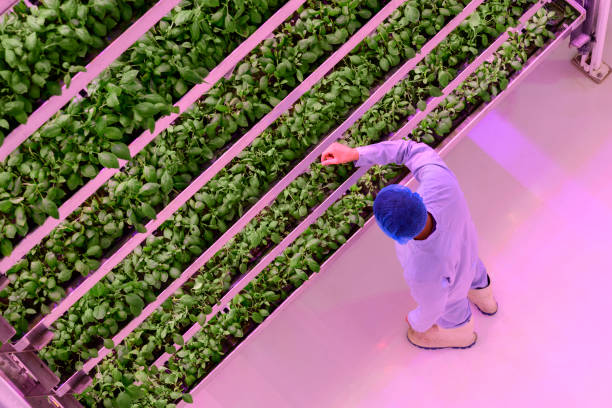
Entry-level individuals undergo basic training in vertical and urban farming systems under supervision. They acquire practical skills through farm...
0.0LPA
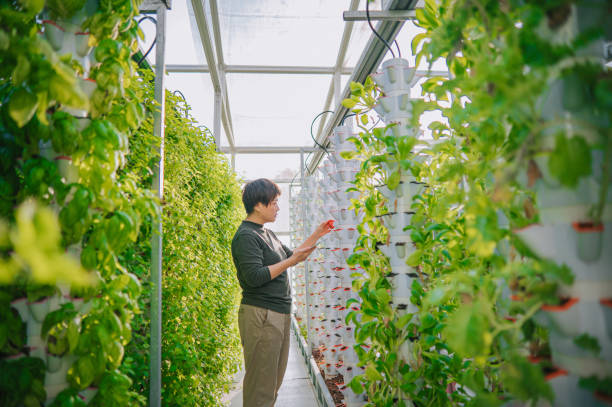
Early-career professionals handle basic farm operations with increasing autonomy. They hone skills in crop management and technology use while...
0.0LPA
Experienced professionals manage complex urban farm projects with high accuracy, using advanced methodologies. They offer technical expertise in...
0.0LPA
Take the next step and explore more about Vertical or Urban-Farm Manager.
Explore similar career paths that might interest you