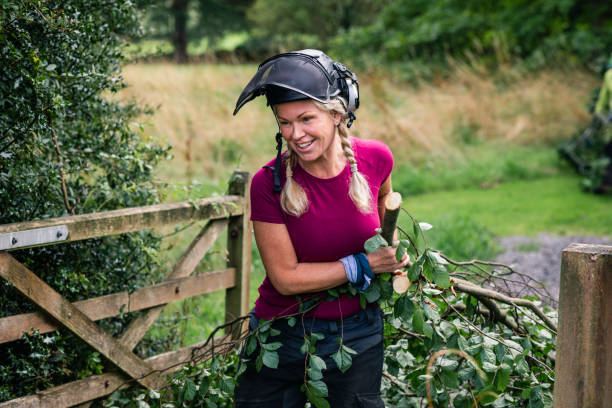
Entry-level individuals undergo basic training in tree care under strict supervision. They acquire practical skills through hands-on exposure in field settings. Their education establishes a foundation for understanding tree biology. They begin their journey by assisting with fundamental tasks such as pruning while learning safety guidelines.
 4.4
4.4

Early-career professionals manage basic tree care tasks with increasing autonomy. They hone skills in trimming and disease identification while ensuring operational safety. Their practice builds field experience through regular tree maintenance. They prepare for advanced roles by mastering core processes and adhering to safety protocols in dynamic environments.
4.4

Experienced professionals handle complex tree care projects with high accuracy, using specialized equipment. They offer technical expertise in diagnosing tree issues and performing surgeries. Their skills improve precision by mentoring junior staff and resolving tree health challenges. They are vital for efficient operations, frequently leading tasks during critical projects.
4.4

Specialists oversee tree care teams and projects with exceptional competence. They integrate deep practical knowledge with expertise in project management for comprehensive oversight. Their proficiency aids detailed coordination through close collaboration with clients. They are central to operational success, often focusing on large-scale tree maintenance.
4.4

Senior professionals specialize in managing urban tree populations, ensuring environmental integration. They provide leadership by establishing tree preservation protocols and managing city-wide projects. Their contributions enhance efficiency through planning and quality assurance of green spaces. They are essential for urban sustainability, often bridging communication between municipalities and communities.
4.4

Leaders offer expert advice on tree management in commercial or public settings. They provide strategic oversight by developing care plans aligned with environmental goals. Their vision fosters institutional growth by integrating modern arboricultural solutions into projects. They are critical for advancing tree care standards, preparing future strategies to meet ecological demands.
4.4

Top-tier experts specialize in evaluating tree hazards in diverse settings. They handle assessments, documentation, and mitigation strategies while ensuring regulatory compliance. Their leadership integrates risk management seamlessly into broader systems. They play a key role in public safety, championing best practices, and driving advancements in hazard evaluation.
4.4

Expert educators offer specialized training on tree care techniques to aspiring arborists. They utilize extensive experience to enhance skill accuracy and safety on a training basis. Their insights shape industry trends by recommending updated practices and tools. They are pivotal in advancing standards, often collaborating with associations to standardize arboricultural education globally.
4.4

Every Student, Career Ready!

This page includes information from O*NET Resource Center by the U.S. Department of Labor, Employment and Training Administration (USDOL/ETA). Used under the CC BY 4.0 license. O*NET® is a trademark of USDOL/ETA.
© 2025 TopTeen. All rights reserved.