Design Thinking & Creative Problem-Solving
Introduction to Design Thinking & Creative Problem-Solving Course for High Schoolers (Grades 9-12)
Welcome to a Journey of Innovation and Impact! Are you ready to tackle real-world challenges with creativity and confidence? Our Design Thinking & Creative Problem-Solving course, specially crafted for high school students in Grades 9-12, introduces you to a powerful framework for solving problems—big or small—using innovative, user-centered approaches. Whether you're struggling with organizing study time, addressing social issues at school, or dreaming of making a difference in your community, this course equips you with the tools and mindset to turn ideas into actionable solutions. Through hands-on projects, teamwork, and the integration of technology, you'll learn how to think like a designer and act like a changemaker, all while building skills that prepare you for college, careers, and beyond.
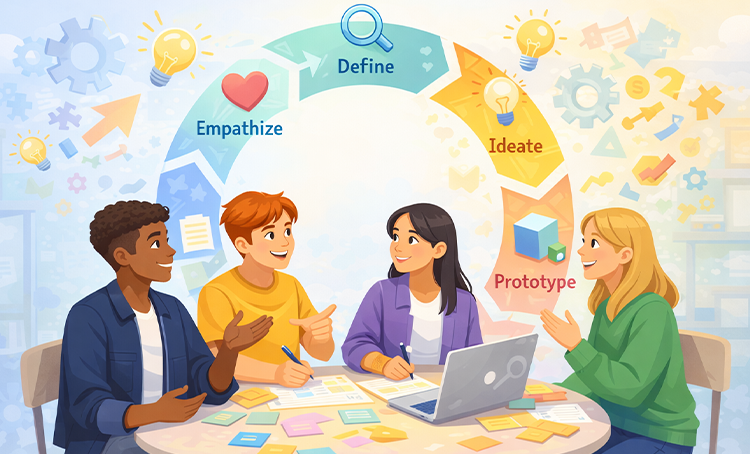
Purpose of the Course The purpose of this course is to empower high school students to become creative problem-solvers who can address personal, academic, and community challenges with empathy and innovation. By introducing the Design Thinking framework—Empathize, Define, Ideate, Prototype, and Test—we aim to foster a mindset of curiosity and resilience, encouraging students to see problems as opportunities for positive change. This course bridges the gap between theoretical learning and practical application, helping teens apply design principles to everyday issues like stress management or global concerns like sustainability, while integrating modern tools such as digital apps and AI to enhance their solutions.
Objectives of the Course By the end of this 12-week journey, students will achieve the following objectives:
- Master the Design Thinking Process: Understand and apply the five stages of Design Thinking to structure problem-solving in a systematic yet creative way.
- Develop Empathy and Insight: Learn to identify and understand the needs of others through interviews, observations, and empathy-building activities.
- Enhance Creative Thinking: Generate diverse ideas using brainstorming techniques and select the most promising solutions for development.
- Build and Test Prototypes: Create tangible representations of ideas using simple materials and digital tools, and refine them based on real-world feedback.
- Strengthen Collaboration Skills: Work effectively in teams, communicate ideas clearly, and resolve conflicts to achieve shared goals.
- Apply Technology to Problem-Solving: Leverage digital and AI tools to design innovative solutions, as demonstrated in a capstone project addressing a high school challenge.
- Communicate and Pitch Ideas: Present solutions confidently through storytelling and visual aids, preparing for future academic and professional opportunities.
- Cultivate a Growth Mindset: Reflect on personal progress, set goals for continued learning, and build a portfolio of creative projects.
Join us to unlock your potential as a problem-solver and innovator! This course isn’t just about learning a process—it’s about discovering how you can make a difference in your world, one idea at a time. Sign up today and start designing the future you want to see!
Course Title: Design Thinking & Creative Problem-Solving for High Schoolers (Grades 9-12)
Chapter 1: Introduction to Design Thinking & Creative Problem-Solving
- What is Design Thinking? Understanding the Mindset
- The Five Stages of Design Thinking: Empathize, Define, Ideate, Prototype, Test
- Why Creative Problem-Solving Matters in Everyday Life
- Examples of Design Thinking in Action (e.g., Product Design, Social Impact)
- Setting Personal Goals for the Course
Chapter 2: Building Empathy – Understanding Others’ Needs
- What is Empathy and Why Does It Matter?
- Tools for Empathizing: Interviews, Surveys, and Observation
- Stepping into Someone Else’s Shoes: Role-Playing Activities
- Identifying Pain Points in School and Community Settings
- Documenting Insights: Creating Empathy Maps
Chapter 3: Defining the Problem – Finding the Root Cause
- Moving from Observations to Problem Statements
- Asking “Why” and “How Might We” Questions
- Narrowing Down Issues to Actionable Challenges
- Avoiding Assumptions: Validating Problems with Peers
- Writing Clear and Specific Problem Statements
Chapter 4: Ideation – Brainstorming Creative Solutions
- What is Ideation? Unleashing Creativity Without Limits
- Brainstorming Techniques: Mind Mapping, SCAMPER, and Crazy 8s
- Encouraging Wild Ideas: Quantity Over Quality
- Collaborating in Teams for Diverse Perspectives
- Selecting the Best Ideas: Voting and Prioritization Methods
Chapter 5: Prototyping – Bringing Ideas to Life
- What is a Prototype? From Concept to Tangible Form
- Types of Prototypes: Sketches, Models, and Digital Mock-ups
- Using Simple Tools: Paper, Cardboard, and Free Apps
- Building Quick and Low-Cost Prototypes for Feedback
- Iterating: Learning from Early Failures
Chapter 6: Testing – Evaluating and Improving Solutions
- Why Testing Matters: Getting Real-World Feedback
- Methods for Testing: User Trials, Peer Reviews, and Surveys
- Asking the Right Questions to Gather Useful Insights
- Analyzing Feedback: What Works and What Doesn’t
- Refining Prototypes Based on Test Results
Chapter 7: Collaboration and Teamwork in Design Thinking
- The Power of Teamwork in Solving Complex Problems
- Roles in a Design Team: Leader, Note-Taker, Timekeeper
- Effective Communication: Listening and Sharing Ideas
- Resolving Conflicts During Group Projects
- Celebrating Team Successes and Learning from Challenges
Chapter 8: Applying Design Thinking to School Challenges
- Identifying Problems in School Life (e.g., Study Habits, Bullying)
- Using Design Thinking to Improve Classroom Experiences
- Creating Solutions for Extracurricular or Club Issues
- Engaging Teachers and Peers as Stakeholders
- Presenting School-Based Solutions for Feedback
Chapter 9: Design Thinking for Community and Global Issues
- Scaling Up: Thinking Beyond Personal Challenges
- Exploring Local Community Needs (e.g., Accessibility, Environment)
- Connecting to Global Issues (e.g., Sustainability, Education Access)
- Partnering with Community Members for Insights
- Designing Impactful Solutions with Limited Resources
Chapter 10: Capstone Project – Solving a High School Challenge with Tech
- Picking a Real High School Issue to Solve (e.g., Organizing Study Time, Reducing Stress)
- Using Digital or AI Tools to Create a Solution (e.g., a Study Schedule App, AI Summarizer)
- Thinking About the Right and Wrong Ways to Use Your Chosen Tool
- Sharing Your Idea with Classmates in a Short Presentation
- Setting Goals to Keep Improving Your Tech Skills Before Graduation
Chapter 11: Storytelling and Pitching Your Ideas
- Why Storytelling Matters in Design Thinking
- Crafting a Compelling Narrative Around Your Solution
- Structuring a Pitch: Problem, Solution, Impact
- Visual Aids for Presentations: Slides, Posters, and Demos
- Practicing Confidence and Clarity in Public Speaking
Chapter 12: Reflecting and Growing as a Creative Problem-Solver
- Assessing Your Growth in Design Thinking Skills
- Reflecting on Successes and Areas for Improvement
- Building a Portfolio of Your Projects and Learnings
- Setting Long-Term Goals for Creativity and Innovation
- Exploring Careers and Opportunities in Design Thinking Fields
Complete the payment to unlock exciting content
Related Courses
View All