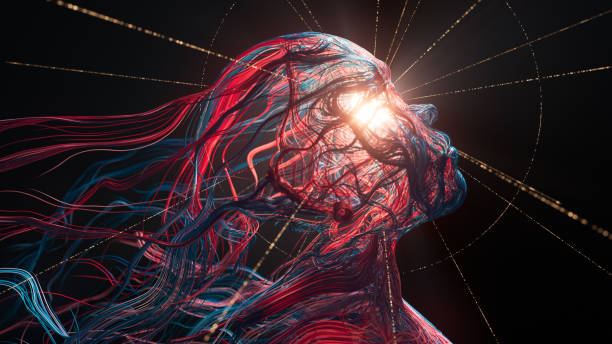
There is a huge debate taking over the creative world right now. On one side, people are worried that Artificial Intelligence is going to replace human artists completely. On the other side, visionary creators are treating AI as the most powerful creative tool invented since the camera.
The reality is that AI isn't killing art—it is fundamentally rewriting the job description.
Just like digital painting software didn't replace traditional painters, generative AI tools need human vision, taste, and direction to make anything truly meaningful. The entertainment, gaming, and advertising industries are actively hunting for a new breed of professional: hybrid creators who can use code and machine learning tools to prototype worlds, direct massive digital assets, and scale human imagination.
If you are a high schooler who loves both coding and sketching, you are sitting on a career goldmine. Here is a look inside the emerging world of AI-driven creative fields.
The New Creative Stack: 4 Hybrid Roles
The combination of artistic taste and algorithmic logic has birthed highly specialized, high-income career tracks that didn't exist just a few years ago.
1. The AI Technical Director (Animation & Gaming)
In video game studios and animation houses, creating assets manually takes thousands of hours. Technical Directors build the custom pipelines that integrate AI tools directly into production software.
- The Job: You write scripts (often in Python) that allow concept artists to instantly generate 3D textures, random environmental backgrounds, or character variations based on the studio's unique artistic style, drastically speeding up production.
2. The Creative Prompt Engineer & Art Strategist
Simply typing "a cool robot" into a generative tool doesn't yield professional results. Major advertising agencies hire specialized artists who treat text and math parameters as their paintbrush.
- The Job: You master the deep syntax of image and video generators. By manipulating lighting physics terms, rendering engine settings, camera lens specs, and aspect ratios directly inside your text inputs, you guide the AI model to produce highly predictable, studio-grade commercial campaigns.
3. The Generative UI/UX Designer
User Interface (UI) and User Experience (UX) designers focus on how apps and websites look and feel. AI has supercharged this field.
- The Job: Instead of designing static web components one by one, you use AI generation frameworks to rapidly test thousands of layout iterations tailored to real-world user data, picking and polishing the highest-performing designs.
4. The Computational Fine Artist
Gallery spaces are being taken over by data-driven art. These artists do not use apps built by other companies; they train their own private machine learning models.
- The Job: You collect specific datasets—like thousands of historical architecture sketches or environmental climate metrics—and feed them into neural networks to generate moving digital art installations that react dynamically to physical inputs.
High School Blueprint: Mapping Your Skills
Blending logic with artistic intuition requires a balance of two traditionally separate mindsets:
| Artistic Side (The Human Intuition) | Technical Side (The Machine Engine) | The Intersecting Career Output |
|---|---|---|
| Color Theory & Lighting Physics | Python scripting and API integration | AI Asset Developer |
| Cinematography & Camera Lenses | Latent space manipulation & token weights | AI Art Director / Prompt Engineer |
| 3D Anatomy & Sculpting | Neural rendering and 3D Gaussian Splatting | Virtual World Architect |
| Storytelling & Pacing | Audio synthesis & AI video editing timelines | Next-Gen Multimedia Creator |
How to Build Your AI Art Portfolio Right Now
You do not need an advanced computer science degree to start playing with professional-grade generative tools. The ecosystem is highly accessible:
- Learn the Logic Behind the Tool: Don't just stick to consumer mobile apps. Open up open-source WebUIs like Stable Diffusion or join community servers for tools like Midjourney. Experiment with how changing specific numerical values—like "CFG Scale" (how strictly the AI follows your text prompt) or "Denoising Strength"—changes your final image structure.
- Master Python for File Management: The modern digital artist frequently deals with massive folders containing thousands of images or data inputs. Writing simple Python scripts to rename files, resize datasets, or scrape source images will build the exact automation instincts required of technical directors.
- Keep Your Original Work Central: An AI portfolio is worthless without your own human fingerprint. Create "Process Portfolios." Show your initial hand-drawn sketch, show how you used an AI model to build iterations of that sketch, and finally, show how you brought it into editing software like Photoshop or Blender to polish the final asset. This proves to colleges and employers that you are the director, and the AI is simply your tool.
The Big Picture: AI isn't going to take your job; a human creator who knows how to collaborate with AI is. By treating machine learning algorithms as a teammate rather than a threat, you open up a world of scalable creativity. The future belongs to those who can speak the language of human emotion and translate it into the language of code.