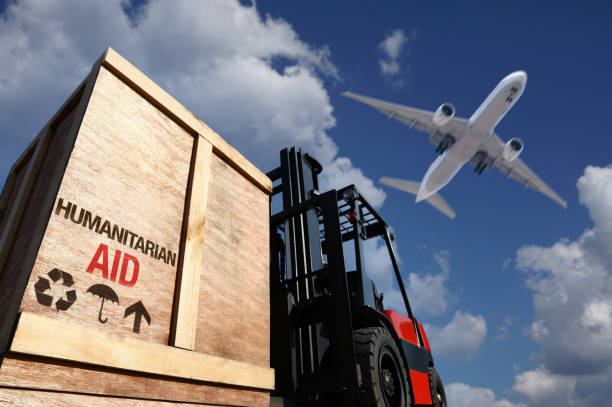
Because humanitarian logistics requires a unique mix of hard technical skills (like coding a data database or optimizing a shipping route) and deep human empathy (like navigating a foreign political crisis), professionals enter this field from several different academic angles.
If you want to design and run the supply chains that save lives in crisis zones, here are the best college majors, engineering paths, and international relations tracks to choose from.
1. The Engineering & Technical Majors (The "How")
If you love math, data, and building systems that run efficiently under extreme pressure, entering through a STEM discipline is a fantastic route. International aid agencies are desperate for highly analytical minds.
Industrial Engineering / Operations Research
This is arguably the gold-standard engineering degree for this career path.
- The Focus: You won't be building bridges or circuits; instead, you will study system optimization, queuing theory (the math behind lines and waiting times), simulation modeling, and resource allocation.
- The Humanitarian Application: You will write code and build mathematical models to solve problems like: "Given three broken roads and limited fuel, what is the mathematically fastest route to distribute 10,000 food rations?"
Supply Chain Management (SCM) / Logistics
Housed within university business or engineering schools, this is a highly specialized, direct path.
- The Focus: Inventory control, procurement (how to buy millions of dollars of goods quickly), warehousing mechanics, and global transportation networks.
- The Humanitarian Application: You learn how massive global corporations move freight across borders seamlessly, and then you flip that blueprint to move medical supplies into disaster areas. Many universities now offer dedicated courses or concentrations specifically in Humanitarian Logistics.
Data Science / Geographic Information Systems (GIS)
Modern disaster response relies heavily on digital mapping and real-time data streaming.
- The Focus: Statistical modeling, programming languages (Python and R), database management, and geospatial mapping.
- The Humanitarian Application: You will use satellite data to map out exactly which roads are flooded after a hurricane or analyze cell phone pings to track where displaced populations are moving, allowing supply trucks to intercept them with aid.
2. The International Relations & Policy Tracks (The "Where")
A perfect mathematical supply chain plan will fail instantly if you don't understand the local laws, culture, and politics of the country you are trying to help. If you lean more toward humanities and global affairs, this is your track.
International Relations (IR) / Global Development
- The Focus: Geopolitics, international law, human rights, and the structural economics of developing nations.
- The Humanitarian Application: You will study how international bodies like the United Nations function. In a crisis zone, you will be the person negotiating with foreign governments, customs officials, and border patrols to get airplanes full of medicine approved for landing without delays.
Emergency Management / Disaster Science
- The Focus: The sociology of disasters, crisis communication, risk assessment, and institutional coordination (how police, fire departments, and international charities talk to each other).
- The Humanitarian Application: You learn the specific psychology and operational chaos that happens during a crisis, allowing you to design emergency supply hubs that don't collapse under sudden stress.
3. The Major + Minor Strategy: The Ultimate Hybrid
The most effective humanitarian logisticians are bilingual in both data and diplomacy. The best way to stand out when applying for elite internships at organizations like UNICEF or the Red Cross is to mix a technical major with a humanitarian minor.
| Choose This Major (Your Core Skill) | Pair It With This Minor (Your Context) | Why It Makes You Unstoppable |
|---|---|---|
| Industrial Engineering | International Relations | You can build world-class optimization algorithms while fully understanding the political terrain where your systems will run. |
| Supply Chain Management | A Foreign Language (Arabic, French, Spanish, etc.) | You know how to source and ship millions of items globally, and you can pick up the phone and coordinate directly with local port authorities in their native language. |
| Global Development | Data Science / GIS | You deeply understand the social needs of a community in crisis, and you have the technical coding chops to map out and analyze their supply vulnerabilities yourself. |
Pro-Tip for High Schoolers
When you are looking at universities, look specifically for schools that are members of the HUMLOG Institute network or have research partnerships with organizations like the Fritz Institute (a leader in humanitarian logistics training). Getting involved in university clubs like Engineers Without Borders or Net Impact early in your college career will give you the hands-on project experience that civilian aid agencies value most.