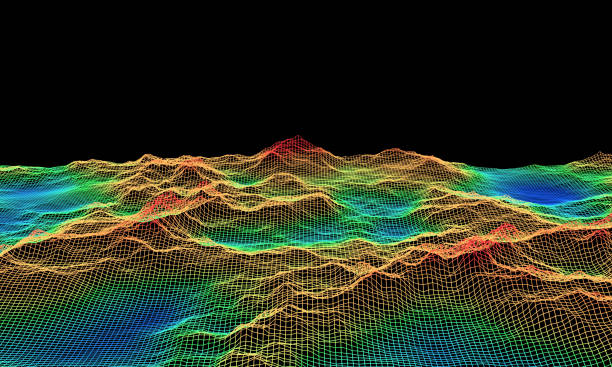

When most people think of coding, they picture black screens filled with lines of dense text, math equations, and software built to optimize database efficiency. On the flip side, when people think of art, they picture paintbrushes, clay, oil canvases, or quiet galleries where a sign reads “Do Not Touch.”
It is time to smash those two worlds together. Welcome to the world of Creative Coding.
Creative coding is a movement where software is used not as a tool for utility, but as an expressive artistic medium. Instead of programming an app to solve a problem, creative coders write algorithms to generate striking visual art, responsive musical soundscapes, and massive physical light installations.
The coolest part? This art isn’t static. It is interactive. Through sensors, cameras, and computer vision, the code responds in real time to the physical movements, voices, or even the heartbeats of the people viewing it. Here is a look inside this high-tech art revolution and how your logic skills can fuel your creative expression.
What Does Interactive Tech Art Look Like?
If you have ever walked through an immersive digital art museum, seen a projection-mapped light show on the facade of a building, or interacted with an AR filter that alters a physical environment, you have experienced creative coding.
In the professional world, this tech operates on a few distinct levels:
1. Generative Living Art
Instead of drawing a picture, artists write a set of rules (an algorithm) that dictates how shapes, colors, and lines behave. Because the code includes variables that constantly shift—like live weather data or noise algorithms—the artwork continuously draws itself, evolving forever. No two moments are ever exactly identical.
2. Kinetic Light and Projection Installations
Using high-powered laser projectors and motion trackers, artists can transform physical architectural structures into living screens. When a person walks past a wall, the tracking camera sends their spatial coordinates to a running script, causing digital waves to part around their silhouette, or light particles to mimic their physical shadow.
3. Audiovisual Environments
In these setups, sound and sight are hard-wired together through software. A creative coder might write a script that analyzes the frequencies of a live musical performance or ambient room noise. The code processes the audio input instantly, translating loud bass frequencies into expanding geometric shapes and high frequencies into sharp, bright flashes of color.
The Creative Coder's Toolkit
You do not need to invent an entirely new programming language to start making digital art. The global creative tech community relies on a few core, highly accessible open-source libraries:
| Tool / Framework | What It Is | Best For | Language |
|---|---|---|---|
| p5.js / Processing | A flexible software sketchbook and library designed specifically to make coding visual and accessible for beginners. | 2D/3D generative graphics, browser art, basic animations | JavaScript / Java |
| three.js | A lightweight, powerful library used to display animated 3D computer graphics directly inside a web browser. | Immersive 3D web environments, interactive product models | JavaScript |
| TouchDesigner | A visual, node-based programming environment where you connect functional blocks instead of writing text. | Live projection mapping, real-time rendering, interactive sensor inputs | Visual Nodes / Python |
| OpenFrameworks | A robust, professional open-source toolkit designed for high-performance graphic rendering. | Massive physical installations, real-time camera tracking | C++ |
How to Get Started While Still in High School
The barrier to entry for creative coding is incredibly low. You already have all the hardware you need right in front of you.
- Launch a Browser Sketchbook: Head over to the p5.js web editor. It is completely free and requires zero installation. Within ten minutes of reading their starter documentation, you can write a short loop that tracks your computer mouse and leaves a trail of shifting, colorful geometric patterns across your screen.
- Connect Creative Projects to School Assignments: The next time you are given freedom on a school project—whether it is designing a cover for a literature project, analyzing geometric patterns for a math class, or building a creative piece for an art class—ask if you can submit a piece of code. A self-generating digital rendering or an interactive web experience will blow a traditional poster board out of the water.
- Combine Hardware with Software: If you have access to a basic micro-controller like an Arduino or a Raspberry Pi, try connecting a simple distance sensor to it. You can write a script that changes the color of a digital drawing on your laptop screen depending on how close your hand gets to the physical sensor.
The Big Picture: The tech industry is evolving past standard software engineering. Companies, entertainment venues, and design studios are actively hunting for "hybrid" minds—people who understand the strict logic of a syntax loop but possess the artistic vision to create something beautiful with it. By looking at code as your digital paintbrush, you are building a highly unique skill set that sits precisely at the intersection of human emotion and technical engineering.