

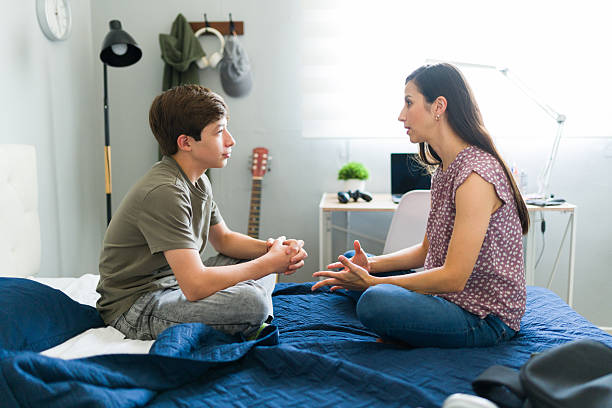
It is natural for parents to remind children to study, complete homework, prepare for tests or organise their schoolwork. When children are younger, they genuinely need this support. But as they grow older, constant reminders can become a habit—and the child may begin depending on a parent to tell them what to do and when to do it.
The long-term goal is not to make your child perfectly disciplined overnight. It is to gradually help them take ownership of their responsibilities so that they can manage themselves without constant parental supervision.
Understand the Difference Between Support and Dependence
Supporting your child means helping them develop the skills to manage a responsibility. Dependence means doing the managing for them.
For example, helping a child create a study schedule is support. Sitting beside them every evening and repeatedly telling them what chapter to study is dependence.
Parents should ask themselves a simple question: If I stopped reminding my child, would they know what to do next? If the answer is consistently no, it may be time to transfer some responsibility.
Start With Small Responsibilities
Self-discipline develops through practice. Don't expect a child who has always relied on reminders to suddenly manage their entire academic routine independently.
Start with small responsibilities. They could be responsible for packing their school bag, recording homework, remembering deadlines or preparing for a test. Once they demonstrate that they can manage one responsibility, gradually add another.
Small successes build confidence as well as independence.
Replace Reminders With Questions
Constant instructions can create resistance. Instead of saying, “Go and study now,” try asking, “What do you need to finish today?”
Similarly, rather than reminding them about an upcoming test, ask, “How are you planning to prepare for it?”
Questions encourage children to think about their responsibilities themselves. Over time, they begin anticipating what needs to be done instead of waiting for a parent to tell them.
Let Natural Consequences Teach When Appropriate
Parents often step in quickly when they see their child making a poor decision. While intervention is sometimes necessary, not every mistake needs to be prevented.
If your child forgets to pack something they needed for school or leaves an assignment until the last minute, an age-appropriate natural consequence can teach them more effectively than a lecture.
The aim is not to punish mistakes. It is to help children understand that their choices have consequences and that they are capable of handling them.
Teach Planning Instead of Doing the Planning
A child who is always given a timetable may follow it, but they may not learn how to create one.
As children grow older, involve them in planning their workload. Ask what deadlines are approaching, how much time each task might take and what they should prioritise.
For teenagers, this becomes particularly important in Classes 9–12, when academic demands increase and they may also be balancing coaching, extracurricular activities and entrance-examination preparation.
Allow Them to Make Some Choices
Self-discipline requires decision-making. Give your child reasonable choices about when to study, which task to complete first or how to organise their notes.
They may not always choose exactly as you would. That is part of learning.
As long as the decision is reasonable and the consequences are manageable, allowing children to make choices gives them opportunities to practise responsibility.
Don't Rescue Them Too Quickly
When a child struggles with homework or an academic task, it can be tempting to immediately provide the answer or take over.
Instead, ask what they have tried and where they are stuck. Encourage them to attempt the next step before stepping in.
The objective is not to leave them struggling unnecessarily. It is to teach them that difficulty is something they can work through rather than something a parent must immediately solve.
Change Your Role as Your Child Gets Older
The amount of parental involvement should gradually decrease.
For younger children, parents may need to provide structure and frequent reminders. During middle school, parents can start transferring responsibility for routines and schoolwork. By Classes 11–12, teenagers should increasingly be planning their own academic work, with parents providing guidance and support when needed.
This transition can feel uncomfortable. Stepping back does not mean becoming uninvolved. It means changing from manager to mentor.
A Step-by-Step Transition Plan
Parents can make this shift gradually rather than removing all supervision at once.
Step 1: Identify One Responsibility
Choose one area where your child can become more independent, such as homework, test preparation, packing their school bag or tracking assignments. Don't try to change everything simultaneously.
Step 2: Plan It Together
Discuss what needs to be done and let your child suggest how they will manage it. You can guide the plan, but allow them to make reasonable decisions.
Step 3: Reduce Reminders
Once the routine is established, stop giving repeated reminders. Instead, ask occasional questions such as, “How is your plan going?” This keeps you involved without taking responsibility away from them.
Step 4: Allow Manageable Mistakes
If your child forgets something or misjudges how long a task will take, resist the urge to immediately fix it. Discuss what they could do differently next time.
Step 5: Review, Don't Police
After a few weeks, have a short conversation about what is working and what is not. Adjust the system together rather than taking control back.
Step 6: Transfer Another Responsibility
Once your child can manage the first responsibility reasonably well, move another area of their routine into their hands.
The goal is gradual progress. A child who manages three responsibilities independently is further along than one who follows a perfect schedule created and monitored entirely by a parent.
Praise Responsibility, Not Just Results
If your child independently starts studying, remembers a deadline or takes responsibility for correcting a mistake, notice it.
Praise the behaviour rather than only the outcome. Saying, “I liked that you remembered to prepare without me reminding you,” reinforces self-management.
This is more useful for developing long-term discipline than focusing only on marks.
Be Consistent About Expectations
Children are more likely to develop discipline when expectations at home are clear and predictable. If homework, screen time, sleep and study routines have constantly changing rules, it becomes harder for children to develop their own structure.
Set a few reasonable expectations and maintain them consistently. At the same time, allow older children increasing control over how they meet those expectations.
Watch for the Difference Between Dependence and Genuine Difficulty
Not every child who needs help is lacking self-discipline. A student may be dependent on reminders because they are struggling academically, overwhelmed by their workload, dealing with anxiety or simply have not yet learned the skills required to organise themselves.
If your child repeatedly wants to be independent but cannot seem to manage, first understand what is getting in the way. They may need skill-building or additional support rather than stricter discipline.
A Simple Independence Check
Every few months, parents can ask themselves:
- Does my child know what responsibilities they have?
- Do they remember deadlines without repeated reminders?
- Can they plan their work reasonably well?
- Do they try to solve problems before asking for help?
- Are we allowing them to experience manageable consequences?
- Am I helping them build independence—or simply making sure everything gets done?
These questions can help parents recognise when it is time to step back a little further.
Final Thoughts
Self-discipline is not something children either have or do not have. It is a skill that develops gradually through practice, responsibility and the opportunity to make decisions.
Parents may need to provide more structure when children are young, but the ultimate goal is to make themselves less necessary in the child's everyday decision-making. When children learn to plan, act, make mistakes, solve problems and take responsibility for their choices, they are preparing for much more than academic success. They are learning how to manage themselves.









