
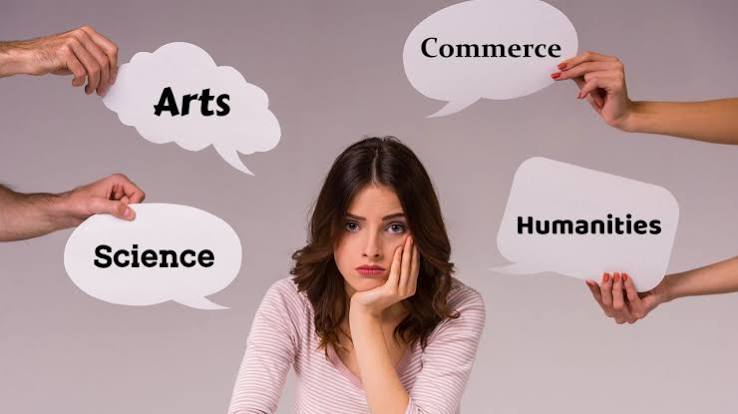
Choosing between Science, Commerce and Humanities is one of the first major academic decisions many teenagers face. For parents, it can feel like a decision that will determine their child's entire future. This can make it tempting to strongly influence the choice—especially when one stream is seen as more prestigious or offers what appears to be a safer career path.
But there is no universally “best” stream. The right choice depends on your child's interests, abilities, learning style and aspirations. Parents can provide guidance and perspective while allowing teenagers to take ownership of the decision.
Move Beyond the “Best Stream” Debate
Science, Commerce and Humanities can all lead to a wide range of higher education and career options. The idea that Science is automatically better, Commerce is only for business, or Humanities has fewer opportunities is outdated.
Science can lead towards fields such as medicine, engineering, research, technology and many interdisciplinary careers. Commerce can open pathways into finance, economics, business, accounting, management and entrepreneurship. Humanities can lead towards areas including law, psychology, media, design, education, social sciences, public policy and many creative and professional careers.
The question should not be, “Which stream is the most prestigious?” but “Which stream is the best fit for my child?”
Understand Your Child's Interests
Start by paying attention to what your teenager actually enjoys learning. Do they like understanding how things work? Are they comfortable with numbers and analytical problems? Do they enjoy economics or business? Are they fascinated by history, society, psychology, literature or current affairs?
Interest matters because students are more likely to engage deeply with subjects they genuinely enjoy. A stream chosen primarily because parents or peers consider it prestigious can become difficult to sustain when the academic workload increases.
Consider Strengths Alongside Interests
Interest alone is not enough. Your teenager should also consider their academic strengths and learning preferences.
A student may enjoy biology but struggle significantly with the demands of advanced science subjects. Another may be very good at mathematics but have little interest in pursuing a heavily quantitative path. Someone who loves reading and debating may thrive in Humanities.
The objective is not to choose the easiest option. It is to find a combination where your teenager can be appropriately challenged while still having a realistic opportunity to succeed.
Don't Choose Based on Career Stereotypes
Many parents still associate particular streams with a limited set of careers. Science is often linked exclusively with medicine and engineering, Commerce with accounting or business, and Humanities with a small number of traditional professions.
Today's career landscape is much broader. Students can combine disciplines, change directions during college and build careers that may not fit neatly into one stream.
A teenager does not need to know their exact job title at this stage. It is more useful to understand their interests and keep appropriate options open.
Talk About the Reality of Each Stream
Guidance should include an honest understanding of what each stream involves. Look at the subjects, workload, assessment methods and expectations rather than choosing based on reputation alone.
Encourage your teenager to speak with teachers, older students and, where possible, professionals who can explain what different academic and career pathways actually look like.
First-hand information can help replace assumptions with realistic expectations.
Use Career Assessments as a Guide
A good career or psychometric assessment can help teenagers understand their interests, aptitudes and preferences and explore academic pathways that may suit them.
However, assessment results should not be treated as instructions. They are a starting point for discussion and exploration. Your child's own experiences, interests and evolving goals should remain part of the decision.
Don't Make the Decision About Your Reputation
Sometimes parental pressure comes from social expectations. Parents may worry about what relatives will say if their child chooses Humanities instead of Science, or feel that a particular stream reflects better on the family.
Your teenager will ultimately have to live with the academic workload and career choices that follow. Their education should not be used to meet someone else's expectations.
A successful student in a field they enjoy is far better positioned than a struggling student in a stream chosen purely for status.
Give Them Ownership
Parents can help teenagers compare subjects, understand career options and think through the consequences of their choices. But the final decision should involve the teenager meaningfully.
Ask questions rather than issuing instructions. What do you enjoy? Which subjects do you want to study more deeply? What kind of work interests you? Which options are you considering, and why?
When teenagers participate in the decision, they are more likely to take responsibility for the outcome.
Use a Simple Decision-Making Framework
Rather than trying to find the “perfect” stream, encourage your teenager to compare each option across four areas: Interest, Ability, Opportunity and Fit.
Interest: Which subjects do they genuinely enjoy learning about, even when the work becomes challenging?
Ability: Which subjects align with their academic strengths, and are they prepared to put in the effort required to improve in weaker areas?
Opportunity: What courses and career pathways could each stream open up? Are there particular subjects they need for careers they are seriously considering?
Fit: Which stream matches their preferred way of learning and the kind of academic workload they are comfortable handling?
Discuss each area honestly and compare the options based on evidence rather than assumptions. If one stream appeals because of family expectations or social status alone, that should be recognised as part of the conversation rather than allowed to make the decision.
Final Thoughts
Choosing Science, Commerce or Humanities is an important decision, but it does not have to define your teenager's entire life. Academic and career paths can evolve, and today's students have more opportunities to combine disciplines and change direction than ever before.
As a parent, your role is to provide information, ask thoughtful questions and help your child understand their options.
The best stream is not the one that sounds most impressive to others. It is the one in which your teenager can learn, grow and build towards a future that genuinely suits them.