
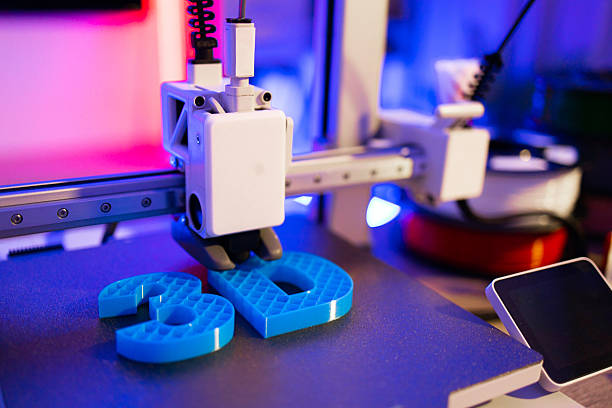
If you think 3D printing is just for making plastic toy dinosaurs, custom phone cases, or cool keychains in your school’s maker space, it is time for a massive reality check.
Right now, a silent revolution is happening inside factories, labs, and design studios across the globe. The professional world calls it Additive Manufacturing (AM)—the process of building objects layer by layer from a digital 3D model. It has evolved from a quirky prototyping hobby into a massive global industry.
By layering advanced materials like titanium, carbon fiber, and even living cells, companies are using 3D printing to build lightweight rocket engines, custom medical implants for children, and entire residential homes.
For high school students looking toward the future, this explosion means one thing: thousands of brand-new, high-paying jobs are opening up. Here is a look inside the 3D printing career landscape and how you can get involved before you graduate.
The Career Tracks: Who Makes the Magic Happen?
The 3D printing ecosystem is highly diverse. It takes a mix of software geniuses, material scientists, and hands-on engineers to make the industry run. Here are some of the coolest career paths emerging today:
1. Additive Manufacturing Design Engineer
Traditional manufacturing requires designing parts that can be carved out of a block of metal or poured into a mold. 3D printing throws those old rules out the window. Design Engineers use CAD (Computer-Aided Design) software to create complex, hollow geometric patterns that are stronger and lighter than anything traditional machinery could ever make.
2. Material Scientist
A 3D printer is only as good as what you feed into it. Material scientists are the chemists of the manufacturing world. They invent new print feedstocks, including high-temperature thermoplastics, custom titanium powders for aerospace, and bio-inks designed to print functional human tissues.
3. AM Automation & AI Specialist
Modern industrial 3D printing is fully automated. Companies hire specialists who use artificial intelligence to optimize print paths, predict where a print might fail before it even starts, and coordinate robotic arms to handle post-processing (cleaning and polishing finished parts).
4. Quality Assurance and Certification Engineer
In industries like aerospace and healthcare, a microscopic flaw in a 3D-printed part can be catastrophic. These engineers use advanced 3D scanners, X-rays, and data analytics to inspect every single print layer, ensuring the final product is flawless and safe for real-world deployment.
Industry Snapshot: Where the Tech is Scaling
The shift toward industrial-scale 3D printing is driving massive market growth across several major fields:
| Industry Sector | Real-World Application | Why 3D Printing Wins |
|---|---|---|
| Aerospace & Defense | Rocket engines, lightweight satellite brackets, drone frames | Reduces weight dramatically, saving millions in fuel costs. |
| Healthcare & Dental | Patient-specific bone implants, prosthetic limbs, dental aligners | Allows "mass customization"—every part fits a specific person perfectly. |
| Automotive | Rapid prototyping, customized high-performance racing parts | Accelerates development speed, getting cars to the track faster. |
| Supply Chain & Logistics | On-demand manufacturing of rare or legacy spare parts | Eliminates the need for massive, expensive warehouses full of old inventory. |
How to Get Started While Still in High School
You do not need an advanced engineering degree to start building your skills today. The entry barriers to additive manufacturing are lower than ever.
- Learn CAD Software for Free: You cannot print without a digital file. Download free student versions of professional modeling software like Autodesk Fusion 360 or Tinkercad. Spend an hour a week watching tutorials and practicing basic geometric modeling.
- Master the Slicer: Download open-source slicing software like Cura or PrusaSlicer. A "slicer" translates your 3D digital model into the exact coordinates (G-code) the printer reads. Learning how print orientation and layer thickness affect part strength is a highly valuable skill.
- Join a Project-Based Club: If your school has a robotics team, a computer science club, or a technology student association, join it. Focus on designing and manufacturing physical components for their projects.
The Big Takeaway: The companies dominating the future of manufacturing aren't looking for people who just know how to press "print." They want problem-solvers who understand the entire digital pipeline—from software design to material science. By picking up these digital manufacturing skills early, you are positioning yourself at the front of a generation-defining career wave.