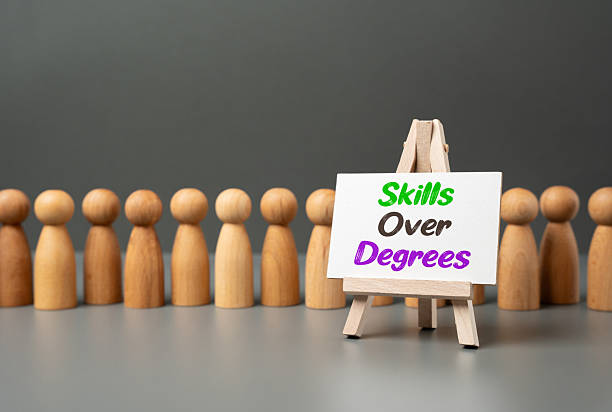
When you think about preparing for your future career, you may focus on choosing the right subjects, getting good marks, selecting the best college or learning a technical skill. All of these things are important. However, there is one skill that may become increasingly valuable no matter which career you choose: adaptability.
The world of work is changing faster than ever before. Artificial Intelligence is transforming industries, new technologies are emerging, businesses are changing the way they operate and completely new career opportunities are appearing. At the same time, some skills that are highly valuable today may become less important in the future.
This means that preparing for one specific job may not be enough. You may need to prepare yourself for change.
Adaptability is the ability to adjust when circumstances change, learn new skills, explore unfamiliar situations and continue moving forward even when your original plans do not work exactly as expected. In the future, this may be one of the biggest advantages you can have.
Your Future Career May Not Look the Way You Imagine Today
Think about how quickly careers have changed over the last decade. Many jobs that are common today were not widely known a few years ago. Careers such as data science, social media management, UX design, cloud computing, digital marketing and AI-related roles have grown rapidly as technology and business needs have changed.
Now imagine what could happen during the next 10 or 20 years.
Some of the careers you may eventually choose may not even exist yet. Others may continue to exist but look very different from the way they do today. A doctor may work with AI-powered diagnostic tools. A lawyer may use AI to analyse legal documents. A designer may use advanced technology to create concepts and test ideas. An engineer may work with robotics, automation and smart systems.
This is why you should avoid thinking of your career as one fixed destination. Your career may be a journey in which you learn, change direction, develop new interests and discover opportunities you did not know existed.
Adaptability Does Not Mean Changing Your Career Every Year
Sometimes people misunderstand adaptability. Being adaptable does not mean constantly changing your career or giving up whenever something becomes difficult.
Adaptability means being open to change when change is necessary. It means recognising when you need to learn something new, improve an existing skill or approach a problem differently.
For example, imagine that you want to become a graphic designer. You may spend years developing your artistic and design skills. Then new AI-powered design tools become widely used. An adaptable person does not immediately think, “My career is over.” Instead, they learn how the new tools work and discover how they can use them to become more efficient and creative.
The same principle applies to almost every career. The goal is not to abandon what you know every time something new appears. The goal is to build on what you already know and continue evolving.
The Skills You Learn Today May Need to Be Updated Tomorrow
One of the biggest differences between the careers of the past and the careers of the future is the speed at which skills are changing.
In the past, a person could often learn a specific set of skills, enter a profession and use those skills for many years with relatively small changes. Today, technology can transform the way an industry works within a much shorter period.
This does not mean that everything you learn in school will become irrelevant. Fundamental knowledge will continue to matter. Mathematics, communication, scientific thinking, creativity and problem-solving can remain useful across many different careers.
However, the tools you use may change. The software you learn today may be replaced by something better. A new technology may change the way your industry works. Your future employer may expect you to learn skills that were not part of your original education.
Being adaptable means not being afraid of this process. Instead of thinking, “I already know enough,” you learn to ask, “What do I need to understand next?”
Artificial Intelligence Is Making Adaptability Even More Important
Artificial Intelligence is one of the biggest reasons why adaptability is becoming such an important career skill. AI is already changing the way people write, design, analyse information, create software and perform many routine tasks.
You may feel worried when you hear that AI can perform tasks that humans once did. However, technology has always changed the nature of work. The people who succeed are often not those who resist every change but those who learn how to work with new tools.
This does not mean that you should allow AI to do all your thinking for you. In fact, independent thinking may become even more important. You need to understand how to use AI while also knowing how to question its answers, identify mistakes and apply your own judgement.
The combination of adaptability and critical thinking can be powerful. You can learn new technology without becoming dependent on it. You can use AI as a tool while continuing to develop your own creativity, knowledge and problem-solving ability.
Your First Career Choice Does Not Have to Define Your Entire Life
Many students feel enormous pressure when they have to choose subjects, streams, courses or colleges. It can feel as though one decision will determine the rest of your life.
While your choices are important, they do not necessarily lock you into one path forever.
People change careers. They discover new interests. They develop unexpected strengths. Industries evolve and new opportunities emerge. Someone may begin in engineering and move into management or entrepreneurship. A psychology graduate may work in human resources, user research or behavioural science. A commerce student may enter finance, analytics, business or technology-related roles.
Your first choice is a starting point, not always a final destination.
This does not mean you should make career decisions carelessly. It means that you should not become paralysed by the fear of making one imperfect decision. A good decision based on what you know about yourself today can still lead to many opportunities tomorrow.
Adaptability Helps You Handle Failure and Unexpected Changes
No career journey goes exactly according to plan.
You may not get into the college you wanted. You may discover that a subject you once loved is not what you expected. You may fail an exam, miss an opportunity or realise that a particular career is not right for you.
These experiences can feel disappointing. However, adaptability helps you see them as situations that can be managed rather than as permanent failures.
An adaptable person asks, “What can I do next?” They look for alternatives, learn from mistakes and continue moving forward.
Sometimes, an unexpected change can lead to a better opportunity. A student who does not get into their first-choice course may discover another field that suits them better. Someone who struggles in one role may develop skills that lead them towards a completely different career.
Your ability to recover, rethink and move forward can be just as important as your original plan.
Adaptability Begins With Curiosity
One of the easiest ways to become more adaptable is to remain curious.
Do not limit yourself to learning only what is required for an examination. Explore topics that interest you. Try activities that are unfamiliar. Learn how different industries work. Ask questions about careers you have never considered.
Curiosity makes change less frightening because you become comfortable with learning new things.
For example, if you are interested in biology, you can also explore biotechnology, genetics and healthcare technology. If you enjoy art, you can learn about animation, UX design, game design and digital media. If you like business, you can explore entrepreneurship, fintech, marketing and data analytics.
You do not need to become an expert in everything. The purpose is to develop the habit of exploration.
How You Can Become More Adaptable
Adaptability is not something you either have or do not have. It is a skill that can be developed.
Start by becoming comfortable with learning new things. Try a new software tool, take up an unfamiliar project or explore a subject outside your usual interests. You may initially feel uncomfortable, and that is normal. Learning to handle that discomfort is part of becoming adaptable.
Avoid thinking that you are permanently “good” or “bad” at something. If you struggle with a new skill, remind yourself that you may simply be at the beginning of the learning process.
Learn to accept feedback. Feedback can sometimes be difficult to hear, but it can help you understand what needs to improve. Instead of seeing feedback as criticism of who you are, try to see it as information that can help you grow.
Develop problem-solving skills. When something does not work, resist the urge to immediately give up. Ask yourself what other approaches you could try.
Most importantly, remember that learning does not end when you finish school or college. Your future career may require you to update your knowledge repeatedly.
Being Adaptable Does Not Mean You Need to Know Everything
One of the biggest mistakes students can make is believing that they need to prepare for every possible future change.
You do not.
You cannot learn every technology, predict every career trend or master every skill. Trying to do so would only create unnecessary stress.
Adaptability is not about knowing everything in advance. It is about having the confidence to learn when you need to.
You may not know how a new technology works today, but you can learn. You may not know exactly which career will suit you at 25, but you can continue exploring. You may encounter a problem you have never faced before, but you can analyse it, ask for help and find a solution.
That confidence in your ability to learn may be more valuable than having every answer right now.
Your Career Will Be a Journey of Learning
The idea that you study until your early twenties and then spend the rest of your life using exactly the same knowledge is becoming less realistic.
Your career may involve learning new technologies, developing additional qualifications, changing roles or even moving into entirely new industries. This does not have to be frightening. It can also make your career more interesting.
Every new skill can create additional opportunities. Every experience can help you understand yourself better. The more willing you are to learn and adapt, the more options you may have when the world changes around you.
Instead of asking yourself, “What is the one career I should choose for the rest of my life?” try asking, “What interests me right now, what am I good at and what skills can I continue developing?”
These questions leave room for growth.
The TopTeen Perspective
At TopTeen, we believe that career planning should not make students feel that they must have their entire life figured out at the age of 15, 16 or 17.
Career exploration is about understanding yourself, discovering opportunities and learning how to make informed decisions. Your interests may evolve, your skills may develop and the world of work will certainly continue to change.
This is why adaptability matters so much.
You do not need to predict every change that will happen in the future. You need to build the confidence to face change when it arrives.
The students who succeed in the future may not always be the ones who know exactly where they are going from the beginning. They may be the ones who remain curious, keep learning, recover from setbacks and have the courage to adjust when the path ahead changes.
Your future career may change.
The skills you use may change.
The opportunities available to you may change.
But if you learn how to adapt, you will be better prepared to grow with them.