As teenagers become more independent, they naturally begin testing boundaries. They may forget responsibilities, break household rules, argue with parents, misuse technology, make impulsive choices or underestimate the consequences of their actions. For parents, these moments can be frustrating and sometimes frightening.
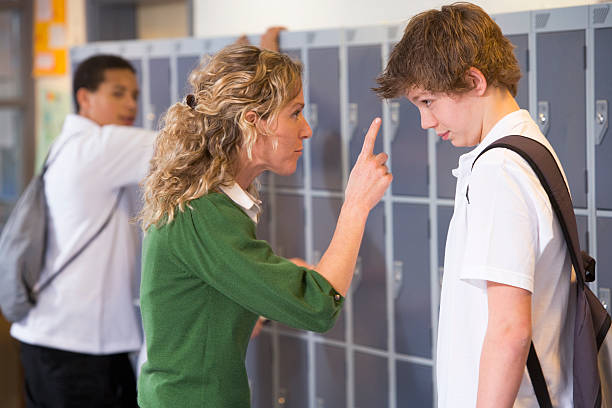
In response, it can be tempting to use threats: “If you do that again, you will lose everything,” or “If you don't listen to me, you will be sorry.”
Threats may produce immediate compliance, but they do not necessarily teach teenagers how to make better decisions. Consequences, when used thoughtfully, can teach responsibility, cause and effect, and self-discipline.
The goal of consequences is not to make teenagers suffer. It is to help them understand that choices have outcomes and that they have a role in deciding what happens next.
A. Understanding the Difference Between Threats and Consequences
A threat is primarily about fear. It warns a teenager about something unpleasant that a parent will do if the teenager does not behave as expected.
A consequence, on the other hand, is connected to the behaviour and helps the teenager understand its impact.
For example:
Threat: “If you don't put your phone away right now, I'm taking it for a month.”
Consequence: “We agreed that phones would be put away during study time. Since that agreement isn't working, we'll need to reduce phone access during study hours until you can manage it responsibly.”
The first focuses on parental power. The second focuses on responsibility and an agreed boundary.
B. Why Threats Often Stop Working
Threats can create immediate fear, but repeated threats may lose their effectiveness over time. Teenagers may begin arguing, negotiating, ignoring warnings or simply waiting to see whether the parent will actually follow through.
Constant threats can also shift the focus away from the behaviour itself.
Instead of thinking:
“My decision had a negative consequence.”
the teenager may think:
“My parent is trying to control me.”
This can create resentment rather than responsibility.
When teenagers regularly experience clear and predictable consequences instead, they begin to understand that their choices have real outcomes.
C. Consequences Should Teach, Not Humiliate
The purpose of a consequence should be to encourage learning and responsibility, not to make a teenager feel ashamed.
If a teenager forgets to complete an important responsibility, a consequence might involve completing the neglected task before moving on to another preferred activity.
If they misuse a privilege, the privilege may need to be temporarily adjusted.
If they damage something through carelessness, they can participate in repairing or replacing it where appropriate.
These responses communicate:
“Your actions matter, and you can take responsibility for what happened.”
That is very different from:
“You deserve to suffer because you behaved badly.”
D. Make Consequences Related to the Behaviour
Consequences are usually more meaningful when they have a logical connection to the behaviour.
If a teenager misuses their phone late at night, adjusting night time phone access is more directly connected to the issue than taking away an unrelated privilege for several weeks.
If a teenager repeatedly fails to manage a responsibility, they may need to develop a more structured routine before receiving additional freedom.
If they spend money irresponsibly, they may need to wait before receiving more discretionary money.
The connection helps teenagers understand why the consequence exists.
E. Set Expectations Before Problems Occur
Consequences work better when teenagers know the expectations in advance.
Parents can discuss important family rules before a conflict occurs.
For example:
- “We expect you to tell us if your plans change.”
- “Homework and essential responsibilities need to be completed before recreational screen time.”
- “If you borrow something, you are responsible for returning it in good condition.”
When expectations are clear, consequences are less likely to feel like something a parent has invented in the heat of anger.
Teenagers may still disagree with the consequence, but they are more likely to understand the reasoning behind it.
F. Avoid Making Threats You Cannot Keep
One of the biggest problems with threats is that parents sometimes make them in moments of anger.
- “I am taking your phone away forever.”
- “You will never go out again.”
- “I'll make sure you never do that again.”
When the parent later does not follow through, the teenager learns that the threat was mostly emotional rather than meaningful.
Parents are better off choosing consequences they can realistically and consistently enforce.
A calm, manageable consequence is more effective than a dramatic threat that is never carried out.
G. Give Teenagers a Chance to Think About What Happened
Consequences become more educational when teenagers are encouraged to reflect on their choices.
Instead of immediately delivering a punishment, parents can ask:
- “What happened?”
- “What were you thinking at the time?”
- “What do you think the impact was?”
- “What could you have done differently?”
- “What do you think would be a fair way to repair the situation?”
These questions encourage teenagers to become active participants in the learning process.
H. Let Natural Consequences Teach When It Is Safe
Parents do not always need to impose a consequence.
Sometimes life provides one naturally.
A teenager who stays up late may feel tired the next day.
A teenager who spends all their money early may have to wait before buying something else.
A teenager who does not prepare adequately for a test may experience disappointment in their result.
Parents should not deliberately create suffering or allow serious harm. But when the natural consequence is safe and reasonable, allowing teenagers to experience it can be more powerful than a lecture.
It teaches them that life itself contains feedback.
I. Don't Rescue Teenagers From Every Consequence
Parents often step in because they want to protect their children from embarrassment or disappointment.
They may contact a teacher after a missed deadline, make excuses for a forgotten commitment or replace something immediately after a teenager loses it.
Support is important, but constant rescue can prevent teenagers from developing responsibility.
Instead, parents can ask:
“What can you do to fix this?”
If the teenager needs help, offer guidance. But whenever possible, let them take the lead in solving the problem.
The lesson becomes:
“I made the mistake, and I can take steps to make it right.”
J. Consequences Should Be Proportionate
A small mistake does not need a massive consequence.
If a teenager forgets to complete one household task, removing all privileges for a month is unlikely to teach more than a reasonable, related consequence would.
Excessively harsh consequences can make teenagers feel that the response is unfair. Once they become focused on the punishment, they may stop thinking about the original behaviour.
A useful question for parents is:
“Will this consequence help my teenager learn something, or am I simply reacting because I am angry?”
Taking a little time before deciding can make a significant difference.
K. Don't Use Consequences to Control Every Choice
Not every disagreement requires a consequence.
Teenagers are allowed to have different preferences, opinions and personalities. They may choose clothes parents would not choose, listen to different music, prefer different hobbies or have opinions about education and careers.
Parents should distinguish between unsafe or irresponsible behaviour and simply making a different choice.
Consequences should be used when responsibility, safety, boundaries or the wellbeing of others are genuinely involved—not as a tool for making teenagers conform to every parental preference.
L. Be Calm and Consistent
The way a consequence is delivered matters.
A parent who calmly says:
“We agreed on this boundary, and it wasn't followed. Let's discuss what needs to happen now.”
communicates much more than a parent who shouts:
“How many times do I have to tell you? You never listen!”
Calmness does not mean weakness.
Parents can be firm while remaining respectful.
Consistency is equally important. If a rule applies one day but is ignored the next, teenagers receive mixed messages about responsibility.
M. Allow the Consequence to End
Consequences should have an endpoint.
If a teenager has acknowledged the mistake, experienced the consequence, repaired the situation and changed the behaviour, parents should allow the matter to move forward.
Repeatedly bringing up an old mistake can turn a learning experience into a permanent label.
A teenager needs to know:
“I am responsible for what I did, but I am also capable of doing better.”
This creates room for growth.
N. Combine Consequences With Connection
Consequences do not have to threaten the parent-child relationship.
A teenager can experience a consequence while still knowing that they are loved and respected.
Parents can say:
“I'm not happy about the choice you made, and there will be a consequence. But I'm here to help you work through it.”
This separates the behaviour from the relationship.
The message is:
“Your behaviour has consequences, but making a mistake does not make you unworthy of love.”
That distinction is particularly important during adolescence.
O. Model Responsibility Yourself
Teenagers watch how adults handle their own mistakes.
When parents acknowledge their errors, apologise, repair problems and accept reasonable consequences, they demonstrate what accountability looks like.
A parent might say:
“I lost my temper earlier, and I shouldn't have spoken to you that way. I'm sorry.”
This teaches teenagers that taking responsibility is not a sign of weakness.
It is part of being a mature person.
Final Thoughts
Teenagers need boundaries, but fear should not be the foundation of those boundaries.
Threats may create temporary obedience, but thoughtful consequences help teenagers understand the connection between choices, responsibility and outcomes. They encourage young people to think about their behaviour, repair mistakes and gradually develop the self-discipline they will need as adults.
Parents do not have to respond to every mistake with anger or punishment. Instead, they can set clear expectations, allow reasonable consequences, listen to their teenager's perspective and provide opportunities to make things right.
The goal is not to make teenagers afraid of getting things wrong.
It is to help them understand that their choices matter, their actions affect others, and they are capable of taking responsibility for what happens next.