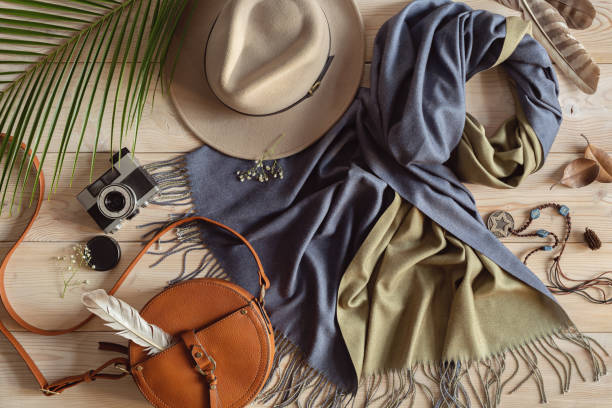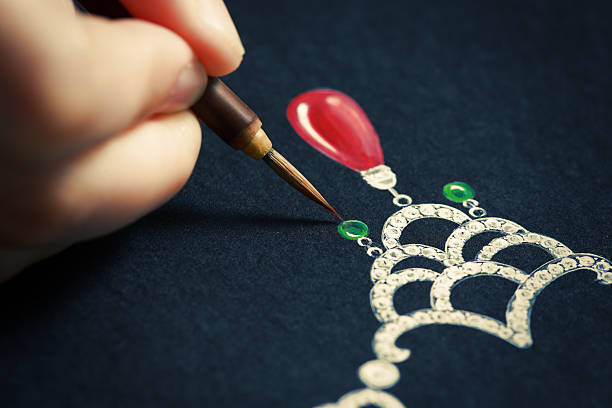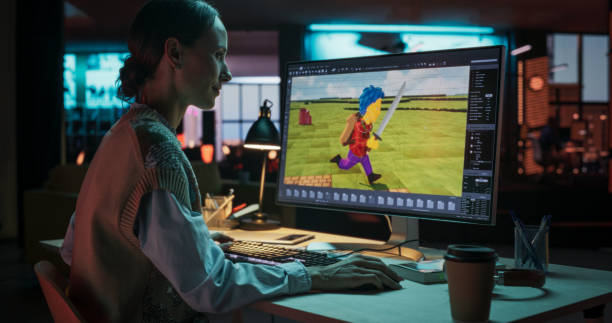
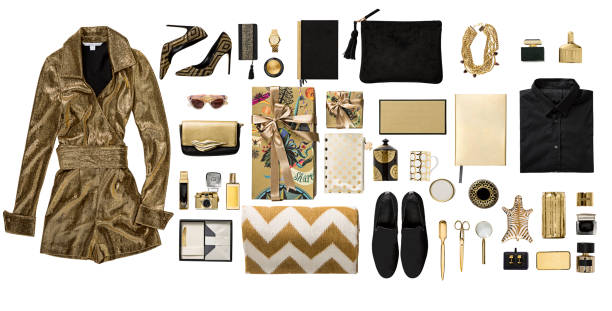
Accessory Designers are artistic innovators responsible for conceptualizing and crafting accessories that align with fashion trends, brand aesthetics, or client needs. Their role includes sketching designs, selecting materials, and addressing challenges ranging from balancing aesthetics with functionality to meeting production constraints. They combine skills in design, craftsmanship, and market awareness, working across various settings to produce distinctive products. As key contributors to the fashion industry, Accessory Designers drive style and innovation in a landscape increasingly reliant on personalized and sustainable fashion solutions.
- Design Conceptualization
- Create original accessory designs that complement clothing lines or stand as statement pieces.
- Develop sketches, mood boards, and prototypes to visualize concepts for clients or brands.
- Material and Component Selection
- Choose appropriate materials such as leather, metals, fabrics, or sustainable alternatives for durability and style.
- Source embellishments, hardware, and other components to enhance design quality.
- Trend Research and Analysis
- Stay updated on fashion trends, cultural influences, and consumer preferences to create relevant designs.
- Analyze market demands to ensure accessories appeal to target audiences.
- Technical Design and Prototyping
- Produce detailed technical drawings and specifications for manufacturing.
- Create prototypes or samples to test design functionality, fit, and aesthetic appeal.
- Collaboration with Teams
- Work with fashion designers, stylists, and merchandisers to ensure accessories align with broader collections.
- Collaborate with manufacturers to oversee production quality and adherence to design vision.
- Brand Identity and Consistency
- Design accessories that reflect and strengthen a brand’s visual identity and ethos.
- Ensure consistency in style across different accessory categories within a collection.
- Project Management
- Manage timelines and budgets for design projects, from concept to market launch.
- Coordinate with suppliers and production teams to meet deadlines and cost targets.
- Sustainability and Innovation
- Incorporate eco-friendly materials and ethical practices into accessory designs.
- Experiment with innovative techniques or technologies to create unique and modern pieces.
| Route | Steps |
| Route 1 | 1. 10+2 in any stream (preferably with Art or Home Science subjects) |
| 2. Bachelor’s degree in Fashion Design, Accessory Design, or related field (3-4 years) | |
| 3. Internship or practical training (3-6 months) | |
| 4. Practice as Junior Accessory Designer or Design Assistant | |
| Route 2 | 1. 10+2 in any stream |
| 2. Diploma or Certificate in Accessory Design or Fashion Design (6 months-2 years) | |
| 3. Build hands-on experience through projects | |
| 4. Work as Freelance or Junior Accessory Designer | |
| Route 3 | 1. 10+2 in any stream |
| 2. Bachelor’s degree in Fashion Design or Industrial Design (3-4 years) | |
| 3. Master’s degree in Accessory Design or Fashion Design (2 years) | |
| 4. Work as Senior Accessory Designer or Creative Lead | |
| Route 4 | 1. 10+2 in any stream |
| 2. Advanced international training or certification in Accessory Design (1-2 years) | |
| 3. Master’s or specialized courses as per country requirements | |
| 4. Practice abroad or in India |
- Mandatory practical training during degree or diploma programs in fashion or accessory design departments.
- Rotations in fashion houses, accessory brands, or retail companies for hands-on experience with real-world projects.
- Internships under senior accessory designers or creative directors for exposure to professional workflows.
- Observerships in design studios or manufacturing units for experience in accessory creation.
- Participation in mock design projects or fashion exhibitions for practical skill development.
- Training in collaborative projects through real-world client briefs or brand initiatives.
- Exposure to industry-standard design software and crafting tools during internships.
- Project-based learning focusing on diverse accessory categories and market challenges.
- Public outreach initiatives like assisting in community fashion or craft projects.
- International attachments or online collaborations for global exposure to accessory design practices.
- Certificate in Accessory Design Techniques.
- Bachelor’s in Fashion Design with Accessory Specialization.
- Master’s in Accessory Design or Fashion Product Development.
- Specialization in Jewelry Design.
- Certification in Footwear Design and Technology.
- Workshops on Handbag and Leather Goods Design.
- Training in Sustainable Materials for Accessories.
- Specialization in Luxury Accessory Design.
- Certification in Fashion Illustration for Accessories.
- Short Courses in Trend Forecasting and Market Analysis.
| Institute | Course/Program | Official Link |
| National Institute of Fashion Technology (NIFT), Multiple Locations | B.Des in Accessory Design | https://www.nift.ac.in/ |
| Pearl Academy, Multiple Locations | BA/MA in Fashion & Accessory Design | https://pearlacademy.com/ |
| Amity School of Fashion Technology, Noida | B.Des in Fashion & Accessory Design | https://www.amity.edu/ |
| Symbiosis Institute of Design, Pune | B.Des in Fashion & Accessory Design | https://sid.edu.in/ |
| Srishti Manipal Institute of Art, Design and Technology, Bangalore | B.Des in Fashion & Textile Design | https://srishti.ac.in/ |
| JD Institute of Fashion Technology, Multiple Locations | Diploma/Bachelor’s in Accessory Design | https://www.jdinstitute.co/ |
| Vogue Institute of Art and Design, Bangalore | B.Sc in Fashion & Accessory Design | https://www.voguefashioninstitute.com/ |
| Sophia Polytechnic, Mumbai | Diploma in Fashion & Accessory Design | https://sophiacampus.com/ |
| Northern India Institute of Fashion Technology (NIIFT), Mohali | B.Sc in Fashion & Accessory Design | https://niiftindia.com/ |
| Footwear Design & Development Institute (FDDI), Multiple Locations | B.Des in Footwear & Accessory Design | https://www.fddiindia.com/ |
| Institution | Course | Country | Official Link |
| Central Saint Martins, University of the Arts London | BA/MA in Fashion Accessories | UK | https://www.arts.ac.uk/colleges/central-saint-martins |
| Parsons School of Design | BFA/MFA in Fashion Design (Accessories) | USA | https://www.newschool.edu/parsons/ |
| Fashion Institute of Technology (FIT) | AAS/BFA in Accessories Design | USA | https://www.fitnyc.edu/ |
| Istituto Marangoni | BA/MA in Fashion Accessories Design | Italy/UK/France | https://www.istitutomarangoni.com/ |
| Polimoda | Bachelor/Master in Accessories Design | Italy | https://www.polimoda.com/ |
| London College of Fashion (UAL) | BA/MA in Fashion Accessories | UK | https://www.arts.ac.uk/colleges/london-college-of-fashion |
| Bunka Fashion College | Diploma in Accessories Design | Japan | https://www.bunka-fc.ac.jp/ |
| RMIT University | Bachelor of Fashion (Design) with Accessories | Australia | https://www.rmit.edu.au/ |
| Shenkar College of Engineering, Design and Art |
| Israel | https://www.shenkar.ac.il/ |
| Domus Academy | Master in Accessories Design | Italy | https://www.domusacademy.com/ |
India:
- NIFT Entrance Exam (National Institute of Fashion Technology): Conducted for admission to NIFT for accessory design programs.
- UCEED (Undergraduate Common Entrance Examination for Design): For admission to design programs at IITs and other institutes.
- Pearl Academy Entrance Exam: For admission to fashion and accessory design programs at Pearl Academy.
- FDDI AIST (Footwear Design & Development Institute All India Selection Test): For admission to footwear and accessory programs at FDDI.
International:
- SAT (Scholastic Aptitude Test): Required for undergraduate programs in countries like the USA.
- TOEFL (Test of English as a Foreign Language): Minimum score of 80-100 required for non-native speakers applying to programs in English-speaking countries.
- IELTS (International English Language Testing System): Minimum score of 6.0-7.0 required for admission to universities in the UK, Australia, and other English-speaking regions.
- PTE Academic (Pearson Test of English Academic): Accepted by many international institutes as an alternative to TOEFL or IELTS for English proficiency.
- Duolingo English Test: Accepted by some institutions as a convenient alternative for English language proficiency testing.
Junior Accessory Designer → Accessory Designer → Senior Accessory Designer → Lead Designer → Creative Director → Brand Manager → Luxury Accessory Consultant → Independent Brand Founder
- Fashion houses for accessory lines complementing apparel collections.
- Luxury retail brands for high-end jewelry, handbags, and footwear.
- Footwear industry for designing shoes and related accessories.
- Jewelry design firms for creating custom and commercial pieces.
- Freelance opportunities for independent accessory projects.
- E-commerce platforms for designing trendy and affordable accessories.
- Film and theater for costume accessory design and historical reproductions.
- Celebrity styling for event-specific or red carpet accessory designs.
- Textile and leather industries for material-based accessory collaboration.
- Non-profit organizations for cultural preservation through traditional accessory design.
| India | International |
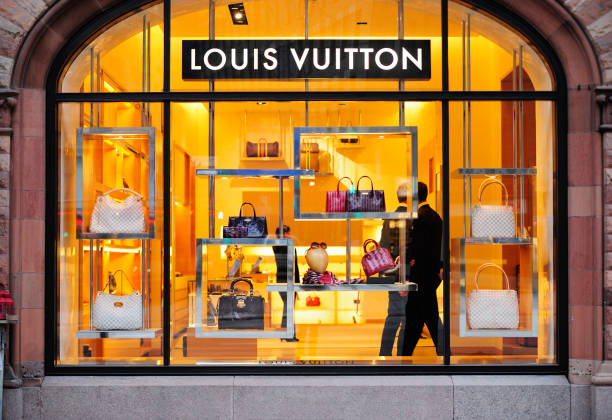
| Titan Company (Tanishq, CaratLane) | Louis Vuitton, France |
| Amrapali Jewels | Gucci, Italy |
| Hidesign | Prada, Italy |
| Baggit | Hermès, France |
| Lavie (Bagzone Lifestyles) | Chanel, France |
| Da Milano | Burberry, UK |
| Liberty Shoes | Coach, USA |
| Metro Shoes | Kate Spade, USA |
| Tiffany & Co., USA |
| Reliance Jewels | Swarovski, Austria |
| Pros | Cons |
| Opportunity to work on creative and trendsetting fashion projects | High-pressure environment due to fast-paced trends and tight deadlines |
| High demand for accessory designers in luxury and retail sectors | Long hours, especially during collection launches or peak seasons |
| Rewarding impact through unique designs and personal style enhancement | Risk of creative burnout from constant innovation and market demands |
| Diverse career paths across jewelry, footwear, and handbag design | Limited job security in freelance or independent roles |
| Strong potential for personal branding with signature accessory styles | Dependency on material costs and production constraints impacting creativity |
- Growing adoption of sustainable and ethical practices in accessory design.
- Rising demand for Accessory Designers due to increasing interest in personalized fashion.
- Advancements in digital tools for 3D modeling and virtual accessory design.
- Heightened focus on cultural and inclusive designs in accessory collections.
- Expansion of accessories in digital platforms for virtual showcases and NFT fashion.
- Development of AI-assisted tools for faster design conceptualization.
- Increased emphasis on cross-cultural designs for global clientele.
- Enhanced collaboration between designers and technology for innovative materials.
- Growing need for continuous training to master emerging fashion technologies.
- Focus on global fashion standards to align practices internationally.
| Career Level | India (₹ per annum) | International (USD per annum) |
| Junior Accessory Designer (Early Career) | 2,00,000 - 4,00,000 | 25,000 - 40,000 |
| Accessory Designer (Mid-Career) | 4,00,000 - 7,00,000 | 40,000 - 60,000 |
| Senior Accessory Designer/Lead Designer | 7,00,000 - 12,00,000 | 60,000 - 80,000 |
| Creative Director/Brand Manager | 12,00,000 - 20,00,000 | 80,000 - 120,000 |
| Luxury Consultant/Independent Founder | 20,00,000+ | 120,000+ |
Note: Salaries vary based on location, experience, employer, and specialization. International figures are approximate and depend on the country and sector.
- Adobe Illustrator for accessory sketching and vector designs.
- CLO3D for virtual accessory design and 3D modeling.
- CorelDRAW for pattern design and illustrations.
- Photoshop for editing and creating mood boards.
- Rhino for 3D jewelry and product design.
- Teleconferencing tools like Zoom for remote client consultations.
- Microsoft Office Suite for documentation and project planning.
- Project Management Tools like Trello or Asana for order coordination.
- Digital Design Software like Marvelous Designer for realistic simulations.
- Mood Board Tools like Pinterest or Milanote for design inspiration.
- Fashion Design Council of India (FDCI), India.
- Council of Fashion Designers of America (CFDA), USA.
- British Fashion Council (BFC), UK.
- Italian National Fashion Chamber (CNMI), Italy.
- Indian Federation for Fashion Development (IFFD), India.
- International Textile and Apparel Association (ITAA), Global.
- Women in Fashion, Global.
- Sustainable Fashion Alliance, Global.
- Asia Fashion Federation (AFF), Asia.
- Jewelry Designers Association, Global.
- Miuccia Prada (Contemporary, Italy): Accessory Designer since the 1970s. Her work at Prada redefined luxury handbags and accessories. Her vision drove modern fashion. Her impact shapes global accessory trends.
- Manolo Blahnik (Contemporary, Spain/UK): Footwear Designer since the 1970s. His iconic shoe designs became cultural symbols of elegance. His artistry inspires progress. His contributions influence luxury footwear.
- Judith Leiber (Historical, USA): Handbag Designer since the 1960s. Her whimsical minaudières are collector’s items in luxury fashion. Her creativity fosters excellence. Her legacy impacts handbag design.
- Roger Vivier (Historical, France): Footwear Designer since the 1930s. His innovative shoe designs, including the stiletto, shaped modern fashion. His vision drives innovation. His contributions influence global trends.
- Anya Hindmarch (Contemporary, UK): Accessory Designer since the 1980s. Her playful and personalized handbags gained international acclaim. Her creativity inspires growth. Her work impacts contemporary fashion.
- Lulu Guinness (Contemporary, UK): Handbag Designer since the 1980s. Her quirky and bold designs became iconic in accessory fashion. Her vision fosters uniqueness. Her contributions shape handbag trends.
- Amrita Arora (Contemporary, India): Jewelry Designer since the 2000s. Her work blends Indian heritage with modern aesthetics in luxury jewelry. Her artistry drives cultural pride. Her impact shapes national design.
- SuhaniPittie (Contemporary, India): Jewelry Designer since the 2000s. Her avant-garde jewelry designs redefined Indian accessorizing. Her creativity fosters trends. Her work influences regional fashion.
- Narciso Rodriguez (Contemporary, USA): Accessory Designer since the 1990s. His minimalist yet striking accessory lines complement his fashion designs. His vision shapes elegance. His contributions impact global runways.
- Farah Khan Ali (Contemporary, India): Jewelry Designer since the 1990s. Her luxury jewelry designs cater to high-end Indian and global markets. Her creativity drives opulence. Her impact influences luxury accessorizing.
- Build a strong foundation in fashion design and material knowledge to understand accessory creation.
- Seek early exposure to fashion houses or accessory brands through internships to confirm interest in the field.
- Prepare thoroughly for entrance exams or portfolio requirements specific to your chosen program or region.
- Pursue advanced certifications in specific accessory design areas like jewelry or footwear to gain technical expertise.
- Stay updated on fashion trends and sustainable practices by attending webinars and industry events.
- Develop hands-on skills in accessory design through personal projects or client commissions.
- Engage in fashion challenges or online communities to build real-world experience.
- Join professional associations like Fashion Design Council of India for networking and resources.
- Work on precision and creative thinking to ensure high-quality accessory designs.
- Explore international fashion programs for exposure to diverse accessory standards.
- Volunteer in community fashion or craft projects to understand client needs and build experience.
- Cultivate adaptability to handle complex creative and market-driven challenges.
- Attend continuing education programs to stay abreast of evolving fashion methodologies.
- Build a network with accessory designers and fashion professionals for collaborative efforts.
- Develop resilience to manage the creative and deadline demands of accessory projects.
- Balance project work with continuous learning to adapt to rapid advancements in fashion technology.
A career as an Accessory Designer offers a unique opportunity to contribute to personal style, fashion innovation, and cultural expression by crafting distinctive accessories for diverse applications. From enhancing individual looks to revolutionizing luxury fashion and sustainable design, Accessory Designers play a pivotal role in modern fashion and aesthetic landscapes. This field combines artistic expertise, technical skills, and a commitment to solving complex design challenges, offering diverse paths in jewelry, footwear, handbags, and beyond. For those passionate about creativity, adapting to evolving trends, and addressing fashion needs in an era of rapid style evolution, a career as an Accessory Designer provides an intellectually stimulating and professionally rewarding journey with the potential to make significant contributions to society by advancing the art and application of accessory design worldwide.