Advance-Care Paramedic
Primary Care Paramedic (PCP)
Explore Career
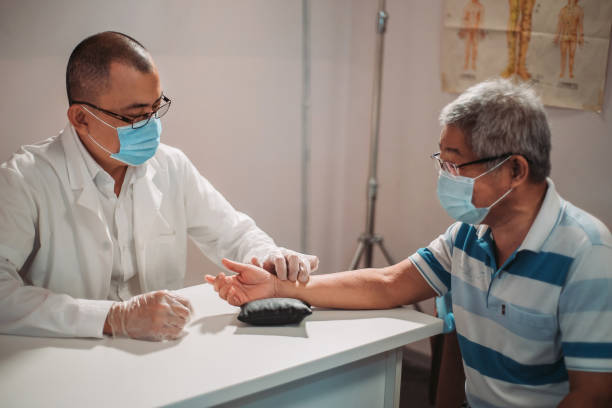
An Acupuncturist is a healthcare professional who practices acupuncture, a traditional Chinese medicine technique involving the insertion of thin needles into specific points on the body to alleviate pain, promote healing, and improve overall wellness. They work with diverse patients seeking alternative or complementary treatments for conditions like chronic pain, stress, and digestive issues, often in private clinics, wellness centers, or integrative healthcare settings. Acupuncturists play a vital role in modern healthcare by offering non-invasive, holistic approaches to treatment, addressing both physical and emotional health. By focusing on restoring balance in the body’s energy flow, they contribute significantly to patient well-being in a world increasingly valuing alternative and integrative medicine.
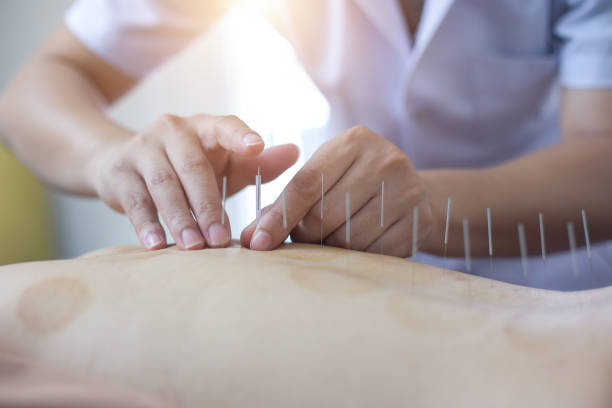
Acupuncturists are trained practitioners who use acupuncture to stimulate specific points on the body, aiming to balance the flow of energy (Qi) and address health concerns ranging from musculoskeletal pain to mental health issues. Their work involves assessing patient conditions through physical exams and health histories, performing acupuncture treatments, and often incorporating related therapies like cupping or herbal medicine. They balance clinical practice with patient education on lifestyle and self-care, frequently collaborating with other healthcare providers for integrative care. Acupuncturists are essential to healthcare, serving as key providers of alternative therapies, enhancing pain management, and promoting holistic wellness in a landscape where patients increasingly seek non-pharmacological solutions.
| Route | Steps |
| Route 1 | 1. 10+2 with Physics, Chemistry, Biology (PCB) or any stream 2. Bachelor’s degree in Acupuncture or Alternative Medicine (3-4 years) 3. Internship or clinical training (6 months-1 year) 4. Practice as a licensed Acupuncturist |
| Route 2 | 1. 10+2 with any stream 2. Diploma or Certification in Acupuncture (6 months-2 years) 3. Hands-on training or apprenticeship 4. Clinical practice as an Acupuncturist |
| Route 3 | 1. 10+2 with PCB or any stream 2. Bachelor’s degree in any field 3. Master’s in Acupuncture or Oriental Medicine (2-3 years) 4. Licensure or certification 5. Specialized clinical role |
| Route 4 | 1. 10+2 with any stream 2. International training or degree in Acupuncture (2-4 years) 3. Licensure as per country regulations 4. Practice abroad or in India |
| Institute | Course/Program | Official Link |
| IGNOU (Indira Gandhi National Open University), New Delhi | Certificate in Acupuncture | https://www.ignou.ac.in/ |
| Institute of Alternative Medicine and Research, Kolkata | Diploma in Acupuncture | https://www.altmedworld.net/ |
| Indian Academy of Acupuncture Science, Aurangabad | Acupuncture Training Programs | http://www.acupunctureindia.org/ |
| Acupuncture Healing and Research Centre, Mumbai | Certification in Acupuncture | Not available |
| Bharati Vidyapeeth Deemed University, Pune | Diploma in Alternative Medicine | https://www.bvuniversity.edu.in/ |
| Kerala Ayurveda Academy, Kochi | Acupuncture Training | https://www.keralaayurveda.academy/ |
| International Academy of Acupuncture, Delhi | Diploma and Certification Courses | Not available |
| Tamil Nadu Physical Education and Sports University, Chennai | Acupuncture Courses | https://www.tnpesu.org/ |
| Annamalai University, Tamil Nadu | Certificate in Acupuncture | https://www.annamalaiuniversity.ac.in/ |
| Global Institute of Alternative Medicine, Bangalore | Diploma in Acupuncture | Not available |
| Institution | Course | Country | Official Link |
| Pacific College of Health and Science | Master’s in Acupuncture | USA | https://www.pacificcollege.edu/ |
| Bastyr University | Master’s in Acupuncture and Oriental Medicine | USA | https://bastyr.edu/ |
| University of Westminster | MSc Chinese Medicine and Acupuncture | UK | https://www.westminster.ac.uk/ |
| Southern California University of Health Sciences | Master’s in Acupuncture | USA | https://www.scuhs.edu/ |
| RMIT University | Bachelor of Health Science (Acupuncture) | Australia | https://www.rmit.edu.au/ |
| McMaster University | Contemporary Medical Acupuncture Program | Canada | https://www.mcmaster.ca/ |
| Beijing University of Chinese Medicine | Acupuncture and Moxibustion Program | China | http://www.bucm.edu.cn/ |
| Kyung Hee University | Traditional Korean Medicine (Acupuncture) | South Korea | https://www.khu.ac.kr/ |
| University of Technology Sydney | Bachelor of Traditional Chinese Medicine | Australia | https://www.uts.edu.au/ |
| Emperor’s College of Traditional Oriental Medicine | Master’s in Acupuncture | USA | https://www.emperors.edu/ |
India:
International:
Trainee → Certified Acupuncturist → Independent Practitioner → Senior Acupuncturist → Acupuncture Clinic Owner/Academic Instructor → Wellness Center Director/Research Lead
| India | International |
| Kerala Ayurveda Academy | Pacific College of Health and Science, USA |
| Apollo Hospitals (Integrative Medicine) | Bastyr University, USA |
| Fortis Healthcare (Wellness Programs) | Emperor’s College, USA |
| Max Healthcare (Alternative Therapy) | University of Westminster, UK |
| Jindal Naturecure Institute, Bangalore | RMIT University, Australia |
| Art of Living Wellness Centers | McMaster University, Canada |
| Soukya International Holistic Health Centre | Beijing University of Chinese Medicine, China |
| Ananda in the Himalayas, Uttarakhand | Kyung Hee University, South Korea |
| VLCC Wellness Centers | Southern California University of Health Sciences, USA |
| Ayushakti Ayurved Health Centre, Mumbai | University of Technology Sydney, Australia |
| Pros | Cons |
| Opportunity to offer non-invasive, holistic health solutions | Limited mainstream acceptance in some regions or medical communities |
| High demand for alternative therapies due to chronic pain prevalence | Variable income depending on client base and location |
| Rewarding work in improving patient well-being without medications | Emotional toll from managing chronic or unresponsive conditions |
| Diverse roles in clinical care, wellness, and education | Risk of burnout due to building a practice and maintaining clientele |
| High potential for personal satisfaction in patient recovery | Regulatory challenges or licensure issues in certain areas |
| Career Level | India (₹ per annum) | International (USD per annum) |
| Trainee/Certified Acupuncturist (Early Career) | 2,00,000 - 5,00,000 | 30,000 - 50,000 |
| Independent Practitioner (Mid-Career) | 5,00,000 - 10,00,000 | 50,000 - 80,000 |
| Senior Acupuncturist | 10,00,000 - 20,00,000 | 80,000 - 120,000 |
| Acupuncture Clinic Owner/Academic Instructor | 20,00,000 - 40,00,000 | 100,000 - 150,000+ |
| Wellness Center Director/Research Lead | 30,00,000+ | 120,000+ |
A career as an Acupuncturist offers a unique opportunity to serve at the forefront of holistic and alternative healthcare, providing non-invasive treatments through the ancient practice of acupuncture to improve patient well-being. From alleviating chronic pain and stress to promoting overall health with personalized therapeutic approaches, Acupuncturists play a pivotal role in modern integrative medicine. This field combines traditional healing knowledge, patient-centered care, and a commitment to holistic wellness, offering diverse paths in private practice, wellness centers, and research. For those passionate about harnessing ancient techniques to make a direct impact on individual lives and address the growing demand for non-pharmacological health solutions, a career as an Acupuncturist provides an intellectually stimulating and professionally rewarding journey with the potential to make significant contributions to healthcare and society by enhancing the quality of holistic care worldwide.
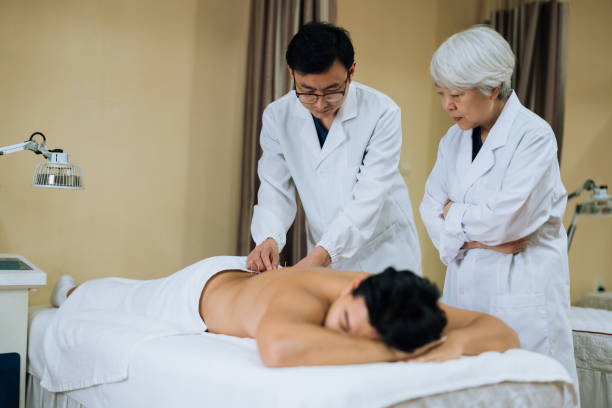
Early-career practitioners provide acupuncture treatments under supervision or independently. They develop clinical skills. Their practice builds...
0.0LPA
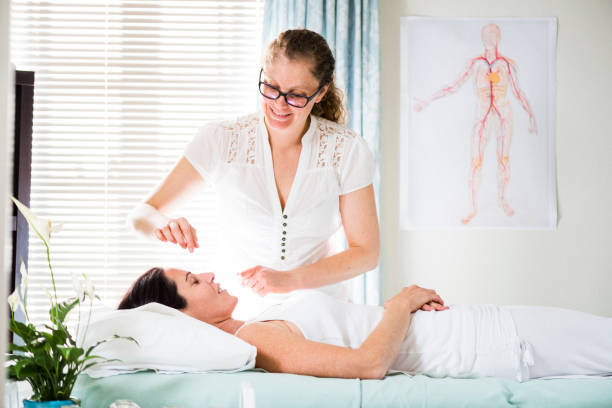
Acupuncturists manage their own client base in private settings. They establish a professional reputation. Their expertise addresses diverse...
0.0LPA
Experienced clinicians handle complex cases and mentor new practitioners. They provide clinical leadership. Their experience attracts diverse...
0.0LPA
Take the next step and explore more about Acupuncturist.
Explore similar career paths that might interest you