Acupuncturist
Certified Acupuncturist
Explore Career
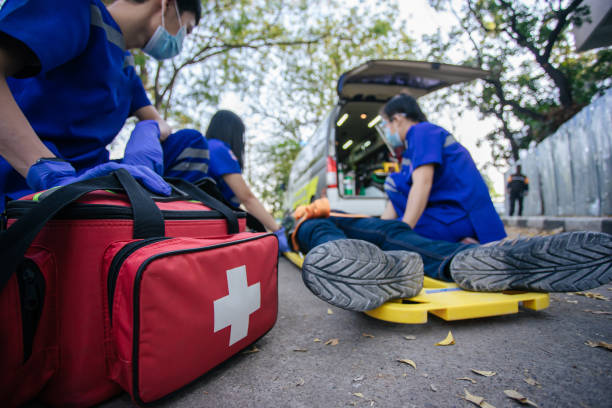
An Advance-Care Paramedic (ACP) is a highly trained emergency medical professional who provides advanced life support and critical care to patients in pre-hospital settings, often during medical emergencies or trauma situations. They work in high-pressure environments such as ambulances, emergency response units, or air medical services, serving communities through rapid intervention for life-threatening conditions. Advance-Care Paramedics play a crucial role in healthcare by delivering immediate, specialized medical care outside hospital settings, bridging the gap between injury or illness onset and definitive treatment. By stabilizing patients and ensuring safe transport to medical facilities, they contribute significantly to saving lives in a world where timely emergency response is vital.
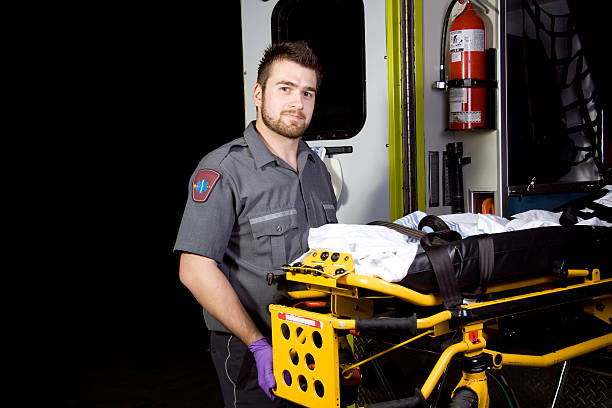
Advance-Care Paramedics are skilled responders who provide advanced medical interventions, including administering medications, performing invasive procedures like intubation, and managing complex trauma or cardiac emergencies. Their work involves assessing patient conditions in the field, initiating life-saving treatments, and communicating with hospital staff for seamless care transitions. They often balance intense emergency responses with ongoing training, public education on safety, and collaboration with other first responders. Advance-Care Paramedics are essential to healthcare, serving as frontline providers of critical care, improving survival rates, and supporting community health in a landscape where rapid medical response can mean the difference between life and death.
| Route | Steps |
| Route 1 | 1. 10+2 with Physics, Chemistry, Biology (PCB) or any stream 2. Diploma in Paramedical Sciences or Emergency Medical Technology (1-2 years) 3. Certification as Primary Care Paramedic (PCP) 4. Advanced Care Paramedic training (1-2 years) 5. Practice as Advance-Care Paramedic |
| Route 2 | 1. 10+2 with any stream 2. Bachelor’s degree in Paramedical Sciences or Emergency Medical Services (3-4 years) 3. Internship or clinical training 4. Advanced Care Paramedic certification 5. Specialized emergency response role |
| Route 3 | 1. 10+2 with PCB or any stream 2. Certification as Emergency Medical Technician (EMT) (6 months-1 year) 3. Work experience as EMT or PCP 4. Advanced Care Paramedic training program (1-2 years) 5. Practice in advanced emergency care |
| Route 4 | 1. 10+2 with any stream 2. International training or degree in Paramedicine (2-4 years) 3. Licensure or certification as per country regulations 4. Practice abroad or in India |
| Institute | Course/Program | Official Link |
| All India Institute of Medical Sciences (AIIMS), New Delhi | Paramedical Training | https://www.aiims.edu/ |
| Christian Medical College (CMC), Vellore | Emergency Medical Technology Courses | https://www.cmch-vellore.edu/ |
| Apollo Hospitals Educational & Research Foundation, Hyderabad | Paramedic Training Programs | https://www.apollohospitals.com/ |
| Fortis Healthcare Training Institute, Gurgaon | Emergency Medical Services | https://www.fortishealthcare.com/ |
| Symbiosis Institute of Health Sciences, Pune | B.Sc. in Paramedical Sciences | https://www.sihspune.org/ |
| Manipal Academy of Higher Education, Manipal | Paramedic and Emergency Care Courses | https://www.manipal.edu/ |
| Jawaharlal Institute of Postgraduate Medical Education & Research (JIPMER), Puducherry | Paramedical Training | https://www.jipmer.edu.in/ |
| Amrita Institute of Medical Sciences, Kochi | Emergency Medical Technology | https://www.amrita.edu/ |
| SRM Institute of Science and Technology, Chennai | Paramedical Sciences | https://www.srmist.edu.in/ |
| Narayana Health Academy, Bangalore | Paramedic Training | https://www.narayanahealth.org/ |
| Institution | Course | Country | Official Link |
| Monash University | Bachelor of Paramedicine | Australia | https://www.monash.edu/ |
| University of Toronto | Paramedic Training Program | Canada | https://www.utoronto.ca/ |
| University of Maryland, Baltimore County | Emergency Medical Services Program | USA | https://www.umbc.edu/ |
| University of Hertfordshire | BSc (Hons) Paramedic Science | UK | https://www.herts.ac.uk/ |
| British Columbia Institute of Technology | Advanced Care Paramedic Program | Canada | https://www.bcit.ca/ |
| Auckland University of Technology | Bachelor of Health Science (Paramedicine) | New Zealand | https://www.aut.ac.nz/ |
| La Trobe University | Bachelor of Paramedicine | Australia | https://www.latrobe.edu.au/ |
| University of Pittsburgh | Emergency Medical Services Program | USA | https://www.pitt.edu/ |
| Kingston University | Paramedic Science Degree | UK | https://www.kingston.ac.uk/ |
| Centennial College | Advanced Care Paramedic Program | Canada | https://www.centennialcollege.ca/ |
India:
International:
Trainee/EMT → Primary Care Paramedic (PCP) → Advance-Care Paramedic (ACP) → Critical Care Paramedic → Paramedic Supervisor/Instructor → Emergency Services Manager/Research Lead
| India | International |
| Apollo Hospitals | St. John Ambulance, Canada |
| Fortis Healthcare | London Ambulance Service, UK |
| Max Healthcare | American Medical Response, USA |
| Narayana Health | BC Emergency Health Services, Canada |
| Manipal Hospitals | NSW Ambulance, Australia |
| GVK Emergency Management and Research Institute (EMRI) | Hato Hone St John, New Zealand |
| Ziqitza Health Care Limited (ZHL) | Falck, Denmark (Global Operations) |
| Ayushman Bharat Health Infrastructure Mission | MedStar Mobile Healthcare, USA |
| National Health Mission (NHM) | Toronto Paramedic Services, Canada |
| Kokilaben Dhirubhai Ambani Hospital | South Western Ambulance Service, UK |
| Pros | Cons |
| Opportunity to save lives through immediate critical care | High stress from life-and-death decisions in emergencies |
| High demand for paramedics due to growing emergency needs | Physically demanding with risk of injury during responses |
| Rewarding work in stabilizing patients in critical conditions | Emotional toll from traumatic scenes or patient loss |
| Diverse roles in field response, critical transport, and education | Irregular hours with night shifts and on-call duties |
| High potential for career advancement with specialized training | Exposure to health risks like infections during patient care |
| Career Level | India (₹ per annum) | International (USD per annum) |
| Trainee/EMT (Early Career) | 2,00,000 - 4,00,000 | 30,000 - 40,000 |
| Primary Care Paramedic (PCP) | 4,00,000 - 8,00,000 | 40,000 - 60,000 |
| Advance-Care Paramedic (ACP) | 8,00,000 - 15,00,000 | 60,000 - 90,000 |
| Critical Care Paramedic | 15,00,000 - 25,00,000 | 90,000 - 120,000 |
| Paramedic Supervisor/Instructor | 20,00,000 - 35,00,000 | 100,000 - 150,000+ |
| Emergency Services Manager/Research Lead | 30,00,000+ | 120,000+ |
A career as an Advance-Care Paramedic offers a dynamic opportunity to serve at the forefront of emergency healthcare, providing life-saving interventions in critical pre-hospital settings. From stabilizing trauma victims and managing cardiac arrests to ensuring safe transport with advanced medical care, Advance-Care Paramedics play a pivotal role in modern emergency medical services. This field combines clinical expertise, quick decision-making, and a commitment to public safety, offering diverse paths in ambulance services, critical care transport, and disaster response. For those passionate about making a direct impact on individual lives and addressing the growing need for rapid emergency response, a career as an Advance-Care Paramedic provides an intellectually stimulating and professionally rewarding journey with the potential to make significant contributions to healthcare and society by enhancing the quality of emergency care worldwide.


Early-career responders provide basic life support in emergencies. They develop field skills. Their practice builds patient care experience. They...
0.0LPA
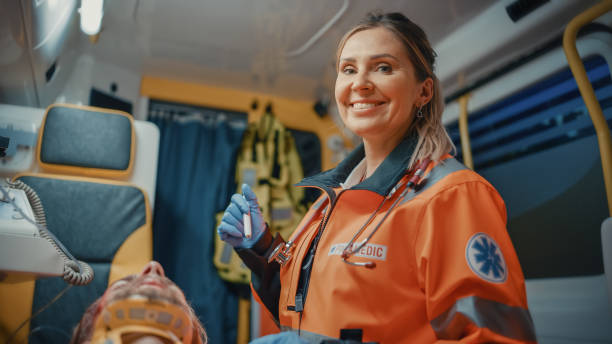
Paramedics trained in advanced life support manage critical emergencies. They integrate specialized care. Their skills enhance survival rates....
0.0LPA
Specialists handle complex transport cases requiring intensive interventions. They provide advanced expertise. Their experience manages high-risk...
0.0LPA
Take the next step and explore more about Advance-Care Paramedic.
Explore similar career paths that might interest you