Ag-FinTech Product Manager
Junior Ag-FinTech Product Manager
Explore Career
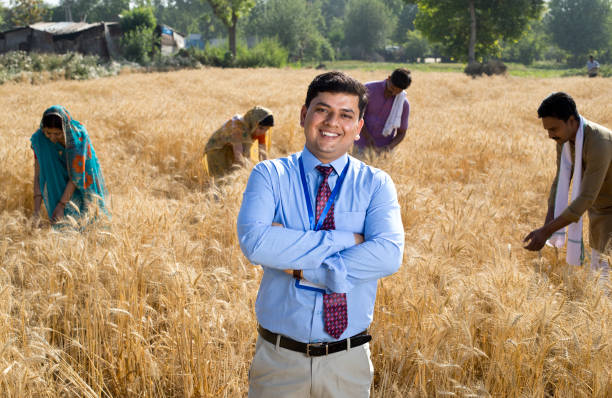
An Agriculturalist, also known as an Agronomist or Agricultural Scientist, is a professional dedicated to improving agricultural productivity, sustainability, and food security through scientific research, technology, and innovative farming practices. They work in farms, research institutions, government agencies, and agribusinesses, collaborating with farmers, scientists, and policymakers. Agriculturalists play a vital role in modern society by addressing global challenges like climate change, population growth, and food scarcity in an era where sustainable agriculture and resource management are paramount.
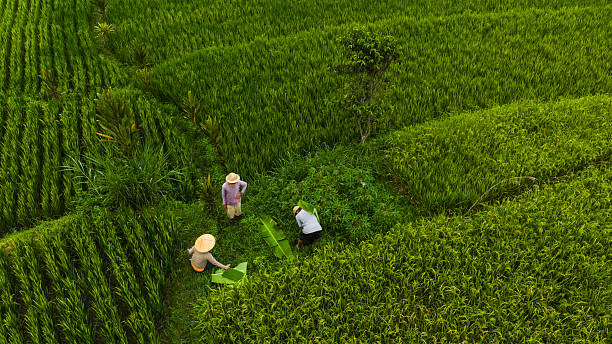
Agriculturalists are experts responsible for studying and enhancing crop production, soil management, and agricultural systems to ensure efficient and sustainable food production. Their role includes developing new farming techniques, improving crop yields, managing pests and diseases, and promoting environmentally friendly practices, often under varying climatic and economic conditions. They combine scientific knowledge with practical application, working in diverse environments to support farmers and agribusinesses. As key contributors to food security, they enable advancements in agriculture in a landscape increasingly focused on sustainability and technological innovation.
| Route | Steps |
| Route 1 | 1. 10+2 with Physics, Chemistry, Biology (PCB) or Agriculture stream 2. Bachelor’s degree in Agriculture (B.Sc. Agriculture) (4 years) 3. Internship or field training (3-6 months) 4. Practice as Agriculturalist |
| Route 2 | 1. 10+2 with PCB or Agriculture stream 2. Diploma in Agriculture (2-3 years) 3. Hands-on training or internship 4. Work as Agricultural Technician or Field Officer |
| Route 3 | 1. 10+2 with PCB or Agriculture stream 2. Bachelor’s degree in Agriculture or related field (4 years) 3. Master’s degree in Agronomy, Soil Science, or related specialization (2 years) 4. Practice as Agricultural Scientist or Researcher |
| Route 4 | 1. 10+2 with PCB or Agriculture stream 2. Advanced certification or international training in Sustainable Agriculture (1-2 years) 3. Licensure or certification as per country regulations 4. Practice abroad or in India |
| Institute | Course/Program | Official Link |
| Indian Agricultural Research Institute (IARI), New Delhi | M.Sc./Ph.D. in Agriculture | https://www.iari.res.in/ |
| Tamil Nadu Agricultural University (TNAU), Coimbatore | B.Sc./M.Sc. in Agriculture | https://www.tnau.ac.in/ |
| Punjab Agricultural University (PAU), Ludhiana | B.Sc./M.Sc. in Agriculture | https://www.pau.edu/ |
| University of Agricultural Sciences (UAS), Bangalore | B.Sc./M.Sc. in Agriculture | https://www.uasbangalore.edu.in/ |
| G.B. Pant University of Agriculture & Technology, Pantnagar | B.Sc./M.Sc. in Agriculture | https://www.gbpuat.ac.in/ |
| Chaudhary Charan Singh Haryana Agricultural University (CCSHAU), Hisar | B.Sc./M.Sc. in Agriculture | https://www.hau.ac.in/ |
| Acharya N.G. Ranga Agricultural University (ANGRAU), Guntur | B.Sc./M.Sc. in Agriculture | https://www.angrau.ac.in/ |
| Mahatma Phule Krishi Vidyapeeth (MPKV), Rahuri | B.Sc./M.Sc. in Agriculture | https://www.mpkv.ac.in/ |
| Kerala Agricultural University (KAU), Thrissur | B.Sc./M.Sc. in Agriculture | https://www.kau.in/ |
| Banaras Hindu University (BHU), Varanasi | B.Sc./M.Sc. in Agriculture | https://www.bhu.ac.in/ |
| Institution | Course | Country | Official Link |
| Wageningen University & Research | Agricultural Sciences | Netherlands | https://www.wur.nl/ |
| University of California, Davis (UC Davis) | Agricultural and Environmental Sciences | USA | https://www.ucdavis.edu/ |
| Cornell University | Agricultural Sciences | USA | https://www.cornell.edu/ |
| University of Reading | Agriculture and Food Security | UK | https://www.reading.ac.uk/ |
| University of Queensland | Agricultural Science | Australia | https://www.uq.edu.au/ |
| Iowa State University | Agricultural Studies | USA | https://www.iastate.edu/ |
| University of Copenhagen | Agricultural Development | Denmark | https://www.ku.dk/ |
| Swedish University of Agricultural Sciences (SLU) | Agricultural Sciences | Sweden | https://www.slu.se/ |
| University of Hohenheim | Agricultural Sciences | Germany | https://www.uni-hohenheim.de/ |
| Purdue University | Agricultural Sciences | USA | https://www.purdue.edu/ |
India:
International:
Trainee → Field Agriculturalist → Agronomist → Agricultural Researcher → Agricultural Consultant → Farm Manager → Agricultural Policy Advisor → Director of Agricultural Programs
| India | International |
| Indian Council of Agricultural Research (ICAR) | Food and Agriculture Organization (FAO), Italy |
| National Dairy Development Board (NDDB) | International Fund for Agricultural Development (IFAD), Italy |
| National Seeds Corporation (NSC) | World Bank (Agriculture Division), USA |
| Mahindra Agri Solutions | Syngenta, Switzerland |
| ITC Agri Business | Monsanto (Bayer), USA |
| Godrej Agrovet | Corteva Agriscience, USA |
| Tata Rallis India | John Deere, USA |
| UPL Limited | Nestlé (Agricultural Division), Switzerland |
| Jain Irrigation Systems | Archer Daniels Midland (ADM), USA |
| Kaveri Seed Company | Cargill, USA |
| Pros | Cons |
| Opportunity to contribute to food security and sustainability | Exposure to unpredictable weather and environmental challenges |
| High demand for agriculturalists in food production and rural development | Physically demanding work with long hours in the field |
| Rewarding impact on farmers’ livelihoods and global nutrition | Risk of dealing with crop failures or economic uncertainties |
| Diverse career paths across farming, research, and policy | Limited public recognition compared to other scientific fields |
| Strong potential for growth with advancements in agricultural technology | Dependency on seasonal cycles and market fluctuations |
| Career Level | India (₹ per annum) | International (USD per annum) |
| Trainee/Field Agriculturalist (Early Career) | 2,00,000 - 4,00,000 | 30,000 - 40,000 |
| Agronomist (Mid-Career) | 4,00,000 - 7,00,000 | 40,000 - 60,000 |
| Agricultural Researcher | 7,00,000 - 10,00,000 | 60,000 - 80,000 |
| Agricultural Consultant/Farm Manager | 10,00,000 - 15,00,000 | 80,000 - 100,000 |
| Policy Advisor/Director of Programs | 15,00,000+ | 100,000+ |
| Note: Salaries vary based on location, experience, employer, and specialization. International figures are approximate and depend on the country and agricultural sector. |
A career as an Agriculturalist offers a unique opportunity to contribute to food security and sustainability by enhancing agricultural productivity and innovation. From improving crop yields to promoting environmentally friendly practices, Agriculturalists play a pivotal role in modern food systems. This field combines scientific expertise, practical application, and a commitment to global well-being, offering diverse paths in farming, research, and policy development. For those passionate about addressing food scarcity, adapting to climate change, and supporting rural communities in an era of increasing population and environmental challenges, a career as an Agriculturalist provides an intellectually stimulating and professionally rewarding journey with the potential to make significant contributions to society by enhancing the quality of food production and agricultural sustainability worldwide.

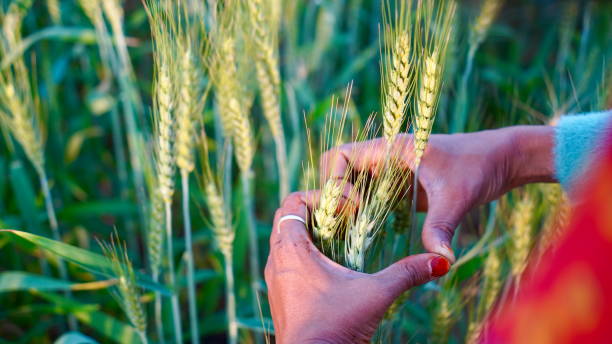
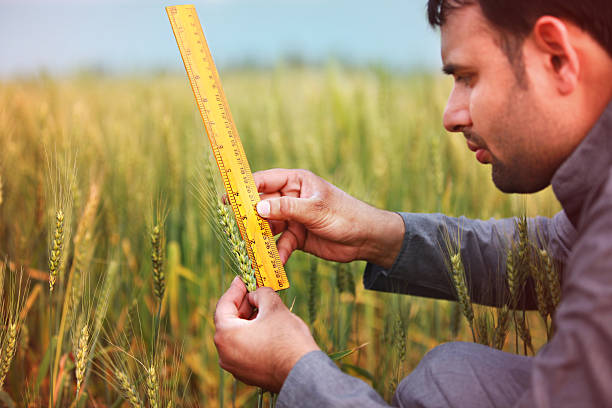
Early-career professionals provide support to farmers with increasing autonomy. They hone technical skills in crop cultivation and pest control...
0.0LPA
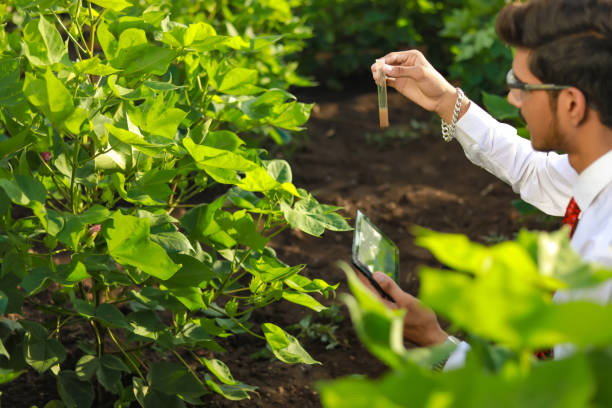
Experienced professionals manage complex agricultural projects with high accuracy, using advanced techniques. They offer technical expertise in...
0.0LPA
Specialists oversee research in crop science or soil health with exceptional competence. They integrate deep scientific knowledge with expertise...
0.0LPA
Take the next step and explore more about Agriculturalist.
Explore similar career paths that might interest you