Archaeology
Archaeologists are professionals dedicated to uncovering, studying, and preserving the material remains of past human societies, ensuring a deeper understanding of history, culture, and human evolution through scientific methods. In India, the demand for archaeologists is steadily growing due to heightened focus on heritage conservation, urban development requiring archaeological surveys, and government initiatives like the National Education Policy (NEP) 2020, which emphasizes interdisciplinary studies and cultural preservation. With roots in historical exploration and modern advancements such as digital archaeology, geospatial technologies, and bioarchaeology, this career is vital for reconstructing past civilizations, informing policy on heritage protection, and educating future generations. Professionals in this field are crucial for roles in research, education, cultural resource management, and museum curation, contributing to opportunities in history, anthropology, and heritage tourism. This career drives progress through trends like technology-driven excavations, public archaeology, and global collaborations for cultural preservation.
Career Description
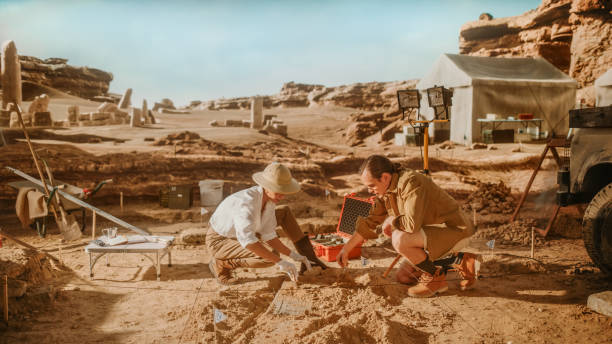
Archaeologists work in diverse settings such as excavation sites, museums, universities, government agencies, cultural heritage organizations, or as independent consultants, often collaborating with historians, anthropologists, conservationists, policymakers, and local communities across various demographics. Their roles encompass fieldwork, laboratory analysis, documentation, and public education while addressing challenges like funding constraints, site destruction due to urbanization, and ethical concerns over cultural repatriation in India’s complex historical landscape. They face issues such as limited public awareness of archaeology’s importance, bureaucratic delays in project approvals, and the need to balance development with preservation amidst diverse stakeholder interests. By leveraging expertise in excavation techniques, artifact analysis, historical interpretation, and digital tools, they uncover insights into human history that shape cultural identity and policy. As key contributors to India’s heritage and academic ecosystem, they propel progress through trends like non-invasive survey methods, digital archiving, and community-driven heritage projects.
Roles and Responsibilities
- Field Excavation and Survey
- Conduct archaeological digs and surveys to locate, document, and recover artifacts, structures, and ecofacts from historical sites.
- Use tools like ground-penetrating radar (GPR) and drones to map sites non-invasively before excavation.
- Artifact Analysis and Conservation
- Analyze recovered materials (pottery, tools, bones) in laboratories to date, classify, and interpret their cultural significance.
- Preserve artifacts through chemical treatments, environmental controls, and restoration techniques to prevent deterioration.
- Documentation and Research
- Record findings through detailed reports, photographs, and digital models for academic publication and archival purposes.
- Research historical contexts, trade routes, or societal structures to contextualize discoveries within broader human history.
- Cultural Resource Management (CRM)
- Assess and protect archaeological sites during infrastructure projects, ensuring compliance with heritage laws like the AMASR Act, 1958 in India.
- Collaborate with developers and governments to mitigate damage to cultural resources during urban or industrial expansion.
- Teaching and Public Outreach
- Educate students in universities or schools about archaeological methods, history, and cultural heritage preservation.
- Engage communities through exhibitions, workshops, or media to raise awareness of local history and site protection.
- Museum Curation and Exhibition
- Design and manage museum displays of artifacts, ensuring accurate storytelling of historical narratives for public education.
- Catalogue and maintain artifact collections for long-term preservation and research access.
- Policy Advocacy and Ethical Practice
- Advise governments or organizations on heritage laws, site protection, and repatriation of cultural artifacts.
- Uphold ethical standards by respecting local traditions, obtaining permissions, and preventing looting or illicit trade.
- Technology Integration in Archaeology
- Utilize Geographic Information Systems (GIS), 3D modelling, and remote sensing to analyze and visualize archaeological data.
- Apply bioarchaeological methods like DNA analysis or isotopic studies to understand ancient diets, migrations, and health.
Study Route & Eligibility Criteria
| Route | Steps |
| Route 1: Bachelor’s to Master’s - Direct Entry | 1. Complete 10+2 in any stream (preferably Humanities/Science) with minimum 50% marks 2. Pursue Bachelor’s in Archaeology, History, or Anthropology (3-4 years) 3. Complete Master’s in Archaeology or specialization (1-2 years) 4. Join roles in research, museums, or government after internships |
| Route 2: Diploma to Degree Pathway | 1. Complete 10+2 and enroll in a 1-2 year Diploma in Archaeology or Heritage Studies 2. Gain entry-level roles or pursue lateral entry into degree programs 3. Build skills through practical fieldwork projects 4. Pursue advanced certifications or degrees for career growth |
| Route 3: Master’s to Ph.D. - Research Focus | 1. Complete Bachelor’s and Master’s in Archaeology or related field 2. Pursue Ph.D. (3-5 years) with research in specific periods or methodologies 3. Join as faculty, senior researcher, or consultant in academia or heritage sectors |
| Route 4: International Education Path | 1. Complete 10+2 and clear relevant entrance exams or language proficiency tests 2. Pursue degrees in Archaeology or Heritage Studies from international universities 3. Gain global exposure through advanced methodologies and fieldwork 4. Return to India or work internationally in research or cultural organizations |
| Route 5: Short-Term Courses and Practical Entry | 1. Complete 10+2 or basic education in any stream 2. Enroll in short-term certificate courses (3-6 months) in Archaeology, Museology, or Conservation 3. Work in entry-level assistant roles for hands-on learning 4. Build experience and pursue formal qualifications for established roles |
Significant Observations (Academic Related Points)
- Eligibility Criteria: 10+2 in any stream (Humanities or Science preferred) for undergraduate programs; Bachelor’s degree in relevant field for Master’s or advanced roles.
- Competitive Examinations: Entrance exams like CUET or university-specific tests may be required for degree programs in India.
- Professional Certifications: Certifications in Museology, Heritage Conservation, or Digital Archaeology enhance credibility.
- Practical Skills: Hands-on experience in fieldwork, lab analysis, and site documentation is critical for success.
- Physical Standards: Fieldwork may require physical endurance for excavations in challenging terrains or climates.
- Technical Knowledge: Familiarity with GIS, remote sensing, and digital archiving tools is increasingly important.
- Continuous Training: Workshops on new excavation techniques, conservation methods, and heritage laws are crucial for relevance.
- Field Readiness: Practical exposure through internships or volunteer digs at archaeological sites builds competence.
- Interdisciplinary Awareness: Understanding anthropology, geology, history, and chemistry enhances research quality.
- Cultural Sensitivity: Respecting local traditions and community sentiments during excavations in India is key to ethical practice.
- Analytical Skills: Interpreting fragmented data to reconstruct historical narratives requires critical thinking and precision.
- Teamwork Ability: Collaboration with multidisciplinary teams, local authorities, and communities is crucial for project success.
Internships & Practical Exposure
- Exposure through internships at archaeological sites with organizations like the Archaeological Survey of India (ASI) for hands-on excavation experience.
- Training workshops on artifact conservation, digital mapping, and bioarchaeology with academic or heritage experts.
- Participation in real-world projects like site surveys or museum cataloguing under supervision of senior archaeologists.
- Observerships at museums or cultural organizations to understand curation, public engagement, and artifact management.
- Involvement in community heritage projects or NGO initiatives for societal impact and networking.
- Exposure to tools like GIS software or 3D modeling during internships with tech-driven archaeological research groups.
- Workshops on non-invasive survey techniques and ethical conservation for specialized expertise.
- Volunteer roles in local digs, heritage walks, or preservation campaigns to build initial fieldwork experience.
- Collaborative projects with historians, geologists, or anthropologists for interdisciplinary insights and real-world challenges.
Courses & Specializations to Enter the Field
- Bachelor’s in Archaeology, History, or Anthropology for foundational training in cultural and historical studies.
- Master’s in Archaeology with specializations like Prehistoric Archaeology, Historical Archaeology, or Maritime Archaeology for advanced skills.
- Diploma or Certificate in Archaeology, Museology, or Heritage Conservation for entry-level practical roles.
- Specialization in Areas like Bioarchaeology, Digital Archaeology, Underwater Archaeology, or Cultural Resource Management.
- Short-term courses on GIS for Archaeology, Artifact Conservation, and Heritage Tourism.
- Training in Heritage Laws, Ethical Practices, and Public Archaeology for modern relevance.
- Certifications like ICOMOS Training or UNESCO Heritage Management for professional credibility.
Top Institutes for Archaeology Education (India)
| Institute | Course/Program | Official Link |
| Deccan College Post-Graduate and Research Institute, Pune | MA/M.Phil./Ph.D. in Archaeology | https://www.dcpune.ac.in/ |
| University of Delhi, Delhi | MA in Ancient History and Archaeology | https://www.du.ac.in/ |
| Banaras Hindu University (BHU), Varanasi | MA in Archaeology and Museology | https://www.bhu.ac.in/ |
| Jawaharlal Nehru University (JNU), New Delhi | MA/M.Phil. in Ancient History | https://www.jnu.ac.in/ |
| University of Calcutta, Kolkata | MA in Archaeology | https://www.caluniv.ac.in/ |
| University of Madras, Chennai | MA in Ancient History and Archaeology | https://www.unom.ac.in/ |
| Maharaja Sayajirao University of Baroda, Vadodara | MA in Archaeology and Ancient History | https://www.msubaroda.ac.in/ |
| University of Kerala, Thiruvananthapuram | MA in Archaeology | https://www.keralauniversity.ac.in/ |
| University of Mumbai, Mumbai | MA in Archaeology | https://mu.ac.in/ |
| Institute of Archaeology, Archaeological Survey of India, Noida | PG Diploma in Archaeology | https://asi.nic.in/ |
Top International Institutes for Archaeology Studies
| Institution | Course | Country | Official Link |
| University College London (UCL), London | MA/MSc in Archaeology and Heritage | UK | https://www.ucl.ac.uk/ |
| University of Oxford, Oxford | MPhil/DPhil in Archaeology | UK | https://www.ox.ac.uk/ |
| Harvard University, Cambridge | Ph.D. in Archaeology and Anthropology | USA | https://www.harvard.edu/ |
| University of Cambridge, Cambridge | MPhil/Ph.D. in Archaeology | UK | https://www.cam.ac.uk/ |
| Stanford University, Stanford | Ph.D. in Classics and Archaeology | USA | https://www.stanford.edu/ |
| University of California, Berkeley | Ph.D. in Anthropology (Archaeology Focus) | USA | https://www.berkeley.edu/ |
| University of Toronto, Toronto | MA/Ph.D. in Archaeology | Canada | https://www.utoronto.ca/ |
| Australian National University, Canberra | MA/Ph.D. in Archaeology and Anthropology | Australia | https://www.anu.edu.au/ |
| Leiden University, Leiden | MA/Ph.D. in Archaeology | Netherlands | https://www.universiteitleiden.nl/ |
| University of Copenhagen, Copenhagen | MA/Ph.D. in Prehistoric Archaeology | Denmark | https://www.ku.dk/ |
Entrance Tests Required
India:
- Common University Entrance Test (CUET): Required for undergraduate and postgraduate programs at central universities like DU and BHU.
- University-Specific Tests: Many institutes like Deccan College or JNU conduct their own entrance exams for Archaeology programs.
- Portfolio or Interview: Often required for specialized courses or Ph.D. programs to assess research potential or fieldwork experience.
International (for Relevant Studies or Exposure):
- Graduate Record Examination (GRE): Required for MA/Ph.D. programs in most international universities, especially in the USA.
- IELTS (International English Language Testing System): Minimum score of 6.5-7.0 for non-native speakers applying to programs in the UK, Canada, etc.
- TOEFL (Test of English as a Foreign Language): Minimum score of 80-100 for programs in English-speaking countries like the USA.
- Research Proposal or Fieldwork Samples: Often required to demonstrate interest and capability for admission to advanced programs.
Ideal Progressing Career Path (Archaeology - Private/Public Sector Example)
Junior Field Assistant → Archaeologist → Senior Archaeologist → Project Director (Excavation/Heritage) → Department Head (Archaeology) → Director of Cultural Heritage → Policy Advisor/Chief Research Officer
Major Areas of Employment
- Government Agencies for roles with bodies like the Archaeological Survey of India (ASI) in site excavation and preservation.
- Universities and Research Institutes for teaching, conducting academic research, and publishing historical studies.
- Museums and Cultural Organizations for curating exhibits, managing collections, and public education on heritage.
- Cultural Resource Management Firms for assessing and protecting sites during infrastructure or urban development projects.
- Heritage Tourism Sector for guiding tours, developing heritage trails, and promoting cultural sites.
- Non-Governmental Organizations (NGOs) for community-based heritage conservation and awareness projects.
- International Organizations for collaborating on global archaeological research or UNESCO heritage protection programs.
- Private Consulting for providing expertise on heritage impact assessments or artifact conservation to developers or collectors.
Prominent Employers/Associated Organizations
| India (Firms/Organizations) | International Collaborations |
| Archaeological Survey of India (ASI), New Delhi | UNESCO World Heritage Networks |
| Indian Council of Historical Research (ICHR), New Delhi | Global Historical Research Networks |
| National Museum, New Delhi | International Museum Networks |
| Indian National Trust for Art and Cultural Heritage (INTACH), New Delhi | Global Heritage Conservation Networks |
| Deccan College Post-Graduate and Research Institute, Pune | International Archaeology Networks |
| Centre for Cultural Resources and Training (CCRT), New Delhi | Regional Cultural Education Networks |
| State Archaeology Departments, Multiple Locations | Regional Heritage Networks |
| Azim Premji Foundation, Bangalore | Global Education and Heritage Networks |
| Tata Institute of Social Sciences (TISS), Mumbai | Interdisciplinary Research Networks |
| Ministry of Culture, Government of India, New Delhi | Global Cultural Exchange Networks |
Pros and Cons of the Profession
| Pros | Cons |
| High societal impact by uncovering human history and preserving cultural heritage | Often involves physically demanding fieldwork in remote or harsh conditions |
| Growing demand in India due to heritage conservation and urban development needs | Pressure to secure funding for projects amidst limited government or private support |
| Rewarding role in connecting past societies to present understanding and identity | Challenges in balancing development pressures with site preservation and ethical concerns |
| Diverse career paths across research, education, museums, and cultural management | Risk of slow career progression due to limited permanent positions and reliance on contracts |
| Opportunity to work globally through international collaborations and heritage projects | Limited public awareness or appreciation of archaeology’s role compared to other sciences |
Industry Trends and Future Outlook
- Digital Archaeology Growth: Adoption of GIS, drones, and 3D modeling for non-invasive site analysis and virtual reconstructions.
- Heritage Conservation Focus: Increased government emphasis on protecting sites under laws like AMASR Act amid urban expansion.
- NEP 2020 Integration: Inclusion of archaeology in interdisciplinary education to promote cultural awareness in schools and colleges.
- Bioarchaeology Advancements: Use of DNA analysis and isotopic studies to explore ancient health, diet, and migration patterns.
- Public Archaeology Rise: Community involvement in heritage projects to foster local pride and protect sites from looting.
- Heritage Tourism Boom: Growing demand for archaeologists in developing cultural trails and promoting historical sites for tourism.
- Climate Change Impact: Focus on studying how past societies adapted to environmental changes to inform current sustainability.
- Ethical Repatriation Debates: Increasing calls for returning artifacts to origin countries, shaping global archaeological policy.
- Underwater Archaeology: Exploration of submerged sites in India’s coastal regions for maritime history and trade insights.
- International Collaborations: Partnerships with UNESCO, foreign universities, and global heritage bodies for funding and expertise.
Salary Expectations
| Career Level (Private/Public Sector Example) | India (₹ per annum) | International (USD per annum, Tentative) |
| Junior Field Assistant (Entry) | 2,50,000 - 4,00,000 | $25,000 - $35,000 |
| Archaeologist (Early-Mid) | 4,00,000 - 6,50,000 | $35,000 - $50,000 |
| Senior Archaeologist (Mid-Level) | 6,50,000 - 9,50,000 | $50,000 - $65,000 |
| Project Director (Excavation/Heritage) (Senior) | 9,50,000 - 13,00,000 | $65,000 - $80,000 |
| Director of Cultural Heritage (Top) | 13,00,000 - 18,00,000+ | $80,000 - $100,000+ |
| Note: Salaries are indicative and vary based on location (metro vs. non-metro for India; country/region for international roles), sector, and experience; public sector often follows government pay scales in India. |
Key Software Tools
- Geospatial Tools: ArcGIS, QGIS for mapping archaeological sites and analyzing spatial data.
- Remote Sensing Software: ENVI, LiDAR processing tools for non-invasive site detection and landscape analysis.
- 3D Modeling Software: Blender, AutoCAD, Agisoft Metashape for creating virtual reconstructions of sites and artifacts.
- Database Management: Microsoft Access, FileMaker Pro for cataloging artifacts and maintaining excavation records.
- Dating and Analysis Tools: OxCal, PastPerfect for radiocarbon dating calibration and statistical analysis.
- Digital Archiving Platforms: Omeka, DSpace for storing and sharing archaeological data and digital collections.
- Field Documentation Apps: Fulcrum, Collector for ArcGIS for recording data on-site with mobile devices.
- Conservation Software: Artifacts Conservation System (ACS) for tracking preservation treatments and conditions.
- Visualization Tools: Tableau, Adobe Photoshop for presenting data or restoring artifact images for publications.
- Collaboration Platforms: Microsoft Teams, Slack for coordinating with multidisciplinary teams and stakeholders.
Professional Organizations and Networks
- Archaeological Survey of India (ASI), India.
- Indian Council of Historical Research (ICHR), India.
- World Archaeological Congress (WAC), Global.
- Society for American Archaeology (SAA), USA.
- European Association of Archaeologists (EAA), Europe.
- Indian Archaeological Society (IAS), India.
- International Council on Monuments and Sites (ICOMOS), Global.
- UNESCO World Heritage Centre, Global.
- Australian Archaeological Association (AAA), Australia.
- Pan-African Archaeological Association (PAA), Africa.
Notable Leaders in Archaeology
- Sir Mortimer Wheeler (UK, 1890-1976): Pioneer of stratigraphic excavation, shaping modern archaeology with work in India (Harappa). His methods revolutionized fieldwork. His impact drives systematic digs globally.
- John Marshall (UK, 1876-1958): Director-General of ASI, credited with excavating Indus Valley sites like Mohenjo-Daro. His discoveries reshaped Indian history. His impact fosters heritage awareness.
- RakhaldasBandyopadhyay (India, 1885-1930): Indian archaeologist who excavated Mohenjo-Daro, contributing to Indus Valley studies. His work pioneered national archaeology. His impact uplifts Indian historical pride.
- H.D. Sankalia (India, 1908-1989): Father of Indian Archaeology, establishing prehistoric studies through Deccan College. His research shaped regional history. His impact strengthens academic archaeology in India.
- B.B. Lal (India, 1921-2022): Renowned for excavations at Hastinapur and Ayodhya, linking archaeology with Indian epics. His findings influence cultural narratives. His impact drives historical debates.
- Mary Leakey (UK, 1913-1996): Discovered early human fossils in Africa, revolutionizing understanding of human evolution. Her work reshaped prehistory. Her impact fosters evolutionary studies.
- Kathleen Kenyon (UK, 1906-1978): Known for excavating Jericho, refining dating methods in biblical archaeology. Her techniques advanced precision. Her impact enhances historical timelines.
- IrfanHabib (India, 1931-): Historian and archaeologist focusing on medieval India, integrating economic history with material culture. His scholarship shapes interpretations. His impact enriches historical analysis.
- ShereenRatnagar (India, 1944-): Expert on Indus Valley Civilization, focusing on trade and urbanism through archaeology. Her studies redefine ancient economies. Her impact deepens cultural insights.
- ZahiHawass (Egypt, 1947-): Prominent Egyptologist, advocating for artifact repatriation and public archaeology globally. His efforts popularize the field. His impact protects cultural heritage.
Advice for Aspiring Archaeologists
- Build a strong foundation in archaeology or related fields through formal degrees like MA or Ph.D. for credibility in research and heritage roles.
- Pursue internships or volunteer digs with organizations like ASI to gain hands-on excavation and conservation experience.
- Create a portfolio showcasing fieldwork, research papers, or site documentation to demonstrate practical and academic impact.
- Stay updated on heritage laws, technological advancements, and global trends through journals, conferences, and workshops.
- Develop proficiency in GIS, 3D modeling, and other digital tools for competitive, modern archaeological research solutions.
- Join reputed programs at institutes like Deccan College or international platforms for quality education and networking.
- Work on physical endurance and adaptability to handle challenging fieldwork conditions in remote or harsh environments.
- Explore entry-level field assistant roles or museum positions if permanent roles are delayed to build practical experience.
- Network with professionals through associations like IAS or WAC for resources, mentorship, and collaboration opportunities.
- Cultivate analytical skills to interpret fragmented data and reconstruct historical narratives with precision and creativity.
- Engage in community outreach or volunteer with local heritage groups to understand cultural sensitivities and contribute socially.
- Explore international exposure or certifications for advanced methodologies in digital archaeology and heritage management.
- Attend continuing education programs to stay abreast of bioarchaeology, underwater archaeology, and ethical conservation practices.
- Focus on societal impact by preserving cultural heritage, educating communities, and advocating for site protection policies.
A career in Archaeology offers a profound opportunity to uncover human history, preserve cultural legacies, and shape collective identity, opening doors to impactful contributions in a heritage-driven world. These professionals are the custodians of the past, using their expertise and curiosity to craft narratives that connect ancient societies to modern understanding across diverse contexts. This profession blends a passion for discovery with scientific rigor, providing diverse pathways in research, education, cultural management, heritage tourism, and beyond. For those passionate about unravelling history, driven by a desire to protect cultural treasures, and eager to navigate the evolving landscape of digital tools and ethical preservation, becoming an Archaeologist is a deeply rewarding journey. It empowers individuals to transform perspectives by equipping society with the knowledge to value, preserve, and learn from the past through impactful, accessible, and innovative approaches to cultural heritage.
Leading Professions
View AllJunior Field Assistant (Entry Level):
Entry-level professionals who assist in excavations, surveys, and documentation under supervision. They build skills by supporting fieldwork. Their role aids discovery by ensuring foundational support.
Archaeologist (Early-Mid Level):
Early-to-mid-level professionals who independently conduct digs, analyze artifacts, and contribute to research reports. They assist in site interpretation. Their work ensures depth by uncovering history. Their contribution aids growth by preserving culture.
Senior Archaeologist (Mid-Level):
Mid-level professionals who lead excavations, mentor juniors, and publish significant findings with increased responsibility. They balance fieldwork with analysis. Their expertise drives impact by fostering insights. Their impact enhances historical knowledge through discoveries.
Project Director (Excavation/Heritage) (Mid-Senior Level):
Mid-to-senior-level professionals who oversee major archaeological projects, ensuring compliance with laws and cultural preservation. They provide leadership in site management. Their skills optimize outcomes by resolving challenges. Their impact strengthens heritage protection.
Department Head (Archaeology) (Senior Level):
Senior professionals who manage academic or governmental archaeology units, align projects with goals, and oversee teams. They handle high-level coordination and strategy. Their leadership shapes research excellence. Their role boosts credibility by establishing standards.
Director of Cultural Heritage (Top Tier):
Top-tier leaders who set strategic vision for heritage programs, manage budgets, and advocate for preservation policies. They lead innovation by integrating technologies. Their vision transforms heritage delivery. Their impact elevates standards by fostering conservation.
Museum Curator (Specialized Role):
Mid-level specialists who manage artifact collections, design exhibits, and educate the public on historical narratives. They solve access barriers by curating stories. Their skills optimize engagement by enhancing displays. Their contribution improves outcomes by fostering awareness.
Cultural Resource Manager (Niche Role):
Mid-to-senior level experts who protect sites during development projects, ensuring legal and ethical compliance. They support growth by safeguarding heritage. Their knowledge secures impact by mitigating damage. Their impact promotes sustainable development.
CAREER VIDEOS
Interested? Take the next step for this career
Skills Needed
This page includes information from O*NET Resource Center by the U.S. Department of Labor, Employment and Training Administration (USDOL/ETA). Used under the CC BY 4.0 license. O*NET® is a trademark of USDOL/ETA.
© 2025 TopTeen. All rights reserved.