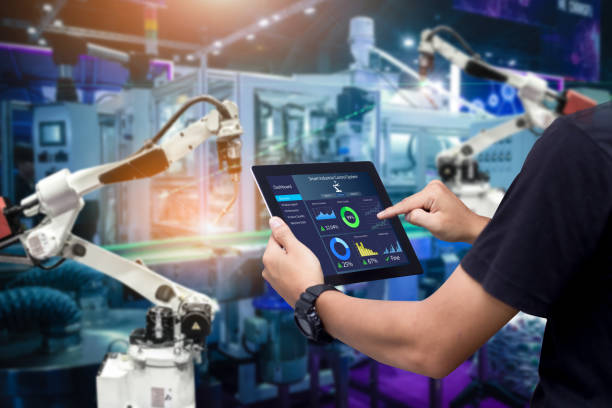
Automation Engineer
An Automation Engineer is a professional dedicated to designing, developing, and implementing automated systems and processes to enhance efficiency, productivity, and accuracy across various industries. They work in sectors such as manufacturing, automotive, aerospace, energy, and technology, collaborating with mechanical engineers, software developers, project managers, and industrial experts. Automation Engineers play a critical role in driving operational excellence and innovation in a world increasingly focused on industrial automation, smart manufacturing, and process optimization.

Career Description
Automation Engineers are experts in control systems, robotics, and software programming, responsible for creating automated solutions, integrating machinery with digital systems, and optimizing workflows to address challenges like production bottlenecks, quality control, or cost reduction. Their role involves designing, testing, and troubleshooting, often working in settings such as industrial plants, tech company offices, or remote environments. They combine expertise in engineering principles, programming, and industrial processes to tackle issues like system downtime, scalability, and safety compliance. As key contributors to operational advancement, they help organizations and societies thrive in an era prioritizing efficiency, smart solutions, and sustainable manufacturing.
Roles and Responsibilities
- Automation System Design
- Design automated systems using control engineering principles, PLCs (Programmable Logic Controllers), and SCADA (Supervisory Control and Data Acquisition) systems.
- Develop solutions to automate repetitive tasks, machinery operations, or data collection processes.
- Programming and Configuration
- Write and configure code for automation hardware and software to control industrial processes or robotic systems.
- Program robots, sensors, and actuators to perform specific tasks with precision and reliability.
- System Integration
- Integrate automation systems with existing machinery, IoT devices, or enterprise software for seamless operations.
- Ensure compatibility between hardware and software components for real-time monitoring and control.
- Testing and Validation
- Test automation systems to ensure functionality, safety, and compliance with industry standards.
- Validate system performance under various conditions and troubleshoot issues like errors or inefficiencies.
- Process Optimization
- Analyze industrial processes to identify areas for automation and implement solutions to reduce waste or downtime.
- Optimize workflows for speed, cost-effectiveness, and quality using data-driven approaches.
- Maintenance and Upgrades
- Perform regular maintenance on automated systems to prevent failures and ensure continuous operation.
- Upgrade systems with new technologies or software to adapt to changing production needs or standards.
- Safety and Compliance
- Ensure automation systems adhere to safety regulations and industry standards to protect workers and equipment.
- Collaborate with safety teams to implement fail-safes and emergency protocols in automated processes.
- Documentation and Training
- Document system designs, configurations, and procedures for future reference and compliance audits.
- Train operators and technicians on the use and maintenance of automated systems for effective implementation.
Study Route & Eligibility Criteria
| Route | Steps |
| Route 1 | 1. 10+2 with Science (Mathematics/Physics) or relevant subjects. 2. Bachelor’s degree in Electrical Engineering, Mechanical Engineering, or Automation Engineering (3-4 years). 3. Gain practical experience through internships or training in automation or industrial roles (3-6 months). 4. Pursue entry-level roles like Junior Automation Engineer or Control Systems Technician (1-2 years). |
| Route 2 | 1. 10+2 with Science (Mathematics/Physics) or relevant subjects. 2. Bachelor’s degree in Electrical Engineering, Instrumentation Engineering, or related field (3-4 years). 3. Master’s degree in Automation Engineering, Control Systems, or Industrial Engineering (2 years, optional). 4. Work in industrial automation or control systems roles to gain experience (1-2 years). 5. Transition to Automation Engineer roles with enhanced skills and knowledge. |
| Route 3 | 1. 10+2 with Science (Mathematics/Physics) or relevant subjects. 2. Bachelor’s degree in Engineering, Computer Science, or related field (3-4 years). 3. Pursue professional certifications like Certified Automation Professional (CAP) or Siemens Certified Programmer (1-2 years). 4. Gain hands-on experience through roles in automation or robotics (1-2 years). 5. Establish a career as an Automation Engineer in industrial or tech sectors. |
| Route 4 | 1. 10+2 with Science (Mathematics/Physics) or relevant subjects. 2. Bachelor’s degree from India in Electrical Engineering or Mechanical Engineering (3-4 years). 3. Pursue international certifications or advanced degrees in automation or control systems abroad (1-2 years). 4. Gain exposure through roles in global industrial firms or automation companies (1-2 years). 5. Work as an Automation Engineer in international markets or global firms. |
Significant Observations (Academic Related Points)
- Technical Foundation: Strong knowledge of engineering, electronics, or computer science is essential for mastering automation concepts.
- Practical Skills: Hands-on training in control systems and programming builds core competencies in automation system development.
- Specialized Certifications: Credentials in automation or control systems enhance professional credibility.
- Industry Expertise: Familiarity with industrial processes and automation trends is crucial for relevant solutions.
- Analytical Focus: Understanding system dynamics and process flows ensures effective automation design.
- Certification Relevance: Some positions may mandate specific certifications from recognized industrial or automation bodies.
- Continuous Learning: Regular training is needed to keep up with evolving automation technologies and tools.
- Global Awareness: Knowledge of international automation standards opens opportunities for cross-border industrial roles.
- Precision Focus: Attention to detail is vital for accurate system configuration and troubleshooting in automation projects.
- Entrance Exam Preparation: Admission to certain programs or competitive roles may require clearing entrance tests.
- International Standards: For global roles, qualifications or certifications from international automation organizations may be required.
Internships & Practical Exposure
- Mandatory practical training during degree programs in engineering or automation units for real-world insights.
- Rotations in manufacturing plants or industrial firms for hands-on experience in automation system development and process control.
- Internships under senior automation engineers for exposure to real-time industrial automation projects and system integration.
- Observerships in automation-focused companies or innovation hubs for insights into cutting-edge technologies and applications.
- Participation in robotics competitions and industrial automation challenges for practical skill development in problem-solving.
- Training in PLC programming and control systems through real-world engagements in industrial projects.
- Exposure to tools like Siemens TIA Portal, Rockwell Automation Studio, and SCADA systems during internships.
- Field projects on process automation, robotic control, or industrial IoT during training.
- Community outreach programs to engage with local industries and understand automation implementation needs on the ground.
- International automation project attachments for global exposure to diverse industrial challenges and standards.
Courses & Specializations to Enter the Field
- Certificate in Industrial Automation
- Bachelor’s in Electrical Engineering, Mechanical Engineering, or Automation Engineering
- Master’s in Automation Engineering, Control Systems, or Industrial Engineering
- Ph.D. in Automation or Robotics
- Specialization in Robotics and Control Systems
- Certification in Certified Automation Professional (CAP)
- Workshops on PLC and SCADA Programming
- Training in Industrial IoT for Automation
- Specialization in Process Control Engineering
- Certification in Siemens Certified Programmer
Top Institutes for Automation Engineer Education (India)
| Institute | Course/Program | Official Link |
| Indian Institute of Technology (IIT), Bombay | B.Tech/M.Tech in Electrical/Mechanical Engineering | https://www.iitb.ac.in/ |
| Indian Institute of Technology (IIT), Delhi | B.Tech/M.Tech in Electrical/Mechanical Engineering | https://www.iitd.ac.in/ |
| Indian Institute of Technology (IIT), Madras | B.Tech/M.Tech in Electrical/Mechanical Engineering | https://www.iitm.ac.in/ |
| Indian Institute of Technology (IIT), Kanpur | B.Tech/M.Tech in Electrical/Mechanical Engineering | https://www.iitk.ac.in/ |
| Indian Institute of Science (IISc), Bangalore | M.Tech in Electrical/Mechanical Engineering | https://www.iisc.ac.in/ |
| Birla Institute of Technology and Science (BITS), Pilani | B.E./M.E. in Electrical/Mechanical Engineering | https://www.bits-pilani.ac.in/ |
| National Institute of Technology (NIT), Trichy | B.Tech/M.Tech in Electrical/Instrumentation Engineering | https://www.nitt.edu/ |
| Vellore Institute of Technology (VIT), Vellore | B.Tech/M.Tech in Electrical/Mechanical Engineering | https://www.vit.ac.in/ |
| Amity University, Noida | B.Tech/M.Tech in Automation & Robotics | https://www.amity.edu/ |
| Manipal Institute of Technology, Manipal | B.Tech/M.Tech in Mechatronics/Automation | https://manipal.edu/mit.html |
Top International Institutes
| Institution | Course | Country | Official Link |
| Massachusetts Institute of Technology (MIT) | BS/MS in Mechanical/Electrical Engineering | USA | https://www.mit.edu/ |
| Stanford University | BS/MS in Mechanical/Electrical Engineering | USA | https://www.stanford.edu/ |
| Carnegie Mellon University | BS/MS in Robotics/Automation | USA | https://www.cmu.edu/ |
| University of California, Berkeley | BS/MS in Mechanical/Electrical Engineering | USA | https://www.berkeley.edu/ |
| University of Toronto | BS/MS in Mechanical/Electrical Engineering | Canada | https://www.utoronto.ca/ |
| University of Oxford | MEng in Engineering Science | UK | https://www.ox.ac.uk/ |
| ETH Zurich | MS in Mechanical/Electrical Engineering | Switzerland | https://ethz.ch/ |
| National University of Singapore (NUS) | B.Eng/M.Eng in Mechanical/Electrical Engineering | Singapore | https://www.nus.edu.sg/ |
| University of Melbourne | MS in Mechanical/Electrical Engineering | Australia | https://www.unimelb.edu.au/ |
| Technical University of Munich (TUM) | MS in Mechanical/Electrical Engineering | Germany | https://www.tum.de/ |
Entrance Tests Required
India:
- JEE Main/JEE Advanced: For admissions in B.Tech programs at IITs and other top engineering institutes.
- GATE (Graduate Aptitude Test in Engineering): For admissions in M.Tech programs in Electrical or Mechanical Engineering at IITs and IISc.
- BITSAT (Birla Institute of Technology and Science Admission Test): For admissions in B.E. programs at BITS Pilani.
- VITEEE (Vellore Institute of Technology Engineering Entrance Exam): For admissions in B.Tech programs at VIT.
- SRMJEEE (SRM Joint Engineering Entrance Exam): For admissions in B.Tech programs at SRM University.
International:
- SAT/ACT: Required for undergraduate admissions in mechanical or electrical engineering programs in the USA and Canada.
- GRE (Graduate Record Examination): Required for MS/Ph.D. programs in automation or engineering in countries like the USA, UK, and Canada.
- TOEFL (Test of English as a Foreign Language): Minimum score of 80-100 required for non-native speakers applying to programs in English-speaking countries.
- IELTS (International English Language Testing System): Minimum score of 6.0-7.0 required for admission to universities in the UK, Australia, and other regions.
Ideal Progressing Career Path
Junior Automation Engineer → Automation Engineer → Senior Automation Engineer → Automation Solutions Architect → Automation Project Manager → Director of Automation Engineering → Chief Automation Officer → Academician/Independent Consultant
Major Areas of Employment
- Manufacturing sector for automating production lines, quality control, and material handling systems.
- Automotive industry for designing automation systems for assembly lines and robotic manufacturing.
- Aerospace sector for implementing precision automation in aircraft production and testing processes.
- Energy sector for automating power generation, grid management, and renewable energy systems.
- Technology companies for developing automation software and IoT solutions for industrial applications.
- Pharmaceutical industry for automating drug production, packaging, and quality assurance processes.
- Food and beverage sector for implementing automation in processing, packaging, and supply chain operations.
- Government and public sector for deploying automation in smart city infrastructure and public utilities.
- Research and academia for advancing automation theories, control systems, and robotic applications.
- Consulting firms for advising businesses on automation adoption, process optimization, and industrial transformation.
Prominent Employers
| India | International |
| Siemens India, Mumbai | Siemens, Germany |
| Larsen & Toubro, Mumbai | Rockwell Automation, USA |
| Bosch India, Bangalore | Honeywell, USA |
| Honeywell India, Pune | ABB, Switzerland |
| ABB India, Bangalore | Schneider Electric, France |
| Schneider Electric India, Gurgaon | Fanuc, Japan |
| Rockwell Automation India, Noida | Mitsubishi Electric, Japan |
| Tata Technologies, Pune | Emerson Electric, USA |
| Tech Mahindra, Pune | KUKA Robotics, Germany |
| Wipro, Bangalore | Bosch Rexroth, Germany |
Pros and Cons of the Profession
| Pros | Cons |
| Direct impact on efficiency through creating automated systems that transform industries and reduce costs | High-pressure role due to complex problem-solving and tight project deadlines in industrial environments |
| Growing demand due to increasing reliance on automation for productivity and smart manufacturing | Challenges in addressing system failures, safety concerns, and integration issues in automation projects |
| Opportunity to contribute to cutting-edge advancements in manufacturing, energy, and other critical sectors | Emotional stress from troubleshooting critical failures or handling downtime in high-stakes industrial settings |
| Varied career paths in engineering, industrial technology, consulting, and international sectors | Need for constant learning to keep up with rapidly evolving automation tools, standards, and methodologies |
| Potential for societal change through automation solutions for sustainability, safety, and operational excellence | Limited immediate visibility of impact, as automation projects often require long-term implementation and testing |
Industry Trends and Future Outlook
- Industrial Automation Surge: Rapid automation adoption in India across manufacturing and energy, driving demand for engineers.
- Government Initiatives: Policies like Make in India and Industry 4.0 boosting automation roles in industrial innovation.
- Smart Manufacturing Growth: Increasing use of IoT and robotics for smart factories in India, necessitating expertise.
- Robotics Boom: Rising interest in industrial robots, creating opportunities in automation and control systems.
- Safety Automation Focus: Growing emphasis on automated safety systems, requiring skills in fail-safe design.
- Energy Automation Development: Expansion of automation in renewable energy systems in India, driving demand for expertise.
- Automation in Agriculture: Adoption of automation for precision farming in India, enhancing roles in rural tech solutions.
- Supply Chain Automation: Growth of automation in logistics and warehousing, creating opportunities in efficiency tech.
- Automation Talent Shortage: High demand for skilled automation engineers in India, pushing for upskilling and training.
- Skill Development Needs: Demand for training in robotics, industrial IoT, and safety automation for future engineers.
Salary Expectations
| Career Level | India (₹ per annum) | International (USD per annum) |
| Junior Automation Engineer (Early Career) | 4,00,000 - 8,00,000 | 50,000 - 70,000 |
| Automation Engineer | 8,00,000 - 15,00,000 | 70,000 - 90,000 |
| Senior Automation Engineer | 15,00,000 - 22,00,000 | 90,000 - 120,000 |
| Automation Solutions Architect/Automation Project Manager | 22,00,000 - 30,00,000 | 120,000 - 150,000 |
| Director of Automation Engineering/Chief Automation Officer/Academician/Independent Consultant | 30,00,000 - 50,00,000+ | 150,000 - 200,000+ |
Note: Salaries may vary based on location, employer, experience, and specialization. Indian figures are updated estimates based on current industry trends, corporate pay scales, and private sector data as of 2025, reflecting inflation and demand growth in the automation sector. International figures are based on data from the U.S., UK, and Europe as of 2025, adjusted for market trends in automation roles, sourced from industry reports and salary surveys like Glassdoor and PayScale. Due to the speculative nature of future data, these are approximations and may differ based on real-time economic factors.
Key Software Tools
- Automation Software (e.g., Siemens TIA Portal, Rockwell Studio 5000) for designing and programming control systems.
- Programming Environments (e.g., MATLAB, LabVIEW) for coding and simulating automation algorithms.
- SCADA Systems (e.g., Wonderware, Ignition SCADA) for monitoring and controlling industrial processes.
- PLC Programming Tools (e.g., Allen-Bradley RSLogix, Siemens SIMATIC) for configuring industrial controllers.
- Version Control Systems (e.g., Git, SVN) for managing code and collaborating on automation projects.
- Industrial IoT Platforms (e.g., ThingWorx, Siemens MindSphere) for connecting and managing automated systems.
- HMI Tools (e.g., WinCC, FactoryTalk View) for designing human-machine interfaces in automation.
- Simulation Tools (e.g., AnyLogic, Simulink) for testing automation designs and process workflows.
- CAD Software (e.g., AutoCAD, SolidWorks) for designing automation hardware layouts and integrations.
Professional Organizations and Networks
- Association for Computing Machinery (ACM) India
- Indian Society for Technical Education (ISTE)
- Computer Society of India (CSI)
- Instrumentation Society of India (ISOI)
- International Society of Automation (ISA), Global
- Institute of Electrical and Electronics Engineers (IEEE) - Automation & Control Group, Global
- Society of Manufacturing Engineers (SME), Global
- British Computer Society (BCS) - Industrial Automation Group, UK
- Association for Advancing Automation (A3), USA
- Australian Computer Society (ACS) - Automation Interest Group, Australia
Notable Leaders in Automation (Top 10)
- Ravi Gopinath (Contemporary, India): COO at Tata Technologies, known for automation in automotive manufacturing. His vision drives efficiency. His leadership builds trust. He shaped Indian automation adoption.
- Anil Chaudhry (Contemporary, India): CEO at Schneider Electric India, known for advancing industrial automation solutions. His strategies grow industries. His leadership inspires tech. He redefined automation applications.
- Sunil Mathur (Contemporary, India): MD at Siemens India, known for digital automation and Industry 4.0 initiatives. His work builds scalability. His leadership drives growth. He influenced automation infrastructure.
- N Chandrasekaran (Contemporary, India): Chairman of Tata Sons, known for automation-driven transformation in Tata Group. His vision shapes strategy. His leadership inspires innovation. He reshapes Indian industrial tech.
- Venkat Ramakrishnan (Contemporary, India): Automation leader at Larsen & Toubro, known for large-scale industrial projects. His tech drives efficiency. His leadership builds trust. He advanced automation in Indian industries.
- Joe Kaeser (Contemporary, Germany): Former CEO of Siemens, known for global automation and digital factory advancements. His research transformed industries. His leadership drives innovation. He redefined industrial automation.
- Patrick Dixon (Contemporary, UK): Futurist and automation thought leader, known for insights on industrial tech trends. His ideas inspire millions. His leadership shapes thinking. He influenced global automation strategies.
- Dean Kamen (Contemporary, USA): Inventor and founder of FIRST Robotics, known for automation in robotics education. His innovations drive learning. His leadership builds impact. He reshaped automation outreach.
- Masayoshi Son (Contemporary, Japan): CEO of SoftBank, known for automation investments via robotics and AI. His vision solves challenges. His leadership drives breakthroughs. He redefined applied automation.
- Elon Musk (Contemporary, South Africa/USA): CEO of Tesla, known for automation in electric vehicle manufacturing. His factories set standards. His leadership inspires progress. He shaped modern automation globally.
Advice for Aspiring Automation Engineers
- Build a strong foundation in electrical or mechanical engineering to understand automation systems and industrial processes.
- Seek early exposure to industrial or automation projects through internships to confirm interest in the field.
- Prepare thoroughly for entrance exams or certification requirements specific to your chosen program or region.
- Pursue certifications in automation or control systems like CAP to gain expertise in system design and implementation.
- Stay updated on automation trends and tools by attending industry conferences, webinars, and workshops.
- Develop hands-on skills in PLC programming, robotics, and industrial IoT through practical experience.
- Engage in industrial automation or control system projects to build real-world experience in process optimization.
- Join professional associations like the Instrumentation Society of India (ISOI) for resources and networking.
- Work on problem-solving and communication skills to ensure impactful automation solutions and stakeholder engagement.
- Explore international automation projects for exposure to diverse industrial challenges and global standards.
- Volunteer in local industries or community initiatives to understand automation implementation needs and societal impacts.
- Cultivate adaptability to handle evolving automation technologies and diverse industry requirements.
- Attend continuing education programs to stay abreast of new automation tools and safety considerations.
- Build a network with industrial professionals, engineers, and automation experts for collaborative opportunities.
- Develop resilience to manage the high-pressure demands and complex challenges of automation engineering.
- Balance technical precision with innovative thinking to drive automation impact and adapt to rapid technological changes.
A career as an Automation Engineer offers a unique opportunity to contribute to industrial progress by designing automated systems that transform operations and improve efficiency across diverse sectors. From optimizing production lines to integrating smart technologies, Automation Engineers play a pivotal role in modern industrial innovation and process excellence. This field combines expertise in control systems, programming, and a commitment to operational advancement, offering diverse paths in industrial technology, research, consulting, and international sectors. For those passionate about shaping the future of manufacturing, adapting to rapid technological shifts, and addressing critical efficiency needs in an era of increasing industrial reliance, a career as an Automation Engineer provides an intellectually stimulating and professionally rewarding journey with the potential to make significant contributions to society by advancing productivity, safety, and sustainability worldwide.
Leading Professions
View AllJunior Automation Engineer
Entry-level professionals assist in designing and testing basic automation systems, working in firms like Siemens India or Larsen & Toubro. They build foundational skills in industrial automation across India’s manufacturing sector.
Automation Engineer
Mid-level engineers design and implement automation solutions, focusing on control systems, employed by companies like Bosch India or Honeywell India. They contribute to innovative projects in hubs like Pune or Bangalore.
Senior Automation Engineer
Experienced engineers lead complex automation projects, mentor juniors, and optimize systems in organizations like ABB India or Schneider Electric India. They focus on high-impact industrial applications at national levels.
Automation Solutions Architect
Architects design scalable automation frameworks and integrate systems for industrial needs in firms like Rockwell Automation India or Tata Technologies. They drive automation strategy across diverse industries.
Automation Project Manager
Managers oversee automation project teams, manage timelines, and ensure delivery in companies like Tech Mahindra or Wipro. They align automation solutions with organizational goals on a broader scale.
Director of Automation Engineering
Senior leaders manage automation engineering departments, set strategic goals for industrial innovation, and ensure market leadership in firms like Reliance Industries or Mahindra & Mahindra. They shape transformative automation frameworks.
Chief Automation Officer
Top-tier executives oversee organizational automation strategies, integrate advanced systems into core operations, and represent firms in companies like Adani Group or Hindustan Unilever. They influence automation policies for national and global impact.
Academician/Independent Consultant
High-level educators or solo practitioners lead automation studies at institutes like IITs or provide bespoke automation advice to industries. They mentor future engineers and influence automation practices through research and expertise.
CAREER VIDEOS
Interested? Take the next step for this career
Skills Needed
This page includes information from O*NET Resource Center by the U.S. Department of Labor, Employment and Training Administration (USDOL/ETA). Used under the CC BY 4.0 license. O*NET® is a trademark of USDOL/ETA.
© 2025 TopTeen. All rights reserved.