Aerospace Engineer
Junior Aerospace Engineer (Entry to Mid-Level)
Explore Career
A Bionics Engineer is a specialized professional who designs and develops technologies that mimic biological systems or integrate with the human body to enhance or restore functions, such as prosthetics, artificial organs, and bio-inspired robotics. They work in industries like healthcare, biotechnology, robotics, and research, collaborating with biomedical engineers, medical professionals, and material scientists. Bionics Engineers play a crucial role in advancing human augmentation, improving quality of life, and pushing the boundaries of bio-inspired innovation in a field driven by technological breakthroughs, interdisciplinary collaboration, and patient-centric solutions.

Bionics Engineers are innovative and detail-oriented individuals who operate in diverse environments such as laboratories, hospitals, design studios, or manufacturing facilities, using tools like CAD software, biomechanical simulation programs, and 3D printing technology. Their role involves creating bionic devices, testing bio-compatible materials, and ensuring integration with human physiology, often facing challenges like achieving natural movement or ensuring long-term durability. They combine expertise in engineering, biology, and neuroscience to deliver life-changing solutions. As key contributors to medical technology and human enhancement, they help shape the future of prosthetics, wearable robotics, and neural interfaces in a sector increasingly driven by AI, nanotechnology, and personalized medicine.
| Route | Steps |
| Route 1 | 1. 10+2 in Science (Physics, Chemistry, Biology/Mathematics) 2. Certificate/Diploma in Biomedical or Bionics Engineering (6 months-2 years) 3. Internship at medical device firms or research labs 4. Practice as Junior Bionics Technician |
| Route 2 | 1. 10+2 in Science (Physics, Chemistry, Biology/Mathematics) 2. Bachelor’s degree in Biomedical Engineering or Mechatronics (Bionics Focus) (4 years) 3. Internship or entry-level role in bionics firms 4. Work as Bionics Engineer |
| Route 3 | 1. 10+2 in Science (Physics, Chemistry, Biology/Mathematics) 2. Bachelor’s degree in Biomedical Engineering or Mechatronics (Bionics Focus) (4 years) 3. Master’s degree in Bionics, Bioengineering, or Robotics (2 years) 4. Gain experience in specialized roles 5. Work as Senior Bionics Engineer or Project Lead |
| Institute | Course/Program | Official Link |
| Indian Institute of Technology (IIT), Delhi | B.Tech/M.Tech in Biomedical Engineering (Bionics Focus) | https://home.iitd.ac.in/ |
| Indian Institute of Technology (IIT), Bombay | B.Tech/M.Tech in Biomedical Engineering (Bionics) | https://www.iitb.ac.in/ |
| Indian Institute of Technology (IIT), Madras | B.Tech/M.Tech in Biomedical Engineering (Robotics Focus) | https://www.iitm.ac.in/ |
| All India Institute of Medical Sciences (AIIMS), Delhi | M.Tech in Biomedical Engineering (Bionics Focus) | https://www.aiims.edu/ |
| Vellore Institute of Technology (VIT), Vellore | B.Tech/M.Tech in Biomedical Engineering (Bionics) | https://vit.ac.in/ |
| Manipal Institute of Technology (MIT), Manipal | B.Tech/M.Tech in Biomedical Engineering (Bionics Focus) | https://manipal.edu/mit.html |
| SRM Institute of Science and Technology, Chennai | B.Tech/M12/M.Tech in Biomedical Engineering (Bionics) | https://www.srmist.edu.in/ |
| Institution | Course | Country | Official Link |
| Massachusetts Institute of Technology (MIT), Department of Mechanical Engineering & Media Lab | MS/PhD in Bionics and Bioengineering | USA | https://meche.mit.edu/ |
| Stanford University, Department of Bioengineering | MS/PhD in Bionics and Neural Engineering | USA | https://bioengineering.stanford.edu/ |
| University of California, Berkeley, Department of Bioengineering | MS/PhD in Bionics and Human Augmentation | USA | https://bioe.berkeley.edu/ |
| ETH Zurich, Department of Health Sciences and Technology | MSc/PhD in Biomedical Engineering (Bionics Focus) | Switzerland | https://hest.ethz.ch/en/ |
| University of Cambridge, Department of Engineering | MPhil/PhD in Bioengineering and Bionics | UK | https://www.eng.cam.ac.uk/ |
| National University of Singapore (NUS), Department of Biomedical Engineering | MEng/PhD in Bionics and Medical Robotics | Singapore | https://www.eng.nus.edu.sg/bme/ |
| University of Toronto, Institute of Biomedical Engineering | MASc/PhD in Bionics and Neural Interfaces | Canada | https://bme.utoronto.ca/ |
India:
International:
Junior Bionics Technician → Bionics Engineer → Senior Bionics Engineer → Bionics Project Manager → Bionic Systems Manager → Regional Bionics Technology Head → Chief Bionics Engineering Officer → Bionics Engineering Consultant
| India | International |
| HCL Healthcare, Multiple Locations | Medtronic, Global |
| Tata Elxsi (Healthcare Division), Multiple Locations | Boston Scientific, Global |
| Wipro (Biomedical Engineering), Multiple Locations | Stryker Corporation, Global |
| Larsen & Toubro (Medical Technology), Multiple Locations | Ottobock, Germany/Global |
| Siemens Healthineers India, Multiple Locations | Siemens Healthineers, Global |
| Philips India, Multiple Locations | Philips Healthcare, Global |
| GE Healthcare India, Multiple Locations | GE Healthcare, Global |
| Pros | Cons |
| Opportunity to improve lives through innovative bionic solutions | Often involves high responsibility for patient safety and outcomes |
| High personal satisfaction in creating life-changing technologies | Can face stress from ensuring device reliability and biocompatibility |
| Rewarding role in a cutting-edge and evolving field | May require long hours during clinical trials or system failures |
| Diverse career paths across healthcare, robotics, and research | Risk of liability for device malfunctions or health complications |
| Strong potential for growth with increasing demand for human augmentation | Uncertainty in adapting to rapidly changing medical and tech standards |
| Career Level | India (₹ per annum) | International (USD per annum) |
| Junior Bionics Technician (Early Career) | 3,50,000 - 6,50,000 | 40,000 - 55,000 |
| Bionics Engineer (Mid-Career) | 7,00,000 - 14,00,000 | 60,000 - 85,000 |
| Senior Bionics Engineer/Project Manager | 14,00,000 - 22,00,000 | 85,000 - 110,000 |
| Bionic Systems Manager/Regional Head | 22,00,000 - 35,00,000 | 110,000 - 140,000 |
| Chief Bionics Engineering Officer/Consultant | 35,00,000+ | 140,000+ |
| Note: Salaries may vary based on location, employer, experience, and specialization. |
A career in Bionics Engineering offers a profound opportunity to transform lives, driving progress through innovative human augmentation and bio-inspired technologies, fostering hope with every solution. Bionics Engineers are the architects of human enhancement, using their skills to empower individuals, address medical demands, and promote cutting-edge solutions across diverse settings. This profession blends technical precision with transformative impact, providing pathways in healthcare, robotics, research, and beyond. For those passionate about technology and humanity, driven by a desire to restore and enhance lives, and eager to embrace the evolving landscape of AI and personalized medicine, becoming a Bionics Engineer is a deeply rewarding journey. It empowers individuals to shape healthier futures, address critical medical needs, and advance human progress through the transformative power of bionic innovation.


Entry-level individuals who assist in assembling and testing bionic devices under supervision. They gain initial experience with prototyping and...
0.0LPA

Mid-level professionals who lead complex bionic designs, oversee projects, and mentor junior staff. They handle diverse challenges and monitor...
0.0LPA
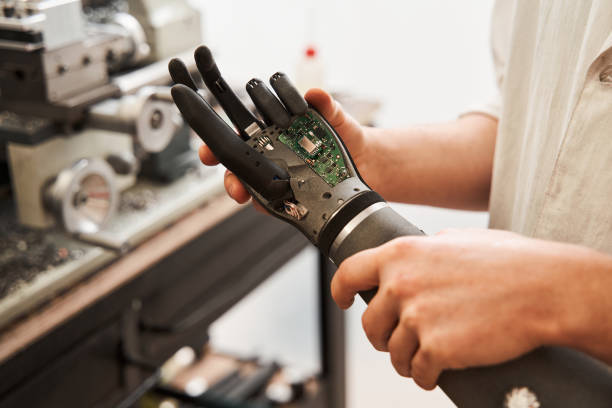
Experienced professionals who oversee bionic technology projects, providing strategic direction in firms or research institutions. They ensure...
0.0LPA
Take the next step and explore more about Bionics Engineer.
Explore similar career paths that might interest you