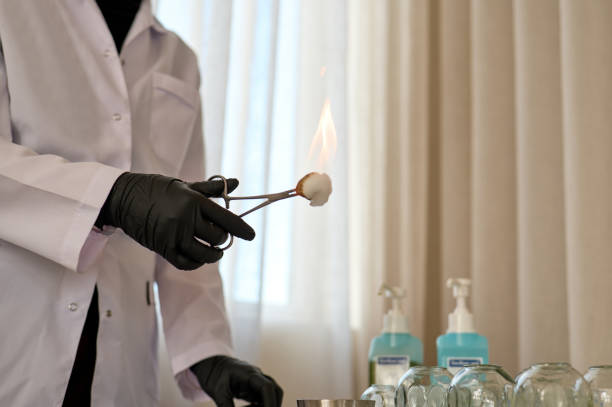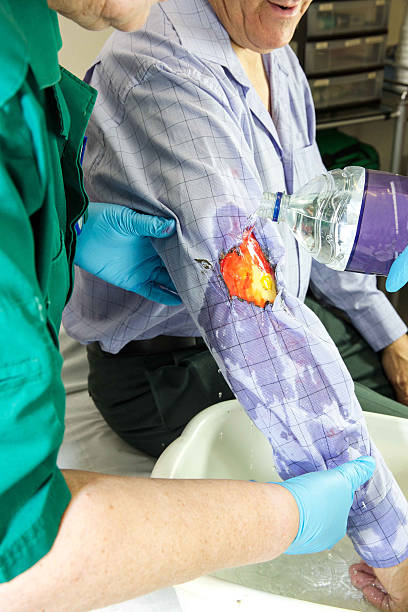
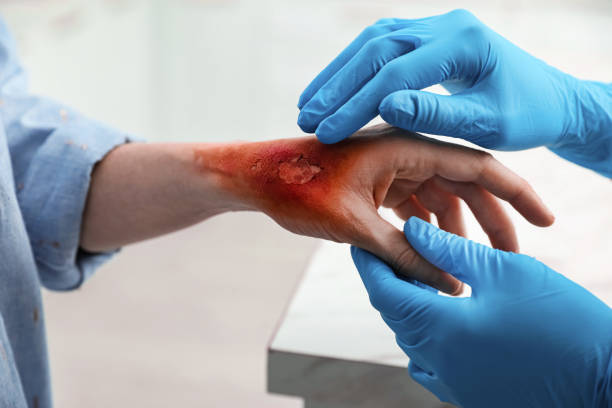
Burn-Care Technologists are skilled professionals responsible for assisting in the management of burn patients, including wound dressing, monitoring for infections, and supporting rehabilitation efforts. Their role involves preparing treatment areas, assisting with debridement and skin grafting procedures, and ensuring patient comfort and safety under the direction of medical teams. They combine technical expertise with compassionate patient care skills, often working in emotionally and physically demanding environments to provide critical support for recovery. As key contributors to burn care, they enable effective treatment in a landscape increasingly focused on specialized trauma care and long-term rehabilitation.
- Wound Care and Dressing
- Assist in cleaning and dressing burn wounds to prevent infection and promote healing
- Apply specialized burn dressings, ointments, and bandages as directed by medical staff
- Patient Monitoring
- Monitor patients for signs of infection, pain, or complications related to burn injuries
- Record vital signs and report changes in patient condition to nurses or physicians
- Assistance in Medical Procedures
- Prepare equipment and assist during debridement, skin grafting, or other burn-related surgeries
- Ensure sterile conditions in treatment areas to minimize infection risks
- Infection Control
- Follow strict hygiene and sterilization protocols to prevent contamination in burn units
- Educate patients and families on infection prevention practices during recovery
- Patient Support and Comfort
- Provide emotional support to patients experiencing pain or psychological distress
- Assist with positioning patients to reduce discomfort and prevent pressure sores
- Rehabilitation Support
- Help patients with mobility exercises under the guidance of physical therapists
- Support the use of compression garments or splints to aid in scar management
- Documentation and Reporting
- Document wound care procedures, patient progress, and treatment details accurately
- Report equipment malfunctions or supply shortages to supervisors
- Equipment and Supply Management
- Maintain and sterilize burn care equipment to ensure readiness for use
- Ensure treatment rooms are stocked with necessary supplies like dressings and antiseptics
| Route | Steps |
| Route 1 | 1. 10+2 with Physics, Chemistry, Biology (PCB) 2. Certificate in Burn Care Technology or Nursing Assistant (6 months-1 year) 3. Internship or clinical training (3-6 months) 4. Practice as Burn-Care Technician |
| Route 2 | 1. 10+2 with PCB 2. Diploma in Nursing or Allied Health with Burn Care focus (1-2 years) 3. Hands-on training or internship in burn units 4. Work as Burn-Care Technologist |
| Route 3 | 1. 10+2 with PCB 2. Bachelor’s degree in Nursing or Allied Health Sciences with Burn Care specialization (3-4 years) 3. Training in burn management 4. Practice as Burn-Care Technologist |
| Route 4 | 1. 10+2 with PCB 2. Master’s degree or international certification in Trauma Care or related fields (2-3 years) 3. Licensure as per country regulations 4. Practice abroad or in India |
- Mandatory clinical training during certificate or degree programs in burn units
- Rotations in trauma centers for hands-on experience with burn patients
- Internships under senior burn care specialists or nurses for exposure to real-time treatment
- Observerships in burn rehabilitation centers for experience in long-term patient care
- Participation in wound care simulations for practical skill development
- Training in infection control protocols through real-world case studies and mock drills
- Exposure to emergency burn treatment scenarios during internships
- Clinical projects on burn wound management or infection prevention during training
- Public health initiatives for assisting in burn awareness or prevention programs
- International hospital attachments for global exposure to burn care practices
- Certificate in Burn Care Technology
- Diploma in Nursing or Allied Health with Burn Care focus
- Bachelor’s in Nursing or Allied Health Sciences with Trauma Care
- Training in Wound Management and Burn Treatment
- Specialization in Advanced Burn Care Techniques
- Certification in Infection Control for Burn Units
- Workshops on Pain Management and Psychological Support
- Training in Pediatric or Severe Burn Care
- Specialization in Skin Grafting Support or Rehabilitation
- Certification in Basic Life Support (BLS) for emergency response
| Institute | Course/Program | Official Link |
| All India Institute of Medical Sciences (AIIMS), New Delhi | Diploma in Nursing and Allied Health | https://www.aiims.edu/ |
| Christian Medical College (CMC), Vellore | Diploma and B.Sc. in Nursing | https://www.cmch-vellore.edu/ |
| Manipal Academy of Higher Education, Manipal | B.Sc. in Allied Health Sciences | https://www.manipal.edu/ |
| Sri Ramachandra Institute of Higher Education and Research, Chennai | B.Sc. in Trauma Care Technology | https://www.sriramachandra.edu.in/ |
| Kasturba Medical College (KMC), Mangalore | Diploma and Degree in Allied Health | https://manipal.edu/kmc-mangalore.html |
| Amrita Institute of Medical Sciences, Kochi | B.Sc. in Nursing and Allied Health | https://www.amrita.edu/ |
| Jawaharlal Institute of Postgraduate Medical Education & Research (JIPMER), Puducherry | Diploma in Nursing | https://www.jipmer.edu.in/ |
| King George’s Medical University (KGMU), Lucknow | Diploma and B.Sc. in Nursing | https://www.kgmu.org/ |
| Nizam’s Institute of Medical Sciences (NIMS), Hyderabad | Diploma in Trauma Care Technology | https://www.nims.edu.in/ |
| Postgraduate Institute of Medical Education and Research (PGIMER), Chandigarh | Diploma in Nursing and Allied Health | https://pgimer.edu.in/ |
| Institution | Course | Country | Official Link |
| Johns Hopkins University | Nursing and Trauma Care Training | USA | https://www.jhu.edu/ |
| University of Toronto | Trauma and Burn Care Programs | Canada | https://www.utoronto.ca/ |
| University College London (UCL) | Nursing with Trauma Focus | UK | https://www.ucl.ac.uk/ |
| University of Melbourne | Trauma Care and Nursing Technology | Australia | https://www.unimelb.edu.au/ |
| Mayo Clinic College of Medicine and Science | Burn Care and Nursing Program | USA | https://www.mayo.edu/ |
| King’s College London | Nursing (Trauma and Burn Care) | UK | https://www.kcl.ac.uk/ |
| University of British Columbia | Nursing and Trauma Care Programs | Canada | https://www.ubc.ca/ |
| Monash University | Trauma and Burn Care Nursing | Australia | https://www.monash.edu/ |
| Karolinska Institutet | Trauma Care Nursing Training | Sweden | https://www.ki.se/ |
| University of California, San Francisco | Burn Care and Trauma Nursing Programs | USA | https://www.ucsf.edu/ |
India:
- All India Institute of Medical Sciences (AIIMS) Paramedical Entrance Exam
- National Eligibility cum Entrance Test (NEET-UG) for some undergraduate allied health programs
- State-level paramedical entrance exams for diploma or degree admissions
- University-specific entrance tests for nursing or trauma care programs
International:
- Specific entrance exams or prerequisites as per institute for nursing or trauma care programs
- Test of English as a Foreign Language (TOEFL) with a minimum score of 80-100 for non-native speakers
- International English Language Testing System (IELTS) with a minimum score of 6.0-7.0
- Pearson Test of English Academic (PTE Academic)
- Duolingo English Test (accepted by some institutions)
- Graduate Record Examinations (GRE) for certain international postgraduate programs
Trainee → Certified Burn-Care Technician → Senior Burn-Care Technologist → Lead Burn-Care Specialist → Burn Unit Supervisor/Manager → Burn Care Educator → Burn Unit Director → Burn Care Consultant
- Hospitals for burn treatment and emergency care
- Burn centers for specialized wound management and rehabilitation
- Trauma units for urgent burn injury response
- Rehabilitation facilities for long-term burn recovery support
- Government health facilities for public burn care services
- Private burn clinics for patient-specific treatments
- Academic medical centers for training future burn-care professionals
- Mobile trauma units for community emergency response
- Military healthcare facilities for burn injuries in combat settings
- Research institutions for studies on burn treatment innovations
| India | International |
| Apollo Hospitals | Mayo Clinic, USA |
| Fortis Healthcare | Cleveland Clinic, USA |
| Max Healthcare | Johns Hopkins Hospital, USA |
| Medanta - The Medicity | Royal Brompton Hospital, UK |
| Narayana Health | Toronto General Hospital, Canada |
| Manipal Hospitals | St Vincent’s Hospital, Australia |
| AIIMS (All India Institute of Medical Sciences) | Karolinska University Hospital, Sweden |
| CMC (Christian Medical College), Vellore | Mount Sinai Hospital, USA |
| Lilavati Hospital, Mumbai | Guy’s and St Thomas’ NHS Foundation Trust, UK |
| Kokilaben Dhirubhai Ambani Hospital | Massachusetts General Hospital, USA |
| Pros | Cons |
| Opportunity to contribute to life-changing burn recovery and patient care | Emotionally challenging due to working with severely injured patients |
| High demand for burn-care technologists in trauma and emergency settings | Exposure to biohazards, requiring strict adherence to safety protocols |
| Rewarding impact on patient outcomes through specialized wound management | Potential for workplace stress due to high-stakes and urgent care demands |
| Diverse career paths across hospitals, burn centers, and rehabilitation facilities | Risk of physical strain from assisting with patient positioning or procedures |
| Strong potential for growth with advanced certifications | Repetitive nature of wound care tasks can lead to monotony over time |
- Growing adoption of bioengineered skin substitutes for advanced burn treatment
- Rising demand for burn-care technologists due to increasing trauma and accident cases
- Advancements in wound care technology for faster healing and reduced scarring
- Heightened focus on infection control with stricter sterilization protocols in burn units
- Expansion of telemedicine for remote consultation in burn rehabilitation
- Development of AI tools for assisting in burn severity assessment and treatment planning
- Increased emphasis on specialized training for pediatric or chemical burn management
- Enhanced collaboration between technologists and surgeons for optimized treatment outcomes
- Growing need for continuous education to master advanced burn care systems
- Focus on global certification standards to align burn care practices internationally
| Career Level | India (₹ per annum) | International (USD per annum) |
| Trainee/Certified Burn-Care Technician (Early Career) | 1,80,000 - 3,00,000 | 25,000 - 40,000 |
| Senior Burn-Care Technologist (Mid-Career) | 3,00,000 - 5,50,000 | 40,000 - 55,000 |
| Lead Burn-Care Specialist | 5,50,000 - 8,00,000 | 55,000 - 70,000 |
| Burn Unit Supervisor/Manager | 8,00,000 - 11,00,000 | 70,000 - 85,000 |
| Educator/Burn Unit Director | 11,00,000+ | 85,000+ |
Note: Salaries vary based on location, experience, employer, and specialization. International figures are approximate and depend on the country and healthcare sector.
- Electronic Medical Records (EMR) for patient data and treatment tracking
- Wound Management Software for documenting burn care progress
- Telemedicine Platforms for remote consultation with burn specialists
- Equipment Sterilization Tracking Software for infection control
- Patient Scheduling Software for managing treatment appointments
- Teleconferencing tools like Zoom for remote collaboration with medical teams
- Clinical databases for staying updated on burn care protocols
- Microsoft Office Suite for documentation and report preparation
- Secure messaging tools for coordinating with burn unit staff
- Simulation software for training on wound care and emergency response
- Indian Association of Burns (IAB)
- American Burn Association (ABA)
- International Society for Burn Injuries (ISBI)
- British Burn Association (BBA)
- European Burns Association (EBA)
- Indian Society of Plastic Surgeons (ISPS)
- American Association of Critical-Care Nurses (AACN)
- Canadian Burn Survivors Community (CBSC)
- Australasian Burn Association (ABA Affiliate)
- World Health Organization (WHO) Trauma and Burn Care Programs
- Dr. John Burke (Historical, USA): Pioneer in burn treatment in the 1970s. His development of artificial skin revolutionized burn care. His contributions impact burn recovery practices globally.
- Dr. David Herndon (Historical, USA): Leader in pediatric burn care since the 1980s. His research on burn metabolism improved survival rates. His work shapes burn treatment standards worldwide.
- Dr. G. Patrick Kealey (Historical, USA): Innovator in burn wound management since the 1970s. His advancements in infection control reduced mortality in burn units. His legacy influences burn care protocols internationally.
- Dr. Basil Pruitt (Historical, USA): Expert in burn trauma research since the 1960s. His contributions to fluid resuscitation techniques saved countless lives. His work impacts burn emergency care globally.
- Dr. Fiona Wood (Contemporary, Australia): Renowned for developing spray-on skin technology in the 1990s. Her innovations in skin regeneration transformed burn treatment. Her efforts shape burn recovery practices worldwide.
- Dr. Steven Wolf (Contemporary, USA): Leader in burn surgery and critical care since the 1990s. His research on burn injury rehabilitation enhances patient outcomes. His contributions influence burn care standards internationally.
- Dr. Rajiv Sood (Contemporary, USA): Specialist in reconstructive surgery for burn patients since the 2000s. His work on scar management improves quality of life. His impact strengthens burn rehabilitation globally.
- Dr. Nicole Gibran (Contemporary, USA): Advocate for burn care research since the 1990s. Her initiatives in wound healing and pain management benefit burn units. Her work enhances treatment protocols worldwide.
- Dr. S. P. Bajaj (Contemporary, India): Expert in burn management in India since the 1980s. His efforts in establishing burn units improve regional healthcare. His contributions support burn care standards in India.
- Dr. Sunil Keswani (Contemporary, India): Leader in burn surgery and rehabilitation since the 1990s. His work on affordable burn treatments benefits underserved populations. His impact elevates burn care practices regionally and beyond.
- Build a strong foundation in biology, anatomy, and wound healing to understand burn care principles.
- Seek early exposure to hospital burn units or trauma centers through volunteer programs to confirm interest in the field.
- Prepare thoroughly for entrance exams or certification requirements specific to your chosen program or region.
- Pursue advanced certifications in burn care or trauma management to gain expertise.
- Stay updated on advancements in burn treatment technology by attending workshops and seminars.
- Develop hands-on skills in wound dressing and patient monitoring through practical training.
- Engage in clinical or burn rehabilitation projects to build real-world experience.
- Join professional associations like the Indian Association of Burns (IAB) for networking and resources.
- Work on precision and attention to detail to ensure effective treatment and patient safety.
- Explore international training programs for exposure to diverse burn care practices and standards.
- Volunteer in burn units or trauma centers to understand patient care needs and build experience.
- Cultivate patience and empathy to support patients in pain or distress during recovery.
- Attend continuing education programs to stay abreast of evolving burn care methods and technologies.
- Build a network with burn surgeons, nurses, and other technologists for collaborative patient care efforts.
- Develop resilience to handle the emotional and physical demands of working with burn victims.
- Balance clinical work with continuous learning to adapt to rapid advancements in burn treatment systems.
A career as a Burn-Care Technologist offers a unique opportunity to contribute to patient recovery and rehabilitation by providing critical support in the treatment of burn injuries. From assisting with wound care to supporting long-term rehabilitation in emotionally challenging environments, Burn-Care Technologists play a pivotal role in modern healthcare systems. This field combines technical expertise, attention to detail, and a deep commitment to patient care, offering diverse paths in hospitals, burn centers, and trauma units. For those passionate about advancing burn treatment, supporting clinical precision, and addressing the growing complexities of trauma care in an era of specialized medicine and patient-centered recovery, a career as a Burn-Care Technologist provides an intellectually stimulating and professionally rewarding journey with the potential to make significant contributions to society by enhancing the quality of burn care and patient outcomes worldwide.