Aerobiologist
Aerology Research Scholar (PhD)
Explore Career
A Chemist is a scientific professional who studies the composition, structure, properties, and reactions of matter to develop new materials, solve industrial problems, and advance technologies in health, energy, and environmental sectors. They operate within research, education, industry, and regulatory fields, collaborating with scientists, engineers, and policymakers to address complex chemical challenges. Chemists play a crucial role in innovation and sustainability in an era where global demands for renewable energy, advanced pharmaceuticals, and environmental protection drive the need for cutting-edge chemical solutions.
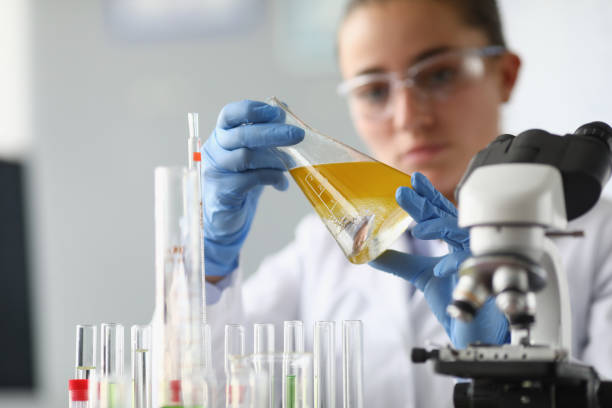
Chemists are analytically skilled and research-driven individuals tasked with investigating the behaviour of chemical substances, designing experiments, and applying findings to real-world applications such as drug development, material synthesis, and pollution control. Their role includes conducting laboratory tests, analyzing data, and creating solutions for scientific and industrial needs. They combine expertise in chemical principles, problem-solving, and specialized techniques, working in diverse settings such as laboratories, manufacturing plants, and academic institutions. As key contributors to science and technology, Chemists drive progress in a landscape increasingly focused on green chemistry, nanotechnology, and public safety.
| Route | Steps |
| Route 1 | 1. 10+2 in Science stream (Physics, Chemistry, Mathematics/Biology mandatory) |
| 2. Bachelor’s in Chemistry or Chemical Sciences (3-4 years) | |
| 3. Start as a Junior Lab Assistant in research or industrial labs | |
| Route 2 | 1. 10+2 in Science stream (Physics, Chemistry, Mathematics/Biology mandatory) |
| 2. Bachelor’s in Chemistry or Chemical Sciences (3-4 years) | |
| 3. Master’s in Chemistry or specialized field (2 years) | |
| 4. Work as a Research Associate in academic or industry settings | |
| Route 3 | 1. 10+2 in Science stream (Physics, Chemistry, Mathematics/Biology mandatory) |
| 2. Bachelor’s in Chemistry or Chemical Sciences (3-4 years) | |
| 3. Master’s in Chemistry or specialized field (2 years) | |
| 4. Ph.D. in Chemistry or related discipline (3-5 years) | |
| 5. Pursue Roles as a Senior Chemist or Principal Investigator | |
| Route 4 | 1. 10+2 in Science stream (Physics, Chemistry, Mathematics/Biology mandatory) |
| 2. Bachelor’s in Chemistry or Chemical Sciences (3-4 years) | |
| 3. Master’s in Chemistry or specialized field (2 years) | |
| 4. Ph.D. in Chemistry or related discipline (3-5 years) | |
| 5. Postdoctoral Research (1-3 years) | |
| 6. Serve as a Lead Researcher, Professor, or Industry Consultant |
| Institute | Course/Program | Official Link |
| Indian Institute of Science (IISc), Bangalore | B.Sc., M.Sc., Ph.D. in Chemical Sciences | https://iisc.ac.in/ |
| Jawaharlal Nehru University (JNU), Delhi | M.Sc., Ph.D. in Chemical Sciences | https://www.jnu.ac.in/ |
| University of Delhi, Delhi | B.Sc., M.Sc., Ph.D. in Chemistry | https://www.du.ac.in/ |
| Indian Institute of Technology (IIT), Bombay | B.Tech, M.Tech, Ph.D. in Chemistry | https://www.iitb.ac.in/ |
| Indian Institute of Technology (IIT), Kanpur | B.Tech, M.Tech, Ph.D. in Chemistry | https://www.iitk.ac.in/ |
| University of Hyderabad, Hyderabad | M.Sc., Ph.D. in Chemistry | https://uohyd.ac.in/ |
| Banaras Hindu University (BHU), Varanasi | B.Sc., M.Sc., Ph.D. in Chemistry | https://www.bhu.ac.in/ |
| University of Calcutta, Kolkata | B.Sc., M.Sc., Ph.D. in Chemistry | https://www.caluniv.ac.in/ |
| Anna University, Chennai | B.Tech, M.Tech in Chemical Engineering | https://www.annauniv.edu/ |
| Tata Institute of Fundamental Research (TIFR), Mumbai | Ph.D. in Chemical Sciences | https://www.tifr.res.in/ |
| Institution | Course | Country | Official Link |
| Massachusetts Institute of Technology (MIT), Cambridge | B.S., Ph.D. in Chemistry | USA | https://www.mit.edu/ |
| Stanford University, Stanford | B.S., M.S., Ph.D. in Chemistry | USA | https://www.stanford.edu/ |
| University of Cambridge, Cambridge | B.A., M.Phil., Ph.D. in Chemistry | UK | https://www.cam.ac.uk/ |
| Harvard University, Cambridge | B.A., M.A., Ph.D. in Chemistry | USA | https://www.harvard.edu/ |
| University of Oxford, Oxford | B.A., D.Phil. in Chemistry | UK | https://www.ox.ac.uk/ |
| California Institute of Technology (Caltech), Pasadena | B.S., Ph.D. in Chemistry | USA | https://www.caltech.edu/ |
| ETH Zurich, Zurich | B.Sc., M.Sc., Ph.D. in Chemistry | Switzerland | https://ethz.ch/en.html |
| University of Toronto, Toronto | B.Sc., M.Sc., Ph.D. in Chemistry | Canada | https://www.utoronto.ca/ |
| National University of Singapore (NUS), Singapore | B.Sc., M.Sc., Ph.D. in Chemistry | Singapore | https://www.nus.edu.sg/ |
| University of Tokyo, Tokyo | B.Sc., M.Sc., Ph.D. in Chemistry | Japan | https://www.u-tokyo.ac.jp/en/ |
India:
International:
Aspiring Chemist → Junior Lab Assistant → Research Associate → Professional Chemist → Senior Chemist → Principal Investigator → Research Director → Professor → Industry Consultant → Chemical Entrepreneur
| India | International |
| Council of Scientific and Industrial Research (CSIR) | Dow Chemical Company, USA |
| Indian Oil Corporation Limited (IOCL) | BASF, Germany |
| Department of Science and Technology (DST) | DuPont, USA |
| National Chemical Laboratory (NCL), Pune | Bayer, Germany |
| Reliance Industries Limited | ExxonMobil, USA |
| Dr. Reddy’s Laboratories | Pfizer, USA |
| Cipla Limited | Novartis, Switzerland |
| Sun Pharmaceutical Industries | Roche, Switzerland |
| Tata Chemicals | GlaxoSmithKline (GSK), UK |
| Hindustan Unilever Limited (HUL) | Merck & Co., USA |
| Pros | Cons |
| Opportunity to contribute to groundbreaking discoveries in materials and health | Long and rigorous educational path requiring advanced degrees for top roles |
| Potential for societal impact through solutions for energy, medicine, or environment | Competitive field with limited funding or positions for research projects |
| Rewarding impact through advancing scientific knowledge and improving technologies | Often requires long hours in labs with exposure to hazardous chemicals |
| Diverse career paths across academia, industry, healthcare, and policy | Slow career progression with dependency on publications or grant success |
| Strong potential for innovation with the rise of green chemistry and nanotechnology | High pressure to produce results or meet industry standards in research roles |
| Career Level | India (₹ per annum) | International (USD per annum) |
| Junior Lab Assistant (Early Career) | 3,00,000 - 6,00,000 | 30,000 - 50,000 |
| Research Associate (Mid-Career) | 6,00,000 - 12,00,000 | 50,000 - 80,000 |
| Professional Chemist (Established) | 12,00,000 - 20,00,000 | 80,000 - 120,000 |
| Senior Chemist/Principal Investigator | 20,00,000 - 40,00,000 | 120,000 - 180,000 |
| Research Director/Professor | 40,00,000+ | 180,000+ |
Note: Salaries vary widely based on location, experience, sector (academic vs. industry), and specialization. International figures are approximate and depend on the country and funding. High-profile research or industry leadership roles often yield significantly higher earnings based on impact and demand.
A career as a Chemist offers a unique opportunity to contribute to science, technology, and sustainability by navigating complex chemical landscapes for diverse societal needs. From advancing pharmaceutical breakthroughs to developing sustainable materials and driving industrial innovation, Chemists play a pivotal role in scientific ecosystems. This field combines analytical talent, research skill, and a commitment to solving intricate chemical challenges, offering diverse paths in academia, industry, environmental science, and beyond. For those passionate about understanding matter, adapting to dynamic scientific trends, and addressing global needs in an era of technological and environmental evolution, a career as a Chemist provides an intellectually stimulating and professionally rewarding journey with the potential to make significant contributions to society by advancing the science and application of chemical knowledge worldwide.


Specialists conduct independent studies or support larger projects with notable competence. They integrate technique with expertise in analysis...
0.0LPA

Leaders oversee research teams or specific studies with deep knowledge. They provide scientific oversight by aligning with project goals. Their...
0.0LPA
Top-tier professionals design and lead major research projects or grants. They handle intricate studies while ensuring breakthroughs. Their...
0.0LPA
Take the next step and explore more about Chemist (chemistry).
Explore similar career paths that might interest you