Aerologist
Meteorologist
Explore Career
An Aerobiologist is a specialized scientist who studies airborne biological particles, such as pollen, spores, bacteria, and viruses, and their impact on ecosystems, human health, and agriculture. They work within the environmental and health sciences sectors, primarily in research institutions, government agencies, universities, and public health organizations. Aerobiologists investigate the distribution, behaviour, and effects of airborne organisms, contributing to fields like allergy research, disease prevention, and climate change studies. Combining expertise in biology, meteorology, and data analysis, they play a crucial role in addressing global challenges such as respiratory diseases, crop protection, and environmental monitoring in a world where air quality and biological contaminants increasingly affect populations across all demographics, necessitating advanced scientific understanding and intervention.

Aerobiologists are scientific specialists who focus on the study of airborne biological particles and their interactions with the environment and living organisms. Their work involves collecting and analyzing air samples, identifying microorganisms and allergens, studying their dispersal patterns influenced by weather and climate, and assessing their impact on human health, agriculture, and ecosystems. They often operate in laboratory and field settings, balancing research with practical applications such as forecasting pollen levels for allergy sufferers or monitoring airborne pathogens during disease outbreaks. Aerobiologists are vital to environmental and public health sectors, serving as experts in understanding and mitigating the effects of airborne biological agents, providing insights for policy-making, and improving quality of life through evidence-based solutions in a scientific landscape where air quality and biological interactions are increasingly critical.
| Route | Steps |
|---|---|
| Route 1 | 1. 10+2 with Physics, Chemistry, Biology (PCB) |
| 2. Bachelor’s degree in Biology, Botany, or Environmental Science (3-4 years) | |
| 3. Master’s degree in Phycology (Algology), Marine Biology, or Microbiology (2 years) | |
| 4. PhD in Algology or related field for research roles (3-5 years) | |
| 5. Postdoctoral research or certification in specialized techniques (optional) | |
| Route 2 | 1. 10+2 with Physics, Chemistry, Biology (PCB) |
| 2. Bachelor’s degree in Biotechnology or Life Sciences (3-4 years) | |
| 3. Master’s degree in Applied Phycology or Environmental Biology (2 years) | |
| 4. Specialized training or diploma in Algology (1-2 years) | |
| 5. Research or industry experience in algae studies | |
| Route 3 | 1. 10+2 with Physics, Chemistry, Biology (PCB) |
| 2. Bachelor’s degree in Marine Science or Environmental Science (3-4 years) | |
| 3. Master’s degree in Aquatic Ecology or Oceanography (2 years) | |
| 4. Fellowship or research project in Algology (1-3 years) | |
| 5. Certification in algal biotechnology or related fields | |
| Route 4 | 1. 10+2 with Physics, Chemistry, Biology (PCB) |
| 2. Bachelor’s degree from India in relevant field (3-4 years) | |
| 3. International Master’s or PhD program in Phycology or Marine Biology | |
| 4. Research or training abroad in specialized algology labs (2-5 years) | |
| 5. Certification or licensure for international practice (if applicable) |
| Institute | Course/Program | Official Link |
| University of Delhi | MSc in Environmental Studies | https://www.du.ac.in/ |
| Jawaharlal Nehru University (JNU), New Delhi | MSc in Environmental Sciences | https://www.jnu.ac.in/ |
| Indian Institute of Science (IISc), Bangalore | Research in Environmental Biology | https://iisc.ac.in/ |
| Banaras Hindu University (BHU), Varanasi | MSc in Botany (focus on Palynology) | https://www.bhu.ac.in/ |
| University of Calcutta, Kolkata | MSc in Microbiology | https://www.caluniv.ac.in/ |
| University of Pune (Savitribai Phule Pune University) | MSc in Environmental Science | https://www.unipune.ac.in/ |
| Anna University, Chennai | MSc in Environmental Science | https://www.annauniv.edu/ |
| University of Madras, Chennai | MSc in Botany | https://www.unom.ac.in/ |
| TERI School of Advanced Studies, New Delhi | MSc in Environmental Studies and Resource Management | https://www.terisas.ac.in/ |
| Amity University, Noida | MSc in Environmental Sciences | https://www.amity.edu/ |
| Institution | Course | Country | Official Link |
| University of Worcester | MSc in Aerobiology | UK | https://www.worcester.ac.uk/ |
| University of Tulsa | Research in Aerobiology | USA | https://utulsa.edu/ |
| University of Montreal | MSc in Environmental Health | Canada | https://www.umontreal.ca/ |
| Technical University of Munich | MSc in Environmental Sciences | Germany | https://www.tum.de/ |
| University of Copenhagen | MSc in Environmental Biology | Denmark | https://www.ku.dk/ |
| University of Sydney | MSc in Environmental Science | Australia | https://www.sydney.edu.au/ |
| Leiden University | MSc in Biology (focus on Aerobiology) | Netherlands | https://www.universiteitleiden.nl/ |
| University of Helsinki | MSc in Atmospheric Sciences | Finland | https://www.helsinki.fi/ |
| Karolinska Institutet | Research in Environmental Health | Sweden | https://ki.se/en |
| National University of Singapore (NUS) | MSc in Environmental Management | Singapore | https://www.nus.edu.sg/ |
India:
International:
Undergraduate Student → Graduate Student (Master’s) → Research Scholar (PhD) → Junior Aerobiologist → Established Aerobiologist → Senior Aerobiologist/Research Lead → Program Director/Professor of Aerobiology
| India | International |
| Indian Council of Medical Research (ICMR) | World Health Organization (WHO) |
| Council of Scientific and Industrial Research (CSIR) | Centers for Disease Control and Prevention (CDC), USA |
| National Environmental Engineering Research Institute (NEERI) | European Centre for Disease Prevention and Control (ECDC) |
| Indian Agricultural Research Institute (IARI) | National Institute of Allergy and Infectious Diseases (NIAID), USA |
| Ministry of Environment, Forest and Climate Change | UK Health Security Agency |
| University of Delhi | University of Worcester, UK |
| TERI - The Energy and Resources Institute | Environment Canada |
| National Institute of Virology (NIV) | CSIRO (Commonwealth Scientific and Industrial Research Organisation), Australia |
| Indian Institute of Science (IISc) | Max Planck Institute for Chemistry, Germany |
| Amity Institute of Environmental Sciences | National University of Singapore (NUS) |
| Pros | Cons |
| Significant contribution to public health through allergen and pathogen monitoring. | Limited awareness of the field, leading to fewer job openings in some regions. |
| Intellectually stimulating work combining biology, meteorology, and data analysis. | Fieldwork can involve exposure to harsh environmental conditions. |
| High impact on environmental and agricultural sustainability. | Research funding can be competitive and inconsistent. |
| Opportunities for interdisciplinary collaboration and innovation. | Slow career progression in academic or research roles. |
| Growing relevance due to climate change and air quality concerns. | Need for continuous learning to keep up with evolving scientific methods. |
| Career Level | India (₹ per annum) | International (US$ per annum) |
| Research Scholar (PhD) | 3,00,000 - 6,00,000 | $30,000 - $40,000 |
| Junior Aerobiologist | 5,00,000 - 10,00,000 | $50,000 - $70,000 |
| Established Aerobiologist | 10,00,000 - 20,00,000 | $70,000 - $100,000 |
| Senior Aerobiologist/Research Lead | 20,00,000 - 35,00,000 | $100,000 - $130,000 |
| Program Director/Professor | 35,00,000 - 50,00,000 | $130,000 - $160,000 |
A career as an Aerobiologist offers the unique opportunity to impact human health, agriculture, and environmental sustainability by studying airborne biological particles that influence daily life and global ecosystems. From conducting detailed field and laboratory research to developing forecasting models and advising on public health policies, Aerobiologists play a pivotal role in mitigating the effects of allergens, pathogens, and environmental changes that affect populations worldwide. This field combines scientific inquiry, technological innovation, and interdisciplinary collaboration, offering diverse paths in research, public health, agriculture, and education. For those passionate about biology, environmental science, and improving quality of life through scientific discovery, a career as an Aerobiologist provides a deeply rewarding journey with significant potential for making meaningful contributions to society in an era where air quality, climate change, and biological interactions continue to pose complex challenges globally.

Scholars conduct in-depth research on airborne biological particles, contributing to scientific knowledge. They build expertise. Their work...
0.0LPA

Early-career researchers work in labs or field settings, assisting senior scientists in data collection and analysis. They establish practical...
0.0LPA
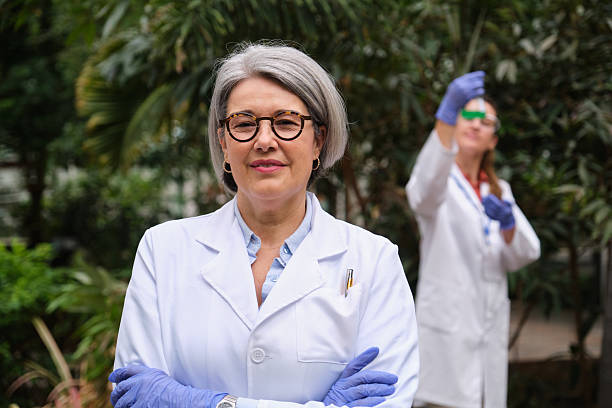
Experienced scientists oversee research teams, design large-scale studies, and mentor junior researchers. They provide scientific leadership....
0.0LPA
Take the next step and explore more about Aerobiologist.
Explore similar career paths that might interest you