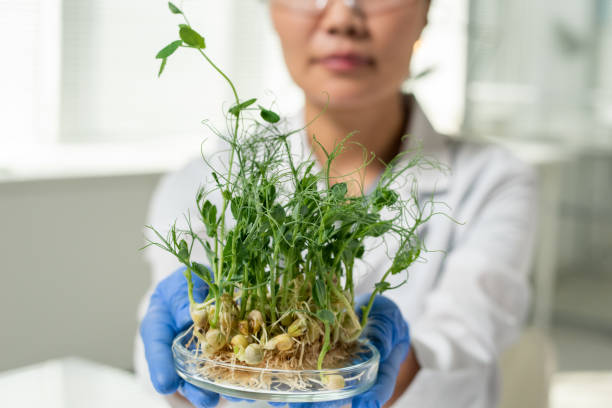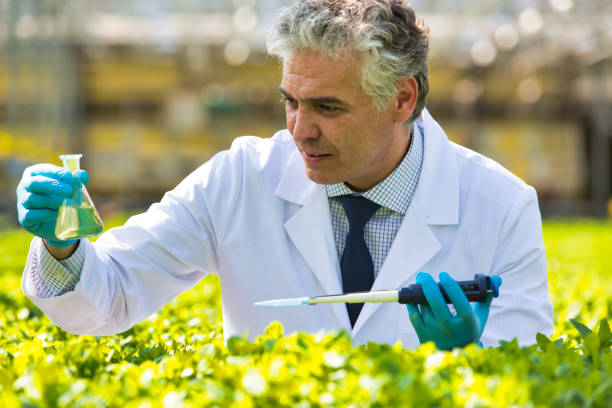
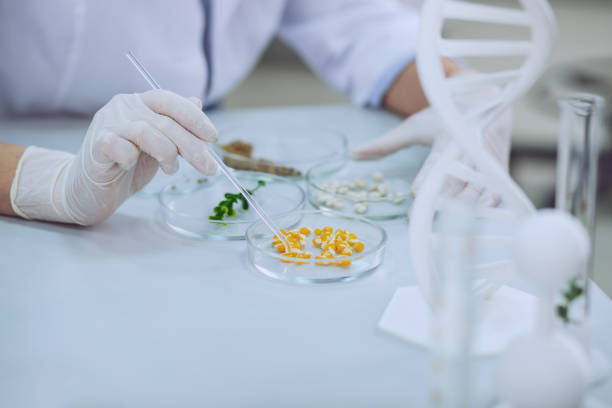
Crop Genomics Scientists are scientific and technical experts responsible for analyzing crop genomes, identifying beneficial traits, and applying genetic engineering or marker-assisted selection to enhance agricultural productivity. Their role involves laboratory research, data analysis, and field trials, often working in controlled environments or research facilities. They combine knowledge of genomics, molecular biology, and plant science to address challenges like pest resistance, drought tolerance, and nutritional deficiencies. As key contributors to modern agriculture, they help shape sustainable practices in an industry increasingly focused on genetic innovation, food security, and environmental adaptation.
- Genomic Data Collection and Analysis
- Sequence and analyze crop genomes to identify genes associated with desirable traits
- Use bioinformatics tools to interpret large-scale genomic datasets for agricultural applications
- Trait Identification and Mapping
- Map genetic markers linked to traits like yield, disease resistance, or stress tolerance
- Identify genetic variations that can improve crop performance under diverse conditions
- Genetic Engineering and Editing
- Apply CRISPR and other gene-editing technologies to modify crop genomes for enhanced traits
- Develop genetically modified organisms (GMOs) to address specific agricultural challenges
- Marker-Assisted Selection (MAS)
- Use genetic markers to assist plant breeders in selecting superior crop varieties
- Accelerate breeding programs by reducing the time needed for trait development
- Field Trials and Validation
- Conduct field experiments to evaluate the performance of genetically enhanced crops
- Validate laboratory findings under real-world agricultural conditions
- Collaboration and Knowledge Sharing
- Work with agronomists and farmers to implement genomic solutions in crop production
- Publish research findings and collaborate with global scientific communities for innovation
- Regulatory Compliance and Safety
- Ensure compliance with biosafety and genetic modification regulations during research
- Assess environmental and health impacts of genetically modified crops
- Training and Advisory Services
- Train agricultural professionals and students on genomic technologies and applications
- Provide technical advice to policymakers and industry stakeholders on crop genomics
| Route | Steps |
| Route 1 | 1. 10+2 with Physics, Chemistry, Biology (PCB) 2. Bachelor’s degree in Biotechnology, Genetics, or Agriculture (3-4 years) 3. Internship or lab training (3-6 months) 4. Practice as Junior Crop Genomics Scientist |
| Route 2 | 1. 10+2 with PCB 2. Bachelor’s degree in Biotechnology, Genetics, or Plant Science (3-4 years) 3. Master’s degree in Genomics, Biotechnology, or Plant Breeding (2 years) 4. Work as Crop Genomics Scientist |
| Route 3 | 1. 10+2 with PCB 2. Bachelor’s degree in Biotechnology or Agriculture (3-4 years) 3. Master’s degree in Genomics or Plant Biotechnology (2 years) 4. Ph.D. in Crop Genomics or Molecular Biology (3-5 years) 5. Practice as Senior Researcher or Academic |
| Route 4 | 1. 10+2 with PCB 2. Advanced international training or certification in Genomics (1-2 years) 3. Master’s or Ph.D. as per country requirements 4. Practice abroad or in India |
- Mandatory lab training during degree programs in biotechnology or genomics research facilities
- Rotations in agricultural research institutes for hands-on experience with crop genetics
- Internships under senior genomic scientists for exposure to real-time gene-editing projects
- Observerships in biotech companies for experience in genetic modification and field trials
- Participation in mock genetic analysis simulations for practical skill development in genomics
- Training in sustainable crop improvement through real-world genetic applications
- Exposure to sequencing technologies and bioinformatics tools during internships
- Field projects on trait mapping or stress tolerance during training
- Community engagement initiatives for educating farmers on genetically enhanced crops
- International genomics attachments for global exposure to advanced genetic research practices
- Certificate in Genomics or Plant Biotechnology
- Bachelor’s in Biotechnology, Genetics, or Agriculture
- Master’s in Genomics, Biotechnology, or Plant Breeding
- Ph.D. in Crop Genomics or Molecular Biology
- Specialization in Gene Editing for Crop Improvement
- Certification in Bioinformatics for Genomic Analysis
- Workshops on CRISPR and Genetic Engineering
- Training in Marker-Assisted Selection for Breeding
- Specialization in Plant Stress Genomics
- Certification in Next-Generation Sequencing (NGS) for Agriculture
| Institute | Course/Program | Official Link |
| Indian Agricultural Research Institute (IARI), New Delhi | M.Sc./Ph.D. in Plant Biotechnology | https://www.iari.res.in/ |
| Tamil Nadu Agricultural University (TNAU), Coimbatore | B.Tech./M.Tech. in Biotechnology | https://www.tnau.ac.in/ |
| University of Agricultural Sciences (UAS), Bangalore | B.Sc./M.Sc. in Biotechnology | https://www.uasbangalore.edu.in/ |
| Punjab Agricultural University (PAU), Ludhiana | B.Sc./M.Sc. in Biotechnology | https://www.pau.edu/ |
| Anand Agricultural University (AAU), Gujarat | B.Tech./M.Tech. in Biotechnology | https://www.aau.in/ |
| Kerala Agricultural University (KAU), Thrissur | B.Sc./M.Sc. in Biotechnology | https://www.kau.in/ |
| National Institute of Plant Genome Research (NIPGR), New Delhi | Ph.D. in Plant Genomics | https://www.nipgr.ac.in/ |
| Banaras Hindu University (BHU), Varanasi | B.Sc./M.Sc. in Genetics & Plant Breeding | https://www.bhu.ac.in/ |
| Bidhan Chandra Krishi Viswavidyalaya (BCKV), West Bengal | B.Sc./M.Sc. in Biotechnology | https://www.bckv.edu.in/ |
| Amity University, Noida | B.Tech./M.Tech. in Biotechnology | https://www.amity.edu/ |
| Institution | Course | Country | Official Link |
| Wageningen University & Research | Plant Biotechnology and Genomics Programs | Netherlands | https://www.wur.nl/ |
| University of California, Davis | Plant Genomics and Biotechnology Programs | USA | https://www.ucdavis.edu/ |
| Cornell University | Plant Genetics and Genomics Programs | USA | https://www.cornell.edu/ |
| University of Illinois Urbana-Champaign | Crop Sciences and Genomics Programs | USA | https://www.illinois.edu/ |
| University of Guelph | Plant Biotechnology Programs | Canada | https://www.uoguelph.ca/ |
| University of Queensland | Agricultural Biotechnology Programs | Australia | https://www.uq.edu.au/ |
| Swedish University of Agricultural Sciences (SLU) | Plant Genomics and Breeding Programs | Sweden | https://www.slu.se/ |
| University of Copenhagen | Plant Science and Genomics Programs | Denmark | https://www.ku.dk/ |
| National University of Singapore (NUS) | Biotechnology and Genomics Programs | Singapore | https://www.nus.edu.sg/ |
| ETH Zurich | Agricultural Biotechnology Programs | Switzerland | https://www.ethz.ch/ |
India:
- ICAR AIEEA (All India Entrance Examination for Admission): Conducted by the Indian Council of Agricultural Research for admissions in agriculture and biotechnology programs.
- JEE Main (Joint Entrance Examination): For admission to B.Tech programs at certain institutes.
- State-Level Entrance Exams: Various states conduct exams for admission to biotechnology or agriculture programs in state universities.
International:
- TOEFL (Test of English as a Foreign Language): Minimum score of 80-100 required for non-native speakers applying to programs in English-speaking countries.
- IELTS (International English Language Testing System): Minimum score of 6.0-7.0 required for admission to universities in the UK, Australia, and other English-speaking regions.
- PTE Academic (Pearson Test of English Academic): Accepted by many international institutes as an alternative to TOEFL or IELTS for English proficiency.
- Duolingo English Test: Accepted by some institutions as a convenient alternative for English language proficiency testing.
Trainee → Junior Crop Genomics Scientist → Senior Crop Genomics Scientist → Genomics Project Lead → Biotechnology Specialist → Research Director → Academician/Professor → Genomics Consultant
- Agricultural research institutions for developing genetically enhanced crops
- Biotechnology companies for genetic engineering and trait improvement
- Government agricultural departments for policy and research in crop genomics
- Seed production firms for creating high-yield, resistant crop varieties
- Private research labs for innovation in plant genomics and breeding
- International agricultural organizations for global crop improvement projects
- Universities and academic institutions for teaching and research in genomics
- Environmental NGOs for promoting sustainable genetic solutions in agriculture
- Extension services for training farmers on genetically improved crop varieties
- Regulatory bodies for assessing safety and compliance of GM crops
| India | International |
| Indian Council of Agricultural Research (ICAR) | Monsanto (Bayer), USA |
| National Institute of Plant Genome Research (NIPGR) | Syngenta, Switzerland |
| Department of Biotechnology (DBT), India | DuPont Pioneer, USA |
| Mahyco, Mumbai | BASF Agricultural Solutions, Germany |
| Nuziveedu Seeds, Hyderabad | Corteva Agriscience, USA |
| Rasi Seeds, Tamil Nadu | Limagrain, France |
| Advanta Seeds, Hyderabad | KWS Saat, Germany |
| Bioseed Research India, Hyderabad | Sakata Seed Corporation, Japan |
| State Agricultural Universities | Dow AgroSciences, USA |
| Tata Chemicals - Rallis India, Mumbai | Nunhems (BASF), Netherlands |
| Pros | Cons |
| Opportunity to contribute to food security and sustainability through genetic crop improvement | High ethical and regulatory scrutiny surrounding genetically modified crops |
| High demand for experts in genomics due to the need for climate-resilient agriculture | Requires continuous learning to keep up with rapidly evolving genomic technologies |
| Rewarding impact on agriculture through enhanced crop yields and resistance | Laboratory work can be repetitive and time-intensive for data collection |
| Diverse career paths across research, industry, and academia | Limited public acceptance of GMOs in some regions despite scientific evidence |
| Strong potential for growth with increasing focus on biotechnology and precision breeding | Risk of research setbacks due to environmental or genetic complexities despite best efforts |
- CRISPR and Gene Editing: Growing use of CRISPR for precise genetic modifications in crops.
- Rising Demand: Increasing need for genomics scientists due to food security and climate challenges.
- Bioinformatics Integration: Adoption of computational tools for analyzing large genomic datasets.
- Climate-Resilient Crops: Development of crops with enhanced tolerance to drought and heat.
- Synthetic Biology: Emergence of synthetic biology for designing novel genetic traits in crops.
- Digital Tools Development: Expansion of platforms for genomic data sharing and analysis.
- Policy Emphasis: Government support for biotechnology as part of agricultural innovation.
- Global Collaboration: Enhanced focus on international partnerships to share genomic resources.
- Skill Development Needs: Growing necessity for training in advanced genomics and bioinformatics.
- Public Awareness Focus: Increased efforts to educate communities on the benefits of genetically enhanced crops.
| Career Level | India (₹ per annum) | International (USD per annum) |
| Trainee/Junior Crop Genomics Scientist (Early Career) | 4,00,000 - 6,00,000 | 35,000 - 50,000 |
| Senior Crop Genomics Scientist (Mid-Career) | 6,00,000 - 10,00,000 | 50,000 - 80,000 |
| Genomics Project Lead | 10,00,000 - 15,00,000 | 80,000 - 110,000 |
| Biotechnology Specialist/Research Director | 15,00,000 - 20,00,000 | 110,000 - 140,000 |
| Academician/Professor/Genomics Consultant | 20,00,000+ | 140,000+ |
| Note: Salaries may vary based on location, employer, experience, and specialization. |
- Bioinformatics Software (e.g., BLAST, Galaxy) for genomic data analysis
- Genomic Sequencing Tools (e.g., Illumina, PacBio) for DNA sequencing
- Statistical Analysis Software (e.g., R, Python) for genetic data modeling
- Gene Editing Platforms (e.g., CRISPR-Cas9 design tools) for genetic modification
- Data Visualization Tools (e.g., Tableau, ggplot2) for presenting genetic insights
- Teleconferencing tools like Zoom for stakeholder collaboration and training
- Cloud Platforms (e.g., AWS, Google Cloud) for storing large genomic datasets
- Microsoft Office Suite for documentation and research reporting
- Project Management Tools (e.g., Trello, Asana) for coordinating research timelines
- Mobile Apps for real-time data collection during field trials
- Indian Society of Genetics and Plant Breeding (ISGPB)
- Biotechnology Industry Research Assistance Council (BIRAC), India
- International Society of Plant Molecular Biology (ISPMB)
- Global Plant Biotechnology Network (GPBN)
- American Society of Plant Biologists (ASPB)
- Crop Science Society of America (CSSA)
- European Federation of Biotechnology (EFB)
- International Plant Genomics Network (IPGN)
- Rajeev Varshney (Contemporary, India/Australia): Leader in crop genomics at ICRISAT, focusing on legume improvement. His work enhances food security. His impact drives global trends.
- Pamela Ronald (Contemporary, USA): Professor at UC Davis, pioneering disease-resistant rice genomics. Her research aids farmers. Her contributions influence policy.
- Susan McCouch (Contemporary, USA): Cornell University scientist, mapping rice genomes for yield improvement. Her efforts improve crop traits. Her impact shapes breeding trends.
- Norman Borlaug (Historical, USA): Father of the Green Revolution, whose early genetic work transformed wheat varieties. His vision saved millions. His legacy inspires innovation.
- Edward S. Buckler (Contemporary, USA): USDA researcher at Cornell, focusing on maize genomics and diversity. His studies guide breeding. His contributions drive genetic insights.
- Jane Glazebrook (Contemporary, USA): Expert in plant-pathogen genomics at University of Minnesota. Her work enhances resistance. Her impact shapes agricultural science.
- Rod Wing (Contemporary, USA): Director of Arizona Genomics Institute, leading rice genome sequencing. His tools support breeders. His contributions influence global research.
- Nagendra K. Singh (Contemporary, India): Leader in rice genomics at NIPGR, advancing drought-tolerant varieties. His efforts aid Indian farmers. His impact drives regional progress.
- SophienKamoun (Contemporary, UK): Genomics scientist at The Sainsbury Laboratory, focusing on crop disease resistance. His research protects yields. His contributions shape resilience.
- Qifa Zhang (Contemporary, China): Pioneer in rice genomics at Huazhong Agricultural University, enhancing hybrid rice. His innovations boost productivity. His impact influences Asia.
- Build a strong foundation in genomics, molecular biology, and plant science to understand crop genetics.
- Seek early exposure to biotechnology labs through internships to confirm interest in the field.
- Prepare thoroughly for entrance exams or certification requirements specific to your chosen program or region.
- Pursue advanced certifications in genomics, gene editing, or bioinformatics to gain expertise.
- Stay updated on advancements in genetic technologies by attending industry conferences and expos.
- Develop hands-on skills in sequencing, gene editing, and data analysis through practical training.
- Engage in research projects or crop improvement initiatives to build real-world experience.
- Join professional associations like the Indian Society of Genetics and Plant Breeding (ISGPB) for networking and resources.
- Work on precision and problem-solving to ensure accurate genetic data and research outcomes.
- Explore international genomics initiatives for exposure to diverse genetic datasets and technologies.
- Volunteer in local agricultural or biotech projects to understand genetic challenges and build experience.
- Cultivate adaptability to handle technological and experimental constraints in genetic research.
- Attend continuing education programs to stay abreast of evolving genomics and biotechnology methods.
- Build a network with geneticists, plant breeders, and agricultural experts for collaborative efforts.
- Develop resilience to manage the analytical and ethical pressures of genomic research.
- Balance scientific skills with practical application to adapt to rapid advancements in crop genetic dynamics.
A career as a Crop Genomics Scientist offers a unique opportunity to contribute to food security and sustainability by leveraging genetic technologies to address critical challenges in agriculture and crop production. From sequencing crop genomes to developing climate-resilient varieties, Crop Genomics Scientists play a pivotal role in modern agriculture and environmental stewardship. This field combines scientific expertise, technological innovation, and a commitment to global nutrition, offering diverse paths in research, industry, and academia. For those passionate about shaping genetic trends in agriculture, adapting to global food challenges, and addressing critical sustainability needs in an era of biotechnological advancement, a career as a Crop Genomics Scientist provides an intellectually stimulating and professionally rewarding journey with the potential to make significant contributions to society by enhancing the efficiency of crop production and industry standards worldwide.