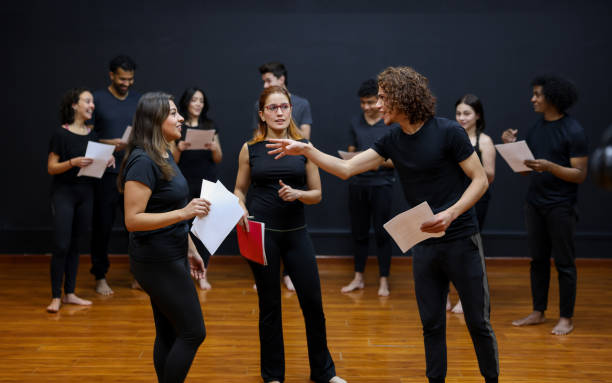
Dance Instructor

A Dance Instructor is a dedicated professional in the performing arts industry who teaches dance techniques, styles, and choreography to students of varying ages and skill levels. They work in dance studios, schools, community centers, theatres, or as independent educators, inspiring individuals to express themselves through movement. Dance Instructors play a vital role in preserving cultural traditions, fostering creativity, and preparing dancers for performances or professional careers. This career falls under the Performing Arts career cluster, focusing on the education and development of artistic expression through dance.

Share :
Career tree mind map (horizontal) — Dance Instructor
Colored branches, hub circles, and underlined topics — same style as counselor course classic (types 18–19 in admin).
Loading mind map…

Dance Instructors are passionate educators and artists who impart knowledge of dance forms such as classical ballet, contemporary, hip-hop, jazz, or traditional styles, tailoring their teaching to suit beginners, intermediates, or advanced learners. They design lesson plans, choreograph routines, and guide students in mastering techniques while emphasizing discipline, physical fitness, and emotional expression. Beyond technical training, they often mentor aspiring dancers, helping them build confidence and stage presence. In a world where dance is increasingly integrated with digital media and global cultural exchange, Dance Instructors adapt to diverse platforms and innovative teaching methods to reach wider audiences and nurture talent.

  • Dance Technique Instruction:
    • Teach fundamental and advanced dance techniques specific to various styles or genres.
    • Correct form, posture, and movement to ensure safety and skill development in students.
  • Choreography Development:
    • Create original dance routines for classes, performances, competitions, or events.
    • Adapt choreography to suit the skill levels and creative goals of individual students or groups.
  • Lesson Planning and Curriculum Design:
    • Develop structured lesson plans that progress from basic to complex skills over time.
    • Incorporate theory, history, and cultural context of dance forms into teaching modules.
  • Student Assessment and Feedback:
    • Evaluate students’ progress through observations, recitals, or formal assessments.
    • Provide constructive feedback to help dancers improve technique, expression, and performance.
  • Performance Preparation:
    • Prepare students for stage performances, auditions, or dance examinations by refining routines.
    • Organize rehearsals and coordinate costumes, music, and other production elements.
  • Physical and Emotional Support:
    • Promote physical fitness, flexibility, and injury prevention through warm-ups and conditioning.
    • Foster a supportive environment to build students’ confidence and passion for dance.
  • Event and Workshop Organization:
    • Arrange dance workshops, masterclasses, or community events to enhance learning opportunities.
    • Collaborate with other instructors or organizations for recitals or cultural programs.
  • Cultural and Trend Awareness:
    • Stay updated on contemporary dance trends, fusion styles, and cultural evolutions in dance.
    • Integrate modern or digital formats like online classes or social media challenges into teaching.

Route Steps
Route 1 1. Basic education (10+2 or equivalent in any stream)
  2. Short-term courses or workshops in dance instruction or specific dance forms (3-6 months)
  3. Practical experience through assisting in dance studios or community classes
  4. Work as a Dance Instructor for small groups or beginners
Route 2 1. Basic education (10+2 or equivalent in any stream)
  2. Diploma in Dance Education or Performing Arts (1-2 years)
  3. Hands-on experience in dance academies or cultural organizations
  4. Work as a Dance Instructor in professional settings
Route 3 1. Basic education (10+2 or equivalent in any stream)
  2. Bachelor’s degree in Dance, Performing Arts, or Physical Education (3-4 years)
  3. Internship or assistant roles in dance schools or theatre companies
  4. Work as a Dance Instructor across varied skill levels and platforms
Route 4 (International) 1. Basic education (10+2 or equivalent in any stream)
  2. Diploma or Bachelor’s in Dance/Dance Education from India or abroad (2-4 years)
  3. Advanced certification or Master’s in Dance Pedagogy or Choreography (1-2 years)
  4. Build experience through international dance projects or teaching residencies
  5. Work as a Dance Instructor globally or in India

  • Assisting in dance studios to learn teaching methods and student interaction under experienced instructors.
  • Involvement in school or community dance programs to gain experience with diverse age groups and skill levels.
  • Internships with professional dance companies to understand performance preparation and choreography creation.
  • Exposure to event coordination by organizing dance recitals or competitions for hands-on logistics training.
  • Collaboration in cultural festivals to teach traditional or regional dance forms to varied audiences.
  • Training in group dynamics by leading dance classes or workshops in local centers or gyms.
  • Experience in high-pressure settings by preparing students for major performances or dance exams.
  • Practical projects like designing dance curricula or choreographing for student showcases during mentorships.
  • Community outreach initiatives to teach underprivileged groups, building empathy and adaptability in teaching.
  • International dance workshops or residencies for exposure to global teaching styles and cross-cultural dance forms.

  • Certificate in Dance Instruction or Specific Dance Styles
  • Diploma in Dance Education or Performing Arts
  • Bachelor’s in Dance Studies or Physical Education with Dance Focus
  • Master’s in Dance Pedagogy or Choreography
  • Training in Dance Therapy and Movement Education
  • Specialization in Classical, Contemporary, or Cultural Dance Forms
  • Certification in Dance Fitness and Conditioning
  • Workshops on Choreography and Performance Coaching
  • Training in Dance History and Cultural Context
  • Continuing Education in Digital Dance Instruction Methods

Institute Course/Program Official Link
Shiamak Davar International, Mumbai Diploma in Dance and Instruction https://shiamak.com/
Nalanda Nritya Kala Mahavidyalaya, Mumbai Bachelor’s and Master’s in Dance https://nalandauniversity.edu.in/
Kalakshetra Foundation, Chennai Diploma in Classical Dance (Bharatanatyam) https://kalakshetra.in/
Sangeet Natak Akademi, New Delhi Training in Dance and Performance Arts https://sangeetnatak.gov.in/
Terence Lewis Professional Training Institute, Mumbai Certificate in Dance Instruction https://www.terencelewis.com/
Natya Institute of Kathak and Choreography, Bangalore Diploma in Kathak and Choreography https://natyainstitute.com/
Bharati Vidyapeeth School of Performing Arts, Pune Bachelor’s in Dance and Performing Arts https://bvspapune.bharatividyapeeth.edu/
Banaras Hindu University (BHU), Varanasi Bachelor’s and Master’s in Performing Arts (Dance) https://www.bhu.ac.in/
Attakkalari Centre for Movement Arts, Bangalore Diploma in Movement Arts and Mixed Media https://www.attakkalari.org/
Rabindra Bharati University, Kolkata Bachelor’s and Master’s in Dance https://rbu.ac.in/

Institution Course Country Official Link
The Juilliard School BFA in Dance USA https://www.juilliard.edu/
Royal Academy of Dance (RAD) BA in Dance Education UK https://www.royalacademyofdance.org/
New York University (NYU) Tisch School of the Arts BFA in Dance USA https://tisch.nyu.edu/
Alvin Ailey American Dance Theater School Certificate in Dance and Instruction USA https://www.alvinailey.org/
Trinity Laban Conservatoire of Music and Dance BA in Contemporary Dance and Education UK https://www.trinitylaban.ac.uk/
Codarts Rotterdam BA in Dance and Dance Education Netherlands https://www.codarts.nl/
University of North Carolina School of the Arts BFA in Dance USA https://www.uncsa.edu/
Queensland University of Technology (QUT) BFA in Dance Performance Australia https://www.qut.edu.au/
Paris Opera Ballet School Diploma in Classical Ballet and Instruction France https://www.operadeparis.fr/en/school
Canadian College of Performing Arts Diploma in Dance and Performing Arts Canada https://www.ccpacanada.com/

India:

  • Auditions, practical demonstrations, or portfolio submissions for admission to dance programs like those at Kalakshetra or Nalanda.
  • Institution-specific entrance exams or interviews to assess dance skills and teaching potential.
  • No mandatory national-level entrance for most programs; admission often based on talent and prior training.


International:

  • Auditions or practical assessments for dance programs at most international institutes.
  • Specific entrance requirements or prerequisites as per institute guidelines, including prior dance experience.
  • Test of English as a Foreign Language (TOEFL) with a minimum score of 80-100 for non-native speakers (if applicable).
  • International English Language Testing System (IELTS) with a minimum score of 6.0-7.0 (if applicable).
  • Pearson Test of English Academic (PTE Academic) or Duolingo English Test (accepted by some institutions).

Assistant Dance Instructor → Dance Instructor (Independent) → Senior Dance Instructor → Dance Studio Owner → Dance Program Director → Choreographer/Educator

  • Dance studios for teaching various dance styles to students of all ages and levels.
  • Schools and colleges for instructing dance as part of physical education or performing arts programs.
  • Community centers for offering accessible dance classes and cultural programs to local residents.
  • Professional dance companies for training aspiring dancers and preparing them for performances.
  • Fitness centers or gyms for leading dance-based fitness classes like Zumba or aerobics.
  • Theatre productions for teaching choreography and movement to actors or ensemble performers.
  • Film and television industries for instructing dance sequences in movies or shows.
  • Event management companies for choreographing and teaching at weddings, corporate events, or festivals.
  • Online platforms for conducting virtual dance classes or creating instructional content.
  • Cultural organizations for teaching traditional or folk dance forms to preserve heritage.

India International
Shiamak Davar International, Mumbai Alvin Ailey American Dance Theater, USA
Terence Lewis Dance Academy, Mumbai Royal Ballet School, UK
Danceworx, Delhi Joffrey Ballet School, USA
Kalakshetra Foundation, Chennai American Ballet Theatre, USA
Nrityashakti, Mumbai New York City Ballet School, USA
Ashley Lobo’s Institute, Multiple Locations Paris Opera Ballet School, France
Natya Institute of Kathak, Bangalore Bolshoi Ballet Academy, Russia
Sumeet Nagdev Dance Arts, Mumbai The Australian Ballet School, Australia
Big Dance Centre, Delhi English National Ballet School, UK
Delhi Dance Academy, Delhi Martha Graham School, USA

Pros Cons
Rewarding opportunity to inspire and shape students’ passion for dance and self-expression Physically demanding role requiring consistent energy, stamina, and personal fitness
Creative freedom to design choreography and explore diverse dance styles in teaching Irregular hours, often involving evenings or weekends for classes, rehearsals, or events
Potential to impact cultural preservation and personal growth through dance education Competitive field with pressure to attract and retain students or build a reputation
Flexibility to work in varied settings like studios, schools, or online platforms Risk of injuries or physical strain due to repetitive movement or demonstration
Chance to build a community of dancers and contribute to the performing arts landscape Income variability, especially for freelance instructors or those starting their own studios

  • Dance expertise in one or more styles to provide accurate and inspiring instruction to students.
  • Teaching ability to break down complex movements into manageable steps for learners of all levels.
  • Choreographic creativity to design engaging and original routines for classes or performances.
  • Communication skills to explain techniques clearly and motivate students effectively during lessons.
  • Patience and empathy to support students’ individual learning paces and emotional needs in dance.
  • Organizational talent to plan lessons, manage class schedules, and coordinate recitals or events.
  • Physical fitness to demonstrate moves, maintain stamina, and model healthy practices for students.
  • Adaptability to teach diverse age groups, skill levels, and dance forms in various environments.
  • Cultural sensitivity to respect and incorporate traditional or regional dance contexts in teaching.
  • Leadership to guide groups, instill discipline, and foster a positive learning atmosphere in classes.

(Figures are approximate and based on latest available data as of 2026, subject to change. Salaries vary based on location, experience, specialization, and employment type.)

Career Level India (₹ per annum) International (US$ per annum)
Assistant Dance Instructor (Entry-Level) 1,80,000 - 3,50,000 $25,000 - $40,000
Dance Instructor (Independent) 3,50,000 - 6,00,000 $40,000 - $60,000
Senior Dance Instructor 6,00,000 - 10,00,000 $60,000 - $80,000
Dance Studio Owner 10,00,000 - 18,00,000 $80,000 - $120,000
Dance Program Director 18,00,000 - 25,00,000 $120,000 - $150,000
Choreographer/Educator 25,00,000+ $150,000+

  • Dance Curriculum Software like Dance Studio Pro for managing class schedules and student progress.
  • Video Editing Tools like Adobe Premiere for creating instructional videos or performance footage.
  • Music Editing Software like Audacity for customizing tracks for choreography or classes.
  • Virtual Classroom Platforms like Zoom for conducting online dance lessons or workshops.
  • Social Media Tools like Canva for promoting classes, events, or student achievements online.
  • Project Management Apps like Trello for organizing recitals, competitions, or teaching schedules.
  • Fitness Tracking Tools for monitoring student physical progress or personal conditioning routines.
  • Dance Notation Software like Dance Designer for documenting choreography or lesson plans.
  • Online Payment Platforms like PayPal for managing class fees or workshop registrations.
  • Content Sharing Platforms like YouTube for uploading tutorials and building an online teaching presence.

  • Indian Dance Sport Federation (IDSF)
  • All India Dance Teachers Association (AIDTA)
  • International Dance Council (CID), UNESCO
  • National Dance Education Organization (NDEO), USA
  • Dance/USA, USA
  • Royal Academy of Dance (RAD), UK
  • Australian Dance Council (Ausdance)
  • Canadian Dance Teachers’ Association (CDTA)
  • European Dance Network (EDN)
  • World Dance Alliance (WDA)

  • Shiamak Davar (India, Contemporary): A pioneering dance instructor since the 1990s, known for introducing contemporary jazz to India and training Bollywood stars through his academy.
     
  • Terence Lewis (India, Contemporary): Renowned instructor and choreographer since the 2000s, his institute trains dancers in various styles, shaping India’s modern dance scene.
     
  • Saroj Khan (India, Historical): Legendary Bollywood dance instructor since the 1960s, celebrated for teaching iconic dance sequences to generations of actors until her passing in 2020.
     
  • Birju Maharaj (India, Historical): Kathak maestro since the 1950s, a revered instructor who preserved and taught classical Indian dance through his extensive career until 2022.
     
  • Ashley Lobo (India, Contemporary): A leading dance educator since the 1990s, founder of Danceworx, known for blending Indian and Western styles in his teaching approach.
     
  • Debbie Allen (USA, Contemporary): Acclaimed instructor since the 1970s, founder of Debbie Allen Dance Academy, known for training dancers and actors through "Fame" and beyond.
     
  • Misty Copeland (USA, Contemporary): Ballet instructor and principal dancer since the 2000s, inspiring through her teaching and historic role at American Ballet Theatre.
     
  • Darcey Bussell (UK, Contemporary): Former Royal Ballet principal since the 1980s, now an instructor and advocate for dance education through various UK initiatives.
     
  • Akram Khan (UK/Bangladesh, Contemporary): Renowned Kathak and contemporary dance instructor since the 1990s, blending cultural forms in his teaching and global workshops.
     
  • Pina Bausch (Germany, Historical): Influential contemporary dance instructor since the 1970s, her teaching through Tanztheater Wuppertal shaped modern dance pedagogy until her passing in 2009.
     

  • Build a strong foundation in dance techniques through consistent training in one or more styles.
  • Gain early teaching experience by assisting in studios or leading small community classes.
  • Develop a portfolio of choreography or student performances to showcase teaching impact.
  • Seek mentorship from experienced instructors to refine pedagogical methods and class management.
  • Stay current with dance trends and digital teaching tools to expand instructional reach.
  • Enhance communication skills to inspire and connect with students of diverse backgrounds.
  • Network with dance schools, theatres, and cultural groups to secure teaching opportunities.
  • Focus on physical conditioning to sustain personal dance practice and demonstration ability.
  • Embrace student challenges as opportunities to adapt and improve teaching strategies.
  • Combine artistic passion with educational dedication to create meaningful learning experiences.

Embarking on a career as a Dance Instructor offers a unique privilege to ignite a love for movement, guiding students to discover their potential through the transformative power of dance. These vital educators serve as mentors, blending technical mastery with heartfelt encouragement to cultivate talent across stages and studios. With pathways ranging from teaching beginners to directing esteemed dance programs in an ever-evolving artistic field, this role resonates with those who cherish creativity and mentorship. For individuals eager to share the joy of dance, nurture aspiring performers, and contribute to the rich tapestry of performing arts, a career as a Dance Instructor promises an inspiring, dynamic, and profoundly gratifying professional journey.

Knowledge & Skills You Will Learn
1
Dance expertise in one or more styles to provide accurate and inspiring instruction to students.
2
Teaching ability to break down complex movements into manageable steps for learners of all levels.
3
Communication skills to explain techniques clearly and motivate students effectively during lessons.
4
Adaptability to teach diverse age groups, skill levels, and dance forms in various environments.
Interested in this career?

Take the next step and explore more about Dance Instructor.