3D Animator
Senior 3D Animator
Explore Career
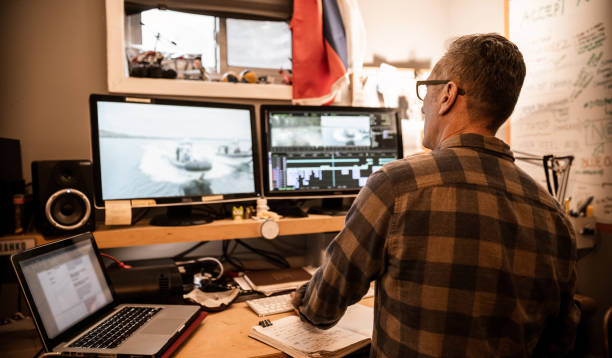
A Film & Video Editor is a creative and technical professional who specializes in assembling and refining raw footage into cohesive, engaging stories for films, television shows, advertisements, and digital content. They work in industries such as entertainment, media production, advertising, and online platforms, collaborating with directors, cinematographers, and producers. Film & Video Editors play a crucial role in modern storytelling by shaping narratives through pacing, transitions, and visual effects in an era where video content dominates cultural expression and audience engagement.
| Route | Steps |
| Route 1 | 1. 10+2 in any stream (preferably with Media or Arts subjects) 2. Bachelor’s degree in Film Editing, Media Production, or related field (3-4 years) 3. Internship or practical training (3-6 months) 4. Practice as Junior Editor or Assistant Editor |
| Route 2 | 1. 10+2 in any stream 2. Diploma or Certificate in Film & Video Editing (6 months-2 years) 3. Build hands-on experience through projects 4. Work as Freelance or Junior Editor |
| Route 3 | 1. 10+2 in any stream 2. Bachelor’s degree in Film Studies or Multimedia (3-4 years) 3. Master’s degree in Film Editing or Post-Production (2 years) 4. Work as Senior Editor or Creative Lead |
| Route 4 | 1. 10+2 in any stream 2. Advanced international training or certification in Film Editing (1-2 years) 3. Master’s or specialized courses as per country requirements 4. Practice abroad or in India |
| Institute | Course/Program | Official Link |
| Film and Television Institute of India (FTII), Pune | Diploma in Film Editing | https://www.ftii.ac.in/ |
| Satyajit Ray Film & Television Institute (SRFTI), Kolkata | Diploma in Film & Video Editing | https://srfti.ac.in/ |
| Whistling Woods International, Mumbai | BA/MA in Film & Video Editing | https://www.whistlingwoods.net/ |
| Annapurna College of Film and Media, Hyderabad | Diploma in Film Editing | https://www.annapurnacollege.com/ |
| LV Prasad Film & TV Academy, Chennai | Diploma in Film & Video Editing | https://www.prasadacademy.com/ |
| Zee Institute of Media Arts (ZIMA), Mumbai | Diploma in Film Editing & Post-Production | https://www.zimainstitute.com/ |
| Srishti Manipal Institute of Art, Design and Technology, Bangalore | B.Des in Film & Video Communication | https://srishti.ac.in/ |
| Symbiosis Institute of Media & Communication, Pune | BA in Film & Video Editing | https://simc.edu/ |
| Amity School of Film & Drama, Noida | B.Sc in Film & Video Editing | https://www.amity.edu/ |
| Digital Academy - The Film School, Mumbai | Diploma in Film Editing | https://www.dafilmschool.com/ |
| Institution | Course | Country | Official Link |
| American Film Institute (AFI) | MFA in Film Editing | USA | https://www.afi.com/ |
| New York University (NYU) Tisch School of the Arts | MFA in Film & Video Editing | USA | https://tisch.nyu.edu/ |
| University of Southern California (USC) School of Cinematic Arts | MFA in Film & Video Editing | USA | https://cinema.usc.edu/ |
| National Film and Television School (NFTS) | MA in Film & Video Editing | UK | https://nfts.co.uk/ |
| Vancouver Film School (VFS) | Diploma in Film & Video Editing | Canada | https://vfs.edu/ |
| La Fémis | Diploma in Film Editing | France | https://www.femis.fr/ |
| Australian Film, Television and Radio School (AFTRS) | MA in Film & Video Editing | Australia | https://www.aftrs.edu.au/ |
| Toronto Film School | Diploma in Film & Video Editing | Canada | https://www.torontofilmschool.ca/ |
| Chapman University - Dodge College of Film and Media Arts | MFA in Film & Video Editing | USA | https://www.chapman.edu/dodge/ |
| London Film School | MA in Filmmaking (Editing Specialization) | UK | https://lfs.org.uk/ |
India:
International:
Ideal Progressing Career Path Junior Editor → Film & Video Editor → Senior Editor → Lead Editor → Post-Production Supervisor → Creative Director → Independent Filmmaker → Studio Executive
| India | International |
| Yash Raj Films | Warner Bros. Entertainment, USA |
| Dharma Productions | Universal Pictures, USA |
| Red Chillies Entertainment | Paramount Pictures, USA |
| Eros International | Walt Disney Studios, USA |
| Reliance Entertainment | Sony Pictures Entertainment, USA |
| Balaji Telefilms | Netflix, USA |
| Zee Entertainment Enterprises | Amazon Studios, USA |
| Star India | BBC Studios, UK |
| Viacom18 | HBO, USA |
| Rajshri Productions | A24, USA |
| Pros | Cons |
| Opportunity to work on creative and impactful storytelling projects | High-pressure environment due to tight deadlines and director expectations |
| High demand for editors in film, TV, and digital media | Long hours, especially during post-production crunch periods |
| Rewarding impact through shaping narratives and audience engagement | Risk of creative burnout from constant revisions and technical demands |
| Diverse career paths across film, advertising, and online content | Limited job security in freelance or project-based roles |
| Strong potential for personal branding with signature editing styles | Dependency on hardware and software costs impacting workflow |
| Career Level | India (₹ per annum) | International (USD per annum) |
| Junior Editor (Early Career) | 3,00,000 - 6,00,000 | 30,000 - 50,000 |
| Film & Video Editor (Mid-Career) | 6,00,000 - 12,00,000 | 50,000 - 80,000 |
| Senior Editor/Lead Editor | 12,00,000 - 20,00,000 | 80,000 - 120,000 |
| Post-Production Supervisor/Creative Director | 20,00,000 - 30,00,000 | 120,000 - 180,000 |
| Independent Filmmaker/Studio Executive | 30,00,000+ | 180,000+ |
| Note: Salaries vary based on location, experience, employer, and specialization. International figures are approximate and depend on the country and sector. |
A career as a Film & Video Editor offers a unique opportunity to contribute to storytelling, cinematic innovation, and cultural expression by crafting compelling narratives through edited video content for diverse applications. From enhancing films and advertisements to revolutionizing digital media, Film & Video Editors play a pivotal role in modern visual and emotional landscapes. This field combines artistic expertise, technical skills, and a commitment to solving complex narrative challenges, offering diverse paths in film, television, advertising, and beyond. For those passionate about creativity, adapting to evolving trends, and addressing storytelling needs in an era of rapid media evolution, a career as a Film & Video Editor provides an intellectually stimulating and professionally rewarding journey with the potential to make significant contributions to society by advancing the art and application of video editing worldwide.

Early-career professionals assist in basic editing tasks with increasing autonomy. They hone skills in specific areas while ensuring project...
0.0LPA
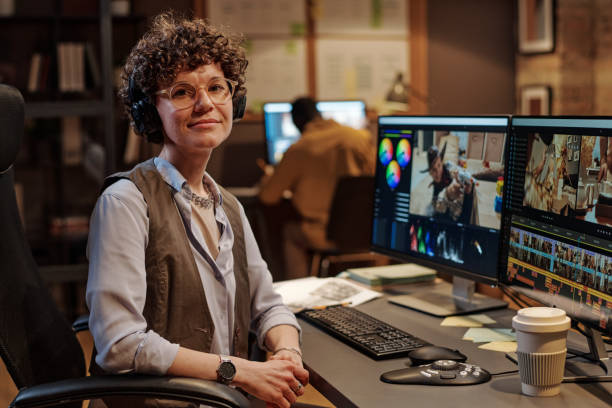
Specialists oversee complex editing projects with exceptional competence. They integrate deep narrative knowledge with expertise in specific...
0.0LPA
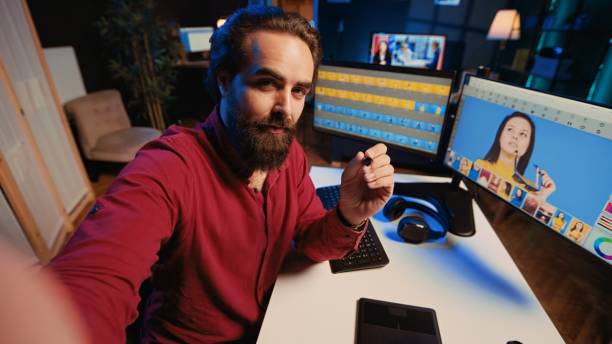
Leaders focus on overseeing entire post-production processes and shaping final outputs. They provide strategic oversight by aligning edits with...
0.0LPA
Take the next step and explore more about Film & Video Editor.
Explore similar career paths that might interest you