Ag-FinTech Product Manager
Junior Ag-FinTech Product Manager
Explore Career
A Floriculturist is a professional who specializes in the cultivation, management, and study of flowering and ornamental plants for aesthetic, commercial, and environmental purposes. They work in nurseries, greenhouses, botanical gardens, floral design firms, and agricultural research institutions, collaborating with landscapers, horticulturists, and business owners. Floriculturists play a vital role in the horticulture industry by enhancing the beauty of spaces, supporting biodiversity, and meeting market demands for flowers and decorative plants in a sector focused on sustainability and innovation.
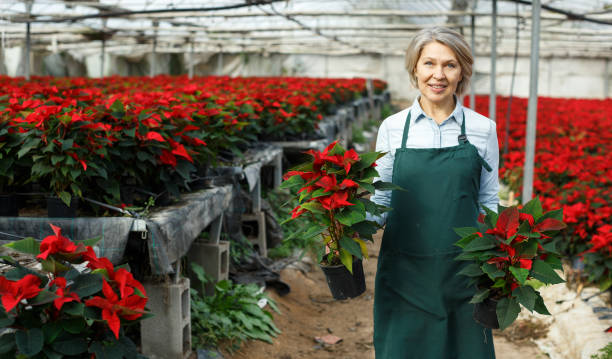
Floriculturists are skilled experts responsible for growing, breeding, and maintaining flowering plants such as roses, tulips, orchids, and lilies, as well as ornamental foliage for various uses including landscaping, events, and retail. Their role involves soil management, pest control, plant propagation, and often working in outdoor fields, greenhouses, or design studios. They combine scientific knowledge of plant biology with practical skills in cultivation to produce high-quality blooms and greenery. As key contributors to the floral industry, they help address challenges like climate adaptability, sustainable practices, and consumer preferences in a field increasingly focused on eco-friendly and aesthetic solutions.
| Route | Steps |
| Route 1 | 1. 10+2 with Physics, Chemistry, Biology (PCB) or Agriculture 2. Bachelor’s degree in Horticulture or Floriculture (3-4 years) 3. Internship or practical training (3-6 months) 4. Practice as Junior Floriculturist |
| Route 2 | 1. 10+2 with PCB or Agriculture 2. Bachelor’s degree in Horticulture or Agriculture (3-4 years) 3. Master’s degree in Floriculture or Ornamental Horticulture (2 years) 4. Work as Floriculturist |
| Route 3 | 1. 10+2 with PCB or Agriculture 2. Bachelor’s degree in Horticulture or Botany (3-4 years) 3. Master’s degree in Floriculture (2 years) 4. Ph.D. in Floriculture or Horticulture (3-5 years) 5. Practice as Senior Researcher or Academic |
| Route 4 | 1. 10+2 with PCB or Agriculture 2. Advanced international training or certification in Floriculture (1-2 years) 3. Master’s or Ph.D. as per country requirements 4. Practice abroad or in India |
| Institute | Course/Program | Official Link |
| Indian Agricultural Research Institute (IARI), New Delhi | M.Sc./Ph.D. in Floriculture | https://www.iari.res.in/ |
| University of Agricultural Sciences (UAS), Bangalore | B.Sc./M.Sc. in Horticulture | https://www.uasbangalore.edu.in/ |
| Tamil Nadu Agricultural University (TNAU), Coimbatore | B.Sc./M.Sc. in Horticulture | https://www.tnau.ac.in/ |
| Punjab Agricultural University (PAU), Ludhiana | B.Sc./M.Sc. in Horticulture | https://www.pau.edu/ |
| Anand Agricultural University (AAU), Gujarat | B.Sc./M.Sc. in Horticulture | https://www.aau.in/ |
| Dr. Y.S. Parmar University of Horticulture and Forestry, Solan | B.Sc./M.Sc. in Floriculture | https://www.yspuniversity.ac.in/ |
| Kerala Agricultural University (KAU), Thrissur | B.Sc./M.Sc. in Horticulture | https://www.kau.in/ |
| Banaras Hindu University (BHU), Varanasi | B.Sc./M.Sc. in Agriculture/Horticulture | https://www.bhu.ac.in/ |
| Bidhan Chandra Krishi Viswavidyalaya (BCKV), West Bengal | B.Sc./M.Sc. in Horticulture | https://www.bckv.edu.in/ |
| Amity University, Noida | B.Sc./M.Sc. in Horticulture | https://www.amity.edu/ |
| Institution | Course | Country | Official Link |
| Wageningen University & Research | Horticulture and Floriculture Programs | Netherlands | https://www.wur.nl/ |
| Cornell University | Horticulture and Plant Science Programs | USA | https://www.cornell.edu/ |
| University of California, Davis | Horticulture and Floriculture Programs | USA | https://www.ucdavis.edu/ |
| Royal Horticultural Society (RHS), London | Floriculture and Horticulture Programs | UK | https://www.rhs.org.uk/ |
| University of Reading | Horticulture and Plant Science Programs | UK | https://www.reading.ac.uk/ |
| Massey University | Horticulture and Floriculture Programs | New Zealand | https://www.massey.ac.nz/ |
| University of Guelph | Horticulture and Plant Science Programs | Canada | https://www.uoguelph.ca/ |
| Swedish University of Agricultural Sciences (SLU) | Horticulture Programs | Sweden | https://www.slu.se/ |
| University of Queensland | Horticulture and Plant Science Programs | Australia | https://www.uq.edu.au/ |
| ETH Zurich | Plant Science and Horticulture Programs | Switzerland | https://www.ethz.ch/ |
Entrance Tests RequiredIndia:
International:
Trainee → Junior Floriculturist → Senior Floriculturist → Floral Production Manager → Plant Breeder → Landscape Designer → Floriculture Research Lead → Horticulture Consultant
| India | International |
| National Horticulture Board (NHB), India | Royal FloraHolland, Netherlands |
| Indian Council of Agricultural Research (ICAR) | Dümmen Orange, Netherlands |
| State Horticulture Departments | Syngenta Flowers, Switzerland |
| Ferns N Petals (FNP) | Ball Horticultural Company, USA |
| Nurserylive | Sakata Seed Corporation, Japan |
| Green Decor | Florensis, Netherlands |
| Puspak Agri Tech | Selecta One, Germany |
| Rose Bazaar | PanAmerican Seed, USA |
| Ugaoo | Takii Seed, Japan |
| MyFlowerTree | Beekenkamp Plants, Netherlands |
| Pros | Cons |
| Opportunity to contribute to environmental beauty and biodiversity through flowers | Physically demanding work with exposure to outdoor conditions |
| High demand for floral products due to events, landscaping, and gifting culture | Seasonal fluctuations in demand affecting income stability |
| Rewarding impact on aesthetics and emotional well-being through floral designs | Risk of crop loss due to pests, diseases, or adverse weather |
| Diverse career paths across cultivation, design, and research | Limited public recognition compared to other agricultural fields |
| Strong potential for growth with increasing focus on sustainable and organic practices | Dependency on market trends and consumer preferences |
| Career Level | India (₹ per annum) | International (USD per annum) |
| Trainee/Junior Floriculturist (Early Career) | 2,00,000 - 4,00,000 | 20,000 - 35,000 |
| Senior Floriculturist (Mid-Career) | 4,00,000 - 6,00,000 | 35,000 - 50,000 |
| Floral Production Manager | 6,00,000 - 9,00,000 | 50,000 - 65,000 |
| Plant Breeder/Landscape Designer | 9,00,000 - 12,00,000 | 65,000 - 80,000 |
| Floriculture Research Lead/Horticulture Consultant | 12,00,000+ | 80,000+ |
| Note: Salaries may vary based on location, employer, experience, and specialization. |
A career as a Floriculturist offers a unique opportunity to contribute to the horticulture industry by cultivating and designing with flowering and ornamental plants that enhance beauty, support biodiversity, and meet market needs. From growing vibrant blooms to creating stunning arrangements, Floriculturists play a pivotal role in modern aesthetics and environmental enhancement. This field combines scientific rigor, practical application, and a commitment to creativity, offering diverse paths in cultivation, design, and research. For those passionate about shaping floral trends, adapting to global environmental challenges, and addressing critical sustainability needs in an era of evolving aesthetic demands, a career as a Floriculturist provides an intellectually stimulating and professionally rewarding journey with the potential to make significant contributions to society by enhancing the quality of natural beauty and floral industry standards worldwide.

Early-career professionals handle basic plant care with increasing autonomy. They hone skills in propagation and pest control while ensuring plant...
0.0LPA

Experienced professionals manage complex floral production with high accuracy, using advanced techniques. They offer technical expertise in...
0.0LPA

Specialists oversee large-scale floral cultivation programs with exceptional competence. They integrate deep horticultural knowledge with...
0.0LPA
Take the next step and explore more about Floriculturist.
Explore similar career paths that might interest you