Aerospace Engineer
Junior Aerospace Engineer (Entry to Mid-Level)
Explore Career
A Food Process Engineer is a professional who applies engineering principles to design, develop, and optimize processes and equipment for the production, packaging, and distribution of food products. They work in food manufacturing companies, research institutions, government agencies, and consulting firms, collaborating with food scientists, quality assurance teams, and production managers. Food Process Engineers play a crucial role in the food industry by ensuring efficient, safe, and sustainable food production to meet consumer demands in a sector focused on innovation, safety, and environmental responsibility.
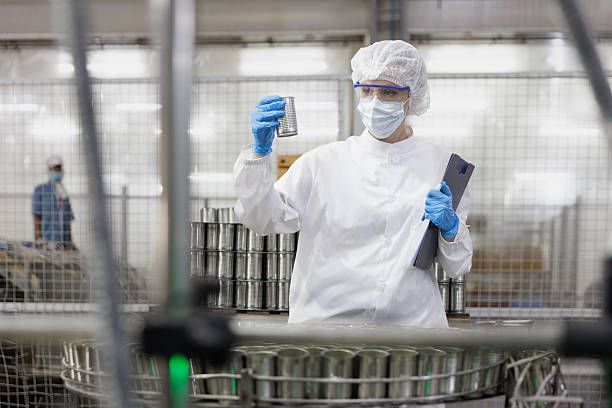
Food Process Engineers are technical experts responsible for creating and improving processes involved in transforming raw ingredients into safe, high-quality food products such as canned goods, frozen meals, and beverages. Their role involves designing equipment, optimizing production lines, ensuring compliance with safety regulations, and often working in manufacturing plants, laboratories, or office environments. They combine engineering skills with knowledge of food science to address challenges like cost efficiency, waste reduction, and scalability. As key contributors to the food sector, they help shape sustainable and innovative practices in an industry increasingly focused on health, technology, and global supply chains.
| Route | Steps |
| Route 1 | 1. 10+2 with Physics, Chemistry, Mathematics (PCM) or Biology (PCB) 2. Bachelor’s degree in Food Process Engineering or Food Technology (3-4 years) 3. Internship or industrial training (3-6 months) 4. Practice as Junior Food Process Engineer |
| Route 2 | 1. 10+2 with PCM or PCB 2. Bachelor’s degree in Food Engineering or Chemical Engineering (3-4 years) 3. Master’s degree in Food Process Engineering or Food Technology (2 years) 4. Work as Food Process Engineer |
| Route 3 | 1. 10+2 with PCM or PCB 2. Bachelor’s degree in Food Technology or Agricultural Engineering (3-4 years) 3. Master’s degree in Food Process Engineering (2 years) 4. Ph.D. in Food Engineering or related field (3-5 years) 5. Practice as Senior Researcher or Academic |
| Route 4 | 1. 10+2 with PCM or PCB 2. Advanced international training or certification in Food Process Engineering (1-2 years) 3. Master’s or Ph.D. as per country requirements 4. Practice abroad or in India |
| Institute | Course/Program | Official Link |
| Indian Institute of Technology (IIT), Kharagpur | B.Tech/M.Tech in Agricultural & Food Engineering | https://www.iitkgp.ac.in/ |
| National Institute of Food Technology Entrepreneurship and Management (NIFTEM), Kundli | B.Tech/M.Tech in Food Technology | https://www.niftem.ac.in/ |
| Indian Institute of Technology (IIT), Guwahati | B.Tech/M.Tech in Chemical Engineering | https://www.iitg.ac.in/ |
| Anna University, Chennai | B.E./M.E. in Food Technology | https://www.annauniv.edu/ |
| Tamil Nadu Agricultural University (TNAU), Coimbatore | B.Tech/M.Tech in Food Process Engineering | https://www.tnau.ac.in/ |
| University of Agricultural Sciences (UAS), Bangalore | B.Tech/M.Tech in Food Technology | https://www.uasbangalore.edu.in/ |
| Punjab Agricultural University (PAU), Ludhiana | B.Tech/M.Tech in Food Technology | https://www.pau.edu/ |
| Anand Agricultural University (AAU), Gujarat | B.Tech/M.Tech in Food Processing Technology | https://www.aau.in/ |
| Amity University, Noida | B.Tech/M.Tech in Food Technology | https://www.amity.edu/ |
| Lovely Professional University (LPU), Punjab | B.Tech/M.Tech in Food Technology | https://www.lpu.in/ |
| Institution | Course | Country | Official Link |
| Massachusetts Institute of Technology (MIT) | Chemical Engineering and Food Processing Programs | USA | https://www.mit.edu/ |
| University of California, Davis | Food Science and Engineering Programs | USA | https://www.ucdavis.edu/ |
| Wageningen University & Research | Food Technology and Process Engineering Programs | Netherlands | https://www.wur.nl/ |
| Cornell University | Food Science and Engineering Programs | USA | https://www.cornell.edu/ |
| University of Illinois at Urbana-Champaign | Food Science and Agricultural Engineering Programs | USA | https://www.illinois.edu/ |
| University of Guelph | Food Science and Engineering Programs | Canada | https://www.uoguelph.ca/ |
| University of Queensland | Food Science and Technology Programs | Australia | https://www.uq.edu.au/ |
| ETH Zurich | Food Science and Engineering Programs | Switzerland | https://www.ethz.ch/ |
| University of Copenhagen | Food Science and Technology Programs | Denmark | https://www.ku.dk/ |
| Swedish University of Agricultural Sciences (SLU) | Food Technology Programs | Sweden | https://www.slu.se/ |
India:
International:
Trainee → Junior Food Process Engineer → Senior Food Process Engineer → Process Design Lead → Production Manager → Food Technology Specialist → Research and Development Head → Food Industry Consultant
| India | International |
| Nestlé India Ltd. | Nestlé, Global |
| Hindustan Unilever Limited (HUL) | Unilever, Global |
| Britannia Industries Ltd. | Mondelez International, USA |
| ITC Limited (Foods Division) | PepsiCo, USA |
| Parle Agro Pvt. Ltd. | Coca-Cola Company, USA |
| Amul (Gujarat Cooperative Milk Marketing Federation) | Danone, France |
| Mother Dairy, Delhi | Kraft Heinz, USA |
| Dabur India Ltd. | General Mills, USA |
| Patanjali Ayurved Ltd. | Archer Daniels Midland (ADM), USA |
| Haldiram’s | Cargill, USA |
| Pros | Cons |
| Opportunity to innovate in a critical industry ensuring food security and safety | High pressure to meet strict food safety and regulatory standards |
| High demand for engineers due to growing global food production needs | Long working hours during production crises or equipment failures |
| Rewarding impact on consumer health through efficient and safe food processes | Risk of production delays due to supply chain or technical issues |
| Diverse career paths across manufacturing, research, and consulting | Intense competition in a technology-driven and fast-paced industry |
| Strong potential for growth with increasing focus on sustainable processing | Dependency on fluctuating raw material costs and market demands |
| Career Level | India (₹ per annum) | International (USD per annum) |
| Trainee/Junior Food Process Engineer (Early Career) | 3,00,000 - 5,00,000 | 35,000 - 50,000 |
| Senior Food Process Engineer (Mid-Career) | 5,00,000 - 8,00,000 | 50,000 - 75,000 |
| Process Design Lead | 8,00,000 - 12,00,000 | 75,000 - 100,000 |
| Production Manager/Food Technology Specialist | 12,00,000 - 18,00,000 | 100,000 - 130,000 |
| Research and Development Head/Food Industry Consultant | 18,00,000+ | 130,000+ |
| Note: Salaries may vary based on location, employer, experience, and specialization. |
A career as a Food Process Engineer offers a unique opportunity to contribute to the food industry by designing and optimizing processes that ensure the safe, efficient, and sustainable production of food for global consumption. From improving production lines to innovating eco-friendly packaging, Food Process Engineers play a pivotal role in modern food manufacturing and technology development. This field combines engineering expertise, practical application, and a commitment to safety, offering diverse paths in production, research, and consulting. For those passionate about shaping food trends, adapting to global supply challenges, and addressing critical sustainability needs in an era of evolving consumer demands, a career as a Food Process Engineer provides an intellectually stimulating and professionally rewarding journey with the potential to make significant contributions to society by enhancing the quality of food production and industry standards worldwide.

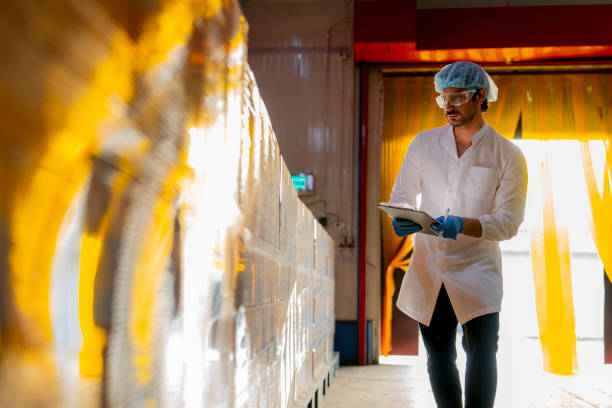
Early-career professionals handle basic process coordination with increasing autonomy. They hone skills in equipment operation and process...
0.0LPA
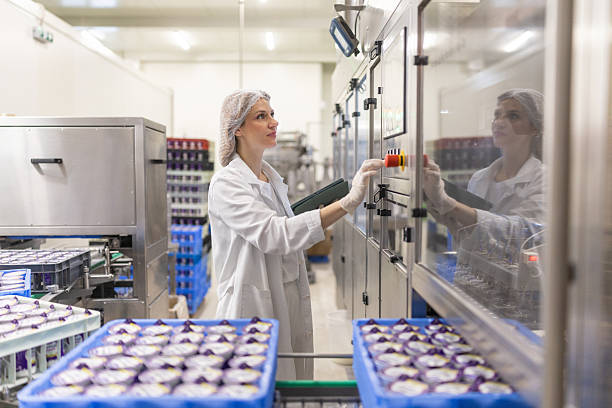
Experienced professionals manage complex production processes with high accuracy, using engineering insights. They offer technical expertise in...
0.0LPA
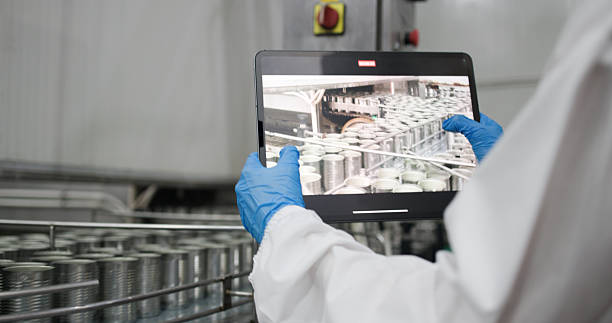
Specialists oversee large-scale process design programs with exceptional competence. They integrate deep engineering knowledge with expertise in...
0.0LPA
Take the next step and explore more about Food Process Engineer.
Explore similar career paths that might interest you