Aerobiologist
Aerology Research Scholar (PhD)
Explore Career
A Geophysicist is a scientific professional who studies the physical properties and processes of the Earth, using advanced techniques to investigate its structure, composition, and dynamics, such as seismic activity, gravitational fields, and magnetic anomalies. They work in academic institutions, government agencies, energy industries, and environmental consultancies, collaborating with geologists, engineers, and policymakers to address challenges in natural resource exploration, disaster prediction, and climate studies. Geophysicists are essential in advancing scientific knowledge and practical solutions in an era where understanding Earth’s systems is critical for sustainable development and mitigating natural hazards. Their contributions help in safeguarding communities and optimizing resource management on a global scale.
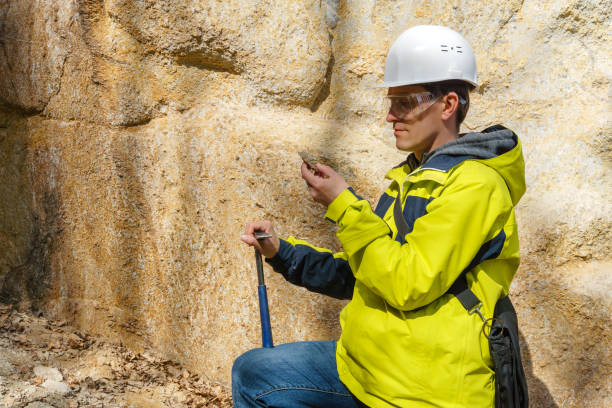
Geophysicists are analytical researchers who apply principles of physics and mathematics to explore the Earth’s interior and surface phenomena, employing tools like seismic imaging, magnetometers, and computational modeling to uncover insights into geological structures, tectonic movements, and resource deposits. Their work involves collecting field data, analyzing complex datasets, and interpreting results to predict earthquakes, locate oil and gas reserves, or assess environmental impacts. Operating in diverse environments from remote field sites to high-tech laboratories, they integrate precision, problem-solving, and specialized expertise to reveal hidden aspects of the planet. As pivotal contributors to pure sciences and research, Geophysicists propel advancements in a landscape increasingly shaped by the need for energy solutions, disaster preparedness, and ecological conservation. Their efforts often bridge theoretical science with real-world applications, ensuring safer infrastructures and informed policy decisions.
| Route | Steps |
| Route 1 | 1. 10+2 in Science stream (Physics, Mathematics mandatory; Chemistry or Geology preferred) |
| 2. Bachelor’s in Geophysics, Geology, or Earth Sciences (3-4 years) | |
| 3. Start as a Junior Geophysicist or Field Technician in research or industry projects | |
| Route 2 | 1. 10+2 in Science stream (Physics, Mathematics mandatory; Chemistry or Geology preferred) |
| 2. Bachelor’s in Geophysics, Geology, or Earth Sciences (3-4 years) | |
| 3. Master’s in Geophysics or Applied Geophysics (2 years) | |
| 4. Work as a Geophysicist in academic, government, or industry settings | |
| Route 3 | 1. 10+2 in Science stream (Physics, Mathematics mandatory; Chemistry or Geology preferred) |
| 2. Bachelor’s in Geophysics, Geology, or Earth Sciences (3-4 years) | |
| 3. Master’s in Geophysics or Applied Geophysics (2 years) | |
| 4. Ph.D. in Geophysics or related discipline (3-5 years) | |
| 5. Pursue roles as a Senior Geophysicist or Principal Investigator | |
| Route 4 | 1. 10+2 in Science stream (Physics, Mathematics mandatory; Chemistry or Geology preferred) |
| 2. Bachelor’s in Geophysics, Geology, or Earth Sciences (3-4 years) | |
| 3. Master’s in Geophysics or Applied Geophysics (2 years) | |
| 4. Ph.D. in Geophysics or related discipline (3-5 years) | |
| 5. Postdoctoral Research (1-3 years) | |
| 6. Serve as a Lead Researcher, Professor, or Industry Consultant |
| Institute | Course/Program | Official Link |
| Indian Institute of Technology (IIT), Kharagpur | B.Tech, M.Tech, Ph.D. in Geology & Geophysics | https://www.iitkgp.ac.in/ |
| Indian Institute of Technology (IIT), Bombay | B.Tech, M.Tech, Ph.D. in Earth Sciences | https://www.iitb.ac.in/ |
| Indian Institute of Science (IISc), Bangalore | B.Sc., M.Sc., Ph.D. in Earth Sciences | https://iisc.ac.in/ |
| University of Delhi, Delhi | B.Sc., M.Sc., Ph.D. in Geology | https://www.du.ac.in/ |
| Banaras Hindu University (BHU), Varanasi | B.Sc., M.Sc., Ph.D. in Geophysics | https://www.bhu.ac.in/ |
| University of Hyderabad, Hyderabad | M.Sc., Ph.D. in Earth Sciences | https://uohyd.ac.in/ |
| Anna University, Chennai | B.E., M.E. in Geology and Geophysics | https://www.annauniv.edu/ |
| Osmania University, Hyderabad | M.Sc. in Geophysics | https://www.osmania.ac.in/ |
| Geological Survey of India Training Institute, Hyderabad | Short Courses in Geophysics | https://www.gsi.gov.in/ |
| National Geophysical Research Institute (NGRI), Hyderabad | Research Programs in Geophysics | https://www.ngri.res.in/ |
| Institution | Course | Country | Official Link |
| Massachusetts Institute of Technology (MIT), Cambridge | B.S., Ph.D. in Earth, Atmospheric & Planetary Sciences | USA | https://www.mit.edu/ |
| Stanford University, Stanford | B.S., M.S., Ph.D. in Geophysics | USA | https://www.stanford.edu/ |
| University of Cambridge, Cambridge | B.A., M.Phil., Ph.D. in Earth Sciences | UK | https://www.cam.ac.uk/ |
| California Institute of Technology (CalTech), Pasadena | B.S., Ph.D. in Geophysics | USA | https://www.caltech.edu/ |
| University of Oxford, Oxford | B.A., D.Phil. in Earth Sciences (Geophysics Focus) | UK | https://www.ox.ac.uk/ |
| ETH Zurich, Zurich | B.Sc., M.Sc., Ph.D. in Geophysics | Switzerland | https://ethz.ch/en.html |
| University of Alberta, Edmonton | B.Sc., M.Sc., Ph.D. in Geophysics | Canada | https://www.ualberta.ca/ |
| Australian National University, Canberra | B.Sc., M.Sc., Ph.D. in Earth Sciences (Geophysics) | Australia | https://www.anu.edu.au/ |
| University of Tokyo, Tokyo | B.Sc., M.Sc., Ph.D. in Earth and Planetary Sciences | Japan | https://www.u-tokyo.ac.jp/en/ |
| University of Oslo, Oslo | B.Sc., M.Sc., Ph.D. in Geophysics | Norway | https://www.uio.no/english/ |
India:
International:
Junior Geophysicist → Geophysicist → Senior Geophysicist → Project Lead Geophysicist → Chief Geophysicist → Research Director → Academic Professor → Geophysical Consultant
| India | International |
| Geological Survey of India (GSI) | United States Geological Survey (USGS), USA |
| National Geophysical Research Institute (NGRI), Hyderabad | British Geological Survey (BGS), UK |
| Oil and Natural Gas Corporation (ONGC) | Chevron, USA |
| Indian Institute of Geomagnetism (IIG), Mumbai | ExxonMobil, USA |
| Indian National Centre for Ocean Information Services (INCOIS) | Shell, Netherlands |
| Central Ground Water Board (CGWB) | BP (British Petroleum), UK |
| Indian Space Research Organisation (ISRO) | Schlumberger, USA |
| Bharat Petroleum Corporation Limited (BPCL) | TotalEnergies, France |
| Reliance Industries Limited (RIL), Exploration Division | Halliburton, USA |
| Physical Research Laboratory (PRL), Ahmedabad | Geoscience Australia, Australia |
| Pros | Cons |
| Opportunity to contribute to critical discoveries about Earth’s structure and resources | Long educational journey often requiring advanced degrees for high-impact roles |
| Potential for societal impact through disaster prediction and sustainable resource use | Physically demanding fieldwork in remote or hazardous locations for extended periods |
| Intellectually engaging career solving complex problems about Earth’s physical processes | Competitive field with limited funding for pure research outside industry applications |
| Diverse career paths across academia, energy sectors, environmental studies, and policy | Slow career progression in academia, reliant on publications or securing grants |
| Strong demand in industries like oil and gas, offering lucrative opportunities | High pressure to deliver accurate data in industry roles with significant financial stakes |
(Figures are approximate and based on latest available data as of 2026, subject to change. Salaries vary based on location, experience, sector (academic vs. industry), and specialization.)
| Career Level | India (₹ per annum) | International (USD per annum) |
| Junior Geophysicist (Early Career) | 4,00,000 - 8,00,000 | 35,000 - 55,000 |
| Geophysicist (Mid-Career) | 8,00,000 - 15,00,000 | 55,000 - 80,000 |
| Senior Geophysicist (Established) | 15,00,000 - 25,00,000 | 80,000 - 110,000 |
| Project Lead Geophysicist/Chief Geophysicist | 25,00,000 - 40,00,000 | 110,000 - 150,000 |
| Research Director/Academic Professor | 40,00,000+ | 150,000+ |
| Geophysical Consultant | 40,00,000+ | 150,000+ |
Embarking on a career as a Geophysicist unveils a remarkable opportunity to probe the hidden depths of our planet, decoding Earth’s physical mysteries to address pressing global needs in resource management and hazard mitigation. From mapping subsurface treasures to forecasting natural disasters, Geophysicists play a crucial role in safeguarding and understanding our world. This discipline fuses analytical precision, innovative technology, and an enduring commitment to exploring Earth’s dynamic systems, offering varied pathways in research, industry, and policy. For those fascinated by the forces shaping our planet, ready to embrace evolving scientific tools, and driven to contribute to sustainable solutions, a career as a Geophysicist presents an intellectually invigorating and profoundly impactful professional journey with the potential to influence humanity’s interaction with the Earth for generations.
Experienced professionals lead complex geophysical studies, often specializing in seismology or resource exploration, guiding teams and ensuring...
0.0LPA

High-level scientists oversee specific geophysical projects, managing budgets, timelines, and teams while integrating data for actionable...
0.0LPA

Senior leaders manage geophysical operations across multiple projects in organizations, setting strategic directions for research or exploration....
0.0LPA
Take the next step and explore more about Geophysicist.
Explore similar career paths that might interest you